



Container Home Builders and Sustainable Living
Container Home Builders and Sustainable Living are increasingly intertwined as global demand for eco-friendly, affordable housing grows—container home builders and container house builders play a pivotal role in turning recycled shipping containers into energy-efficient, low-carbon dwellings. Among these innovators, ZN House stands out: Founded in 2005 and starting in Suzhou, ZN House began with modular houses, determined to fill the gap in the market for high-quality, high-safety container houses. Today, as a leading contributor to the chinese container homes movement, ZN House and other container home builders leverage sustainable design principles—from material recycling to renewable energy integration—to create homes that reduce environmental impact while meeting modern living needs. By prioritizing sustainability in every stage of construction, these builders are redefining affordable housing as both eco-conscious and comfortable, making sustainable living accessible to more communities worldwide.
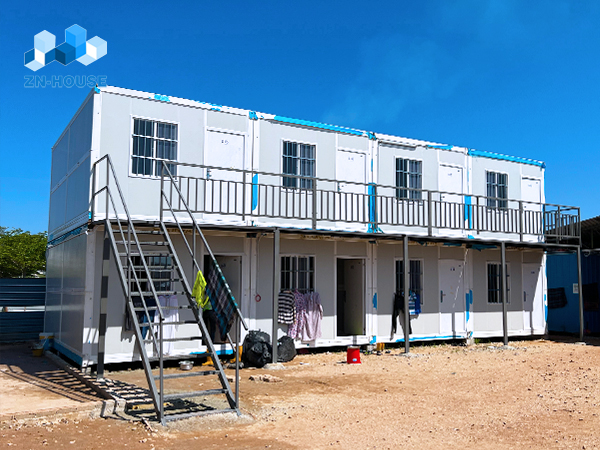
Sustainable Material Practices in Container home builders
- Recycled Container Utilization: Container home builders like ZN House source used shipping containers (90% of their raw material) to reduce steel waste—each recycled container diverts ~2.5 tons of steel from landfills, cutting carbon emissions by 30% compared to using new steel. The company inspects every container for structural integrity (ensuring compliance with ISO 1496-1) before repurposing, ensuring safety while maximizing sustainability. This practice is a cornerstone of chinese container homes’ eco-credentials, appealing to clients seeking low-waste housing solutions.
- Low-VOC Material Integration: Container home builders prioritize low-VOC (volatile organic compound) materials for insulation, paints, and finishes. ZN House uses water-based paints (VOC ≤50g/L) and rock wool insulation (recyclable, fire-resistant) in its chinese container homes, improving indoor air quality and reducing off-gassing. These materials align with global green building standards (e.g., LEED), making the homes suitable for eco-conscious families and rental markets.
- Local Material Sourcing: To minimize transportation-related emissions, container home builders like ZN House source 80% of non-container materials (e.g., windows, flooring) from local suppliers in Suzhou and nearby regions. This cuts carbon footprints from material transport by 40% and supports local economies, a practice now widely adopted in chinese container homes projects to balance sustainability and community impact.
Energy Efficiency Innovations in Chinese container homes
- Solar Energy Integration: Chinese container homes by ZN House and other container home builders often include rooftop solar panels (2-4 kW per home) that power 60-80% of daily electricity needs. The company’s modular design pre-installs solar mounting brackets during construction, simplifying installation and reducing on-site labor. In sunny regions like southern China, these solar-equipped chinese container homes achieve net-zero energy use for 5-6 months annually, slashing utility costs for residents.
- Passive Design for Temperature Control: Chinese container homes leverage passive design—double-glazed windows (U-value ≤1.8 W/m²·K), thermal insulation (R-value ≥3.5 m²·K/W), and north-facing shading—to reduce heating and cooling needs. ZN House’s homes maintain indoor temperatures 5-8°C cooler in summer and 3-5°C warmer in winter without active systems, cutting energy consumption by 50% compared to traditional homes. This design is critical for container house builders targeting climate-vulnerable regions.
- Rainwater Harvesting Systems: Many chinese container homes include built-in rainwater harvesting (100-200L tanks) and filtration systems, collecting water for non-potable uses (gardening, toilet flushing). ZN House integrates these systems into the container’s undercarriage, saving space while reducing reliance on municipal water supplies. Clients in water-scarce areas report 30% lower water bills, highlighting the practicality of sustainable design in chinese container homes.
Modular & Flexible Design in Container house builders
- Modular Construction for Reduced Waste: Container house builders like ZN House use modular construction, where 90% of chinese container homes are prefabricated in factories. This reduces on-site waste by 70% (vs. traditional construction) as cuts, measurements, and material usage are precision-controlled. The modular approach also shortens build time by 50%—a 2-bedroom chinese container home takes just 4-6 weeks to assemble, minimizing disruption to local environments.
- Expandable Design for Adaptability: Container house builders design homes that can be expanded by adding more containers, avoiding the need for full demolition and reconstruction as families grow. ZN House’s “stackable” chinese container homes allow for vertical or horizontal expansion with minimal modifications, extending the home’s lifespan by 15-20 years. This flexibility reduces housing turnover and the associated environmental impact of new construction.
- Multi-Purpose Space Design: To maximize efficiency in compact container sizes, container house builders create multi-purpose spaces—e.g., fold-down desks, convertible sofas, and hidden storage. ZN House’s 20ft chinese container homes include built-in storage that increases usable space by 30%, eliminating the need for additional furniture (which often comes with high carbon footprints). This design philosophy makes sustainable living feasible even in urban areas with limited space.
Container Home Builders FAQS
What makes container home builders like ZN House different from traditional home builders in terms of sustainability?
Container home builders like ZN House differ by prioritizing recycling (using 90% recycled containers) and modularity (70% less on-site waste) — practices traditional builders rarely adopt. Unlike traditional homes that use new lumber and generate 2-3 tons of waste per unit, ZN House’s chinese container homes divert steel from landfills and cut carbon emissions by 30%. Additionally, container home builders integrate renewable energy (solar) and passive design as standard, while traditional builders often treat these as add-ons—making container home builders inherently more sustainable.
Are chinese container homes by ZN House durable enough for long-term living?
Yes, ZN House’s chinese container homes are built for long-term living (50+ year lifespan) — the company inspects every container for structural integrity (ISO 1496-1 compliance) and reinforces weak points with additional steel. The homes also use weather-resistant paints (UV-protective, anti-rust) and fire-resistant insulation, ensuring durability in harsh climates (from -10°C to 40°C). Many clients have lived in ZN House’s chinese container homes for 10+ years with minimal maintenance, confirming their long-term viability.
How do container house builders ensure chinese container homes are comfortable for daily living?
Container house builders ensure comfort by addressing container limitations: ZN House adds thick insulation (R-value ≥3.5) to eliminate temperature extremes, double-glazed windows for noise reduction, and ventilation systems to prevent stuffiness. The company also designs open floor plans and multi-purpose spaces to maximize usable area—even 20ft chinese container homes feel spacious with built-in storage. Container house builders also offer customizations (e.g., extra windows, outdoor decks) to meet client comfort needs, proving chinese container homes are as comfortable as traditional homes.
Can container home builders like ZN House customize chinese container homes for specific climates?
Absolutely, container home builders like ZN House customize chinese container homes for climates: In cold regions, they add thicker insulation (40mm rock wool) and underfloor heating; in hot, humid areas, they include extra ventilation and heat-reflective roofing; in coastal areas, they use anti-corrosion steel and storm-resistant windows. For example, a client in southern China received a chinese container home with solar-powered fans and rainwater harvesting, while a client in northern China got one with insulated walls and a small wood-burning stove—container home builders tailor designs to local conditions.
What is the cost of chinese container homes compared to traditional homes, and why?
ZN House’s chinese container homes cost 30-50% less than traditional homes of similar size: A 2-bedroom container home costs ~30,000, vs. 50,000-$70,000 for a traditional 2-bedroom home. This is because container home builders use cheaper recycled materials, reduce labor time (modular prefabrication cuts build time by 50%), and minimize waste (70% less material waste). While chinese container homes have lower upfront costs, they also save on utilities (solar power, energy efficiency), making them more affordable long-term than traditional homes.
Similar Posts

Foldable Container Homes Setup Time Guide
In the rapidly evolving landscape of modern housing solutions, foldable container homes have emerged as a revolutionary choice…
Spacious Interiors in Flat Pack Houses for Sale
In the world of modern housing, flat pack houses for sale have gained immense popularity, and one…
Luxury, Simplified: The Prefab Container Modern Luxury Prefab House Easy to Assemble
The phrase prefab container modern luxury prefab house easy to assemble might sound complex, but it…

Discover the Future of Living with Shipping Container Houses
As the world moves towards sustainable and innovative housing solutions, shipping container houses have emerged as a…
Practical Benefits Of Foldable Container Homes
The demand for affordable, fast, and flexible housing is growing, and foldable container homes provide one of…
Shipping Container House For Family Living Solutions
In an era of soaring housing costs and environmental concerns, innovative living solutions are capturing global…


