



The Rising Popularity of Flat Pack Homes in Urban and Rural Areas
The global housing landscape is undergoing a significant transformation. Driven by a confluence of factors including rapid urbanization, the need for cost-effective construction, and a growing emphasis on sustainable living, innovative building solutions are gaining unprecedented traction. Among these, the concept of flat pack homes is emerging as a powerful force, reshaping how we think about residential and commercial spaces in both dense cities and sprawling countryside. This shift represents a move away from traditional, time-consuming building methods towards efficiency, flexibility, and modern design. At the forefront of this movement are companies like ZN House, which have dedicated nearly two decades to perfecting the art of modular construction, bringing high-quality, safe, and customizable living solutions to a global market.
Unpacking the Appeal of Modern Flat Pack Building Solutions
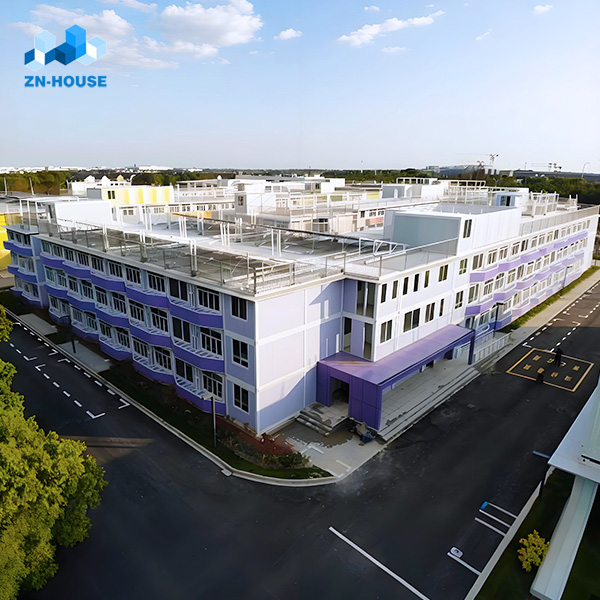
The rising demand for flat pack homes is not without reason. This modern construction methodology addresses several critical challenges faced by property developers, businesses, and individual homeowners alike.
- Speed and Efficiency: Traditional construction projects can be plagued by delays due to weather, labor shortages, and logistical complexities. Flat pack building, in contrast, involves the fabrication of building components in a controlled factory environment. This parallel process means site preparation and foundation work can occur simultaneously with manufacturing, slashing overall project timelines by more than half in many cases.
- Cost-Effectiveness: The streamlined manufacturing and assembly process inherent in flat pack building leads to significant cost savings. Reduced labor requirements on-site, minimized material waste through precision engineering, and lower financing costs due to shorter project durations all contribute to a more affordable building solution without compromising on quality.
- Reduced Environmental Impact: Sustainability is a core benefit. Factory production ensures precise material cutting, drastically reducing waste that would typically end up in a landfill. Furthermore, the ability to transport compact, flat-packed materials reduces the carbon footprint associated with logistics. Many manufacturers, including ZN House, also prioritize the use of recycled and eco-friendly materials in their designs.
The Engine of Innovation: Inside a Flat Pack Prefab House
To understand the durability and versatility of these structures, it is essential to look at their core components. A modern flat pack prefab house is a marvel of engineering designed for both performance and ease of assembly. For instance, the flat pack container house from ZN House is a type of expandable prefabricated building that exemplifies this innovation.
Its framework consists of a high-quality galvanized steel structure system, providing exceptional strength and resistance to the elements. The walls, roof, and floor are constructed using insulated sandwich panels, which can be filled with materials like EPS, rockwool, or glasswool to provide thermal and acoustic insulation tailored to any climate. A key feature of this system is its simplicity. The roof and floor of these prefab flat pack homes are completely finished before shipment. On-site, the process primarily involves assembling the structural frame and then inserting and securing the pre-fabricated panels. This “plug-and-play” approach makes construction accessible and remarkably fast.
Design Freedom and Scalability with Flat Pack Homes
One of the most persistent myths about prefabricated housing is that it offers limited design options. The reality is quite the opposite. Companies that specialize in custom solutions, like ZN House, have shattered this stereotype.
- Modular Flexibility: The standard 20ft container unit acts as a building block, offering immense creative freedom. A single unit can serve as a compact home, office, or studio. More commonly, multiple units can be combined horizontally to create spacious residences, multi-room offices, or commercial complexes.
- Vertical Potential: The structural integrity of the steel frame allows these modules to be stacked securely, enabling the construction of multi-story buildings up to three or four floors high. This is particularly valuable in urban areas where land is scarce and expensive.
- Customization for Any Need: Whether for a rural retreat, an urban infill project, a temporary sales office, or a permanent school building, the interior and exterior of these flat pack homes can be extensively customized. Clients can choose layouts, finishes, window placements, and plumbing configurations to meet their exact specifications, ensuring the final product is uniquely theirs.
FAQs about Flat Pack Prefab House Products
What is the typical lifespan of a flat pack homes structure?
When constructed with high-quality materials like galvanized steel and properly maintained, a flat pack home can have a lifespan comparable to that of a conventional building. The durable materials are designed to withstand various environmental conditions, ensuring long-term durability and performance.
Can a flat pack building be customized for specific commercial needs?
Absolutely. The modular nature of a flat pack building makes it exceptionally adaptable. We work collaboratively with clients across industries to create tailored solutions, whether it’s for a pop-up retail store, a multi-room site office, a medical clinic, or a hospitality suite. The interior layout, exterior cladding, and utility configurations can all be designed to meet specific operational requirements.
How long does it take to assemble a flat pack prefab house on-site?
The on-site assembly time is significantly faster than traditional construction. For a standard single-unit model, a small experienced crew can often complete the primary assembly in a matter of days. Larger, multi-unit projects will naturally take longer, but the process remains exponentially faster due to the pre-finished nature of the major components.
What insulation options are available for the walls and roof of flat pack homes?
Our sandwich panels can be insulated with different materials to suit various needs and climates. Standard options include Expanded Polystyrene (EPS) for good all-around insulation, rockwool for superior fire resistance and sound absorption, and glasswool for high thermal performance. We advise clients on the best option based on their location and intended use.
Is it possible to connect multiple flat pack homes units to create a larger space?
Yes, this is a fundamental feature of our design philosophy. Our container units are engineered to be easily connected both side-by-side and end-to-end. Special joining systems and removable wall panels allow for the creation of seamless, open-plan interiors from multiple modules, providing virtually limitless scalability for your project.
The ascent of flat pack homes is more than a passing trend; it is a logical and innovative response to the evolving demands of the 21st-century world. By offering a blend of speed, affordability, sustainability, and remarkable design flexibility, flat pack building techniques are democratizing access to quality housing and functional spaces. As evidenced by the nearly two-decade journey of companies like ZN House, from a specialist in Suzhou to a global provider, the commitment to quality and innovation in the flat pack prefab house sector is solid. This construction paradigm is poised to continue its growth, offering a practical, efficient, and modern solution for living and working in both our urban centers and rural landscapes.
Similar Posts

How Much Does a Container House Cost
One of the first questions prospective buyers ask when considering a container home is, how much…

The Ultimate Solution: Folding Container House for Sale
Are you searching for an innovative and cost-effective living space? Look no further! The folding container…
Flat Pack Homes Price Guide: Affordable Housing Solutions
The demand for cost-effective, sustainable housing has made flat pack homes for sale a popular choice worldwide. These flat…
Container Office Solutions for Modern Workspaces
The idea of a Container Office has moved far beyond temporary sheds or basic site cabins. Today,…
How to Build Container House
In the booming construction market, the demand for efficient and sustainable housing solutions has led to…
Smart Building with an Assemble House: Cost, Convenience, and Customization
In the fast-evolving world of construction, the demand for flexible, efficient, and cost-effective housing is reshaping…


