



Are Container Homes Fireproof? Everything You Need to Know
Container houses have been a good alternative to buy a new house recently. These have become more popular in the last few decades, mainly due to their modular design, easy construction and low price. I’m one of the few people who have expressed concern over their container homes, their safety if a fire. The questions: “Are container homes fireproof?” “Do they catch fire?” “Are they safe from fire?” are asked repeatedly. Although the truth is that shipping containers are made of steel, much more fire resistant than wood, is definitely an advantage, this does not necessarily mean a container will be fire proof. In fact, those considering purchasing a container home are interested in learning.
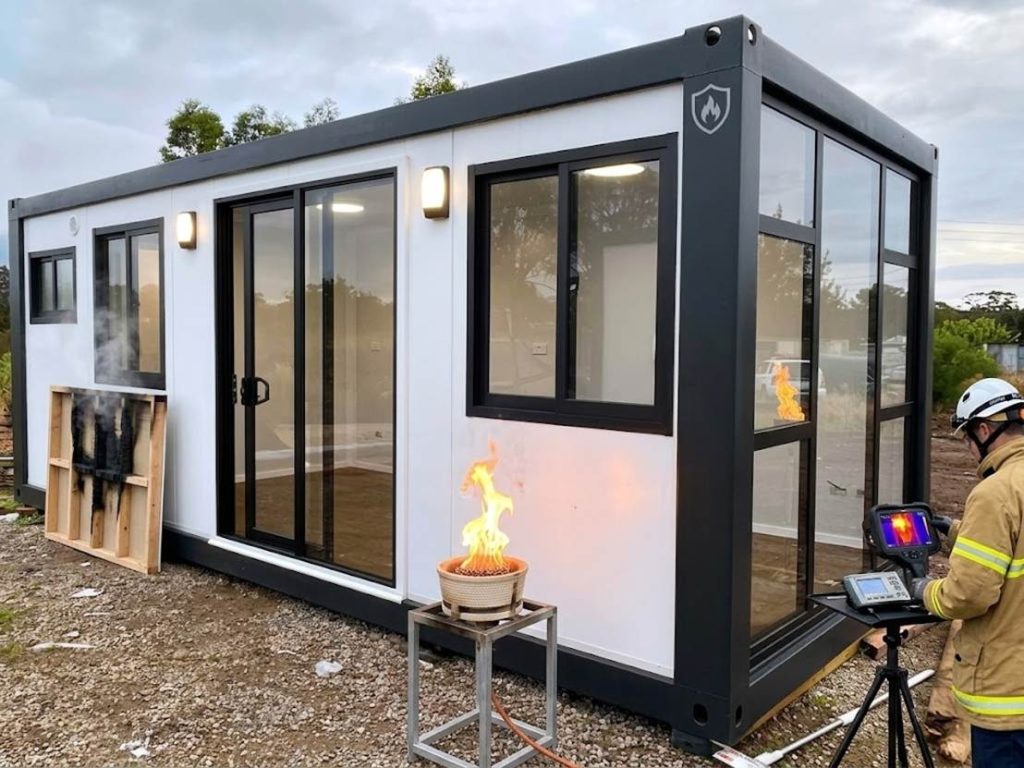
In this guide, we will explain the fire science of container homes, the main factors that affect their fire resistance, their comparison to traditional wooden houses, and how to identify an effective fireproof container house.
Are Container Homes Naturally Fireproof?
The short answer is that container homes are more fire-resistant than regular wooden structures but they are not “fireproof” or indestructible.
Steel Structures Have Strong Fire Resistance
The short answer is: Container homes are naturally more fire-resistant than traditional houses, and the reason is what they’re made of. Generally, as container homes constructed with non-combustible steel structures and fire-rated insulation materials, if designed according to local building codes and tested for fire resistance, can provide an adequate amount of fire resistance.
Most of the containers are consisted of Corten Steel (weathering steel) which has an extremely high melting point of around 1,370 o C and 2,500 o F. Steel, in comparison with wood, will not burn, not add fuel to a fire, or even give space for flames to propagate over its surface. This inherent non-combustibility is a strong point when comparing structural “shells” of container homes to stick-built homes.
Steel behaves very differently to wood in terms of fire response:
- Steel doesn’t catch fire. Then again, just like wood that can burn, steel won’t ignite or add a fire load to a fire.
- Steel’s melting point is very high – approximately 1,370°C (2,500F). A house fire usually gives off 600-900°C, so steel structure can stay without damage much longer than wooden frame one.
- Steel is incapable of transferring fire. When heated to very high temperatures, it still harms its own structure, but it is not able to help fire spread horizontally through a building the way fire is carried by burning wood frames.
Fireproof ≠ Completely Fire-Resistant
Here’s the honest answer: no building is 100% fireproof steel-made house alone is not the exception. Container home’s steel frame really gives it a huge advantage over wooden houses for fire resistance, but what makes a huge difference is the interior of the house.
Steel frame is really strong but a house is more than just its shell. To turn a container into a house, many parts are introduced which can impact fire safety:
- Interior Decoration: Flooring, cabinetry, and wall finishes.
- Insulation: The core material used to regulate temperature.
- Electrical Systems: Wiring and appliances.
- Furniture: Everyday household items.
The combination of these components largely determines the overall fire rating of a container home.
What Makes a Container Home Fireproof?
Modular building fire resistance is basically the raw power of the choices of the stuff and other design decisions made during manufacturing. At ZN House, we are always on the lookout for good quality materials so the safety levels are pushed to the maximum.
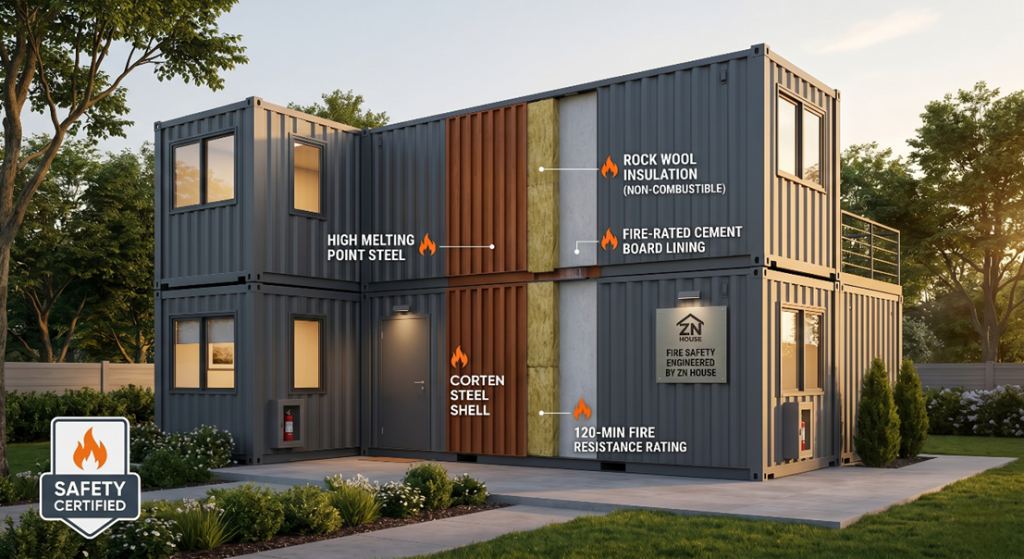
Fire-Resistant Insulation Materials
Without a doubt, insulation can be considered as the paramount aspect of a container home’s fire resistance. Incorrect insulation choices may even convert a metal-shelled building into a significant danger.
Recommended Options:
- Rock Wool: Non‑combustible to ~1,000°C, excellent thermal and acoustic performance; ZN House uses rock wool sandwich panels as standard.
- Mineral Wool: Similar to rock wool; ideal for fire compartmentalization.
- Fire‑rated PU Panels: Treated PU foam with strong thermal and fire performance.
- Cement Board: Non‑combustible cladding for added protection.
Insulation to Avoid:
- Standard EPS (Expanded Polystyrene) Foam Board: Produced highly flammable, toxic smoke.
- Unrated or Generic Foam Insulation: Can undermine an otherwise safe structure.
The core material preferred by ZN House is rock wool due to its fire resistance, thermal stability (from –35°C to +50°C) and sound insulation.
Fireproof Wall and Roof Systems
A well-designed container house integrates fire safety measures using a “system” approach. It involves:
Double Insulation Structures: These are protective layers arranged in such a way as to prevent the transfer of heat.
Fire-Rated Ceiling Systems: Their purpose is to restrict fire to a given zone.
Fire Resistance Tests: The European standard EN 13501 Part II specifies the fire resistance ratings of all Rock Wool materials. The method of testing the time and conditions that a wall or ceiling component will withstand a standardized fire are determined by the European standards EN 1363-1 or EN 1363-2 in conjunction with EN 1364 ff.
Fireproof Doors and Windows
Points of entry to a building or room are the most fire-prone points; even a steel wall may not be able to withstand the fire if the door is destroyed by fire.
Key Elements:
Fire-resistant Steel Doors: It’s a 30/60/90-minute door certification which means the door will withstand the fire and block off the heat and smoke for 30/60/90 minutes.
Fire‑resistant Glazing System: Regular glass will break easily, but fire-rated glass and window assemblies can last 30-60+ minutes.
Emergency Exit Design: Besides the layout having clearly marked doors that are capable of being opened without a key from inside, the exit doors should also open outwards, be unobstructed and compliant with egress standards.
Electrical Safety
One of the main reasons for house fires is improper electrical wiring. The process of making identical containers includes:
- Expert electrical work carried out inside galvanized conduits.
- Breaking the electrical circuit (circuit breakers) in case of short circuit and overload.
Fire proof wires to prevent fire from spreading.
Are Shipping Container Homes Safer Than Traditional Houses?
This is a question we are asked frequently and in nearly all cases the answer is yes. Here’s a direct comparison:
| Feature | Container Homes | Traditional Wooden Houses |
| Structural Material | Steel (Corten) | Wood frame |
| Fire Resistance | Higher — steel is non-combustible | Lower — wood burns readily |
| Heat Resistance | Excellent — steel melts at ~1,370°C | Moderate — wood chars at ~300°C |
| Flame Spread | Does not contribute fuel | Can accelerate fire spread |
| Structural Integrity Under Fire | Maintained longer | Compromised faster |
| Durability | 15–20+ years in harsh conditions | Highly variable by material quality |
The non-combustibility of steel structures is a tremendous advantage since they do not burn and do not supply fuel for the fire. This is mainly beneficial in high-risk environments like on construction sites, mining camps and on oil & gas projects.
Common Fire Risks and How to Improve Safety
There are also risks with a steel frame. The first step in prevention is to identify them. Here are the most common fire risks in container homes:
Poor Insulation Materials
As outlined previously, expansive EPS foam is the most common source of fire for all container homes. Additionally, once ignited they burn very fast, and make a great deal of toxic fumes. Always check the fire rating of the insulation before installing.
Unsafe Electrical Systems
Any DIY electrical work, undersized wiring, or cheap components can produce short circuits and arc faults that cause ignition of the combustibles. Avoid the use of non-rated electrical components, and ensure all wiring is checked by a registered electrician before occupation.
Kitchen Fire Risks
Many house fires originate in the kitchen as it is the most likely room to be in use. Container homes tend to be small so that the heat sources created during cooking are close to the fragile cabinetry and walls. This risk is minimized through the use of non-combustible splashbacks, fire-rated cabinetry, and installation of a correctly vented range hood with grease filters.
Overheating Equipment
Heat appliances, such as space heaters, industrial power tools, rechargeable batteries, and others that generate heat can spark combustible material in their vicinity if left alone or incorrectly placed. Maintain the proper clearance distances from the equipment to combustible surface; never leave heat equipment operating unattended.
Lack of Ventilation
Poor ventilation can result in a build-up of heat which could lead to high temperatures in the home, increase demand on electrical systems and create an environment that could allow fire to spread. Make sure you have an appropriate container home heating, ventilation and cooling (HVAC) and passive ventilation for your climate and occupancy.
How to Improve Fire Safety in Container Homes
If you are building a new container home or improving an existing one, you can greatly improve fire safety by taking these measures:
Use Fire-Rated Insulation
For any standard EPS foam, substitute mineral wool, rock wool, or fire-rated PU panels. This single upgrade gives the greatest single improvement to all aspects of fire performance. ZN House recommends rock wool sandwich panels for all permanent uses for residential and commercial.
Install Smoke Detectors
Several interconnected smoke alarms in each room e. g. sleeping areas kitchens corridors etc. Ensure that they are tested once a month, check the batteries and change every year. For remote and industrial container camp, a fire alarm system with a networked central monitoring system is recommended.
Add Fire Suppression Systems
In high-risk situations including industrial buildings, catering establishments or buildings with high occupant levels, a fire suppression system (sprinklers, or other gas-based suppression method) offers an active safeguard, and will really limit the level of fire damage and injuries. Several legal jurisdictions mandate suppression technology for multi-unit residential container developments.
Use Fireproof Interior Materials
Fire-rated (Type X) gypsum board, non-combustible flooring material, and fire-retardant-treated wood should be identified for all interior spaces contained by them. Fireproof coating (intumescent paint) may be coated to the visible (exposed) portion of the structural steel element to enhance the fire performance rating.
[Note: Fire resistance ratings apply to tested assemblies, not individual materials in isolation.]
Regular Electrical Inspection
Set a date for an electrician to carry out a professional inspection annually if for home use, or more regularly if used more often, for commercial or industrial use. Check that there are no visual signs that a plug or distribution board are burnt or wet.
Are Container Homes Suitable for Extreme Environments?
Definitely and this is actually one of the biggest advantages of the container home concept.
ZN House has supplied container homes and camp products to over 50 countries, even a good number of which work in harsh environments where fire safety, weather-resistance and endurance are simply a must.
Container homes are proven in:
- Construction Camps: Temporary worker accommodation on active construction sites, where fire risk from equipment and fuel is elevated
- Mining Camps: Remote housing for mining personnel in areas with limited emergency services response
- Oil & Gas Projects: Accommodation and office modules for offshore platforms and remote processing facilities
- Disaster Relief: Rapidly deployable emergency shelter to withstand post-disaster conditions.
- Desert and Cold Regions: Container homes can be used at temperatures between -35°C and +50°C with proper insulation.
With all of these applications steel-frame construction combined with fireproof insulation and professional assembly gives you a structure that is:
- Fireproof: Fire-rated panel systems with non-combustible steel core
- Windproof: Heavy duty steel frame to withstand high wind loads
- Moisture-proof: Factory applied protective coatings and sealed panel joints prevent water entry
- Weather-resistant: Corten steel develops a natural protective patina that resists corrosion, without the need for painting.
Best Fireproof Materials for Container Homes
The secret to a fireproof container home is the right materials. Use this table as a reference guide for quickly:
| Material | Fire Resistance | Insulation Performance | Recommendation |
| Rock Wool | Excellent (non-combustible to ~1,000°C) | Excellent | Best overall choice |
| Mineral Wool | Excellent (non-combustible) | Good | Strong alternative to rock wool |
| Fire-Rated PU Panels | Good (flame-retardant treated) | Excellent | Best where thermal performance is priority |
| Cement Board | Excellent (non-combustible) | Low | Best as external cladding or wet area finish |
| Standard EPS Foam | Low (highly flammable) | Moderate | Not recommended for fire-sensitive applications |
| Gypsum Board (Type X) | Very Good | Low | Excellent for interior walls and ceilings |
Are Container Homes Approved by Fire Safety Standards?
Yes. Container homes are capable of surpassing many of the fire safety standards found in international building codes, provided they are built and designed correctly. Here are a few points to keep in mind:
International Certifications:
The relevant key certifications for fire safety and structural performance are:
- ISO 9001: Quality management system for uniform manufacturing standards (ISO 9001 certifies our manufacturing quality management system, ensuring consistent production standards).
- CE Marking: Conformity with European safety, health, and environmental protection standards (CE Marking confirms conformity with applicable EU directives for market access).
- COC (Certificate of Conformity): Product compliance documentation required by many project specifications and import regulations.
Building Code Compliance:
Container home building code requirements vary by country and jurisdiction but generally include:
- Fire resistance ratings for walls, roofs, and floors (often expressed as 30, 60, 90, or 120 minutes)
- Egress requirements — minimum door widths, emergency exit quantities, and clear distances
- Sprinkler and alarm requirements — mandated above certain occupancy thresholds
- Electrical installation standards — minimum wiring specifications, earthing requirements, and RCD protection.
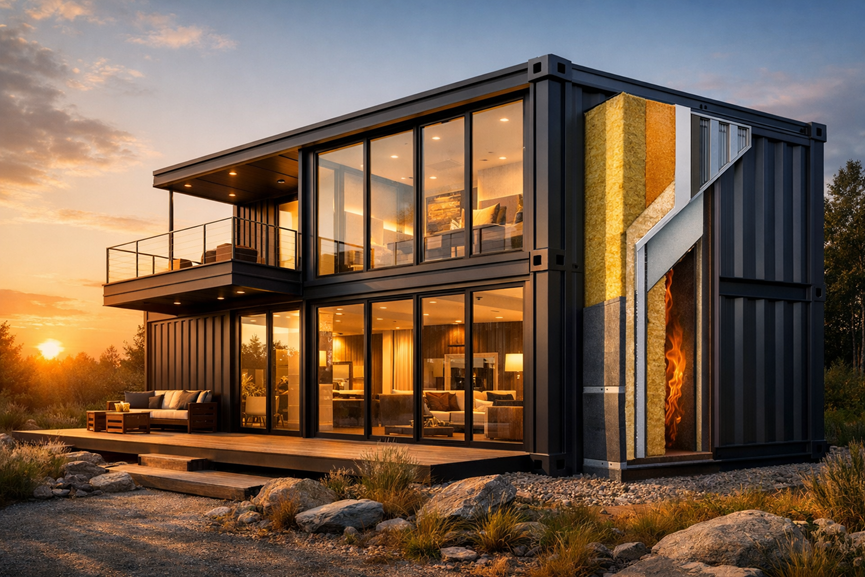
Pros and Cons of Fireproof Container Homes
Advantages
- Inherently Higher Fire Resistance: Steel is non-combustible, giving container homes a structural fire safety advantage over wood-frame construction from the beginning.
- Greater Durability: Steel frame buildings withstand not only fire, but wind, seismic and impact damage.
- Ideal for industrial and High-risk Environments: Container homes are the preferred construction, mining, oil & gas and military applications with a fireproof structure and modular design coming together.
- Modular and Scalable: Fire safety systems, insulation and structural upgrades can be factory-installed and repeated on multiple units for large camp projects.
- Certifiable: In contrast to a lot of ad-hoc or DIY approaches to construction, fire performance can be tested and certified to international standards.
Disadvantages
- Steel Conducts Heat: Steel, although not combustible, is a conductor of heat and, without sufficient insulation, heat from a fire can pass through the structure more easily than through a masonry wall.
- Requires Professional Insulation Specification: The fire safety of a container home is only as good as its insulation. Utilizing the wrong material or positioning it inappropriately can compromise the steel structure’s innate benefits.
- Professional Construction is Essential: Another matter of contention is whether an accomplished DIY builder could pull it off for each of these building types. Having been burned before, for fire-proof container home construction to have approved insulation, electrical and fire door work it has to be done by professionals.
Conclusion
In all seriousness, container houses are much more fire resistant than a traditional house built of (mostly) wood. Their Corten steel structures are non-combustible, structurally stronger than a normal blaze, and are capable of withstanding temperature much higher than a blaze in a house. And that’s a seriously good thing. Selecting that manufacturer will be the most critical purchasing decision you will make.
An international manufacturing company with certifications, documented fire testing, and real-world experience in harsh conditions (construction, mining, disaster response) assures you that your container home will not simply be labelled as fireproof, but built to be. Across over 50 countries, we have completed well over 2500 projects designing and building container homes and modular buildings of all types.
Many have been in the most fire-prone environments on the planet. Every one of our container homes features rock wool sandwich panels by default, factory-built electricals (designed to all internationally accepted standards) and fire-rated window and door systems because we feel safety should not be optional.
Ready to build a fireproof container home that’s engineered to last?
Contact ZN House today for a free consultation and tailored fireproof container home solution.
Explore our Container Home solutions to see our full product range and global project portfolio.
Frequently Asked Questions (FAQs)
Are shipping containers completely fireproof?
The steel shell of the building is non-combustible, but the contents of the interior and the insulation have to be designed with fire-rated materials to be fire-resistant.
What insulation is best for fireproof container homes?
Rock wool is the gold standard for fire safety; it is non-combustible and provides great thermal barriers.
Can container homes pass fire safety regulations?
Yes. When built to standard, container homes often meet and exceed local building codes for fire safety.
Are container homes safer than wooden houses in a fire?
Most generally, yes. Steel is classed as non-combustible and will not supply fuel to a fire. Wood is combustible and, if present, will help a fire spread. The steel frame of a container home will probably retain its strength for longer if a fire occurs.
How long can a container home resist fire?
Professional fire-rated sandwich panels are normally rated for 1.5 to 2 hours fire resistance in such units.
Is rock wool insulation fireproof?
Yes. Rock wool is a great fire-resistant material and, therefore, great for container home insulation.
Disclaimer: All of the fire resistance values indicated in this section are based on full-scale tests conducted under strictly defined conditions in the laboratory. Actual performance will differ due to site conditions, use of the project, and applicable codes. Consult with a fire protection engineer for specific project compliance.
Similar Posts

How to Choose the Best Container Camp for Your Outdoor Adventure
Container camps have changed outdoor experiences in many ways, allowing people to shift from tent camping…
Demountable Buildings vs. Permanent Modular Construction: What’s the Difference?
Demountable and permanent modular constructions are the same in the sense that they use prefab methods….
Modern Prefab House Guide: Designs & Building Process
Why Modern Prefab Houses are Revolutionizing Modern Living? The global container home market is growing at 6.5%…
The Versatility of Shipping Container Houses
Have you ever considered transforming a simple shipping container into a stylish and comfortable living space?…

Shipping Container Houses: Affordable, Modern, and Sustainable Living
In the face of rising real estate prices and increasing environmental concerns, more people are turning…
Shipping Container Houses
Are you looking for an innovative and sustainable housing solution? Shipping container houses are taking the…


