



What Size Shipping Container Is Best for a House?
Due to their durability, affordability, rapid construction time and variety of customization options, shipping containers have transitioned from an architect’s creative outlet to a popular trend in residential construction, which begs the question: What size shipping container is ideal for with being similar in size and style. While square footage is one of the factors that many of us consider when determining what type of container to use, there are many other factors that need to be taken into consideration. The size of the shipping containers directly ties into not only price but also how large you are going to be able to create your floorplan, how easy/expensive it is to transport, and most importantly, how comfortable day-to-day life is within that container.
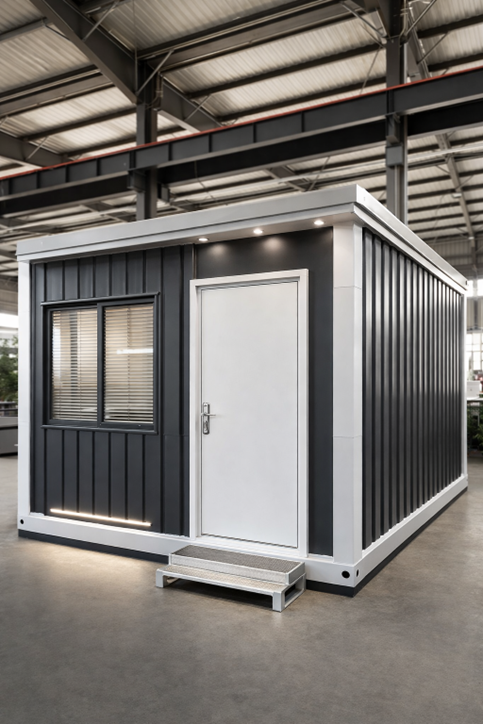
Depending on whether or not you chose a well-sized container, you may be too cramped or overspend on the size you want due to an ill-conceived strategy.
This article provides you everything needed to know about different shipping container sizes, ranging from single 10ft containers all the way up through multiple contiguous containers to (modular) designs based upon 20ft versus 40ft containers and their respective sizes, with an explanation as to why using a High Cube container is often the best choice, as well as whether or not it’s easier or more difficult than using a traditional home for your living arrangements.
Understanding Standard Shipping Container Sizes
To help you compare container options, it’s best to first familiarize yourself with the actual dimensions of the standard shipping containers – both on the outside and inside, keeping in mind that the two-dimensional measurements will differ from one another. This is due to factors such as wall thickness, insulation, flooring and ceiling finish taking up a portion of your usable area.
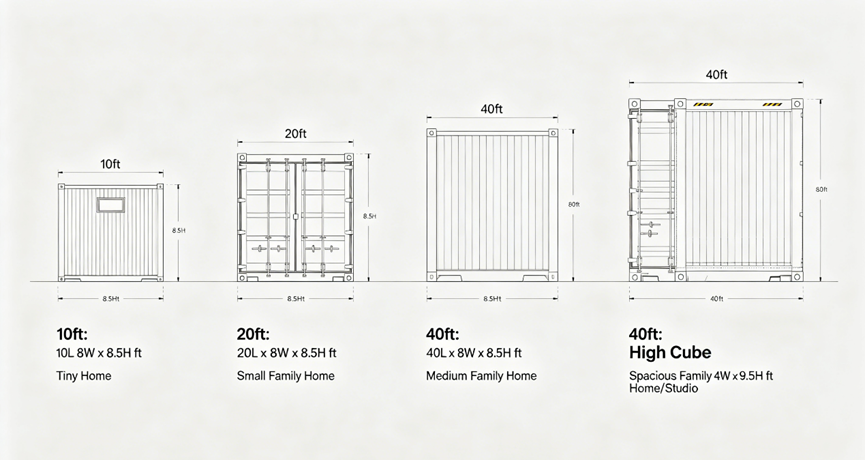
The following is what you can expect for the four primary types of containers generally used in the construction of residential structures.
10ft Shipping Container
The 10ft container is genuinely useful for:
- Small site offices or security guard booths
- Storage rooms and utility enclosures
- Kiosks, pop-up retail, or ticketing booths
- Workshops or compact tool sheds
20ft Shipping Container
The 20ft container is the most manufactured ISO container type in the world, meaning they are easy to purchase and very economical. Outside dimensions are approximated at 20ft × 8ft × 8.5 ft with a total living area of approximately 160 square feet after wall thickness is considered.
The 20ft container is a solid choice for:
- Tiny homes and minimalist residences
- Single-person living or couple’s retreats
- Vacation cabins or weekend getaway units
- Remote site offices or field accommodation
- Starter homes on a tight budget
40ft Shipping Container
Containing twice as much floor space as the 20ft model, a 40ft shipping container provides approximately 320 square feet (sq ft) of usable interior area as well as having exterior dimensions of approximately 40 ft by 8 ft by 8.5 ft (.3 m) (standard 8-foot ceiling). This size of container is also the beginning of what most people can live in and be comfortable in their home.
At 320 sq ft, you have enough room for:
- A proper kitchen and dining area
- A full bathroom
- One or two bedrooms or a bedroom plus flex space
- A living/lounge area
The 40ft container is the go-to choice for:
- Family homes (couples, small families)
- Airbnb or short-term rental units
- Modular apartment projects
- Multi-room layouts with distinct functional zones
High Cube Containers
The High Cube containers measure the same for the height, length and width as the regular containers do, but they are taller for almost another foot. For instance, a High Cube container will measure around 9.5 ‘ compared to 8.5′ for the same standard container. The interior ceilings of the containers will also be increased in height from around 7.7′ to 8.7’ after the interior finishes are installed.
Here’s why High Cube containers are the preferred option for residential use:
- More comfortable ceiling height that eliminates the “box” feeling common in standard containers;
- Better space for insulation systems — thicker ceiling insulation can be installed without sacrificing headroom;
- Improved ventilation options, including higher-mounted windows, ceiling fans, and recessed lighting;
- Enhanced premium feel for higher-end residential and hospitality applications;
- More natural light penetration when taller windows or clerestory glazing is used.
Container Size Comparison Table
| Container Type | Approx. Exterior Size | Approx. Living Space | Best For |
| 10ft Standard | 10ft × 8ft × 8.5ft | ~80 sq ft | Storage/kiosk / guard booth |
| 20ft Standard | 20ft × 8ft × 8.5ft | ~160 sq ft | Tiny homes / solo living |
| 40ft Standard | 40ft × 8ft × 8.5ft | ~320 sq ft | Family homes / Airbnb |
| 40ft High Cube | 40ft × 8ft × 9.5ft | ~320 sq ft + extra height | Best all-round residential option |
What Size Shipping Container Is Best for Different Housing Needs?
Understanding the size of containers is only half the equation; finding the appropriate container to match your unique lifestyle needs (floor space, price) and the type/size of the project you wish to do is where most of the difficult decisions lie (making sure you have all of the necessary tools).
Best Size for Tiny Homes
Recommended: 20ft Container
Due to their practical size, 20-foot shipping containers are well-suited for the tiny house movement. The minimalist living principles of reducing your environmental impact, lowering your expenses, and having a mobile and flexible lifestyle are in line with this type of structure.
Key reasons the 20ft works for tiny living:
- Lower upfront cost — both for the container itself and the buildout
- Simpler lifestyle — less space means less to furnish, clean, and maintain
- High mobility — a 20ft unit is easier to transport, reposition, or relocate
- Faster construction — fewer square feet means a faster turnaround from order to move-in
Best Size for Family Living
Recommended: 40ft High Cube Container
A 40ft High Cube is ideal for those still living as couples, small families or those simply unwilling to sacrifice comfort for being environmentally friendly. The extra foot means there will be ample space to include a fully functioning kitchen, a decent-sized bathroom, separate sleeping areas and a real seating and living area.
When it comes to family use (especially if there are multiple people living in the same unit), the additional ceiling height of the High Cube variant is very beneficial, making the overall space feel much larger and allowing you to enjoy it at a more leisurely pace. Best Size for Airbnb or Rental Projects
Best Size for Airbnb or Rental Projects
Recommended: 40ft Container (or Multi-Container Layout)
Because of their affordability and high potential returns on investment (ROI), lots of people are interested in using shipping containers as a type of short-term lodging through sites like Airbnb. Whether you’re looking for a unique place to stay or you love the look of industrial designs that work well for photography purposes, shipping containers will suit both needs perfectly. When considering what kind of accommodations can be made from 40′ containers, guests will have the flexibility to create creative interiors with the necessary amenities (e.g., kitchen, bath, etc.) to accommodate guests at a premium nightly rate compared to hotels/motels. Furthermore, operators can create larger lodging arrangements that combine several containers into one larger lodging unit (2 or 3 container combinations side by side or in an L-shape).
Best Size for Expandable Container Houses
Recommended: Expandable Container House
Expandable container homes differ in every aspect from what standard ISO shipping containers are classified as. A 20′ shipping container has 160 sq ft of usable floor space, whereas an expandable 20′ container home can expand to provide at least double the amount of usable interior space, with most models providing 300 sq ft or more of usable living space after the side panel expands. If you have limited living space available to you on land with no access for typical delivery vehicles and high costs associated with having the expandable container delivered due to your geographic location or delivery method, this product category is an ideal solution:
- Temporary housing projects and rapid-deployment accommodation
- Worker dormitories on remote construction or resource sites
- Resort cabins that need to look and feel spacious while remaining cost-efficient to ship
- Emergency housing where fast deployment and livable space are both priorities
20ft vs 40ft Shipping Container House: Which Is Right for You?
The most common size decision when determining how many containers to build for your container home is determined by a multitude of variables, including your finances, family size, form of living (i.e., traditional or alternative), and how you expect to utilize this space.
| Feature | 20ft Container House | 40ft Container House |
| Living Space | ~160 sq ft | ~320 sq ft |
| Cost | Lower | Higher |
| Transportation | Easier and cheaper | More complex, higher cost |
| Layout Flexibility | Limited | Significantly better |
| Suitable For | 1 person/couple | 2–4 people/family |
| Bathroom + Kitchen | Compact combined layouts | Full separate rooms possible |
| Best Use | Tiny homes, cabins, offices | Primary residence, rental, Airbnb |
Choose a 20ft if: You are building a vacation cabin, remote office, starter home, personal retreat and are comfortable with a reduced square footage for your project, want to keep costs down and have fewer logistical issues to deal with.
Choose a 40ft if: You prefer to use your space as a home for more than just sleeping and eating. This is especially true if you have a family or need to host guests often, and want the same kind of separation in your kitchen, bathroom and bedrooms as an actual room, rather than small, limited-use spaces.
Choose a 40ft High Cube if: Everything in the 40ft column above applies, and you want the added comfort, better insulation performance, and more premium living experience that comes with the extra ceiling height. For most residential projects, this is the top recommendation.
Should You Choose a High Cube Container for a House?
Almost always, the answer is yes, and there are important implications that most buyers have not realized.
Most standard shipping containers are 8.5′ tall on the exterior, but once you add the height of an insulated wood frame (which you would use to insulate) and the height of the finished ceiling (also dependent on insulation requirements), you may find your finished ceiling in a standard shipping container to be as low as 7.5′. That is lower than most ordinary homes and many people find that very oppressive after being in it for an extended period.
With high cube containers, the exterior height is 9.5′. So, after performing the same calculation, you will find that the finished interior height is approximately 8.5-8.7′, which is a comfortable height for living (in comparison to standard residential construction).
Single Container vs Multi-Container Homes
Only one option is available to you for any particular unit. Container building has one of the biggest benefits of allowing for developing large and/or complex structures, using various shipping containers, by combining multiple containers combined together to form a total of several containers in total.
Single Container Homes
Single-container homes epitomize the ultimate expression of container living: affordable, quickly constructed, simple to maintain, and effortless to move.
They work best when:
- Budget is the primary constraint
- The occupant is comfortable with compact living
- The location is temporary or frequently changing
- The use case is a cabin, office, or supplementary dwelling rather than a full-time primary residence
Multi-Container Homes
Combining multiple containers provides a significantly increased variety of architectural design opportunities when more space is required. When multiple containers are combined, together provides considerably more architectural design options when additional space is needed.
Common multi-container configurations include:
- 2-container side-by-side for a wider living area, effectively doubling the floor width to create a 16ft-wide footprint
- L-shaped or U-shaped layouts that create private outdoor courtyards
- Stacked two-story structures that maximize the building footprint on small or narrow lots
- Mixed-use combinations — for example, a 40ft living unit plus a 20ft studio, office, or garage
- Modular villas combining 4–6 containers into a full-scale family home with multiple bedrooms, open-plan living, and dedicated utility areas
Expandable Container Homes
Expandable container houses should have their own distinct category as they fundamentally change the way we can create more space-efficient living possibilities than when stacking multiple standard containers.
A single expandable container arrives at its destination compacted into a single shipping container and can be delivered and installed using conventional flatbed or container shipping methods. Once it’s on the site, the walls extend outward, opening up the entire inside of the unit to give you close to twice the floor space of a standard container with the same outside length.
The combination of transportation efficiency and ample interior space makes expandable container homes the most practical solution for:
- Expandable and foldable container houses for residential use
- Prefab modular homes for resort, glamping, or remote accommodation projects
- Worker accommodation camps where dozens of units need to be deployed, used, and potentially relocated
- Emergency or temporary housing where both speed of deployment and livability are non-negotiable
Important Factors Before Choosing a Container Size
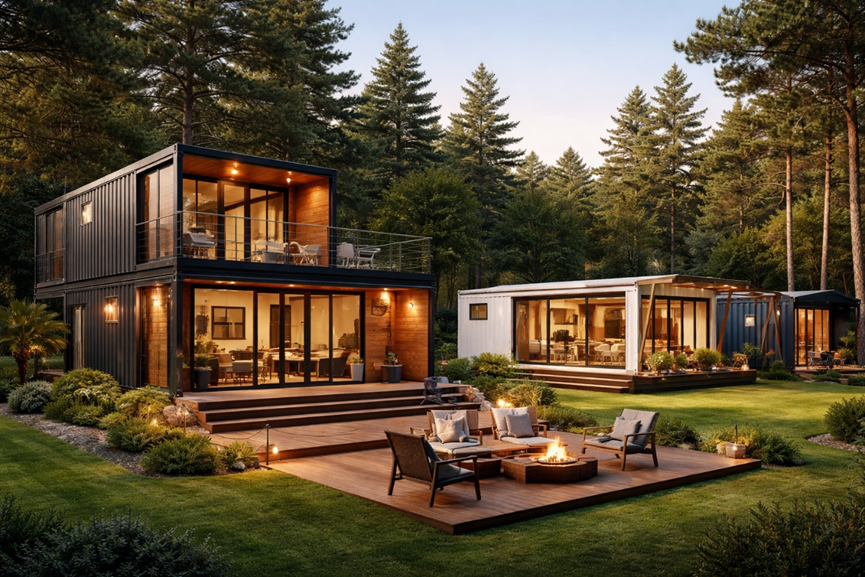
In the decision, size is not the only factor. Here are five things to consider before you sign on the dotted line for a container home specification:
Local Building Regulations
All container houses must comply with local zoning and building codes as they pertain to each country’s zoning regulations, state zoning regulations, and municipal zoning regulations. Additionally, some jurisdictions have specific zoning requirements such as minimum square footage for a habitable area, minimums for setback requirements, or land uses allowed on a site for non-traditional housing structures; it is therefore very important to verify that you meet the applicable local requirements or zoning laws before ordering the unit(s). This is especially true if the unit(s) are intended for use by a permanent residential occupant.
Transportation Restrictions
ISO 20′ and 40′ (standard) containers are built for road and rail, but you will want to look into locally available infrastructure. Check road widths, the weight of bridges, overhead clearances, and the access route to your delivery site. Specialized transport planning will be necessary for remote (mountainous or island) locations. Expandable container homes are at an advantage in this regard because one expandable container will deliver much more space over each, than would be a standard container if delivered in multiple loads.
Foundation Requirements
Container homes mandate a level and secure base. The choices of base type include concrete slab bases, pier bases, steel frame units, and screw pile bases. Each choice depends upon several factors, including your soil conditions at your building site, how deep the frost line runs in the area where you are constructing the home, and whether you want your home to remain at a specific site or if you want it to be relocatable. If you are interested in building a large, multi-container structure (e.g., a 40-foot container), you will need a more complex foundation than if you were building a single 20-foot container.
Insulation & Climate
The type of climate you live in will greatly influence the choice of container size and interior specifications. If you live in a hot climate, you will have better air circulation with a High Cube design and a thicker layer of insulation in your ceiling. If you live in a cold climate, you will need to build up the thickness of your exterior and roof insulation, which also necessitates using a High Cube due to the additional ceiling height.
Future Expansion Plans
When selecting a container, keep in mind that size isn’t the only consideration, but its ability to be used over the long term. If there may be any chance you will need additional room in the future (a new addition to the family, a home office, or a guest suite), you should plan for this now. ZN House designs its modular container systems so they are ready for any future adjustment needs. An original 20ft starter container can easily be attached to another container at a later date, thanks to structural connection points already designed at the time of construction.
Recommended Container Sizes by Application
| Application | Recommended Size | Notes |
| Tiny Home | 20ft | Budget-conscious, solo or couple living |
| Family House | 40ft High Cube | Best comfort and layout flexibility |
| Airbnb / Short-Term Rental | 40ft | Premium finish, strong ROI |
| Site Office | 20ft | Efficient, transportable, quick to deploy |
| Worker Dormitory | Multi-container | Scalable capacity, modular layout |
| Resort Cabin | Expandable container | Space-efficient shipping, premium feel |
| Emergency Housing | Foldable/expandable container | Fast deployment, livable interior |
| Vacation Cabin | 20ft or 40ft HC | Depends on guest count and amenity level |
| Multi-Room Villa | Multi-container | Custom layout, 3+ bedroom configurations |
Why Expandable Container Houses Are Becoming More Popular
Container houses that are expandable in nature have quickly become very popularly preferred as they allow for larger living spaces while significantly improving the transportation efficiency of transporting them from the supplier to where the home will be located. When shipped, expandable containers are a very compact unit. Once they arrive at their destination, they provide much wider and more usable space due to having expanded from their original single container form and needing only one container instead of several separate containers.
Some other significant benefits would be:
- After the expandable container has been expanded, there will be a significantly larger enclosed usable living space as opposed to a regular single container.
- Very high transportation efficiency, due to being very compact and only having one shipping module.
- Very fast installation, often within one to two days.
- More suitable for long-term living as opposed to using a container conversion for a home.
Expandable containers can be found in today’s market in many forms, such as part of modern prefabricated homes, modular living options, and in many projects developed around sources of worker or resort accommodations. The ZN House series of expandable containers was built with these modern uses in mind and with an overall focus on comfort and flexibility while maintaining a high degree of speed to install.
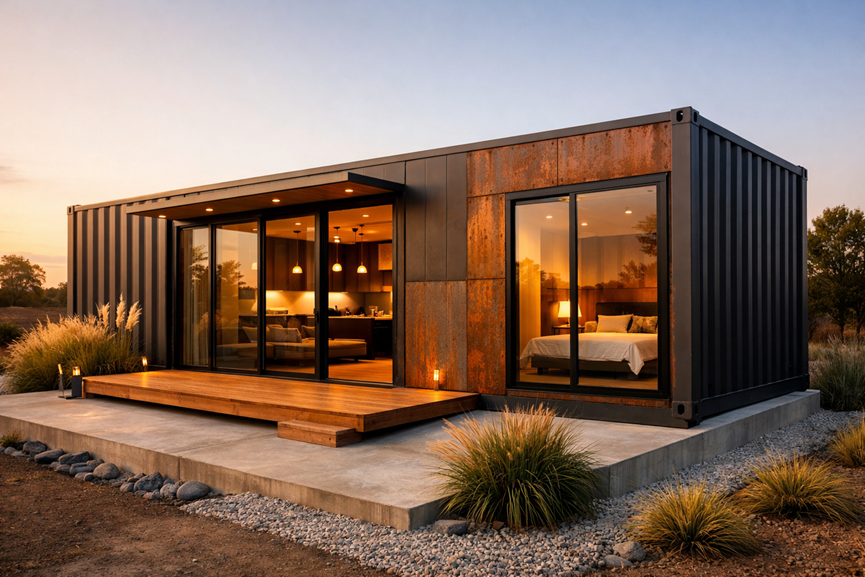
Conclusion: Choosing the Right Shipping Container House Size
The dimensions of container homes depend on how you want to use your space in relation to your lifestyle – not simply the largest container you can buy.
Here’s a helpful overview of what you can expect based on your preferences:
20-foot containers will work best for individuals, couples, or anyone who wants to live an extremely minimal lifestyle. They are also the cheapest to transport relative to the amount of space you’ll have to use them for. A 20-foot container provides enough living space for an easy, thoughtful lifestyle with no extra need for large rooms.
40-foot containers are the practical option for families and others who want a fully functional, residential home (rooms, kitchen, bathroom). They also offer sufficient room to move around during daily existence, which ultimately increases the quality of your life.
High Cube containers are usually the more comfortable option when compared to normal-height containers. Higher ceilings and better insulation, ventilation, etc., all have a positive effect on the quality of life of the occupants of that house, most substantially noticeable by an occupant.
Expandable container houses are probably the most versatile and space-efficient method for eco-friendly building available today. As a result, expandable container houses have lower transportation costs. As a result, expandable container houses can be assembled in less time than conventional residential building construction.
Modern Expandable Container Homes – This represents the 4th level of the evolution of Modern Modular Homes, due to the fact that it combines Moderate Shipping Costs with expansive, beautiful, and practical layouts of a single-family home.
Frequently Asked Questions (FAQs)
What is the most popular shipping container size for homes?
The 40ft High Cube container is one of the most popular options as it offers improved interior comfort and layout flexibility for residential living.
Is a 20ft container enough for living?
Yes. One person can fit inside a 20ft container with a small kitchen, bathroom and sleeping area. It’s perfect for tiny homes and vacation cabins.
How many bedrooms fit in a 40ft container house?
Typically, 1-2 bedrooms can be accommodated in a 40ft container house, depending on the design and if multiple containers are combined together.
Are high cube containers better for homes?
Yes. High Cube containers offer additional ceiling height, improved insulation performance and a more comfortable living environment.
Can multiple shipping containers be combined into one house?
Yes. Several containers can be combined to make bigger modular homes, villas, offices or multi-story residential buildings.
What is the difference between expandable container homes and standard container homes?
Standard shipping containers are of fixed dimensions, but expandable container homes can be unfolded or expanded on-site to produce greatly increased interior space.
ZN House is a professional container home and prefab housing manufacturer based in Suzhou, China, with export experience in over 50 countries. Learn more about our shipping container house products or contact our team for a free consultation.
Similar Posts
What Is a Modular Classroom? Benefits, Costs & Modern School Building Solutions
Today, more pressure is placed on the schools than at any other time. Crowded classrooms, overcrowded…

Insulated Folding Container House Designs
In an era where flexibility, sustainability, and efficiency define modern living and working spaces, insulated folding…
Buying Container Houses from China: Factory vs Trader, QA & Incoterms
Why source from China (and what you can actually buy) Container Houses from China are becoming…
The Future of Living with Folding Container Houses
In today’s rapidly evolving world, the quest for innovative and efficient housing solutions is more critical…

What Is a Container Camp? The Complete Guide to Modular Workforce Accommodation
All major construction sites share one relentless challenge: Where are workers supposed to sleep while they…

Folding Container House Structural Integrity Testing
The global demand for versatile, rapidly deployable, and robust housing solutions has surged, driven by needs…


