



Where to Buy a Container House in the Philippines? Cost, Benefits & Complete Buying Guide
If you want to buy a container home in the Philippines but aren’t sure how to get started, you are not alone. Container homes are popping up all over the country, from the beach to mountains to job sites and residential neighbourhoods, and they are in high demand!
This guide answers the three questions Filipinos and foreign investors ask most:
- Where can I buy a container house in the Philippines?
- How much does a container house cost in the Philippines?
- Are container houses actually suitable for the Philippine climate?
By the time you finish this article, you will have the full picture, from types and pricing to the best supplier options and what to watch out for before you buy.
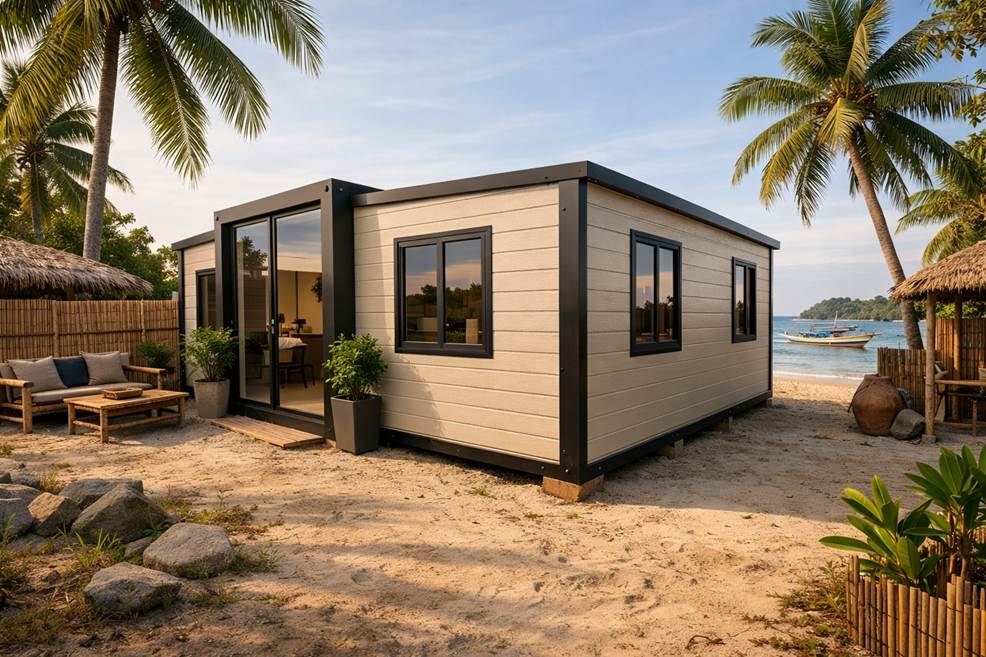
What Is a Container House?
Container House Definition
A container house is a prefabricated building made from shipping containers or modular steel frames. Compared to conventional construction performed on location, container homes are manufactured in a factory, transported to their destination, and can be rapidly built with very little work required at the construction site.
They are used across a wide range of applications:
Residential housing — from compact single units to multi-room family homes
Resort cabins and beachfront villas — popular in tourism-heavy destinations
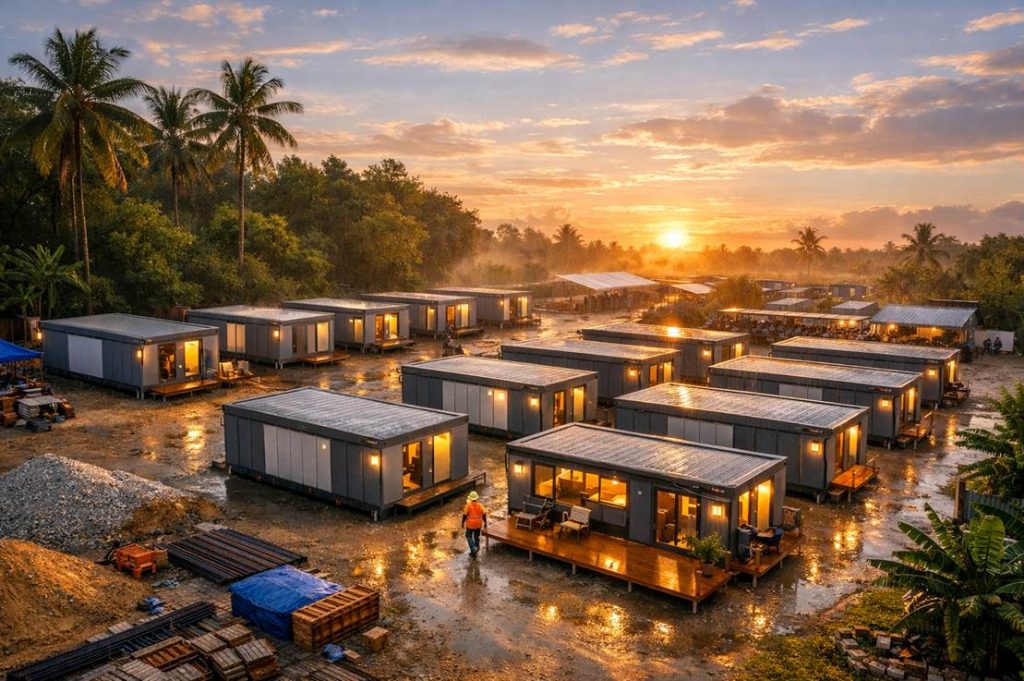
Worker dormitories and construction camps — fast to deploy and cost-efficient
Offices and commercial spaces — modular, expandable, and relocatable
Cafés, pop-up shops, and restaurants — thanks to their eye-catching industrial aesthetic
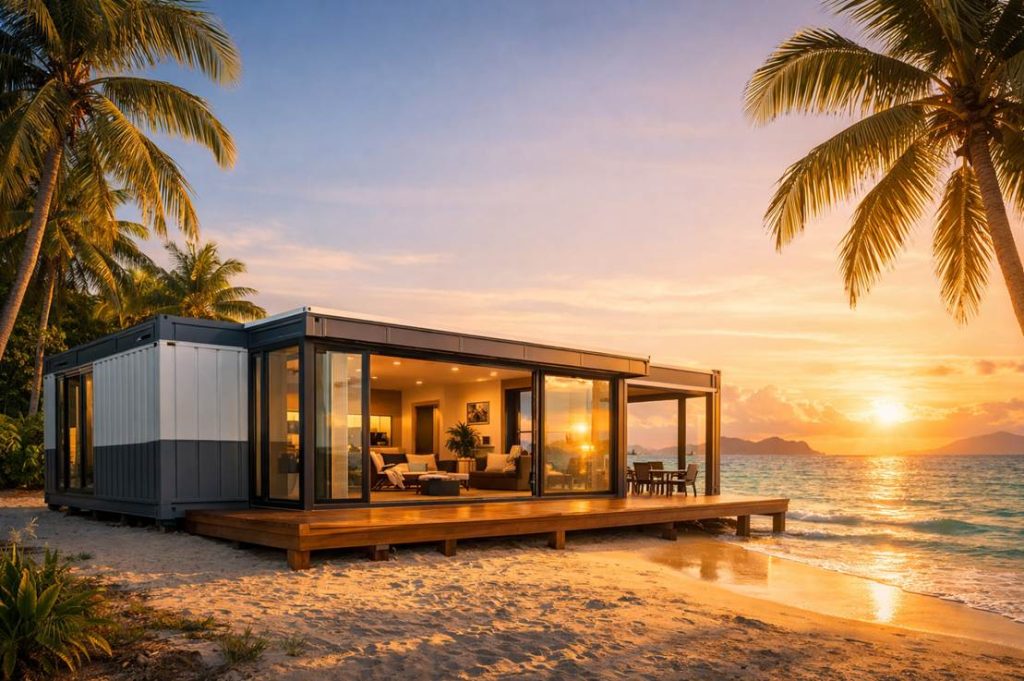
Types of Container Houses in the Philippines
In the Philippines, there are various types of container homes. Below is an overview of the four primary categories.
Standard Shipping Container Home: Constructed using either a 20 or 40-foot shipping container. These containers are sturdy enough to endure a punch; therefore, they are used for basic temporary housing.
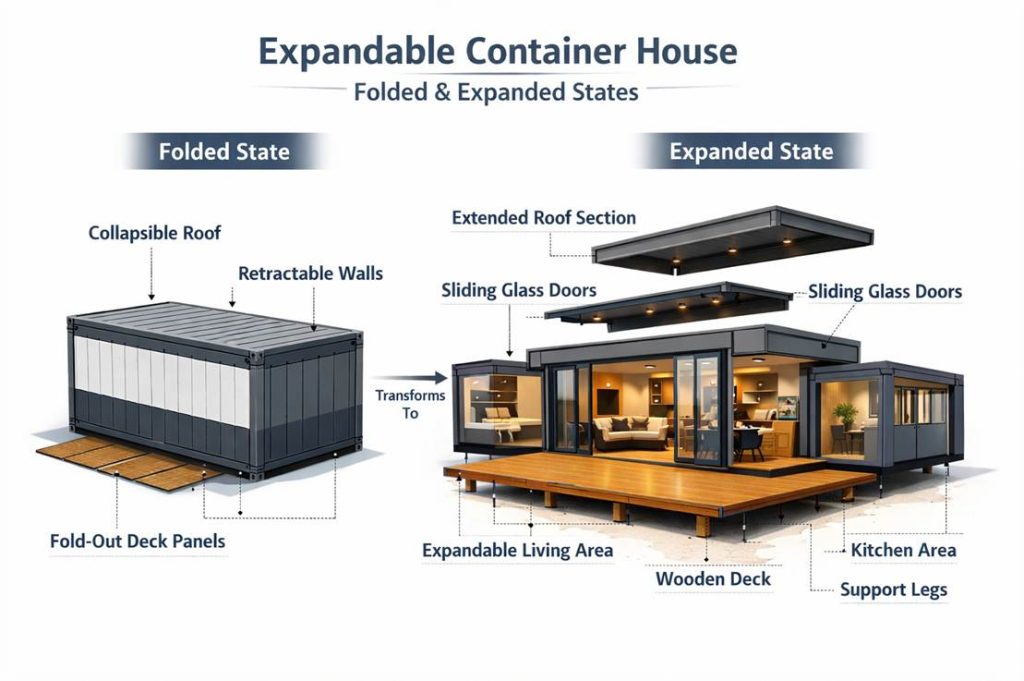
Expandable Container House: These units can expand by double their size (when installed) but have the same dimensions as if they were shipping alone; therefore, they are perfect for remote islands.
Foldable Container Home: Units can be shipped flat, making it easy to transport multiple units to one location. Assembling these units is quick.
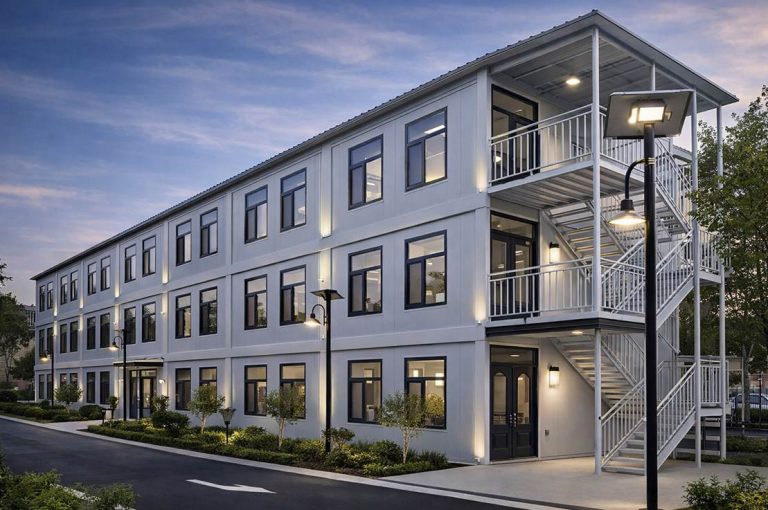
Modular Prefab Container Structure: This type is designed by combining and connecting multiple shipping container units. The resulting structures can have multiple stories and size ranges from small residential homes to large commercial complexes.
Your choice of type of container home depends upon your intended use, budget, and location within the Philippines.
Is a Container House Good in the Philippines?
This is a critical question, and with proper design and construction techniques, the answer should be an affirmative “yes”. Below are some reasons that justify the alignment of container homes with existing Philippine conditions.
Suitable for Tropical Climate
The climate in the Philippines is hot, humid, and wet for most of the year. A properly built container house handles this environment well:
- Thermal insulation (rock wool, EPS foam, or PU panels) keeps interiors cool without over-relying on air conditioning
- Ventilation systems can be custom-designed to maximize airflow
- Waterproof roofing with extended eaves or pitched roof additions manages heavy tropical rainfall
- Solar panels and air conditioning can be integrated during manufacturing
Fast Installation for Island & Remote Areas
There are over 7600 islands in the Philippines; therefore, procuring traditional building materials for remote areas is an expensive and logistically difficult challenge. Prefab container homes solve this problem:
- Units are factory-finished and shipped ready to install
- Flat pack and foldable units minimize shipping volume, reducing transport costs
- No large construction crew is needed on-site
- Installation can be completed in days rather than months
Lower Construction Cost
In the Philippines, container houses offer real savings compared to conventional hollow-block buildings:
- Reduced on-site labor costs
- A shorter construction timeline means less overhead
- Factory production reduces material waste
- No need for expensive on-site scaffolding or long-term construction management
This cost advantage is a big plus for budget-conscious homeowners, resort developers and investors.
Typhoon Resistance Potential
The Philippines sees around 20 typhoons annually. When designed appropriately, container homes are capable of withstanding the intensity of these storms:
- Galvanized steel Corten frame is designed to endure ocean transport conditions far more severe than most typhoons
- Reinforced anchor systems bolt units to engineered concrete foundations
- Storm-rated doors and windows can be specified during the order
- Windbreak and drainage features can be built in at the factory
Good for Tourism & Airbnb Businesses
Container houses are becoming popular among tourism entrepreneurs in the Philippines.
Applications include:
- Beach resort cabins in Palawan, Siargao, Cebu, and Batangas
- Glamping sites in Benguet, Bukidnon, and Batangas highlands
- Airbnb rentals in urban and peri-urban areas
- Café shops and restaurants with an industrial-chic aesthetic
How Much Does a Container House Cost in the Philippines?
The greatest concern for buyers will be cost, which is why we have included a real-world price guide using recent information from the market.
Average Container House Price in the Philippines
| Container House Type | Estimated Price Range (USD) |
| 20ft basic container house | $3,000 – $10,000 |
| 40ft container home | $8,000 – $25,000 |
| Expandable container house | $6,000 – $18,000 |
| Luxury modular container villa | $20,000+ |
Note: These are approximate ex-factory or CIF prices. Final costs in the Philippines will depend on customization, interior fit-out, and logistics.
What Affects the Cost?
There will be several variables which will push the price up or down:
- Size — A 40ft unit offers roughly double the floor area of a 20ft unit
- Steel quality — New Corten steel vs. second-hand containers
- Interior decoration — Basic shell finish vs. fully fitted with flooring, wall cladding, and ceilings
- Bathroom and kitchen systems — Plumbing, fixtures, and waterproofing add cost
- Insulation specification — Rock wool, PU foam, or EPS panels at different thicknesses
- Local delivery and installation — Port clearance, trucking, and crane hire in the Philippines
- Foundation work — Concrete footings or steel ground anchors
- Optional systems — Solar panels, air conditioning, smart home features
Always specify what’s included when comparing a price. A headline price that does not include insulation, plumbing and delivery will always work out much more costly than a package deal.
Shipping & Installation Costs in the Philippines
Most factory-built container homes are imported from China. Here’s how the process usually goes:
- Sea freight from Chinese ports (Qingdao, Tianjin, Shanghai) to Philippine ports (Manila, Cebu, Davao)
- Port customs clearance — work with a licensed Philippine customs broker
- Last-mile delivery — trucking from the port to your site; remote island locations require barge transport
- Crane hire for unloading and positioning
Flat pack container houses offer huge savings on shipping costs due to their ability to fold into a third of the volume of a standard type house once assembled and allowing more units per shipping container. Perfect for island resort projects shipping multiples.
Where to Buy a Container House in the Philippines?
Local Suppliers in the Philippines
More local fabricators and distributors of container houses and prefab frames are appearing in the Philippines. Choosing a local dealer can cost less due to peso-based invoicing, local language assistance and domestic after-sales service.
Though local capacity is often limited for high complexity or high-volume projects, and quality control can vary quite a bit from one supplier to another.
Most of the big container home projects in the Philippines – due to resort development projects, dormitory camps, modular housing projects – are procured from Chinese suppliers, for these reasons: Lower unit costs because of mature supply chains.
Importing from China
In the Philippines, nearly all of the country’s biggest container home projects for resort developments, dormitory camps, and modular housing schemes are purchased from Chinese manufacturers. There are very good reasons for this:
- Lower unit costs due to mature supply chains and economies of scale
- Full customization capability including layout, interior fit-out, façade cladding, roof type, and color
- Faster mass production for multi-unit orders
- Export documentation and shipping experience that reduces buyer-side risk
Established in 2005, ZN House is headquartered in Suzhou, China and is in the production and exportation of container homes and modular prefab buildings to over 50 countries around the world. The container homes manufactured by ZN House find use in holiday houses, vacation homes, beach houses, hotels, restaurants, bars, clubs, and coffee shops, markets that are relatively similar to the Philippine tourism and property market.
What to Look for When Choosing a Supplier
Check out the following when you’re researching a container home supplier, local or imported:
- Export and shipping experience — Have they shipped to the Philippines or Southeast Asia before?
- Steel quality — Do they use new Corten steel or recycled containers?
- Wind and typhoon resistance — Can they provide structural calculations or engineering certifications?
- Waterproof performance — How are roof joints, door seals, and wall panels waterproofed?
- International certifications — ISO, CE, or country-specific building standards
- Installation support — Do they provide assembly guides, video support, or on-site supervision?
- Custom design capability — Can they accommodate your floor plan, façade design, and interior specification?
ZN House brings full OEM and custom design capabilities, design assistance, and has supplied container homes into many different regions of the world across many climates including Southeast Asia.
Best Container House Types for the Philippines
Expandable Container Houses
You could make a case that expandable container homes are the best all-around option for the Philippine market. They:
- Expand to up to double their transport width on-site, creating generous living or hospitality spaces
- Ship efficiently in their folded state — reducing freight costs to remote islands
- Are available in 20ft and 40ft versions, single and double-story
- Work excellently as Airbnb rentals, resort cabins, and permanent residences
Efficient transport and spacious, liveable interior make them the best recommendation for island locations.
Folding Container Houses
If speedy deployment and low shipping costs are priorities, folding container houses are ideal:
- Fold flat for very compact sea freight
- Can be assembled by a small team in under a day
- Ideal for temporary worker housing, construction site camps, and emergency shelters
- Available with various interior finish levels from basic shell to fully fitted
Folding container houses have unmatched logistics efficiency for construction companies, infrastructure projects, and disaster response agencies.
Luxury Modular Container Villas
For high-end tourism projects and eco-resort developers, luxury modular container villas provide:
- Premium interior finishes — engineered wood flooring, tiled bathrooms, air conditioning
- Architectural façade cladding — timber, composite panels, or painted steel
- Multiple unit combinations for multi-bedroom configurations
- Rooftop decks, glazed walls, and custom furniture integration
These are highly applicable at boutique beachfront resorts in Palawan, El Nido, Boracay, and Siargao, where differentiation in design is a key driver of marketing.
Container House Applications in the Philippines
| Application | Recommended Type | Rationale |
| Airbnb | Expandable container | Maximum interior footprint layout with fast setup times to accelerate revenue generation. |
| Resort Cabin | Luxury modular house | Provides a high-end, premium aesthetic appeal that commands premium nightly booking rates. |
| Worker Dormitory | Foldable container | Designed for rapid transport, rapid teardown, and heavy repetitive deployment cycles across multiple project sites. |
| Beach Café | 20ft container | Compact foot traffic layout featuring rugged structural resistance to highly corrosive coastal salt air. |
| Family Home | 40ft modular container | Creates a spacious, permanent residential layout with ample multi-room flexibility. |
| Emergency Housing | Flat pack container | Optimized for maximum bulk shipping efficiency to quickly aid remote disaster areas. |
Container House vs Traditional House in the Philippines
| Feature | Container House | Traditional House (Concrete/Masonry) |
| Construction Time | Fast (Days to a few weeks) | Slow (Several months to over a year) |
| Cost | Lower (Highly optimized material usage) | Higher (Susceptible to material and labor inflation) |
| Mobility | Flexible (Can be unanchored and relocated) | Fixed (Permanent structure linked to land) |
| Expansion | Easy (Simply bolt or stack new modules) | Difficult (Requires breaking walls and structural re-engineering) |
| Installation | Modular (Fabricated in a factory; assembled on-site) | On-site construction (Highly exposed to weather disruptions) |
| Remote Area Suitability | Excellent (Shipped in compact, flat-packed configurations) | Limited (Extremely vulnerable to local logistics bottlenecks) |
Things to Consider Before Buying a Container House in the Philippines
Make sure you’ve dealt with the structural and civil realities before you write a check or sign an import order.
Local Regulations & Permits
Similar to the construction of any conventional building, the construction of a modular building needs to be duly approved at the local level. So, you must seek the approval of your local LGU and the Office of the Building Official to get the Building Permit for the building. Your plans have to be as per the National Building Code of the Philippines (PD 1096). Also, you should obtain the Barangay Clearance and Zoning Clearances for the particular property.
Foundation & Land Preparation
Never place n a steel frame directly on raw topsoil. The periodic heavy rainy seasons will shift the soil and lead to settled sinks. Consult a civil technician to build a pier foundation with an elevated support structure, concrete footings insulated from the soil or a solid concrete slab. Keeps the steel raised above ground moisture levels to prevent early rusting; has a heavy anchoring base to secure it against typhoon winds.
Ventilation & Insulation
Never ever skimp on the internal wall insulation. Always make sure to ask the contractor to specify high-density insulation cores (e.g., Rockwool or Polyurethane panels sandwiched). Design the locations of the windows to take advantage of cross ventilation, and define the most realistic electrical routing systems to run high-efficiency inverter air conditioning.
Typhoon & Corrosion Protection
Given construction within 5km of the ocean, salt-spray will be highly aggressive towards vulnerable metals. Make sure the supplier can deliver hot-dip galvanized structures with a marine-grade anti-corrosive primer coat and final coat. Make certain that any structural anchoring brackets are bolted to your concrete foundations using robust mechanical or chemical anchor bolts.
Water & Electrical Systems
Utilize local plumbing and electrical code compliance in your plans. Use the electrical wiring diagram as laid out in the Philippine standard (normally 220V, 60Hz). Design the routing of greywater and blackwater into a local three-chamber septic tank system or have direct connections to local municipal utility networks.
Why Expandable Container Houses Are Becoming Popular in the Philippines
The Philippines is among the most intriguing markets for container houses in Southeast Asia. With its diversity of environment, large inflow of tourism industry, consistent requirements for speedy-built worker houses, plus the growing interest in cheap housing, the future could not be better: container houses meet all criteria of demand.
For the buyers, it is the best option to choose those who have experience and exporting capability, who can offer customized designs and even Engineering support. ZN House gives this facility that people must be looking for.
Ready to get started?
Contact ZN House for container house solutions tailored to the Philippines market. Get floor plans, pricing and shipping quotes now. Modular housing designs for OEM and custom use, including residential, resort and commercial projects.
Frequently Asked Questions (FAQs)
How much does a container house cost in the Philippines?
You can find basic container homes for about $3,000, while larger luxury modular homes come in at over $20,000, depending on the customization and installation needs.
Is a container house legal in the Philippines?
Yes, container houses can be legal in the Philippines, but local permits, zoning regulations, and building approvals must be followed.
Can container houses survive typhoons?
If the container home is well-engineered with a reinforced galvanized steel structure and secure foundation, it can provide strong typhoon resistance.
Where can I buy a container house in the Philippines?
You can purchase them from local prefabricated builders or import modular container houses from experienced international manufacturers like ZN House.
Are expandable container houses good for tropical climates?
Yes. Expandable container houses can be insulated, ventilated, waterproof-roofed, and air-conditioned for greater comfort in tropical climates.
How long does a container house last in the Philippines?
A quality modular house designed with high-end hot-dip galvanized steel or Corten steel will easily last 25-30 years. Under recommended maintenance (rust preventative inspection once per year, minimum), 9 elevation foundation and so on, it can go beyond 40 to 50 years.
Is a container house cheaper than a traditional house?
In many cases, yes. Container homes often cut down on labor, construction time and transportation costs over conventional buildings.
Similar Posts
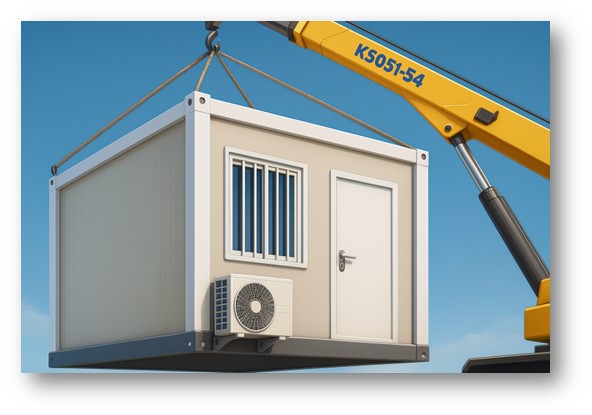
How to Install a Flat Pack Container House: Step-by-Step Guide (With Tools, Timeline & Tips)
Introduction Flat pack container houses fall into the category of modular homes and have come a…
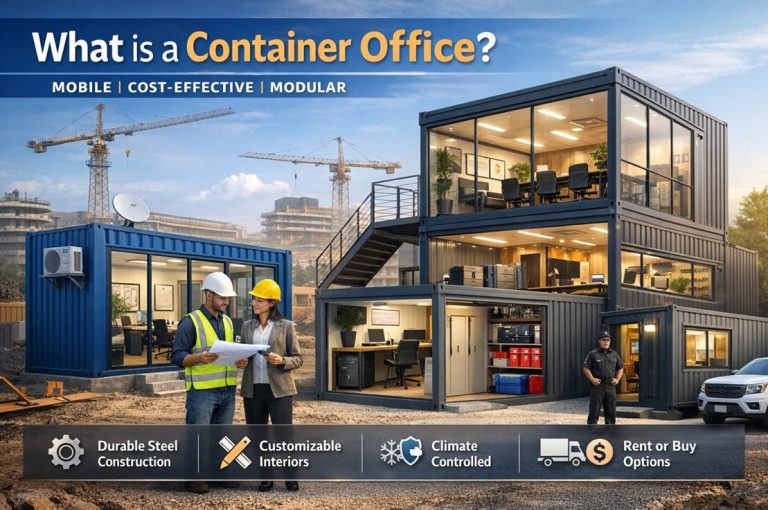
What is a Container Office? A Deep-Dive into Benefits and Structural Integrity
With today’s business environment being so competitive and multifaceted, agility has become the ultimate way to…
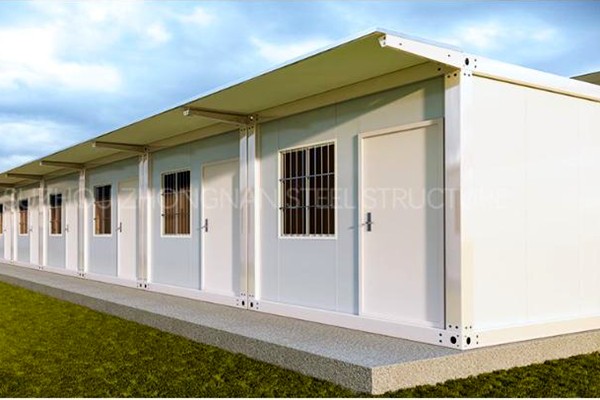
Navigating Building Codes for Your Assemble Container House
The dream of owning a modern, efficient, and stylish home has found a compelling answer in…
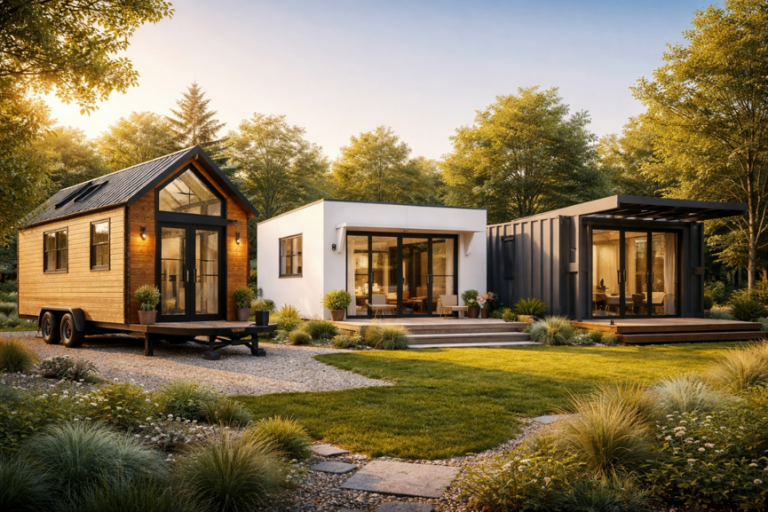
3 Types of Prefab Tiny Houses: Which One Is Right for You?
The tiny house movement has moved well beyond being just a niche trend. Today, homeowners, investors,…
How Much Does a Modular Classroom Cost?
School populations are growing at a rate that outstrips the ability of traditional construction to keep…

How to Build Container House
In the booming construction market, the demand for efficient and sustainable housing solutions has led to…


