



Benefits of a Modular Classroom
Introduction
A common challenge throughout the world for all types of schools is the dramatic increase in school enrollment, the age of school facilities, the reduction of funding for schools, and longer than expected timeframes to complete construction. In many cases, such as when a district needs to be able to provide for an additional 10 classrooms by September, traditional building methods simply do not work. Because of this, modular classrooms have become one of the most practical and popular solutions in today’s educational design.
The modular classroom itself is a learning space that has been designed and manufactured for use as an educational facility. Modular classrooms are built in a controlled factory setting and then shipped to the school or district and put together on the site in a fraction of the time of a traditional, site-built classroom. Once this is completed, the finished product meets all applicable construction codes, provides an environment that is conducive to education, reduces the time to complete the classroom construction cycle, is easy to expand, is kinder to the campus environment during the construction phase, and is generally far less expensive than traditional building materials (concrete, brick, etc) used in a permanent building.
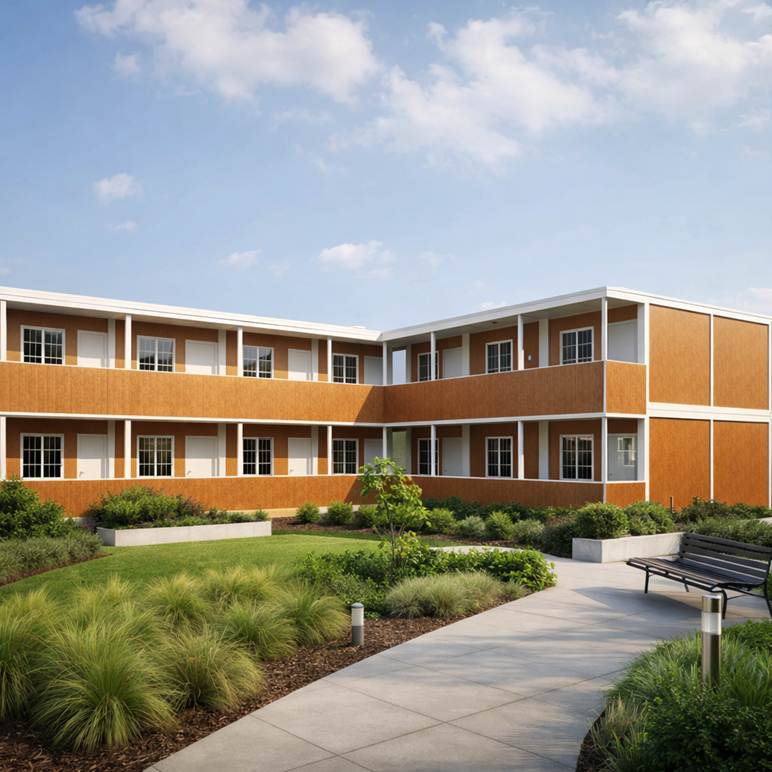
This article will provide additional information related to the various advantages of using modular classrooms that are inherent in the construction of modular classrooms, including speed of completion of construction, flexibility of building layout according to school needs, sustainability of product and construction methods, climatic durability, and long-term/temporary relocation possibilities —As well as providing reasons that governments, schools, and universities are choosing to utilize a modular classroom design today.
Faster Construction Timelines
One compelling reason many schools select modular classrooms is that they can be delivered quickly. Because construction of the modules occurs in a factory at the same time that site prep begins on the school campus, the project timeline is compressed significantly.
Traditional school construction timescales are typically 12 to 24 months from groundbreaking through to occupancy. Conversely, a typical modular classroom building can often be completed within six to fourteen weeks of the end of the site-prep phase. Factory production eliminates all of the delays due to poor weather, delays in the delivery of materials and construction scheduling conflicts; this is why traditional construction will often miss their deadlines.
| Phase | Modular Classroom | Traditional Construction |
| Design & factory production | 4–8 weeks | — |
| Site preparation | Concurrent with factory production | 2–4 months |
| On-site assembly | 1–3 weeks | 8–18 months |
| Total project timeline | 6–14 weeks | 12–24+ months |
| Weather delays | Minimal (factory-controlled) | Common |
| Commissioning | Faster | Slower |
The above-mentioned speed benefits of modular classrooms are ideal for instances where immediate classroom expansion is required (e.g., in emergencies) or when currently used by pupils at the start of any upcoming school year.
Flexible & Scalable Classroom Layouts
A modular design classroom offers many advantages because of the ability to change its arrangement. Each module is essentially its own stand-alone building, which gives them the ability to be rearranged to meet the school’s or campus’s changing needs. A small school (or pilot program) typically begins with one modular classroom. As enrollment grows, they will often add more modular classrooms side-by-side, back-to-back, and/or on top of one another to form tall blocks of classrooms. School designs by ZN House’s Modular Learning Trust can be configured as a single classroom (portable), or as a multi-wing, double-storey building, using the same modular building system.
Possible layout configurations include:
- Single Classroom Unit: Ideal for a small school expansion or temporary overflow space
- Double-unit Layout: Two classrooms sharing a connecting corridor or common entrance
- Multi-classroom Combination: Three to eight classrooms configured in a row or L-shape, with shared restroom and service areas
- Double-story Modular Block: Stacked modules creating a compact two-floor building on a small footprint
- Full Modular Campus: Classrooms, dormitories, canteen, and administration all delivered as a coordinated modular system
As modules have a standard design, scaling up can happen without having to build the entire structure again. Schools have the option of adding one module at a time to their existing structure while still retaining all of the initial investments in the original modules.
Cost-Effective School Construction
Almost all education projects are limited by their budgets, so the case for using a modular classroom versus a traditional building is always much stronger financially.
Many different factors contribute to the relative cost benefits of modular classrooms, including:
- Reduced Labor Costs: Factory assembly is faster and more efficient than on-site construction, requiring fewer person-hours overall
- Less Material Waste: Factory environments allow precise cutting and material management, reducing the waste that is common on traditional building sites
- Shorter Project Cycle: Less time on site means lower project management costs and earlier availability of the facility
- Predictable Budget: Factory production with standardized components means fewer surprise cost overruns compared to traditional construction, where scope changes and weather delays frequently inflate final costs
- Reuse and Relocation Value: A modular classroom that is no longer needed at one campus can be moved and reinstalled elsewhere, preserving the capital investment.
A key benefit for schools funded by the Federal Government for capital improvements, and supported by the use of federal funds, is that they provide a considerable advantage with respect to providing classrooms on an expanded basis for every dollar spent.
Minimal Disruption to Existing Campuses
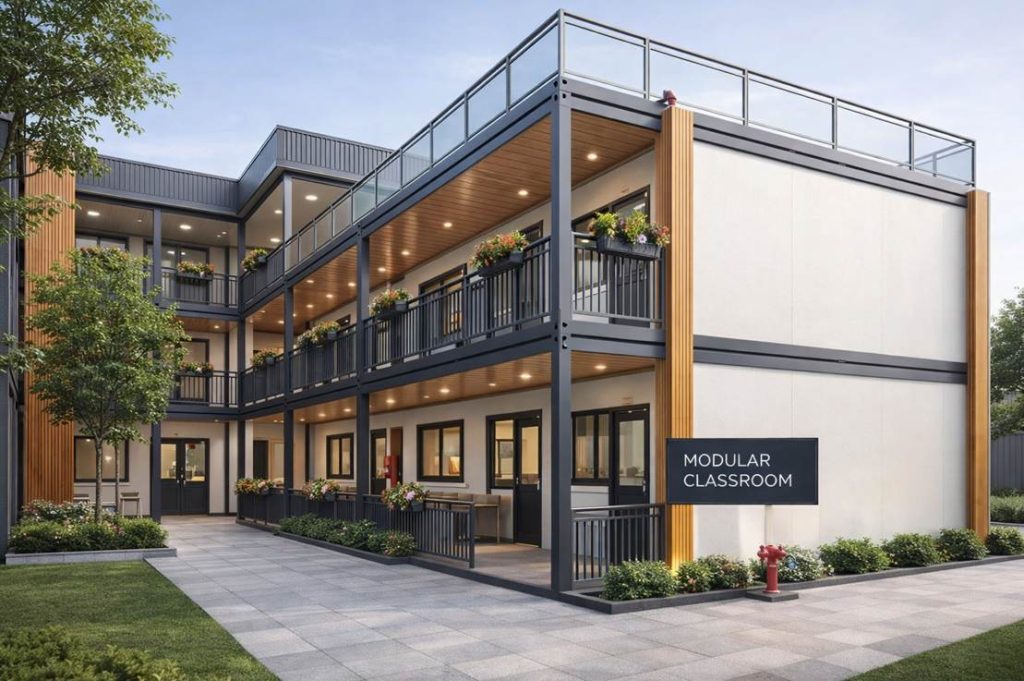
Constructing a school campus while the school is operating results in clear issues like excessive noise during classes, dirt around playground areas, blocked routes of access to parts of the school, and safety concerns related to ongoing work zones. Traditional construction has the potential to take months or years to complete, thereby forcing schools to cope with the disruptions caused by construction during the school year.
Modular classrooms directly deal with the problem of long-term disruption by limiting the on-site phase of their construction to only a few days or a week instead of months or years. A great deal of the actual construction occurs off-site in a factory. Crews that assemble the modular classrooms will arrive once the foundations are prepared, place the modular units in position using cranes, connect the utilities, and turn the building over for occupancy; thus, unlike traditional construction, this process generates a mere fraction as much noise, dust, and construction site space as traditional construction.
This makes modular classrooms especially appropriate for:
- K-12 schools where continuous campus access for students is essential
- University campuses with dense built environments and heavy daily foot traffic
- Renovation projects where a replacement building is needed while the original structure is being refurbished
- Urban sites with tight boundaries and neighbors who cannot tolerate extended construction disruption
High-Quality Factory-Controlled Construction
People have traditionally believed that a high-speed production method will adversely affect the quality of the product. However, with modular schools, this does not hold. With modular school production using factory production methods, every modular unit is produced in a controlled environment where everything is produced using identical methods, receives identical testing and inspection, and is manufactured using the same materials. There is no variability in the amount of humidity, temperature, or weather exposure encountered by different modulars during construction. During factory construction, the following items are performed with identical conditions and inspections before leaving the factory: connecting structural members together, installing insulation, fitting wall panels, and completing wiring.
ZN House produces modular school buildings using pre-galvanized steel framing, high-performance sandwich panels for walls, and engineered joints for connections. Each of these building components meets stringent dimensional tolerances. The tolerances found in modular buildings are virtually impossible to duplicate at traditional job sites. The result is a building that is structurally sound, thermally effective, and completely finished to the same level of quality — no matter where it is ultimately installed.
Modular production also eliminates the potential downside associated with materials being adversely affected by rain, cold or heat during construction. This will be a key factor in determining the useful life of the wall panels, insulation systems, and interior finishes of any modular building.
Portable & Relocatable Classroom Solutions
Flexible classroom designs do not limit modular classrooms to a single or determined space. Concrete-built-out models will not move with nearly as much ease as a modular classroom will; therefore, a permanent classroom has more options available through modular construction over time than does a traditional classroom built out of concrete.
This relocatability creates lasting value in a range of scenarios:
Temporary Classrooms During Construction
Modular units can be used to replace the permanent classrooms when the school building is demolished or rebuilt by providing fully functional replacement classrooms in an adjacent location and can be removed when they are no longer needed.
Post-disaster Education
Modular classrooms are containers that provide immediate educational continuity for children in times of natural disaster, such as earthquakes, floods, wildfires, or conflict areas, and can easily be relocated once the state of emergency has passed.
Remote and Rural Education
Communities where there is little to no infrastructure for building schools may get access to modular buildings; specifically, these buildings will arrive at the community in either truckload or shipping formats, and can be assembled without the need for specialized tradespeople.
Relocatable Campus Growth
When urban schools grow into new areas or districts, there is the opportunity for previously built modular units too to follow the student body expansion.
Sustainable & Energy-Efficient Buildings
Sustainable design is incorporated into the construction of modern modular classrooms; they also provide versatile environmental impacts throughout the lifecycle of the building. The amount of material waste created during the factory production of modular classrooms is significantly less than that created at the construction site. In addition, the ordering of materials is done precisely for each classroom unit, which helps to minimise waste created. Finally, because factory construction eliminates site vehicles and reduces construction time, it reduces carbon emissions and energy used during the building process.
The specification of a modular classroom determines its performance in operation largely. The ZN House modular school buildings comprise:
- High-performance Sandwich Panel Walls and Roofs: Providing thermal insulation that reduces heating and cooling loads in both hot and cold climates
- Energy-efficient Window Systems: Designed to maximize natural daylight while minimizing solar heat gain or heat loss, depending on climate
- HVAC-ready Layouts: Modules are designed to accommodate efficient mechanical ventilation systems that maintain healthy air quality for students and teachers
- Environmentally Friendly Materials: Pre-galvanized steel framing and factory-finished panels reduce the need for paints and treatments applied on site, lowering volatile organic compound emissions.
Durable for Different Climate Conditions
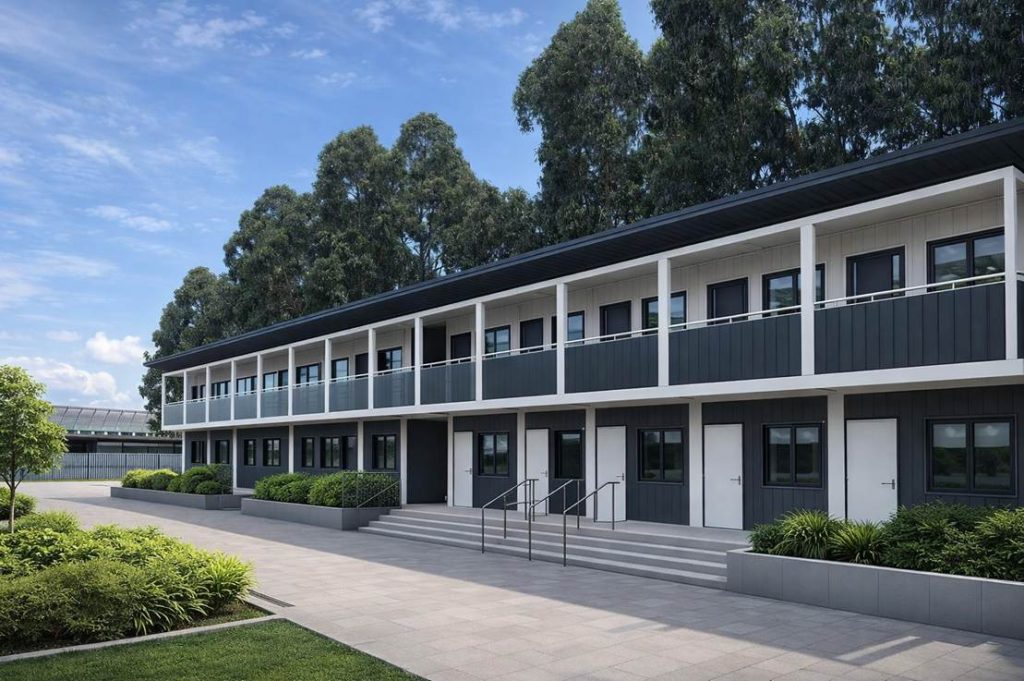
The modular classroom needs to have dependable performance in very diverse climates, including tropical coastal regions, cold mountain areas, arid regions, and high-humidity coastal areas. ZN House modular school buildings have been built to meet this challenge.
The structural frames of the buildings are made from pre-galvanized steel, a type of steel that has been treated with a protective coating to prevent rusting in moist and coastal environments. Both the wall and roof panels are produced as composite sandwich systems that provide thermal insulation as well as weatherproofing. Fire-resistant materials are used as standard throughout the entire structure.
ZN House’s modular school projects in a variety of extreme climates:
- Tropical and coastal environments (Philippines, Kenya): Raised floor systems and durable cladding manage humidity and flood risk while natural ventilation systems keep classrooms comfortable
- Cold climates (Norway): Heavily insulated modules arrive pre-wired for heating systems, allowing teachers to move in within weeks rather than months
- Arid and Semi-arid Regions: Shaded circulation areas and high-performance wall systems keep internal temperatures manageable without excessive mechanical cooling
- Disaster-affected areas (Australia): Fire-resistant materials and robust structural design ensure that buildings remain safe and functional in challenging post-disaster environments.
Applications of Modular Classrooms
Because modular space is inherently adaptable, it can be used more than just for elementary school desks. Today’s modular education buildings have been configured to be used for many different specialized purposes:
- K-12 Primary & Secondary Schools: General education classrooms, specialized STEM labs, art studios, and music practice rooms.
- Higher Education & Universities: Satellite lecture halls, seminar rooms, research offices, and graduate student workstations.
- Administrative & Support Infrastructure: Principal offices, staff breakrooms, nurse clinics, school counselor suites, and standalone multi-stall restroom blocks.
- Government & Community Projects: Public literacy centers, vocational training facilities, and workforce development classrooms.
- Emergency & Disaster-Relief Classrooms: Quick-turnaround clinics and classrooms to restore community stability following unexpected disruptions.
Modular Classrooms vs Traditional School Buildings
| Feature | Modular Classrooms | Traditional Buildings |
| Construction Speed | 6–14 weeks typical | 12–24+ months |
| Site Disruption | Minimal — most work is offsite | Significant — months of on-site activity |
| Flexibility | High — modules reconfigurable | Limited — structural changes costly |
| Scalability | Easy — add modules as needed | Complex — requires new construction phase |
| Weather Delays | Low — factory production | Common — weather impacts timeline and quality |
| Budget Predictability | High — standardized components | Moderate — overruns common |
| Relocatability | Yes — disassemble and move | No — permanent structure |
| Sustainability | Lower construction waste, recyclable steel | Higher waste, non-recyclable materials |
FAQs About Modular Classrooms
What are modular classrooms?
Prefabricated Modular Classrooms are pre-made educational structures produced off-site in modular sections (modular buildings). These buildings can be either temporary or permanent locations for education facilities.
Are modular classrooms permanent?
Yes. The modern modular classroom is offered in temporary or permanent configurations, depending on the project and local building code requirements.
Can modular classrooms be relocated?
Modular classrooms are extremely flexible educational resources that can be moved and reconfigured in the future.
Are modular classrooms cost-effective?
Yes. Modular classrooms can often save money on construction costs by reducing timelines and cutting labor, waste and manufacturing costs.
Are modular classrooms suitable for large schools?
Yes, of course. Modular systems can be used for single classrooms, multi-building campuses, and double-story educational facilities for large numbers of students.
Conclusion
The modular classroom embodies a new direction in how schools can be designed, constructed and operated. It provides advantages over all other forms of construction – including a shorter lead time to delivery, flexible and expandable building layouts, improved cost management, reduced disruptions to the campus community, and portability of the modular classroom building to accommodate changes in the community.
As schools experience the convergence of increasing enrolments and limited capital budgets, the modular classroom is a proven and globally-accepted solution that does not require compromising quality or learning environment. Whether a single classroom is required by a rural school, or an entire new school is required by an urban school system, modular construction provides a faster, smarter, and more valuable long-term solution.
Looking for Modular Classroom Solutions?
ZN House is a global manufacturer of modular school buildings for educational projects worldwide. Our team can take you from a single portable classroom to a full multi-story campus with custom layouts, fast installation and worldwide delivery support.
Similar Posts
How Much Does a Modular Classroom Cost?
School populations are growing at a rate that outstrips the ability of traditional construction to keep…

Folding Container House Office Designs: Revolutionizing Workspaces with Ingenuity
The modern office landscape is shedding its static skin. As businesses embrace flexibility, remote work, and…
Expandable Container House vs Folding Container House: Which One Is Better for Your Project?
Introduction Modular building has grown very rapidly as a choice for new buildings in the majority…

Folding Container House Weatherproof
Folding container house has emerged as a transformative solution in portable, all-weather housing, addressing the diverse needs…
The Evolution of Prefab Steel Container Housing
Modern construction is evolving. For a long time, brick and mortar were the only options for…
Benefits of Prefab Houses
Prefab houses come with all standard equipment and are designed to be simple yet cost-efficient solutions…


