



Folding Container House: A Flexible and Efficient Residential Solution
Folding Container House, As an emerging form of architecture, it has received increasing attention in recent years. It has shown great potential in the fields of temporary housing, emergency rescue, and even permanent housing due to its convenience, economy, and sustainability. This article will explore the advantages, applications, and challenges faced by Folding Container Houses, and look forward to their future development prospects.

The most prominent feature of Folding Container House is its high degree of flexibility
Although traditional container houses have the advantages of easy transportation and assembly, they still have limitations in terms of mobility and storage. The folding design cleverly solves this problem. Through sophisticated mechanical structures, the entire house can be folded into a compact unit that is easy to transport and store. This greatly reduces transportation costs and storage space, especially in emergency rescue scenarios that require rapid deployment. Foldable container houses can be quickly transported to disaster areas, providing immediate shelter for affected people.
In addition to flexibility, Folding Container House also has economic advantages
Compared to traditional brick and tile structure houses, its production and construction cycle is shorter and the cost is lower. The prefabricated production mode can greatly shorten the on-site construction time and reduce labor costs. In addition, due to its mobility and reusability, fold out container homes also have higher asset value. It can be transferred and modified according to demand, thereby extending its service life and reducing resource waste.
In terms of sustainability, Folding Container House also has advantages
Many collapsible container homes use environmentally friendly materials, such as recycled steel or renewable wood. This not only reduces the impact on the environment, but also conforms to the concept of sustainable development. In addition, by integrating environmentally friendly equipment such as solar panels and rainwater collection systems, Folding Container House can also achieve energy self-sufficiency and reduce dependence on traditional energy sources.
The development of Folding Container House also faces some challenges
Firstly, technical limitations still exist. The strength and durability of the folding structure need to be further improved to ensure the safety and reliability of the house in various environments. Secondly, the lack of norms and standards hinders its large-scale application. Lack of unified building standards and quality supervision can easily lead to uneven product quality and affect consumer confidence. Finally, the lack of social awareness is also a constraining factor. Despite the increasingly prominent advantages of foldable container homes, many people still have doubts about their comfort and safety.
Looking ahead to the future, with the continuous advancement of technology and the growth of market demand, Folding Container House will usher in even broader development prospects. By strengthening technological research and development, improving industry standards, and increasing publicity efforts, we can eliminate people’s doubts and promote its application in various fields. Whether in tourist resorts, wilderness camps, temporary offices, or emergency response bases, Folding Container House will leverage its unique advantages to provide people with more flexible, efficient, economical, and sustainable living solutions. It is not only an innovation in architectural form, but also a transformation in lifestyle.
Folding Container House FAQs
What is a Folding Container House?
Answer: Folding Container House is a modular house that is foldable and easy to transport. It adopts a container structure design and can compress the volume during transportation (reducing 60% to 80% of space). After arriving at the site, it quickly unfolds and is fixed into a complete house.
What are the core advantages of Folding Container House?
Ultra convenient transportation: After folding, it only occupies one-third of the volume of a standard container, significantly reducing logistics costs.
Rapid deployment: on-site deployment only takes a few hours, more than 10 times faster than traditional buildings.
Reusable: Can be folded and relocated multiple times, suitable for temporary projects or mobile needs.
Sturdy structure: Steel frame+waterproof coating, wind and earthquake resistant (usually able to withstand wind up to level 8).
Size comparison of Folding Container House before and after folding?
Folding state:
After folding, the standard 20 foot container measures approximately 2.5m in length, 2.4m in width, and 0.8m in height.
Expand status:
After unfolding, restore the standard size (6m × 2.4m × 2.6m), with an internal area of approximately 14 square meters (can be stacked in multiple layers).
What are the suitable usage scenarios for Folding Container House?
Temporary facilities: construction site campsite, emergency rescue room, field hospital.
Business and Tourism: Mobile coffee shops, camping hotels, pop-up exhibition halls.
Residential use: low-cost affordable housing, remote area workstations.
What are the prices and lifespan of Folding Container Houses?
Price range:
Basic single box: $8000~$15000 (excluding interior).
Fine decoration with water and electricity: $20000~$40000 (including air conditioning/bathroom).
Lifespan: 10-25 years (can be extended with regular maintenance).
Similar Posts
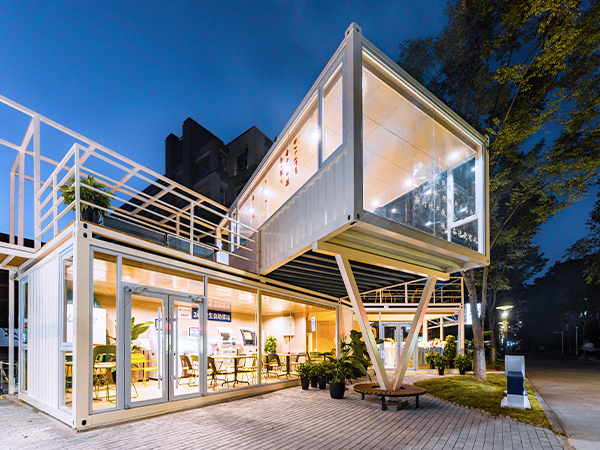
Beyond the Box: Key Modular House Design Trends—Open Concept, Multi-Unit, and Sustainability
According to Forbes, modular housing can reduce construction times by up to 50 per cent, costs…
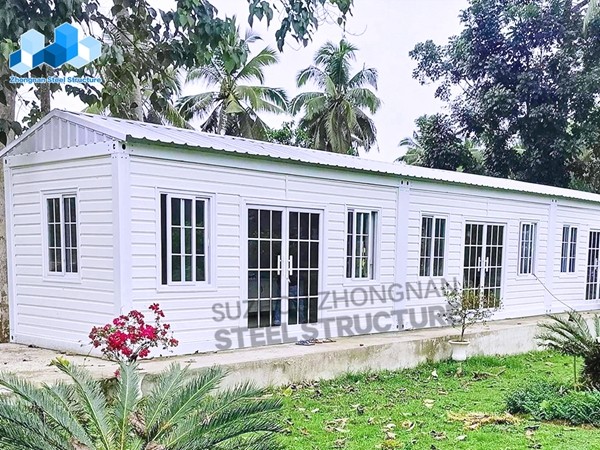
Affordable Quick Homes for the Modern World
In the ever-evolving world of housing, solutions that combine cost-efficiency, sustainability, and speed of construction are…
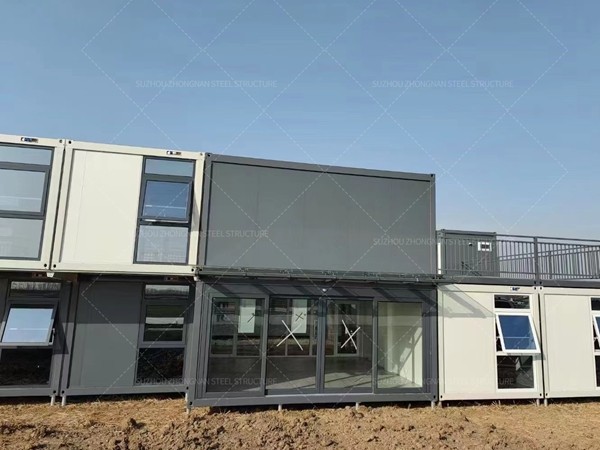
Modular Container Homes Solar Panel Integration
At Suzhou Zhongnan Steel Structure Co., Ltd., our vision for modular housing goes beyond just space…

The Ultimate Space-Saver: Unveiling Fold Out Shipping Container Homes
Imagine a fully functional home that arrives looking like a compact, flat-packed crate, and within an…

The Future of Affordable and Sustainable Housing: Shipping Container Homes
In a world where sustainability and affordability are becoming increasingly important, shipping container houses are making waves…
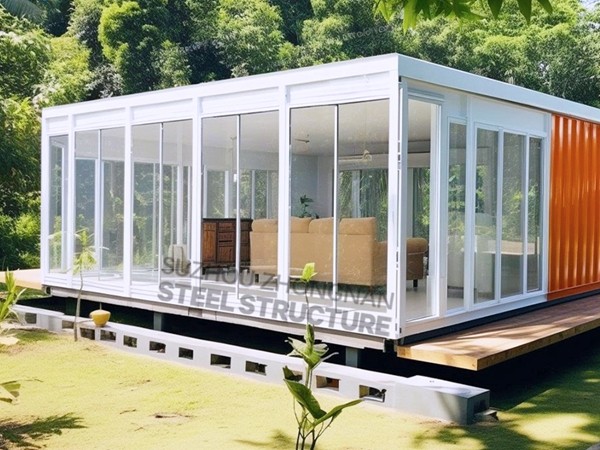
Modular Container Houses: Affordable, Flexible, and Sustainable Housing Solutions
As the need for affordable, quick-to-build, and sustainable housing continues to rise, modular container houses have emerged…


