



Shipping Container House: Integration of practicality, sustainability, and design possibilities
Shipping Container House, As an emerging form of architecture, it is increasingly receiving attention from architects, designers, and the general public. It cleverly utilizes abandoned or idle shipping containers to transform them into spaces with residential functions, integrating practicality, sustainability, and design possibilities, providing new ideas for modern residential architecture.

The practicality of Shipping Container House is reflected in its cost-effectiveness and construction speed
Compared to traditional brick and tile structures or reinforced concrete buildings, the construction material cost of converted shipping containers is relatively low. A large number of containers come from global trade waste, reducing the initial input of building materials. At the same time, the container itself already has a structural framework, which can be directly used for building the main body of the house after appropriate modification and reinforcement, greatly shortening the construction period and reducing labor costs, making rapid construction possible. This is of great significance for those who need to quickly relocate their homes, such as post disaster reconstruction or temporary resettlement projects.
Shipping Container House demonstrates significant advantages in sustainability
The reuse of containers itself is an environmentally friendly behavior, reducing the pollution of waste to the environment and lowering the demand for raw material extraction. By retrofitting containers with insulation, heat insulation, ventilation, etc., their energy efficiency can be improved and energy consumption can be reduced. Meanwhile, shipping container buildings can be flexibly modularized and expanded to meet different residential needs and terrain environments, reducing the waste of land resources. In today’s increasingly important world of sustainable development, Shipping Container House is undoubtedly a promising green building option.
The design possibilities of Shipping Container House provide architects and designers with vast creative space
The standardized size and modular characteristics of containers make them easy to combine and arrange, creating a variety of architectural forms. By means of opening windows, cutting, stacking, painting, etc., the original monotonous image of the container can be broken, giving it new aesthetic value. From simple individual residences to complex multi story apartments, shipping container cabin can meet different living needs and showcase different design styles. This flexibility and adaptability make Shipping Container House have unlimited potential in design to meet people’s increasingly personalized living needs.
The development of Shipping Container House also faces some challenges
For example, it is necessary to solve the insulation problem of containers to meet the living needs in different climatic environments. At the same time, it is necessary to overcome the rust and corrosion prevention issues of containers in order to extend their service life. In addition, there may be differences in building codes and approval processes for shipping container tiny houses in different countries and regions, which require further improvement and standardization.
In summary, Shipping Container House, as an emerging form of architecture, has brought new perspectives to modern residential buildings through its practicality, sustainability, and design possibilities. Despite still facing some challenges, with the continuous advancement of technology and the development of concepts, Shipping Container Houses will undoubtedly play a more important role in the future construction field, providing people with more economical, environmentally friendly, and personalized living choices.
Shipping Container House FAQs
What is Shipping Container House?
Answer: Ocean freight container houses are buildings that have been renovated from retired or brand new standard ocean freight containers (commonly 20 foot or 40 foot specifications). By using cutting, reinforcement, insulation and other processes, it is transformed into a space that can be used for living or commercial purposes, with modular and movable characteristics.
Why choose Shipping Container House?
Low cost: Second hand container prices are low (about $1500~$4000/piece), and the total renovation cost is 30%~50% lower than traditional buildings.
Fast construction: Factory prefabrication and on-site assembly can shorten the construction period to a few weeks.
Sturdy structure: Corrosion resistant steel can withstand wind and earthquake (requires professional reinforcement).
Environmental sustainability: Recycling and reusing waste containers to reduce resource waste.
Flexible mobility: It can be relocated or reorganized as a whole, suitable for temporary or mobile needs.
How does Shipping Container House solve problems such as insulation and rust prevention?
Thermal insulation scheme: spray polyurethane foam, install rock wool/XPS board, or design a double-layer container hollow structure.
Rust and corrosion prevention: Regular maintenance (sand rust+rust proof paint), or use Corten Steel material.
Ventilation and moisture prevention: Install openable windows, exhaust fans, or raise the foundation to avoid water accumulation.
How large can a Shipping Container House be built on? What are the creative designs?
Scale:
Single box (20 feet): approximately 14 square meters, suitable for single person apartments or studios.
Multi box combination: can be expanded into villas, office buildings, or hotels of hundreds of square meters.
Creative Design:
Glass curtain wall, rooftop garden, cantilevered terrace, staggered stacking, artistic graffiti, etc.
What are the actual costs and lifespan of Shipping Container Houses?
Cost reference:
Basic renovation (single box simple packaging):$ 10000~$20000.
High end customization (multiple boxes+intelligent system):$ 50000~$200000+.
Lifespan: 20-30 years (can be extended with regular maintenance).
Similar Posts
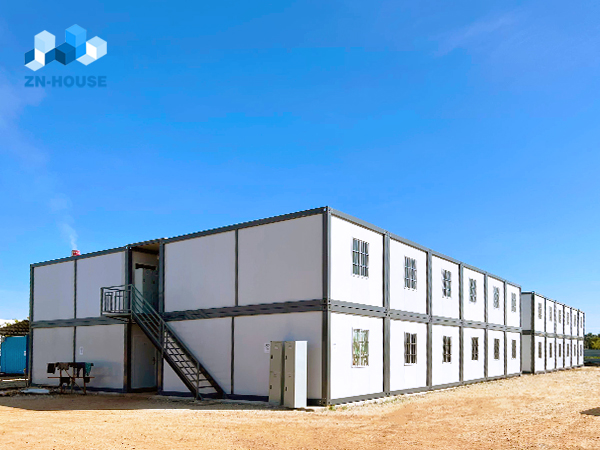
Discover the Versatility of Modular Container Homes
Transform your living experience with our innovative Modular Container House solutions. Designed for flexibility, efficiency, and ease of…
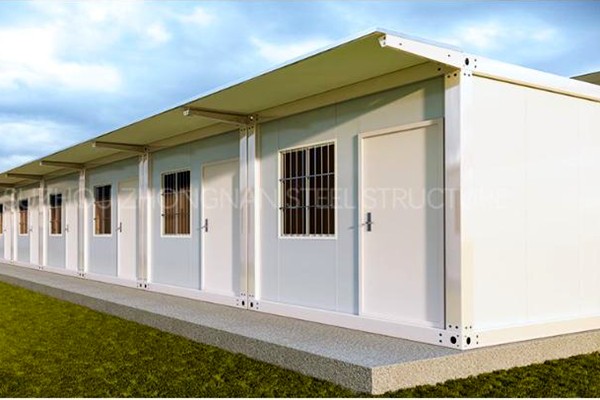
Assemble container house is modular
The global construction industry is witnessing a paradigm shift, moving away from lengthy, labor-intensive traditional methods…
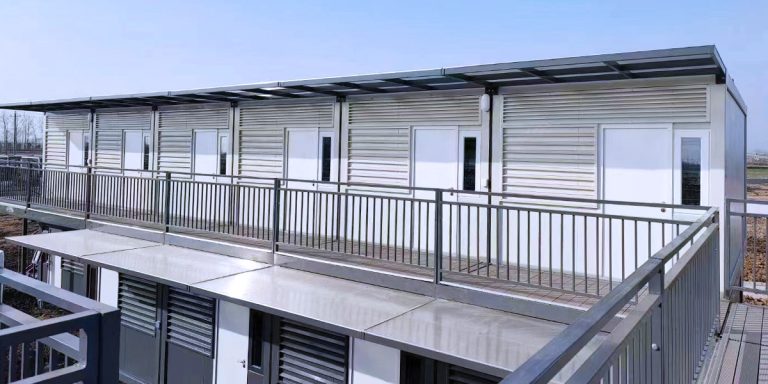
Container Home Builders and Sustainable Living
Container Home Builders and Sustainable Living are increasingly intertwined as global demand for eco-friendly, affordable housing…
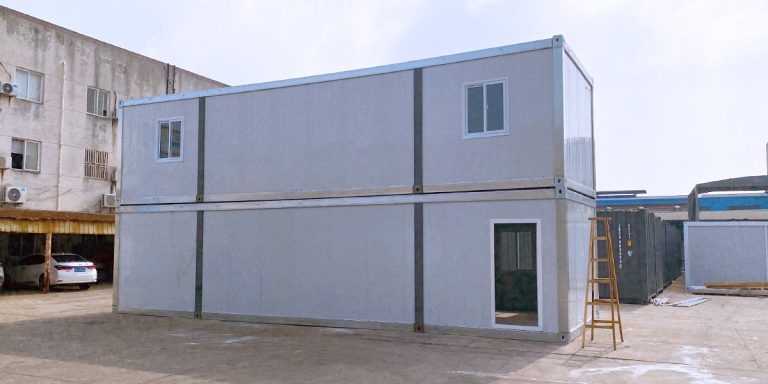
Step-by-Step Guide to Assembling a Flat Pack House
The rise of modular construction has introduced innovative housing solutions that combine affordability, efficiency, and sustainability. Flat…

Collapsible Container House Ideal for Temporary Worksite Accommodation
As a leading provider among folding container house suppliers, Suzhou Zhongnan Steel Structure Co., Ltd. understands the…

Insulation Solutions for Custom Shipping Container Homes
The rise of prefabricated architecture has revolutionized modern living, offering sustainable, efficient, and innovative housing solutions….


