



Insulation Solutions for Custom Shipping Container Homes
The rise of prefabricated architecture has revolutionized modern living, offering sustainable, efficient, and innovative housing solutions. Among these, custom shipping container homes stand out for their versatility, durability, and unique aesthetic appeal. However, transforming a standard steel box into a comfortable, energy-efficient dwelling hinges critically on one factor: effective insulation. For companies like ZN House, founded in 2005 in Suzhou with a mission to build high-quality, high-safety mobile homes for the world, mastering insulation is paramount to delivering habitable spaces that meet diverse global demands. Driven by a team-focused approach and a commitment to innovation, ZN House leverages years of global trade experience, exporting its expertly crafted container solutions to over 50 countries through a network of international agents, ensuring that comfort is never compromised, regardless of climate.

Tailoring Thermal Comfort: Solutions for Every Custom Shipping Container Home
The beauty of custom shipping container homes lies in their adaptability. A one-size-fits-all approach to insulation simply doesn’t work. ZN House employs a range of sophisticated insulation strategies, chosen based on the project’s specific climate, design complexity, intended use, and budget. Here are the primary solutions utilized for mass-produced custom homes:
- Spray Foam Insulation (SPF): Often considered the gold standard for container homes, SPF (especially closed-cell) offers exceptional advantages. Applied directly to the interior steel walls, ceiling, and floor, it expands to fill every crevice and irregularity, creating a seamless, monolithic thermal barrier with minimal air gaps. This provides a very high R-value per inch, excellent moisture resistance (acting as a vapour barrier), and adds significant structural rigidity to the container. For climates with extreme temperatures or high humidity, SPF is frequently the optimal choice in ZN House’s portfolio of custom shipping container homes.
- Rigid Panel Insulation (PIR/PUR, EPS, XPS): Rigid foam boards like Polyisocyanurate (PIR), Extruded Polystyrene (XPS), or Expanded Polystyrene (EPS) offer high R-values and are relatively easy to install. They are typically fitted between interior framing studs (applied after a vapour barrier) or used in exterior insulation systems. PIR/PUR boards offer excellent fire resistance and thermal performance. XPS provides high compressive strength and moisture resistance, suitable for floors or foundations. EPS is cost-effective with good insulating properties. Panel systems require meticulous sealing at joints to prevent thermal bridging and air infiltration.
- Hybrid Systems: Often, the most effective solution combines materials. For instance, rigid board insulation might be used on the exterior or interior walls, supplemented by spray foam in complex corners or roof cavities. Mineral wool batts can be used in framed interior walls for soundproofing benefits alongside the primary thermal barrier. ZN House engineers select hybrid approaches to maximize performance and cost-efficiency for each unique custom shipping container home design.
- Considerations for Mass Production: ZN House’s factory-controlled environment is a significant advantage for insulation quality. Applying insulation precisely under controlled conditions ensures consistent thickness, complete coverage, and proper adhesion far more reliably than on-site application. This factory precision directly translates to predictable thermal performance and airtightness for every unit rolling off the production line.
Maximizing Space and Efficiency in Your Shipping Container Tiny House
The popularity of the shipping container tiny house movement underscores the demand for minimalist, efficient living. However, the compact nature of a single or double-container tiny home means every inch counts. Insulation choices become even more critical, as thicker insulation eats into precious interior space.
- Space-Saving Champions: Closed-cell spray foam is often the preferred choice for shipping container tiny house projects due to its high R-value per inch. Achieving the necessary thermal resistance with only 2-3 inches of SPF is feasible, whereas bulkier materials like fiberglass batts might require significantly more depth, drastically reducing usable interior width.
- Eliminating Thermal Bridges: In tiny spaces, thermal bridges (where conductive materials like steel studs create paths for heat/cold transfer) can have a disproportionately large impact on comfort. Spray foam’s ability to encapsulate structural elements minimizes these bridges. If using rigid panels, careful detailing with thermal breaks is essential.
- Moisture Management: With limited air volume, managing humidity is crucial in a tiny home to prevent condensation and mold. Insulation systems that incorporate effective vapour barriers (like closed-cell SPF or properly installed membranes with rigid panels) are vital. ZN House integrates ventilation strategies (like Energy Recovery Ventilators – ERVs) into their tiny home designs to ensure healthy indoor air quality without sacrificing thermal efficiency.
- Factory Precision for Tiny Comfort: The controlled factory setting allows ZN House to install insulation in shipping container tiny house units with millimeter precision, ensuring maximum thermal performance is achieved without wasting a single centimeter of valuable living space. Everything is fixed in the factory, ready for immediate habitation upon arrival.
Elevating Elegance: Advanced Insulation for Luxury Shipping Container Homes
The evolution of container architecture has reached stunning heights with luxury shipping container homes. These expansive, multi-container residences demand the highest standards of comfort, quiet, and energy efficiency, pushing insulation technology further.
- Beyond Basic R-Value: Luxury demands exceptional thermal performance. This often involves using premium insulation materials like high-density closed-cell SPF or advanced PIR panels with enhanced R-values. It also means employing thicker insulation layers where possible, sometimes incorporating exterior insulation systems alongside interior applications for superior thermal breaks.
- Combating Condensation Rigorously: Luxury homes often feature high-end finishes susceptible to moisture damage. ZN House employs multi-layered approaches in luxury shipping container homes, potentially combining exterior weather barriers, meticulous vapour control layers within the wall assembly, and highly effective insulation to completely eliminate condensation risk within the structure.
- Acoustic Insulation: Luxury living requires serenity. Insulation choices are made not just for thermal performance but also for superior sound attenuation. Combining dense spray foam or rigid panels with specialized acoustic mineral wool in interior partitions creates a peaceful oasis, shielding inhabitants from external noise and sound transmission between rooms.
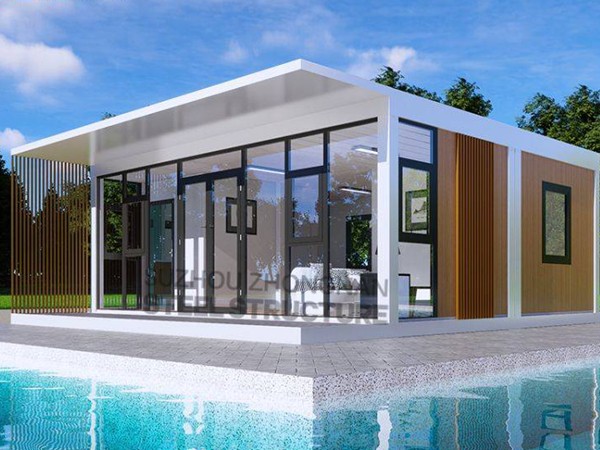
- Seamless Integration with High-End Design: Insulation installation in luxury projects must accommodate complex architectural features, large glazing systems, and intricate interior designs. ZN House’s engineering team meticulously plans the insulation strategy to integrate flawlessly with elements like floor-to-ceiling windows, cantilevers, and sophisticated HVAC systems, ensuring the thermal envelope remains uncompromised while achieving the desired aesthetic. The outer front can retain its original iron aesthetics for a bold statement, contrasting with a meticulously insulated, clean, and modern interior design. Transparent doors and expansive windows connect the structure to its environment and flood the space with natural daylight, all made possible by a robust thermal foundation.
- Holistic Energy Performance: For luxury shipping container homes, insulation is part of a comprehensive energy system. It works synergistically with high-performance glazing (double or triple-paned, low-E coatings), energy-efficient HVAC, and often renewable energy sources to achieve net-zero or near-net-zero energy goals, aligning with the sustainable ethos frequently associated with luxury container living.
FAQs About Luxury Shipping Container Homes
What are the main insulation options ZN House offers for its custom shipping container homes?
ZN House primarily utilizes high-performance solutions tailored to each project: Closed-cell Spray Foam Insulation (SPF) for its superior air-sealing, high R-value/inch, and moisture resistance; Rigid Panel Insulation (PIR/PUR, XPS, EPS) for consistent performance and ease of integration; and Hybrid Systems combining materials to optimize cost, space, and thermal/ acoustic performance for the specific needs of the custom shipping container home.
Is spray foam insulation safe for use in a shipping container tiny house?
Absolutely. When professionally installed in a controlled factory environment like ZN House’s, using high-quality, industry-approved materials, closed-cell spray foam is completely safe. It cures into an inert plastic, emitting no harmful gases. Its space-saving properties and superior air-sealing make it an excellent, safe choice for maximizing comfort and efficiency within the compact space of a shipping container tiny house.
How does ZN House prevent condensation issues inside its luxury shipping container homes, especially in humid climates?
Preventing condensation is critical in luxury shipping container homes. ZN House employs a science-based approach: using insulation systems that act as or incorporate robust vapour barriers (like closed-cell SPF or properly detailed rigid panels with membranes), ensuring complete and continuous air sealing to prevent warm, moist indoor air from reaching cold surfaces, incorporating effective ventilation systems (like HRVs or ERVs) to manage indoor humidity levels, and sometimes utilizing exterior insulation strategies to keep the container’s steel structure within the warm, conditioned envelope, eliminating the cold surface where condensation forms.
Can large windows and glass doors impact the insulation effectiveness of a custom shipping container home?
While large glazing elements are desirable for views and light in custom shipping container homes, they represent areas with lower inherent insulation value (lower R-value) compared to insulated walls. ZN House mitigates this by specifying high-performance glazing (double or triple-pane, low-emissivity coatings, argon gas fill) to maximize the thermal performance of the windows themselves. Crucially, the insulation and air-sealing around the window and door frames within the container structure is executed with extreme precision during factory fabrication to prevent thermal bridging and air leaks, ensuring the overall thermal envelope remains highly effective.
Why is factory-applied insulation advantageous for mass-produced shipping container tiny house and luxury units?
Factory application offers significant quality and performance advantages for all ZN House products, from shipping container tiny house units to expansive luxury shipping container homes. Controlled environmental conditions (temperature, humidity) ensure optimal adhesion and curing of materials like spray foam. Precision machinery and skilled technicians guarantee consistent thickness, complete coverage (especially in hard-to-reach corners), and meticulous sealing around penetrations and joints. This level of quality control is difficult to achieve consistently on-site, leading to superior thermal performance, airtightness, and long-term reliability straight from the factory, ready for immediate use at the destination.
From the high R-value and air-sealing prowess of spray foam to the precision of rigid panels and the sophistication of hybrid systems, ZN House leverages its team-driven approach, global experience, and factory-controlled manufacturing to implement the optimal insulation solution for every project. This ensures that their container homes, widely used as holiday houses, vacation retreats, beach houses, hotels, restaurants, bars, clubs, and coffee shops, are not just structurally sound and visually striking but also provide exceptional thermal comfort, energy efficiency, and durability. The ability to integrate large windows and transparent doors, connect with the environment, and achieve a modern aesthetic – all while maintaining a robust thermal envelope – is a direct result of this commitment to insulation excellence. By addressing condensation risks, maximizing space, and integrating seamlessly with high-end designs, ZN House continues to drive innovation, proving that custom shipping container homes can meet the highest standards of modern living, anywhere in the world.
Similar Posts

Reliable Manufactured Homes for Sale Prefab House Options
In the dynamic realm of real estate, the housing industry is constantly on the lookout for…

Modular Shipping Container House
In today’s rapidly evolving housing market, modular shipping container house solutions have become increasingly popular for those…
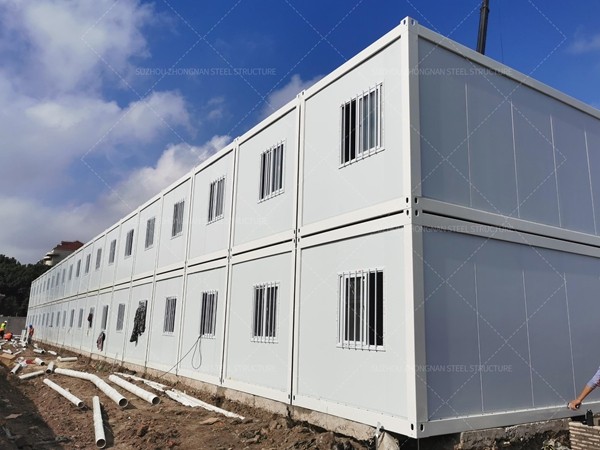
Why Flat Pack Homes are Both Affordable and Efficient
In the ever – evolving real estate market, flat pack homes have emerged as a game –…

Easy Assemble, Assemble & Container Houses: Design Focus
The modern construction industry demands solutions that combine speed, efficiency, and quality. Easy assemble houses, assemble houses, and assemble…

The Future of Housing: Assemble Houses You Can Assemble in a Day
Imagine a world where housing solutions are as flexible and efficient as the technology we use…
The Engineering Behind Durable and Safe Modular Container Homes
The rise of modular container house and container house modular solutions has revolutionized modern construction by combining innovative engineering with…


