



Building Modular Quarantine Centers with Prefab House Units
The global demand for adaptable and rapid-response infrastructure has never been more urgent, and new manufactured homes are emerging as a cornerstone solution for modular quarantine centers. These structures, built off-site using precision engineering, can be transported and assembled in a fraction of the time required for traditional construction. The steel frame of prefab container homes ensures structural integrity while allowing for seamless scalability. Whether deployed for emergency healthcare facilities, temporary housing, or isolation units, these homes are designed to meet stringent safety standards while addressing the need for speed in crisis scenarios.
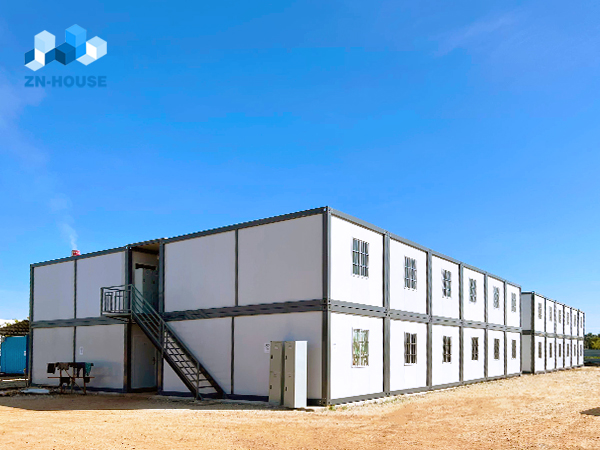
A key strength of new manufactured homes lies in their modular design. Each unit functions as a self-contained module, enabling configurations that range from single-room isolation pods to multi-story complexes. The bolt-and-rivet assembly system simplifies on-site construction, reducing labor costs and minimizing errors. For quarantine centers, this means rapid deployment in areas with limited infrastructure—remote villages, disaster zones, or urban hotspots. The lightweight nature of prefab container homes also lowers transportation costs, making them ideal for international logistics. Governments and organizations increasingly recognize these homes as a reliable tool for pandemic preparedness, offering a balance between durability and flexibility.
Moreover, the adaptability of new manufactured homes extends beyond emergencies. Once a crisis subsides, these structures can be repurposed as schools, community centers, or affordable housing, maximizing long-term value. This dual-use capability aligns with sustainable development goals, reducing waste and optimizing resource allocation. As the world grapples with unpredictable health and environmental challenges, prefab container homes are proving to be a versatile asset in modern infrastructure planning.
Innovative Materials in Prefab Container Homes for Enhanced Safety
Safety and durability are non-negotiable in quarantine facilities, and the materials used in prefab container homes are engineered to exceed expectations. The steel framework provides a robust skeleton resistant to extreme weather, seismic activity, and fire. Walls and roofs utilize sandwich panels filled with rock wool or EPS (expanded polystyrene), materials chosen for their insulation properties and lightweight nature. Rock wool, in particular, offers superior fire resistance and soundproofing, critical for maintaining a calm and secure environment in medical settings.
The modular construction of affordable prefab homes also incorporates airtight seals and antimicrobial surfaces to prevent cross-contamination. High-quality windows and ventilation systems ensure proper airflow while filtering pathogens, a necessity in quarantine zones. These features are not afterthoughts but integral components of the design process, reflecting a deep understanding of healthcare requirements. For instance, electrical and plumbing systems are pre-installed within wall cavities, reducing on-site work and potential exposure risks for construction crews.
Sustainability is another hallmark of prefab container homes. Many manufacturers now use recycled steel and eco-friendly insulation, aligning with global green building standards. The energy efficiency of these homes lowers operational costs—a crucial factor for long-term quarantine facilities. By prioritizing materials that are both safe and sustainable, affordable prefab homes set a new benchmark for responsible construction in high-stakes environments.
Custom Manufactured Homes: Tailoring Solutions for Diverse Needs
No two quarantine scenarios are identical, and custom manufactured homes empower governments and organizations to design facilities that meet specific operational demands. From layout customization to specialized interior finishes, these homes can be modified to include isolation wards, decontamination chambers, or diagnostic labs. The flexibility of custom manufactured homes ensures compatibility with existing medical equipment, such as HVAC systems for negative-pressure rooms or reinforced flooring for heavy machinery.
The design process for custom manufactured homes begins with digital modeling, allowing stakeholders to visualize and adjust configurations before production. This collaborative approach minimizes errors and accelerates project timelines. For example, a quarantine center in a tropical climate might prioritize solar shading and elevated foundations, while a facility in a colder region could integrate enhanced heating systems. Such adaptability is unmatched in traditional construction, where retrofitting often incurs prohibitive costs.
Beyond functionality, aesthetics matter. Custom manufactured homes can be clad in materials that blend with local architecture, reducing the “temporary” feel often associated with emergency structures. This psychological consideration is vital for patient morale and community acceptance. By offering solutions that are both practical and visually cohesive, custom manufactured homes redefine what modular infrastructure can achieve.
Cost-Effectiveness of Affordable Prefab Homes in Large-Scale Projects
Budget constraints are a reality in public health initiatives, and affordable prefab homes provide a cost-efficient alternative to conventional building methods. The off-site fabrication of these units slashes labor expenses by up to 50%, as skilled workers assemble multiple homes simultaneously in controlled factory environments. Reduced construction waste—a byproduct of precision cutting and material recycling—further lowers costs. For governments managing tight budgets, affordable prefab homes offer a way to allocate funds to critical areas like medical staffing or vaccine distribution.
The economic benefits extend beyond initial savings. Affordable prefab homes are designed for disassembly and relocation, enabling reuse across multiple projects. A quarantine center built for a pandemic can later serve as student housing or disaster relief shelters, ensuring continued ROI. Maintenance costs are also minimized due to the durability of materials like galvanized steel and corrosion-resistant fasteners.
In developing regions, affordable prefab homes are democratizing access to safe infrastructure. Their scalability allows phased implementation—starting with a few units and expanding as needed—which is ideal for regions with limited upfront capital. By combining affordability with high standards, these homes are bridging the gap between emergency response and sustainable development.
FAQs: Building Modular Quarantine Centers with Prefab House Units
How quickly can prefab container homes be deployed for quarantine use?
Depending on the scale, prefab container homes can be operational within 2–4 weeks, including fabrication, shipping, and assembly.
Are manufactured homes suitable for extreme climates?
Yes. Custom manufactured homes can be insulated for Arctic conditions or ventilated for tropical heat, ensuring functionality in diverse environments.
Can I modify existing prefab homes to include medical equipment?
Absolutely. New manufactured homes are designed with modular interiors, allowing retrofitting for oxygen lines, electrical upgrades, or reinforced walls.
What is the lifespan of a prefab homes quarantine center?
With proper maintenance, affordable prefab homes last 25–30 years, far exceeding the lifespan of traditional temporary structures.
How do container homes address waste management in quarantine zones?
Many designs include integrated plumbing for waste segregation and treatment, complying with international medical waste protocols.
Discover how our new manufactured homes and prefab container homes can transform your emergency infrastructure plans. Visit https://znsshouse.com/ to explore customizable, cost-effective, and safety-certified options. From custom manufactured homes tailored to your needs to affordable prefab homes that prioritize speed and sustainability, we deliver solutions that save lives and resources. Contact us today for a consultation—your vision for a safer tomorrow starts here!
Similar Posts
Storage Container Home Builders Smart
In an era where innovation and technology are transforming the construction industry, storage container home builders…
Flat Pack Houses: The Back Perfectyard Office or Vacation Retreat?
In the quest for versatile and sustainable living spaces, flat pack homes have emerged as a revolutionary…
Shipping Container Homes for Sale: Where Industrial Meets Luxury
Discover the revolution in modern living with our stunning shipping container homes for sale – the perfect fusion…

How a Collapsible Container House Can Save You Time and Money
In today’s fast-moving world, innovative housing solutions are revolutionizing the construction industry. Folding container house and collapsible container house options…

How to Build Container House
In the booming construction market, the demand for efficient and sustainable housing solutions has led to…

Foldable Container House Modern Living Solution
The construction industry is evolving rapidly, and Foldable Container House solutions are leading this transformation. As a premier…


