



Flat Pack Container Houses vs. Traditional Housing: What’s the Real Difference?
Introduction
Increasingly, modern construction projects require building systems that can respond to the changes based on the needs of the specific timeline, project site, and/or operational requirements. Much of this evaluation is made on a “comparison basis” when comparing Flat pack container homes to traditional houses, made like conventional concrete or masonry structures. The comparison is between the structural systems, methods for construction, the timeframes required for installation, and the flexibility of use of the building. Each building’s structural system is based on a different engineering logic and is designed for very different types of projects. Furthermore, the basis of a Flat Pack house is typical of modern prefabricated modular production. The structural components are manufactured in a factory and then delivered as imported components to the site for installation on the block (aka knock-down assembly).
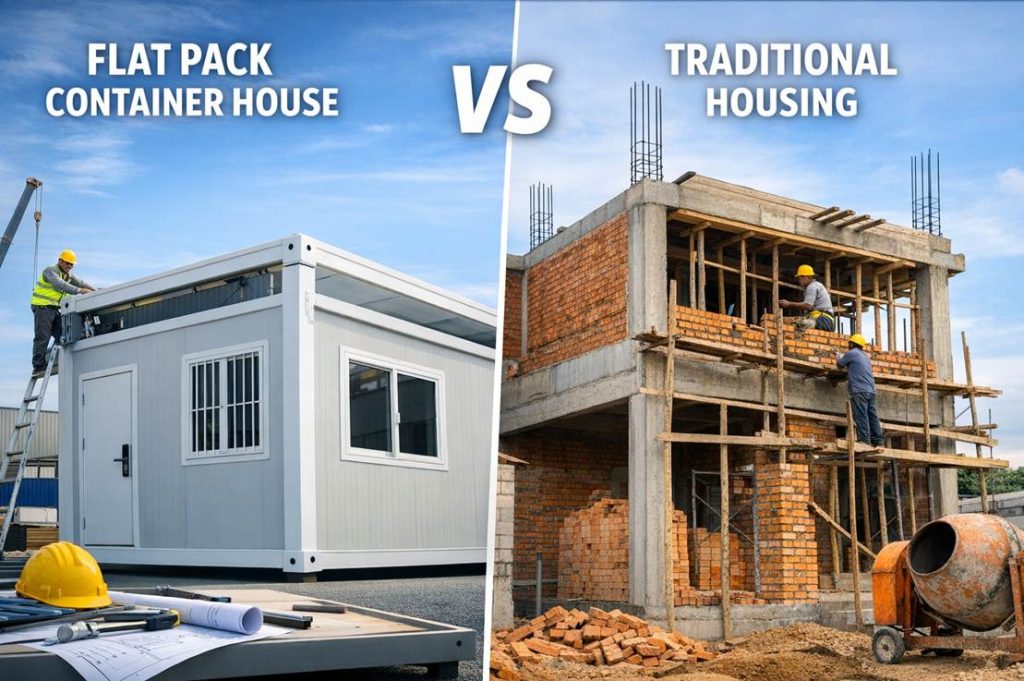
Fig.1: Flat Pack Container House vs Traditional Construction: Delivery Speed Comparison
By contrast, traditional houses are primarily constructed on-site using the sequential (aka circuitous) process of pouring concrete, constructing brick walls, installing reinforcement, and then doing finish work. By understanding the structural differences between these two building types, project managers, developers, and contractors will be better able to select an appropriate construction system (modular or traditional) for their project site and its associated circumstances.
What is a Flat Pack Container House?
A Flat Pack container house utilizes a modular approach through factory-built components that are transported to a location to be assembled. Rather than build the entire house at one site, the majority of the structural components are produced in an industrial factory off-site.
While there are various ways to categorize system types within the ranges of Flat Pack modular housing, prefabricated container houses can be categorized based on their main structural systems, which include standardised framing systems, wall panels, roof systems, and floor components designed for ease of transport and quick assembly.
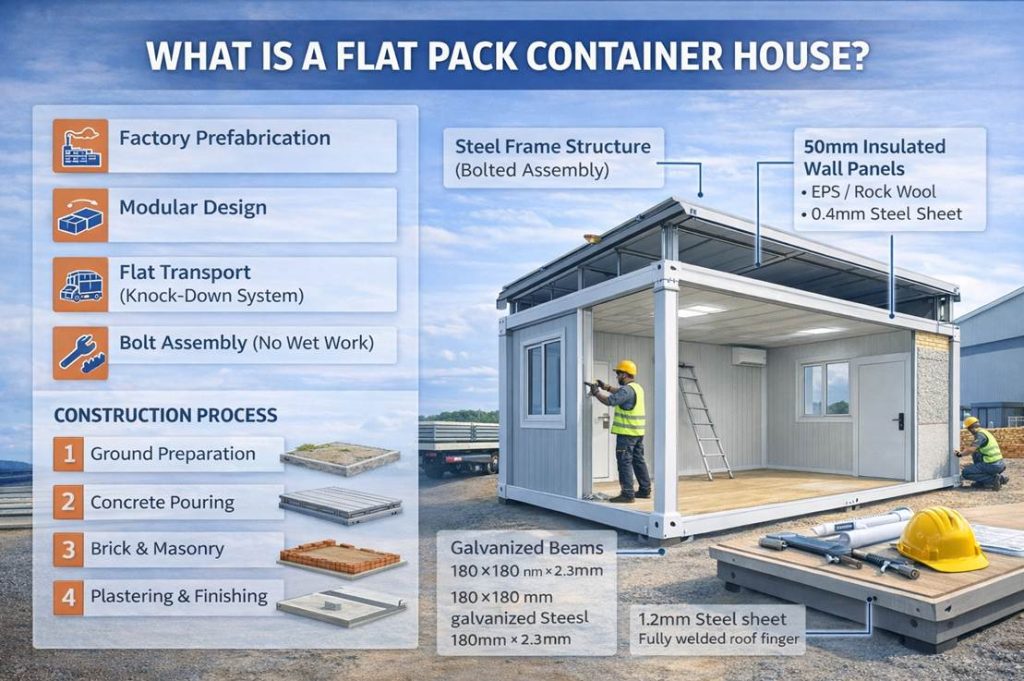
Fig. 2: Flat Pack Container House Structure and Modular Construction System
Industrialized Production Logic
Standardized dimensions are used when manufacturing structural components in a factory; for example, the structural elements of a building would use steel columns that are 180×180×4 mm, with galvanized beams of 180 mm in width and 2.3 mm in thickness, which are used as the primary load-bearing components of the building. Generally, a common flat pack house of ZN House has overall dimensions of 5800 mm (L) × 2438 mm (W) × 2896 mm (H).
The wall systems used in flat pack house can be made of insulated sandwich panels (50 mm) using EPS or rock wool insulation between two outer steel sheets (approximately 0.4 mm thick), which provide enclosure of the building and insulation in one component.
In comparison to traditional construction methods, flat-pack buildings do not require on-site welding, and very little wet work will be performed at the time of installation due to the structural frame being assembled utilizing bolts and mechanical connections. As a result, the weather has less impact on the installation schedule, and the installation process is simplified.
To know how rock wool insulation impacts the temperature of the container houses, read this article.
Installation and Reusability
Once the foundation surface has been prepared, it is possible to assemble a standard unit in a relatively short amount of time. Since the building’s parts are modular in design and connected with bolts, this allows the finished product to be taken down again if the requirements of the project change.
Additional pre-fabricated features (e.g., double-glazed windows (4mm, 6mm, 4 mm), integrated electrical circuits, drainage and insulation systems) will typically be incorporated into the final assembly of the completed unit.
Modular construction logic creates an industrial mindset in manufacturing, with the building being treated as an engineered product and not simply an on-site construction process.
Read this post from our blog on Why Choose Flat Pack Container House?
What is Traditional Housing?
Traditional housing consists primarily of onsite built-up structures from on-site materials, including brick, masonry, and reinforced concrete. Such construction methods have been widely employed in the last 50 years for both residential and commercial structures.
Traditional housing has two general types:
- Brick/concrete structure
- Concrete-framed structure
Both types of conventional housing are constructed in a sequential manner through multiple building phases, with all building phases occurring at the same site.
Construction Process
Building a house using traditional construction methods proceeds in five main steps:
- Preparing the ground for the footing
- Pouring the concrete into the footing
- Bricking and masonry finish work, such as concrete masonry work
- Plastering and other final touches
Each step involves a sizeable amount of coordination between labourers and is dependent on on-site preparation of the materials. Concrete will need time to cure before any additional construction can be done.
Construction Characteristics
Due to the construction project taking place on-site, environmental conditions (rain, temperature, and humidity) tend to affect the construction process. In some instances, delays due to adverse weather may result in construction progress being slowed or schedule modifications. Typically, traditional types of residential housing are built as permanent structures. The structure is typically fixed into the ground on a foundation and cannot be moved after being constructed.
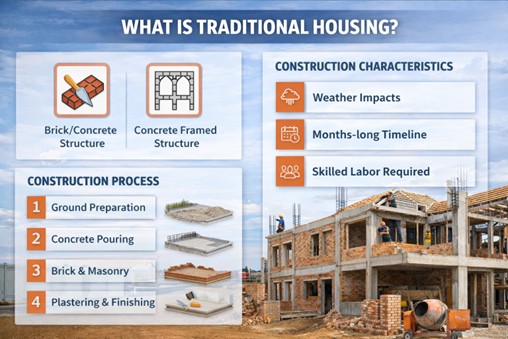
Traditional Housing Construction Process and Characteristics
The cycle length of traditional houses will vary based on the size of the house, structural complexity, and labour availability. For most residential houses, the construction duration comes to several months, from the time of pouring the footing and foundation until completion.
Another aspect of traditional house construction is that it is reliant upon skilled labour to perform the construction activities of a residential house, including the placement of reinforcement steel, pouring of concrete, and masonry work; therefore, these trades will often use multiple subcontractors (acting independently) to perform their work in a specific order/work sequence.
Because of the combined influence of the labour market and scheduling of the trades and/or subcontractors, the project schedule and project cost will be impacted by the availability of labour, as well as the construction schedule.
Direct Comparison of Construction Methods
Flat pack container homes (or “Flat pack house”) and conventional houses differ mostly in their methods of building the home. Flat pack homes use a process called “industrialized prefabrication.” Most parts are manufactured in a controlled factory environment before travelling to the site, while conventional houses are built by using materials that are put together in sequence on-site.
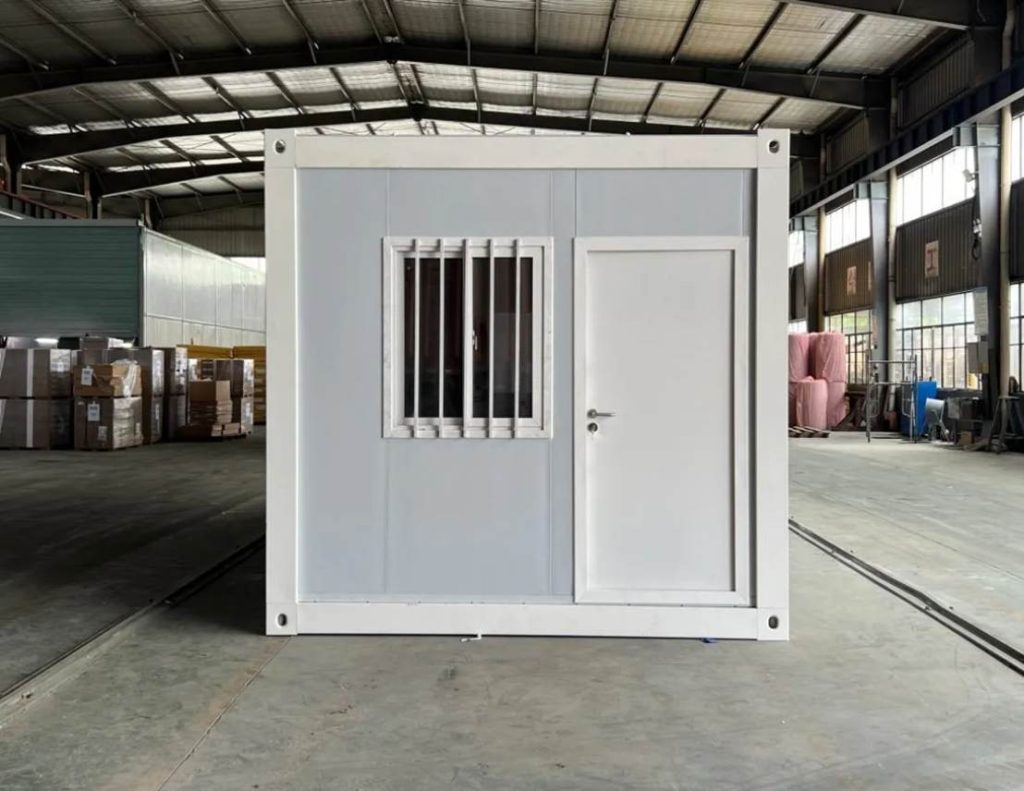
Flat pack homes are built with much fewer steps than conventional homes because they are manufactured ahead of time, allowing most of the construction on-site to be done by putting the parts together structurally and installing the parts to each other. Conventional homes require many different phases of “wet construction,” or processes that involve pouring wet concrete and building with concrete blocks, etc., which must be done one after the other.
A simplified comparison of the two methods has been provided below:
| Characteristics | Flat Pack Container House | Traditional Housing |
| Construction Method | Factory Prefabrication + On-site Assembly | Fully On-site Construction |
| Wet Work Required | No | Yes |
| Construction Cycle | Days to Weeks | Months |
| Mobility | Relocatable | Permanent |
| Weather Impact | Low dependence | High dependence |
Table 1: Comparison between Flat Pack Container House and Traditional Housing
Flat pack containers are ideally suited for practical applications that require quick-to-install, modular housing. On the other hand, traditional housing is typically used for long-term residential developments.
Both types of systems have very different construction logics; one is manufactured in a factory, while the other typically uses traditional craftsmanship.
To know why Western countries choose Flat Pack Container houses, read this post from our blog.
Cost Structure Comparison
There is another research that suggests that modular and/or prefabricated products may reduce total construction cost by as much as 20%, depending on their efficiency to utilize materials more efficiently, cut labour time, and streamline the material delivery process or supply chain operations (Source: KODiFLY).
Evaluating how to build a structure involves more than the cost of materials alone. Other costs will affect the project’s overall cost, including coordinating labour, managing projects, and long-term maintenance.
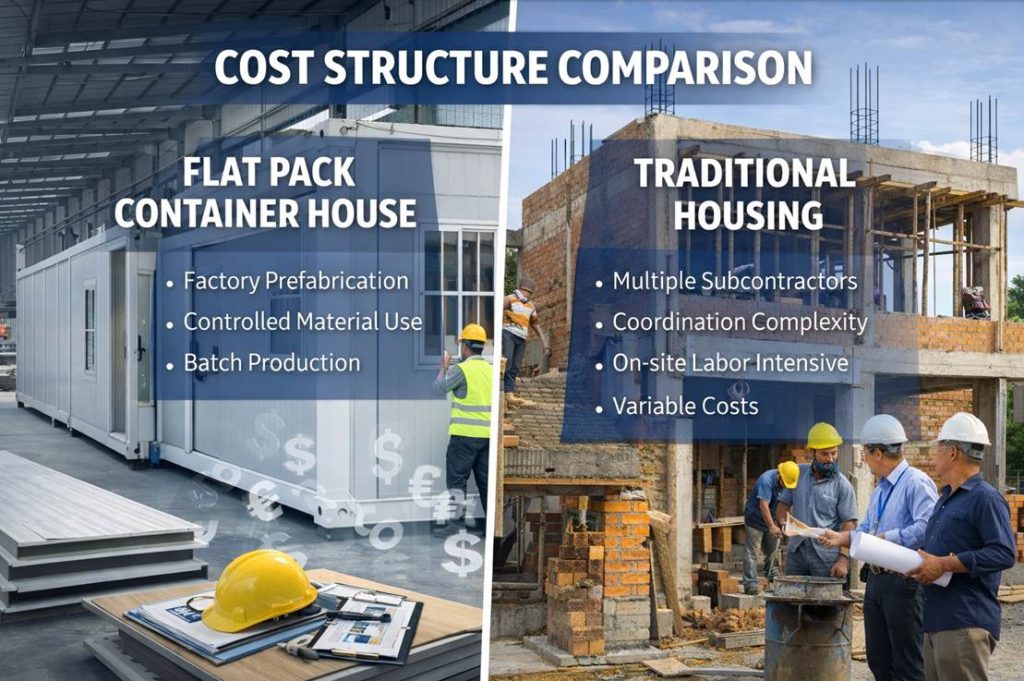
Fig. 4: Cost Structure Comparison: Flat Pack Container Houses vs Traditional Housing
Construction Cost Logic
As the name implies, Flat Pack homes are built from prefabricated materials that have been manufactured in a factory by utilizing standardized processes and techniques. This method enables the manufacturer to manage the use of materials and to improve the efficiency of the manufacturing process. The structural components for Flat Pack houses (beams, columns, wall panels, etc.) are produced from a batch of material; therefore, the labour cost associated with the manufacturing process will be more predictable than for traditional housing methods. The majority of the work that is performed on a traditional home will be done on site and will be subject to fluctuations based on the availability of labour, the availability of material, and the construction schedule.
Indirect Costs
Project management and construction delay indirect expense. For example, in a normal construction project, there are usually many subcontractors involved in the construction of a project, such as foundation workers, concrete workers, masonry workers, electricians, and finishers. Coordinating these subcontractor teams, although required, adds complexity to the overall management of the project.
In contrast to traditional construction methods, the use of prefabricated modular construction systems has reduced the amount of coordination necessary on the job site, as the majority of the structural components (walls, floors, and roofs) are delivered to the site fully constructed and in place for installation.
Life Cycle and Maintenance
Costs associated with ongoing maintenance and modification of the structure can also affect long-term cost estimates. Since individual panels and/or modular components of Flat Pack container homes can be replaced or upgraded individually, reconfigurations of modular sections may permit easier changes in the overall layout.
Changing the layout of a traditional house (especially one with a reinforced concrete frame) typically involves a larger-scale structural modification project than would be required in order to change the layout of a Flat Pack container home.
Both types of homes will need to be inspected and maintained periodically, depending on their level of exposure to the environment and how they are used.
Construction Period and Delivery Speed
Studies show modular building utilizes pre-fabricated methods to shorten construction time from 20%-50%. The creation of the building structural components in a factory versus working on the site allows for work to be performed on both sites at the same time (Source: ConstructionDive).
When developing a project, the timeframe for construction often has a major effect on the overall planning of a project. This is especially true when there are tight deadlines for the delivery of buildings.
Scenario A: Fast Track Construction Projects
Fast-track construction projects usually require the delivery of buildings to remote locations, new infrastructure, or the installation of temporary employee accommodations in a very short time frame.
Fast Track Container Houses are generally better suited for fast-track construction projects where the majority of the structure is pre-fabricated and shipped to the construction site as a flat package. The only on-site construction activity is the assembly of the structure and the finishing of the interior.
Scenario B: Long-Term Residential Communities
Residential developments that will eventually become permanent communities are generally constructed using traditional housing methods that correspond with the long-term planning of the community.
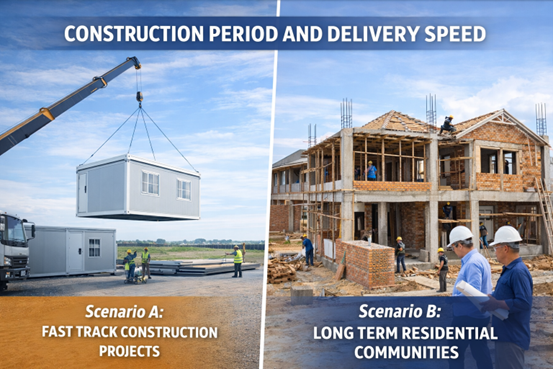
Fig. 5: Construction Period Comparison: Flat Pack Container Houses vs Traditional Housing
For example, permanent residential developments with concrete or masonry construction materials typically have less strict timelines.
In conclusion, the type of construction method chosen is influenced by the urgency of the project and site availability, as well as the expected long-term use of the structure once it is completed.
Durability and Structural Performance
Material quality, design, and environment determine the service or usable life of a structural element. Flat Pack container houses are designed with a steel structural frame comprising components that have been engineered to accept vertical and lateral loads; these components are typically 180×180×4 mm hot-dipped galvanized steel columns and hot-dipped galvanized floor and roof systems (also known as beams). The wall system used generally makes use of 50 mm EPS or rock wool panels, which are sandwiched between 2 steel sheets; these walls provide enclosure, insulation, and fire protection. The roof assembly combines a steel roofing plate, insulation, and an interior ceiling to provide a weather-resistant structure.
Traditional housing uses reinforced concrete and masonry materials (i.e., wood or metal) as they are strong under compressive loads and can withstand the test of time. While both construction systems (i.e., steel frame and concrete/masonry) can be engineered to achieve the required wind, seismic, and load-bearing capacity, they have different design philosophies and construction methods.
Flexibility and Expansion
One more difference between modular construction and conventional construction is flexibility. Typically, flat-pack-container-houses utilize a modular grid design. Larger buildings can be created by horizontally joining or vertically stacking additional units. Due to the prefabrication nature of modular systems, most designs allow for expanded designs to be achieved through the addition of additional modules.
Conversely, most types of conventional housing consist of a completed structure with an architectural layout that generally cannot change unless the walls and/or foundation are altered. If projects will develop through time, modular systems can provide more opportunities to change to meet these evolving needs.
Applicable Scenarios
Types of construction systems that may be used will vary according to the type of project.
Flat Pack container homes are commonly used for:
- Construction of site offices and dormitories
- Temporary accommodation for projects
- Projects requiring remote infrastructure
- Providing emergency housing after a disaster
- Providing relocation or transitional housing
Some examples of when to use traditional housing structures include:
- Permanent residential developments
- Long-term family housing and apartment buildings
- Permanent institutional buildings and municipal buildings
Which option to use is determined mainly by how long the project is expected to be in use, what infrastructure will be required, and any future planning that may be necessary for the project.
How to Choose?
The choice of using either a Flat Pack container house or conventional housing will depend on the project goals and what is being prioritised by those involved in the project. Important issues to consider are installation speed, if the building will need to be relocated, the length of the project; ability to schedule the project, and the importance of cost predictability.
Flat Pack systems are more appropriate for projects that need rapid delivery, modular expansion, or structures that can be relocated. Conventional housing is more appropriate for permanent long-term housing as part of larger urban development, where longer construction timelines are acceptable.
Both methods are valid solutions from an engineering perspective; therefore, the most appropriate option is one that meets a project’s functional & operational requirements.
Frequently Asked Questions
Are Flat Pack container houses suitable for long-term residence?
Container homes by flat pack work well as temporary to semi-permanent homes if built correctly with steel frames, insulated wall panels, and waterproof roofs. The inside of a flat pack container can be made comfortable, but for long-term use, container homes must have a stronger foundation, comply with local building codes, and fully integrate utilities to operate as a legitimate residence.
Are traditional residential structures more robust?
Reinforced concrete houses are a common building method for long-lasting permanent buildings because of their strength and durability. Similarly, modular steel buildings can also have the same load-bearing and safety requirements as brick or concrete. In either case, a structure’s ultimate strength is determined by the design, calculation, and workmanship of the project, not necessarily by which method (steel or concrete) of construction was used.
Which construction method saves more time?
The construction timeframes will vary based on the size/complexity of the project. Container houses built with Flat Pack technology allow faster delivery than traditional methods since most of the components are pre-manufactured before they arrive at the job site; therefore, there is less to do on-site than for traditional housing, which has multiple sequential phases (i.e., install reinforcement, cure concrete, build masonry) that tend to slow down the process overall.
Can Flat Pack container houses be used in remote areas?
Yes. In many places around the globe that are remote, modular containers can be sent flat-packed so they can be assembled on-site with only simple tools. Because of this, fewer construction materials and significantly smaller crews need to be at the project site.
How should lifecycle costs be compared?
Lifecycle cost analysis must consider construction, maintenance, upgrades, and long-term operations. Modular buildings offer the ability to easily replace or reconfigure components, whereas a traditional building may require more invasive structural changes to allow for relocation of the entire structure; however, traditional buildings are less likely to be relocated.
To know more about the Flat Pack Container Houses, visit our Product Page here.
Conclusion
Flat Pack container houses and traditional housing follow different engineering approaches and serve different project needs. Traditional housing depends on on-site masonry and reinforced concrete work, resulting in permanent structures with longer construction periods. Flat Pack systems use factory-made modular components that assemble quickly on site, offering faster delivery and greater flexibility.
The most suitable option depends on factors such as project duration, location, mobility requirements, and operational goals. Reviewing technical specifications and aligning them with project needs helps planners and developers determine which building system provides the best overall fit.
The engineering specialists at ZN House can offer thorough technical assistance regarding your project specifications if you’re considering modular building solutions for a construction project, a remote location, or temporary facilities. To discover how modular container housing can be modified according to your project requirements, get in touch with ZN House.
Watch the following video on “Elevate Your Commercial Spaces with the Grey Flat Pack Container Reception Room”:
Similar Posts

Flat Pack Container Living Made Easy
The flat pack container house is becoming a practical and popular choice for people who want fast,…
Flat Pack Homes Price Guide: Affordable Housing Solutions
The demand for cost-effective, sustainable housing has made flat pack homes for sale a popular choice worldwide. These flat…
Step-by-Step Guide to Assembling a Flat Pack House
The rise of modular construction has introduced innovative housing solutions that combine affordability, efficiency, and sustainability. Flat…
Flat Pack Homes Winter Insulation Techniques
Flat Pack Homes Winter Insulation Techniques are essential for enhancing the comfort, energy efficiency, and longevity…
Why Choose a Container Dormitory in the Philippines?
A container dormitory is a modular housing solution made from shipping containers or prefabricated container units….
Container house price facts every homeowner should knowFolding Container House
Container house price depends on size, design, and location. Learn key cost factors and how container homes compare to traditional housing.


