



Flat Pack vs Foldable vs Expandable: Which Container Home Is Best?
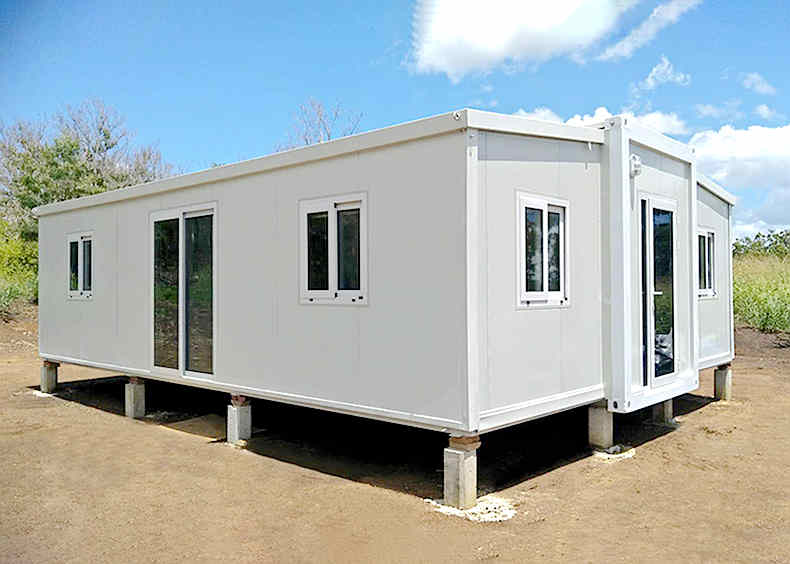
Flat pack container houses are the most freight-efficient and cost-controlled for bulk projects; foldable container houses deploy fastest with minimal crane time; expandable container units deliver the largest on-site area and best livability per module. Choose by project scale, timeline, climate/insulation needs, and local code requirements.
What each system actually means
Flat pack container house
A flat pack container house ships as a kit of pre-engineered floor, wall, and roof panels (plus doors/windows, MEP conduits) that bolt together on site. It optimizes container store shipping space and keeps freight costs predictable. Best for multi-unit orders (offices, container classrooms, dormitories, site camps) where consistent quality and repeatable assembly matter. Flat packs are common from a container house factory in Asia, especially China container house suppliers, though there are capable folding house manufacturers USA for certain lines too.
Foldable container house
A foldable container house (a.k.a. collapsible container house, foldable house container, portable folding houses) arrives as a steel “box” that unfolds, walls hinge up, roof locks in, finishes are pre-installed. Expect the fastest on-site setup: a small crew can deploy many units per day. Ideal for refugee camp, emergency containers, pop-up container office or container classroom needs, and seasonal container camping solutions.
Expandable container house
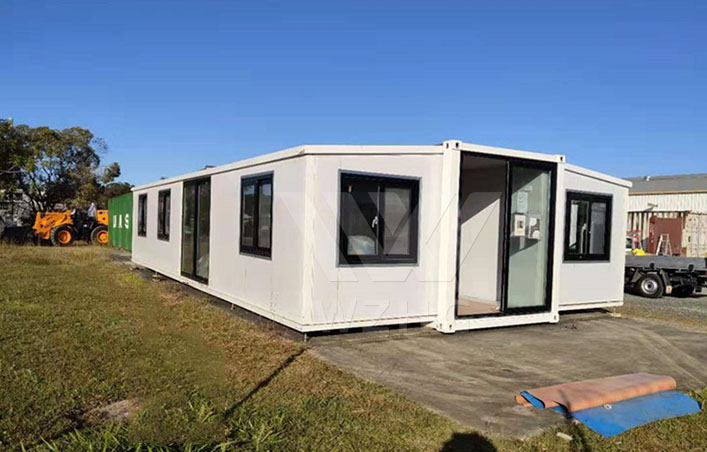
An expandable container house transports at ISO width but slides out on both sides to create a much larger footprint, great for modern prefab houses, 2 story modular homes (when stacked), family layouts, or a u shaped container house concept when several are arranged around a courtyard. Expandables can integrate richer interiors, larger glazing, and superior insulation for long-term container house construction.
Related terms you’ll see: detachable container house (modules disconnect for maintenance), modular container houses/prefab buildings (factory-built volumes assembled on site), house container factory (OEM manufacturing base), and prefabricated construction (umbrella method covering all of the above).
Side-by-side comparison
Transport & freight efficiency
- Flat pack: Highest packing density (multiple kits per 40-ft). Strong choice when importing from container houses China/Chinese container house suppliers or any large container supplier.
- Foldable: Ships as single folded units; density is good, but hinges and pre-installed fittings occupy space.
- Expandable: Lowest freight density (mechanisms and frames add bulk). Offsets freight with superior livable area on site.
Speed on site
- Foldable: Fastest. Can be lifted, unfolded, and weather-tight within hours.
- Flat pack: Fast for trained crews; predictable bolt-up (think flat pack container house factory repeatability).
- Expandable: Quick once positioned, but extension, level, and sealing steps take longer than foldables.
Structure & lifespan
- Flat pack: Robust frames plus panelized walls; consistent QC from mature factories in container house china ecosystem.
- Foldable: Repeated folding cycles require hinge maintenance; great for short- to mid-term deployments (camps, classrooms).
- Expandable: Heavier frames, more moving parts; excellent long-term comfort if maintained (seals, sliders).
Insulation, acoustics & comfort
- Flat pack: Flexible specs—from budget rockwool to high-performance closed-cell foam.
- Foldable: Factory-set insulation; verify R-values for hot-humid climates (e.g., container house malaysia, container house philippines) and wind/cyclone tie-downs.
- Expandable: Best potential for thermal breaks, thicker walls/ceilings, and quiet HVAC zoning—ideal for container hotel, container pool villas, or shipping container apartment concepts.
MEP integration (electrical, plumbing, HVAC)
- Flat pack: Pre-routed conduits and junctions make serial assembly clean, especially for container office building or shipping container store rollouts.
- Foldable: Pre-wired units simplify rapid deployment for disaster relief containers, refugee camp WASH blocks, container toilets for sale.
- Expandable: Room for premium bathrooms, toilet container suppliers specs, and larger kitchens.
Code & compliance
- Check fire ratings, egress, wind/seismic anchoring, and corrosion protection. In Saudi Arabia, specify desert-grade coatings and sand-proof HVAC; in Malaysia/Philippines, emphasize anti-corrosion, moisture barriers, and typhoon tie-downs. In the USA, align with local zoning and energy codes (and verify folding house manufacturers USA certifications).
Maintenance & lifecycle cost
- Flat pack: Panels and seals are easy to replace.
- Foldable: Hinge/locking systems need periodic inspection.
- Expandable: Slider mechanisms and seals are the main long-term items; plan a maintenance schedule.
Which one should you pick? (Use-case picker)
Residential & small hospitality
Choose expandable container house for livability, daylight, and space planning. Cluster two or three around a court for a u shaped house layout, add shading, and consider a container pool. For budget builds, a flat pack with upgraded insulation can meet comfort targets.
Offices, classrooms & workspace
For site office container, container office for sale, or container office price-sensitive projects, flat pack shines due to scale and standardization. Need immediate classrooms? Go foldable for speed—especially for remote schools buying shipping container classrooms for sale.
Camps, dorms & relief
Foldable wins for rapid deployment of container camp, container dormitory, container van dormitory, agriculture camp, mining camp, soldier camp, and medical container hospital nodes. Pair with shipping container toilets and showers in modular WASH blocks.
Retail, F&B & pop-ups
For shipping container shop, container street concepts, or container workspace, flat pack offers tight cost control and easy finish customization. Expandable modules can create bigger service areas without stacking.
Price & cost drivers (without guessing numbers)
Avoid fixed global numbers, costs vary with steel markets, finish specs, and country codes. Instead, budget using these levers:
- Structure: frame gauge, anti-corrosion system, cyclone/wind kits
- Envelope: insulation type and thickness, glazing quality, thermal breaks
- MEPs: electrical amperage, HVAC tonnage, plumbing fixtures (WASH standards)
- Finishes: flooring (vinyl, SPC, tile), bathrooms (waterproofing, coved skirtings), acoustic partitions
- Logistics: ocean freight, last-mile crane/rigging, site prep, foundations
- Scale: multi-unit orders from a container house manufacturer or prefab container house factory improve unit economics
As a rule of thumb: flat pack tends to be the most cost-efficient for multi-unit orders; foldable can be mid-range but saves big on setup time; expandable typically costs more per unit but offers more usable area and higher comfort—valuable for permanent housing or hospitality.
Sourcing & quality assurance (especially for imports)
Whether buying a container house from China or domestically:
- Vendor verification: Ask for factory license, ISO/QMS, welding qualifications, and recent third-party audits.
- Technical pack: GA drawings, container house design specs, materials list (BOM), insulation data, window/door schedules.
- Samples & mock-ups: Approve a bathroom pod or wall-roof junction before mass production.
- Tests: Electrical insulation tests, water-tightness, load tests; if targeting soundproof shipping container performance, request STC/Rw lab data.
- Trade terms: Use clear INCOTERMS (EXW/FOB/CIF), insurance, and staged payments (LC/Escrow).
- Inspection: Pre-shipment inspection with punch list; verify spares for hinges, locks, and seals—important for detachable house or foldable container house maintenance.
Installation checklist you can hand to your GC
- Site & foundation: Soil bearing verified; storage container buildings pads/pier blocks levelled; anchoring per wind/seismic.
- MEP intake: Power capacity, panel boards, earthing; water supply/pressure; grey/blackwater routing and treatment (especially for container toilet clusters).
- Weathering & waterproofing: Roof edges, window flashings, door thresholds; bathroom membranes with coved skirting.
- Thermal & moisture control: Vapor barriers inside insulation for humid climates; avoid thermal bridges.
- Fire & egress: Fire-rated partitions where required; exit widths, signage, hardware.
- Commissioning: HVAC, electrical, plumbing, smoke/CO detectors; document serials and warranties.
- Handover pack: O&M manuals, spare parts, maintenance schedule.
Common mistakes to avoid
- Treating ISO boxes as “plug-and-play” houses: Even shipping container house builders must adapt to local codes and climates.
- Under-specifying insulation: Hot-humid countries (e.g., container house philippines, container house malaysia) need robust moisture control; arid zones need UV and dust management (e.g., container house in saudi arabia).
- Ignoring last-mile costs: Cranes, permits, and road access can erase savings if not planned.
- No corrosion plan: Coastal installs need marine-grade coatings, sacrificial anodes, or stainless hardware.
- Skipping QA: A missing inspection on a customised shipping containers order often becomes an expensive on-site fix.
FAQs (People Also Ask style)
Are flat pack, foldable, and expandable units all “modular houses”?
Yes. All three are forms of prefabricated construction. They differ in how they ship and how quickly they assemble.
Which type is fastest to install?
Foldable. Most arrive pre-finished; crews can deploy multiple units per day for container camp or classroom needs.
Which offers the best comfort for families?
Expandable. You get more width, better room layouts, and space for higher-spec insulation and HVAC zoning.
If I need 50 site offices quickly, what’s best?
Flat pack. It scales well, keeps freight efficient, and standardizes MEPs for a site office container fleet.
What about long-term maintenance?
Flat packs: simple panel and seal replacement. Foldables: inspect hinges/locks. Expandables: maintain sliders and weather seals.
Can these be stacked for 2 stories?
Yes—verify structural frames and foundations. Many projects deliver 2 story shipping container house or 2 story modular homes safely with engineering sign-off.
Do I need permits?
Almost always. Check zoning, egress, fire ratings, structural loads, energy code, and sanitary approvals before ordering.
Conclusion
Choose flat pack when freight optimization and scale matter, foldable when speed is everything, and expandable when livability per module drives value. For schools, offices, storage container office hubs, and relief housing, define your container house price targets by structure, envelope, MEPs, finishes, and logistics. Work only with a verified container house manufacturer/prefab container house partner, insist on drawings and test data, and plan installation like any serious build. Done right, container systems deliver fast, durable spaces—from shipping containers storage sites and container office blocks to family homes, pop-up retail, and full container hotel concepts.
Similar Posts
Why Choose Container House Resort?
In recent years, in the tourism industry, a novel accommodation option – container house resorts, is…
Prefabricated Resettlement Homes: A Reliable Solution for Government Housing Projects
Government housing programs are often caught in a dilemma of speed, cost, and quality. After natural…
What Is Temporary Accommodation on a Construction Site
Temporary accommodation on construction sites plays a crucial role in ensuring that construction projects run smoothly…
Why Choose Flat Pack Container House
The flat pack container house commonly known as the flat pack house, is a type of…
EPC Project Camp Construction — Practical Implementation of a Container-Based Approach
In outdoor Container Camps for EPC such as infrastructure, new energy, and mining, the efficiency and…
How to Install a Flat Pack Container House: Step-by-Step Guide (With Tools, Timeline & Tips)
Introduction Flat pack container houses fall into the category of modular homes and have come a…


