



Modular Container House Foundation Options
Modular container house—including durable modular shipping container house and customizable prefab modular container house variants—relies on stable, site-adaptable foundations to ensure structural safety, especially in emergency, residential, or commercial scenarios. Unlike traditional buildings that demand complex, time-consuming foundations, modular container house foundations prioritize speed, cost-efficiency, and compatibility with prefabricated components—critical for wholesalers serving disaster relief organizations, construction firms, or hospitality developers. For wholesalers, partnering with a manufacturer that provides foundation-matched modular container house solutions is key. Suzhou Zhongnan Steel Structure Co., Ltd. (ZN House), founded in 2005 and a leader in modular housing, excels here: they craft modular shipping container house and prefab modular container house models with pre-assembled roofs/floors, designed to pair seamlessly with diverse foundation types—all while offering anti-rust galvanized steel frames and customizable interiors. With exports to 50+ countries and 30+ international agents, ZN House is a trusted bulk partner for wholesalers seeking foundation-flexible modular container house options.

Gravel Pad Foundations for Modular Shipping Container House
- Quick Installation for Modular Shipping Container House: Modular shipping container house thrives with gravel pad foundations—an ideal choice for temporary or semi-permanent use (e.g., construction site offices, disaster shelters). This foundation type requires only leveling the site, laying a geotextile fabric (to prevent weed growth), and filling with compacted gravel (3–6 inches deep). ZN House’s modular shipping container house models, with their pre-assembled floors, sit directly on gravel pads without extra support, cutting installation time by 70% vs. concrete foundations. For example, a disaster relief team can set up 10 modular shipping container house units on gravel pads in 1 day, getting shelter to survivors fast. Unlike concrete, gravel pads require no curing time and use locally sourced materials—reducing shipping costs for wholesalers’ clients in remote areas. This speed and cost-efficiency make gravel pads a top pick for wholesalers targeting time-sensitive projects.
- Drainage Benefits for Prefab Modular Container House: Gravel pad foundations offer natural drainage, a major advantage for prefab modular container house in rainy or flood-prone regions. The porous gravel lets water seep through, preventing pooling under the modular container house (which causes frame rust or floor rot). ZN House recommends gravel pads for prefab modular container house used in tropical climates (e.g., Southeast Asian disaster shelters) or muddy construction sites, where standing water is common. For instance, a prefab modular container house on a gravel pad in a monsoon zone remains dry even after heavy rains, while one on bare ground would suffer water damage within months. This durability reduces maintenance costs for clients, making gravel pads a valuable selling point for wholesalers.
Concrete Strip Foundations for Prefab Modular Container House
| Foundation Attribute | Key Feature for Prefab Modular Container House | Ideal Client Use Case | ZN House Advantage | Wholesaler Value |
| Load-Bearing Capacity | 4–6 inch wide concrete strips; supports 100+ lbs/sq.ft | Permanent residential modular container house, hotels | Matches ZN House’s galvanized steel frame weight; no sagging | Appeals to long-term use clients |
| Site Adaptability | Works on sloped or uneven ground (strips adjusted for grade) | Hilly campgrounds, rural hospitality projects | Pre-cut frame brackets fit concrete strips; no custom drilling | Caters to challenging terrain clients |
| Durability | Resists frost heave (in cold climates) with rebar reinforcement | Cold-climate mining camps, northern residences | Compatible with ZN House’s insulated sandwich panels | Fits global climate needs (50+ countries) |
| Installation Ease | Requires basic concrete mixing; no heavy machinery for small strips | Local construction firms, community housing | Modular container house pre-assembled parts align with strips | Appeals to clients with limited equipment |
Concrete Slab Foundations for Modular Container House
- Permanent Stability for Modular Container House: Concrete slab foundations (4–8 inches thick, reinforced with rebar) are perfect for permanent modular container house use (e.g., urban apartments, coffee shops—popular uses for ZN House’s customizable models). The slab acts as a solid base for modular container house frames, preventing shifting over time and supporting heavy interior fixtures (e.g., kitchen cabinets, bathtubs). ZN House’s modular container house units, with their pre-assembled floors, bond directly to concrete slabs via anchor bolts, creating a seamless, rigid structure. For example, a modular container house converted into a coffee shop on a concrete slab remains stable even with daily foot traffic and heavy equipment (e.g., espresso machines), requiring no repairs for 10+ years. This permanence appeals to wholesalers’ clients seeking long-term investments, such as hospitality developers or urban housing providers.
- Customization Compatibility for Modular Shipping Container House: Concrete slab foundations support the customizable nature of modular shipping container house—ZN House’s clients can add features like under-slab heating (for cold climates) or built-in storage hatches (for extra space) during slab installation. Unlike gravel pads, slabs provide a flat, solid surface for custom interiors (e.g., tile flooring, built-in desks) that enhance the modular shipping container house’s appeal as a permanent space. For instance, a modular shipping container house used as a luxury glamping unit can have a concrete slab with under-slab heating and a built-in fire pit pad, elevating guest comfort. This customization lets wholesalers market modular shipping container house to premium clients, expanding their customer base beyond temporary-use scenarios.
Modular Container House FAQS
Can Modular Container House Foundations Be Reused for New Units?
Yes— most modular container house foundations (gravel pads, concrete strips, slabs) can be reused if the original unit is relocated or replaced. Gravel pads require only re-leveling and adding fresh gravel to reuse for a new modular shipping container house. Concrete strips or slabs, with their durable structure, can support new prefab modular container house units as long as the anchor bolt holes are re-drilled (ZN House provides guidance on bolt spacing for compatibility). For example, a construction firm can move a modular container house office from one site to another and reuse the concrete slab for a new unit at the original site, saving 50% on foundation costs. This reusability reduces waste and lowers long-term expenses for clients, making it a key selling point for wholesalers.
Do Prefab Modular Container House Need Different Foundations for Stacked Units?
Stacked prefab modular container house (e.g., 2–3 floors) require reinforced foundations—typically concrete strips or slabs with extra rebar—to handle increased weight. ZN House’s stacked prefab modular container house models (popular for dormitories or multi-unit housing) need foundations that support 150+ lbs/sq.ft (vs. 100 lbs/sq.ft for single units). For example, a 2-story prefab modular container house dormitory would use concrete strips with double rebar, ensuring the foundation can hold the weight of two units plus occupants and furniture. Unlike single units, stacked models also require alignment guides (included with ZN House’s bulk orders) to keep units level on the foundation. Wholesalers can advise clients on reinforced foundation specs, ensuring safe stacking for high-density projects.
How Do I Choose the Right Foundation for Modular Shipping Container House?
The right foundation depends on three factors: 1) Use case (temporary vs. permanent)—gravel pads for temporary modular shipping container house, concrete slabs for permanent use; 2) Climate—gravel pads for rainy regions (drainage), concrete with frost heave protection for cold areas; 3) Site terrain—concrete strips for sloped ground, gravel for flat sites. ZN House provides a “foundation guide” for wholesalers, matching modular shipping container house models to site conditions (e.g., gravel pads for African disaster shelters, concrete slabs for European urban apartments). This guidance helps wholesalers’ clients avoid mismatched foundations, reducing installation delays and repair costs.
Can Modular Container House Foundations Be Installed Without Heavy Machinery?
Yes— most modular container house foundations (gravel pads, small concrete strips) can be installed with manual labor and basic tools (shovels, rakes, concrete mixers), no heavy machinery needed. Gravel pads require only hand-leveling and compaction with a manual tamper. Small concrete strips (for 1–2 modular container house units) can be mixed by hand or with a portable mixer. ZN House’s pre-assembled modular container house units are designed to fit these manually installed foundations, so clients in remote areas (with no access to cranes or excavators) can still set up units. For example, a rural community in Africa can install 5 modular container house units on gravel pads with 3–4 workers and basic tools, avoiding machinery rental costs. This accessibility expands wholesalers’ reach to clients in low-resource regions.
What Maintenance Do Modular Container House Foundations Require?
Modular container house foundations need minimal maintenance: Gravel pads require topping up with fresh gravel every 1–2 years (especially in high-traffic areas). Concrete strips/slabs need annual inspections for cracks—small cracks can be sealed with concrete caulk (provided in ZN House’s bulk accessory kits) to prevent water damage. For modular shipping container house in coastal areas, gravel pads should be checked for saltwater erosion, and concrete foundations may need a fresh coat of anti-rust paint on exposed rebar. This low maintenance saves clients time and money, making modular container house a hassle-free option. Wholesalers can include maintenance guides with bulk orders, enhancing client satisfaction and repeat business. To explore ZN House’s full range of modular container house models and foundation compatibility tools, visit our official website today.
Similar Posts

China Container House for Practical Living
The china container house has become a practical housing and space solution that ordinary people can truly…
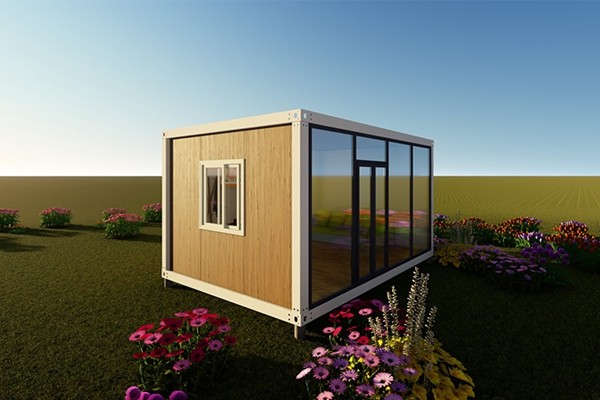
Flat Pack House: Design & Customization for Modern Living
The flat pack house revolution is here, offering affordable, customizable, and sustainable housing solutions for modern living. Whether…

Are flat pack mobile homes durable for full-time living
The quest for affordable, efficient, and sustainable housing has led to a significant shift in the…
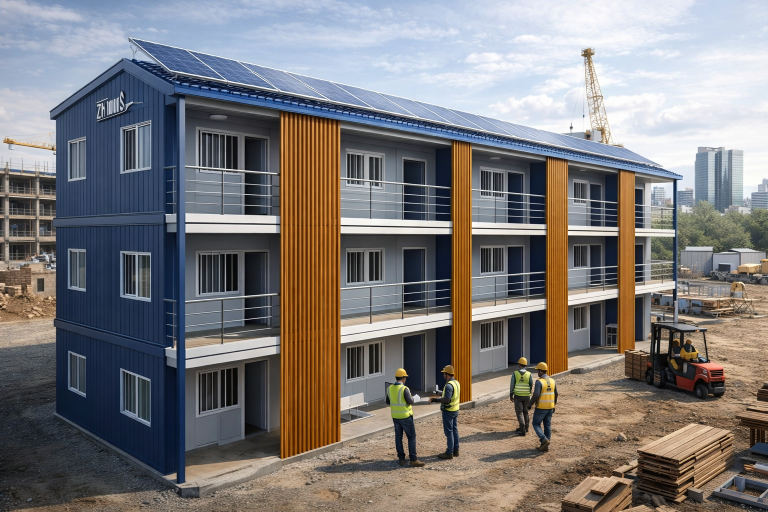
The Future of Workforce Housing: A Guide to Container Dormitory Solutions
The need for fast, quality, and scalable housing has just about gone through the roof, especially…
The Evolution of Modern Living: A Deep Dive into Prefab Homes in Asia
The construction landscape across Asia is changing. The rapid urbanization and the need for sustainable housing…
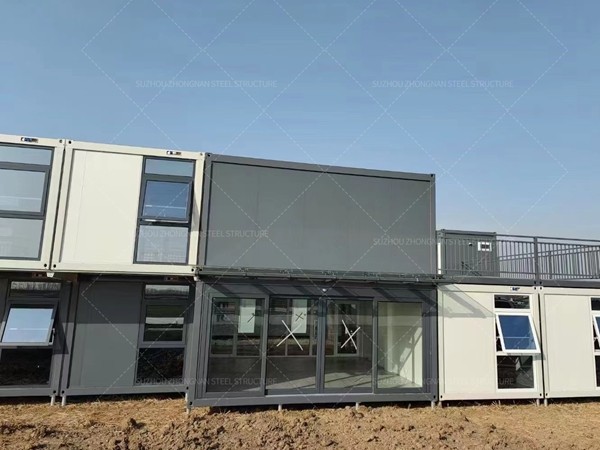
Foundation Options for a Modular Container House
The rise of prefabricated and sustainable construction has positioned modular units as a leading solution for…


