



Prefab House For Harsh Climates: Engineering Resilience In Extreme Environments
In the face of escalating climate volatility—from Arctic tundras to scorching deserts—traditional construction often falters. Enter prefab houses, a revolution in resilient architecture. Born from innovation, these structures merge speed, sustainability, and robustness, offering sanctuary where conventional methods fail. At the forefront stands ZN House, a pioneer since 2005. Starting in Suzhou, the company filled a critical gap in high-safety, customizable prefab container house solutions. With a mission to build “Mobile Homes for the World,” ZN House exports to 50+ countries, supported by 30+ global agents. Their modular expertise transforms steel boxes into fortified havens, proving that adaptability and endurance can coexist.
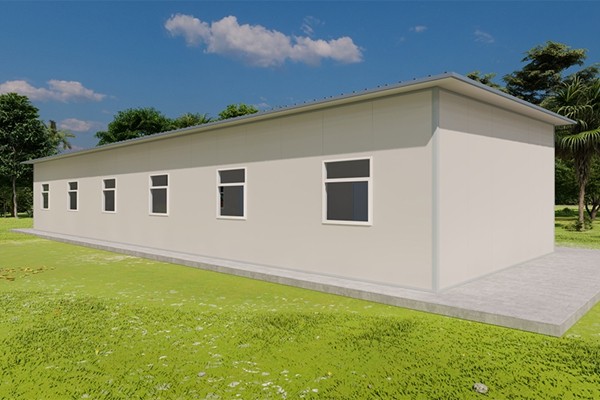
Prefab House: Engineering for Extreme Elements
Prefab houses are redefining durability in unforgiving terrains. Unlike site-built homes, these structures are factory-crafted under controlled conditions, ensuring precision engineering to combat snow loads, hurricanes, or seismic shifts. ZN House integrates military-grade steel frames with aerogel insulation (R-values up to 40), maintaining interior stability amid -40°C winters or +50°C summers. Walls undergo triple-coating anti-corrosion treatments, while interlocking modular joints distribute structural stress evenly. For permafrost regions, adjustable hydraulic stilts prevent ground-heave damage; in flood zones, buoyant foundations add passive safety. These scientific adaptations make prefab houses ideal for research stations in Antarctica or oil rigs in the Sahara.
Table: Core Advantages of Prefab Container Houses
| Parameter | Impact in Harsh Climates |
| Rapid Deployment | 90% faster build time; critical for disaster relief or seasonal weather windows. |
| Cost-Effectiveness | 30–50% savings vs. traditional builds; no budget overruns from weather delays. |
| Versatile Design | Configurable layouts for blizzard-proof entrances or desert cross-ventilation. |
| Minimal Site Disruption | Reduced noise/pollution; vital for ecologically sensitive zones like tundras or rainforests. |
| Eco-Friendly Construction | 70% recycled steel; solar-panel-ready roofs for off-grid resilience. |
Prefab Container House: Fortress Against Nature’s Fury
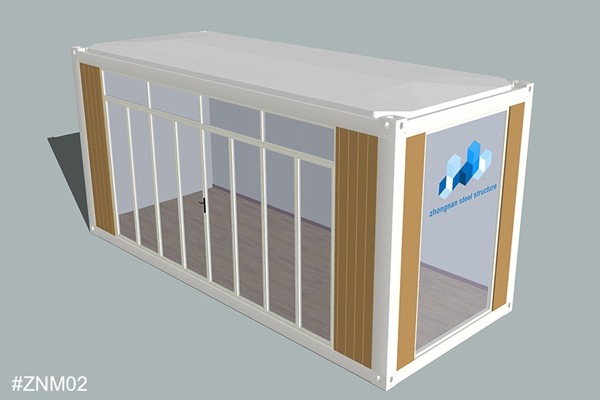
The prefab container house excels as a climate warrior. ZN House repurposes shipping containers into storm-resistant cubes, reinforcing corners with carbon steel braces to withstand 150-mph winds. In wildfire-prone areas, non-combustible mineral wool cladding replaces timber, while Arctic editions feature triple-glazed windows with thermal breaks to eliminate ice buildup. One Canadian mining camp uses ZN’s stacked-container design to endure -60°C winters, with integrated heat-recovery systems slashing energy use by 45%. For corrosion resistance, containers receive hot-dip galvanization and marine-grade paint—proven in coastal Saudi Arabia deployments where salt spray devours conventional builds. These homes aren’t just shelters; they’re engineered ecosystems.
Large Prefab Homes: Expansive Yet Unyielding
When space meets survival, large prefab homes deliver. ZN House constructs sprawling 400m² residences by merging multiple containers into seamless floor plans. In Mongolia’s wind-swept steppes, cantilevered extensions create snow-deflecting overhangs, while Australian bushfire survivors use fire-retardant composite decks. The secret? Unified thermal envelopes. HVAC ducts embed within walls, avoiding thermal bridges, and smart moisture barriers prevent condensation in humid climates. A Siberian family compound features a central atrium linking four containers, creating a microclimate buffer zone. Such scalability supports communities—think schools in typhoon-hit Philippines or worker hubs in Alberta’s oil sands—without sacrificing safety.
Table: Versatile Applications of Prefab Solutions
| Use Case | Harsh-Climate Adaptations |
| Residential & Labor Camps | Hurricane-rated roofing; sand-filtered ventilation for desert camps. |
| Office & Commercial Spaces | Earthquake-resistant bracings; UV-reflective exteriors. |
| Tourism & Vacation Cabins | Elevatable designs for flood zones; wildlife-resistant foundations. |
| Emergency Response Units | Air-droppable modules; radiation shielding for nuclear zones. |
| Industrial Hubs | Acid-resistant coatings; pressurization for high-altitude factories. |
FAQs: Your Prefab Solutions Unveiled
What Advantages Does a Prefab Container House Offer in Harsh Climates?
Prefab container houses deliver unmatched resilience. Factory welding ensures structural integrity impossible with on-site builds, while modularity allows rapid reconfiguration. Insulation exceeds traditional homes, with options like vacuum-insulated panels for extreme cold. Cost efficiency shines in remote sites—fewer laborers, no weather delays. ZN House units include pre-installed utilities, cutting deployment time by months.
How Do Prefab Houses Withstand Extreme Weather?
Prefab houses use computational modeling to simulate stressors like wind shear or seismic waves. Steel frames redistribute impact forces, while laminated glass resists projectile debris. Foundations adapt: screw piles for permafrost, concrete berms for tornado alleys. ZN House subjects units to wind-tunnel tests, certifying them for Category 5 hurricanes.
Can Large Prefab Homes Be Customized for Specific Climates?
Absolutely. Large prefab homes are climate-tailored canvases. For deserts, we add solar chimneys and shaded terraces; for cold climates, heated floors and airlocks. ZN House’s 3D design portal lets clients tweak layouts, materials, and systems—like adding snow-melting roof coils or typhoon-proof shutters.
Why Are Prefab House Solutions More Eco-Friendly?
Modular construction generates 90% less waste than traditional builds. Containers repurpose retired shipping units, diverting steel from landfills. Off-grid readiness includes rainwater harvesting and renewable energy integration. ZN House uses low-VOC paints and recycled insulation, slashing carbon footprints by up to 40%.
How Fast Can a Prefab House Be Deployed Post-Disaster?
Prefab container houses ship in 3–6 weeks. Flat-pack components enable air/sea transport to inaccessible zones. ZN House’s disaster-relief modules unfold into functional clinics or shelters in 72 hours—critical during monsoons or blizzards when time saves lives.
Harsh climates demand uncompromising innovation. Prefab houses, especially container-based and large-scale designs, offer scientifically crafted resilience without sacrificing comfort or aesthetics. ZN House’s 19-year legacy—forged in Suzhou and validated across 50 nations—proves that the future of durable living is modular, mobile, and mighty. From glacial outposts to desert labs, these homes aren’t just structures; they’re testaments to human ingenuity against nature’s extremes.
Similar Posts
Building Safe Classrooms in Remote Areas Using Flat Packs
The global demand for equitable education has driven innovative solutions like flat pack houses for sale to…

Innovative Living Solutions Through Flat Pack Container Houses
The construction industry is experiencing a revolutionary transformation through advanced buy flat pack house opportunities and sophisticated chinese flat…

The Ultimate Solution: Folding Container House for Sale
Are you searching for an innovative and cost-effective living space? Look no further! The folding container…
Purchasing Strategies for Cheap Prefabricated Houses
In the dynamic landscape of the housing market, the allure of affordable yet well – constructed…
Modular Shipping Container Homes for Sale Eco Features
In an era where environmental consciousness is at the forefront of consumer choices, modular shipping container homes…
Luxury, Simplified: The Prefab Container Modern Luxury Prefab House Easy to Assemble
The phrase prefab container modern luxury prefab house easy to assemble might sound complex, but it…


