



Prefab vs Modular Homes: What's the Difference
If you have been looking into modern housing, you definitely came across the words "prefab" and "modular”. Sometimes they are used interchangeably, while at other times they can lead to quite a confusion. Is it the same thing? Is one of them better? Which one is suitable for your project?
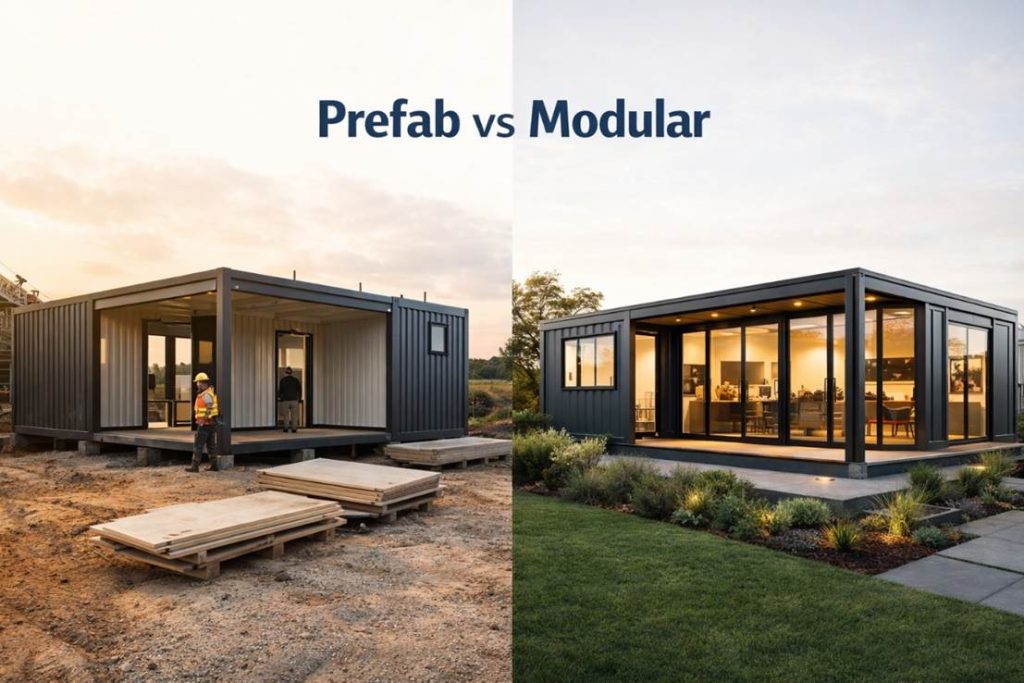
You are not the only one wondering. These two words refer to factory-built construction methods. They are related, but not the same. Knowing the difference can help you avoid a lot of time, money, and frustration. We will clarify what each word means, how they compare in terms of construction speed, cost, quality, and design flexibility and most of all help you choose which one is best for you.
At ZN House, we have been producing both prefab container houses and modular container houses for clients in more than 50 countries. In this article, we will share a practical and clear comparison with the help of our real-life working experience.
What Is a Prefab Home?
The word "prefab" is a shortened form of prefabricated and it's a very broad term that refers to all types of buildings where parts are first made in a factory and then moved to the construction site for assembly. Prefab does not refer to one particular construction method. It is a category that includes several altogether different methods, such as:
Panelized Homes: Where the walls, floors, and roof panels are made in a factory and then put together at the location.
Modular Homes: Where fully finished sections (modules) are made in a factory and then connected on the location.
Manufactured Homes: Those are built on a permanent steel chassis in a factory, then transported.
Kit Homes: Where the pre-cut parts are packed flat and shipped for assembly on-site.
Container Homes: Where the shipping containers are modified to be used as living or working spaces.
Production in a factory is really the main defining feature of prefab buildings. Thanks to the major parts being built in a well-controlled environment, prefab houses are typically quicker to build, produce less waste of materials, and have costs that are more foreseeable than those of regular site-built houses.
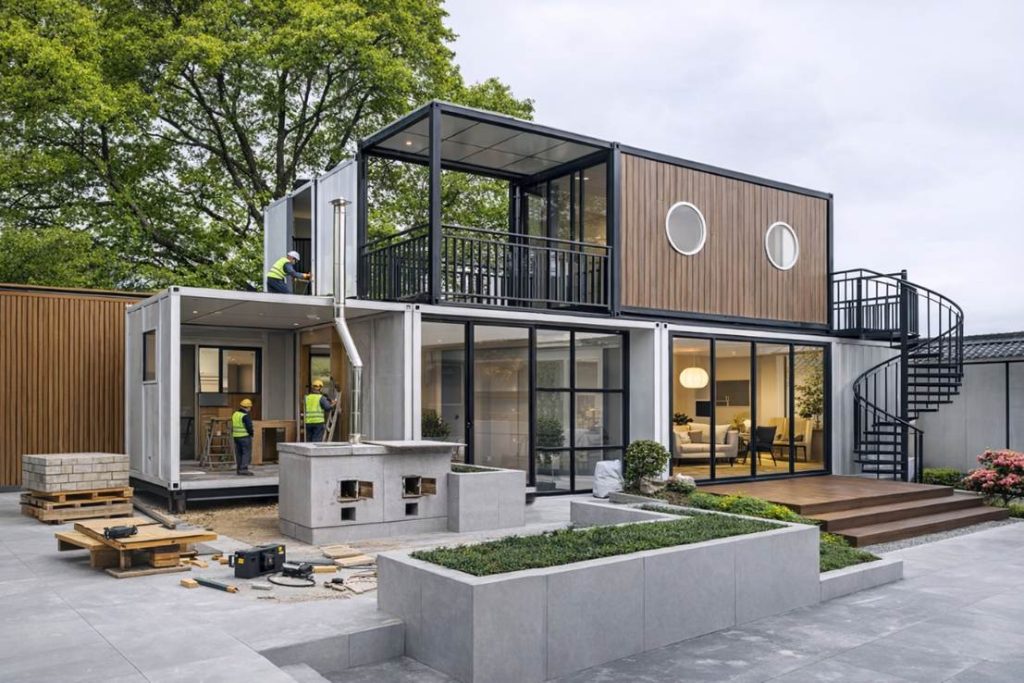
What Is a Modular Home?
A modular home is a type of prefab dwelling that is different from other prefabs because it is made in a factory environment by building entire, three-dimensional modules, not only panels or parts. Usually, a module contains a structural frame, electrical wiring, plumbing insulation, interior finishes, and even cabinets and appliances, all prepared by the time the module is ready to be shipped.
These finished modules are taken to the site and joined onto a permanent foundation, while only very little extra work is done on-site. Factory completion rate for modular houses normally varies from 80% to 95%, which means that the majority of the construction happens in the controlled factory environment.
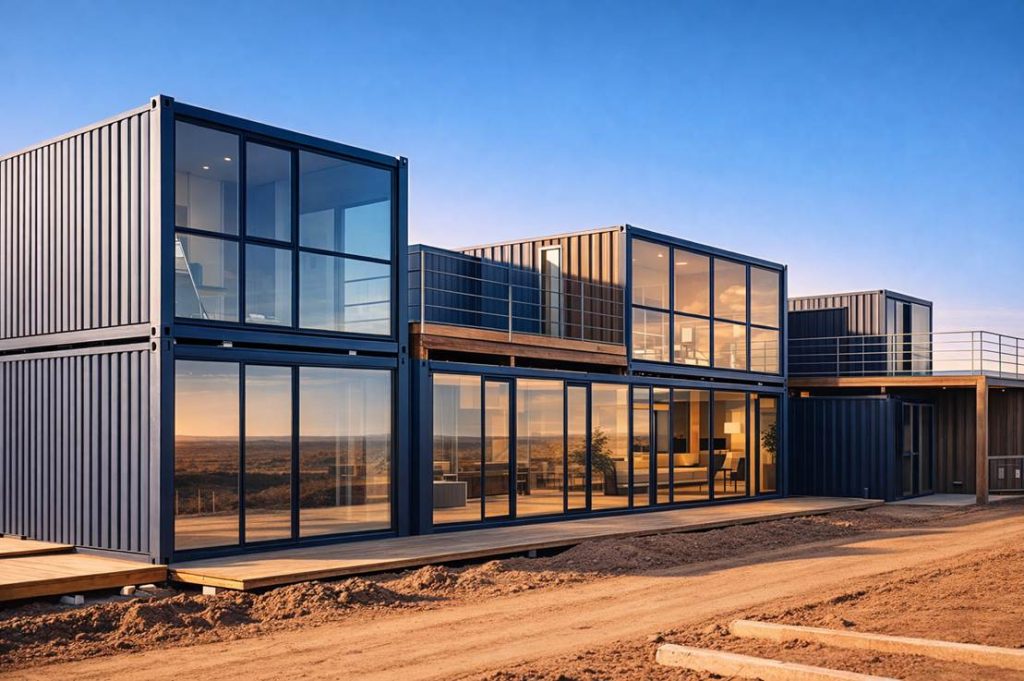
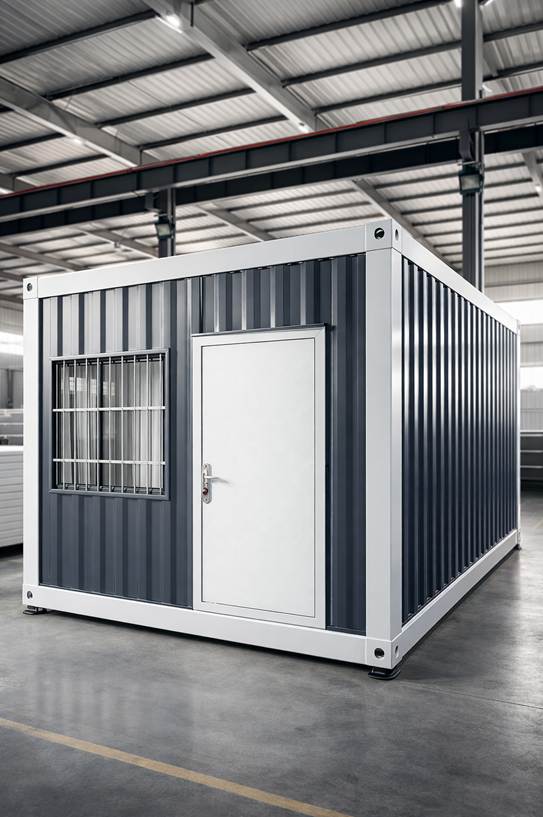
Modular container houses, which are developed using an anti-rust galvanized steel frame, high-grade Corten steel or other corrosion-resistant materials, tempered glass, and waterproof sandwich panels, reflect the high level of engineering. They are capable of withstanding the harshest weather and transportation conditions. Before delivery, 80% of customization, such as electrical wiring, plumbing, and interior finishes, is done in the factory. With this level of completion, the assembly of the house on-site is quick and dependable.
Key Differences Between Prefab and Modular Homes
Here is a list of the most important differences next to each other:
| Feature | Prefab Homes | Modular Homes |
| Definition | Broad category of factory-built buildings | A specific subset of prefab construction |
| Structure | Panels, components, or sections | Fully built, three-dimensional modules |
| Factory Completion | Partial (varies widely by type) | High — typically 80–95% |
| On-Site Work | More — significant assembly required | Less — mainly connection and finishing |
| Construction Speed | Fast (compared to traditional builds) | Faster — factory and foundation work done simultaneously |
| Quality Control | Medium — depends heavily on on-site conditions | High — factory environment ensures consistency |
| Design Flexibility | High — adaptable to complex terrain and layouts | High with standardized modules — customization available |
| Best For | Flexible, complex, or phased projects | Fast, high-quality, long-term residential or commercial projects |
The reasoning behind this is simple: among various forms of prefabricated constructions, modular homes are the most finished and standardized ones. They capitalize on the advantages of prefab and even push them to the extreme.
Construction Process Comparison
Knowing how each type is made helps explain why they work differently in the field.
How Prefab Homes Are Built
Prefab homes (in the broader sense) follow a split construction model. Components, whether panels, frames, or pre-cut elements, are produced in a factory, then shipped to the site where workers complete the assembly. The portion of work done on-site varies significantly by prefab type. For instance, a panelised prefab house requires a lot of on-site work: the foundation, framing, roofing, and all interior finishing work take place at the build site, in open-air conditions.
This means prefab (non-modular) construction is more prone to weather interruptions, variation in workmanship, and the complications of the logistics of managing multiple trades on-site. The construction timeline of prefab houses is faster than a fully traditional build, but a big part of the schedule still depends on site conditions.
How Modular Homes Are Built
Modular construction operates on an entirely different principle. A whole module, including the framework walls, roof, floors, electrical systems, plumbing, and interior finishes, is produced inside a factory. At the same time, site preparation and foundation work are carried out. This parallel work is one of the major reasons why modular construction is quicker than other types of prefabs.
Once the modules reach the site, they are lifted by cranes into their positions, joined together, and the building is finished. The entire duration of the task is more like putting a ready-made item together than building a structure from the ground up. Since every module has undergone testing, inspection, and quality assurance before leaving the factory, the chances of on-site errors are very low.
ZN House's modular container houses come with the roof and floor installed. In fact, the house can be assembled by on-site workers who just use the included accessories and connection hardware it is a fast process and no special knowledge of construction is required.
Speed Comparison: Which Builds Faster?
Speed is one of the top reasons why buyers pick factory-built homes over traditional construction and both prefab and modular provide much faster timelines than site-built options.
Prefab homes (broader category) have an edge in speed over conventional construction, mainly because large components are manufactured ahead of time, which means less skilled labour is needed on-site. However, on-site construction still accounts for a large part of the overall project timeline. Weather interruptions, inspections, and the scheduling of various trades on-site may all cause additional time.
Modular homes bring speed to a whole new level. Since factory work and site preparation can be done at the same time and because very little is left for on-site installation after the modules arrive, overall project timelines are drastically shortened. For those who have a deadline, operational needs, or time-sensitive situations (e.g., disaster relief shelters or construction camp housing), modular will almost certainly be the faster option.
Both options are quicker than traditional construction. Modular tends to be the fastest of all types of prefabs.
Cost Comparison: Prefab vs Modular
Cost is always a big factor and the truth is, there is an element of both sides; both options bring significant value compared to conventional building, yet they differ in the way and place of costs.
For instance, prefab houses typically have a smaller initial purchase price. The modular pieces or panels themselves are cheap to manufacture on a large scale. On the other side, since prefab involves more onsite work, the overall cost of a prefab may comprise higher labour expenses, the possibility of weather delays, and less budget predictability. If a building meets problems during onsite assembly, costs can rise.
Modular houses usually have a mid-range overall price - not the cheapest option at the time of purchase, but significantly more cost-manageable. Since most of the work is done in the factory under regular conditions, labour costs are low, waste is eliminated, and the project duration is fixed. The consequence is that the total cost of a modular home can be quite equal to or even lower than a prefab home that requires a lot of on-site work.
Both are more economical than conventional construction. Prefab may cost less at first, but modular gives you better control over and predictability of costs.
Quality and Durability
One of the major advantages that factory-built homes have over traditional construction is the quality of the manufacturing environment. However, even within the area of factory-built construction, there are key differences.
Prefab homes rely largely on the on-site construction process and so, their quality can vary greatly from one home to another. Since a large chunk of the work is performed "in the field, " open-air type conditions, their quality can be unpredictable. Nature, the skill of the labourers and how materials are handled on the site are just some of the factors that the factory environment negates. Nevertheless, the components that are factory-produced are made to consistent standards.
Modular homes are supported by the greatest degree of quality control that is present in the prefab construction industry. Each module is constructed within a factory with a controlled environment; it is inspected at every stage of production and it will also be tested before leaving. Furthermore, the modular home structural engineering is also designed to consider the transportation-related stresses, so they are generally constructed to surpass the minimum requirements for permanent site-built homes. At ZN House, our modular homes are made of Corten steel (weathering steel), galvanized frames, galvanized fasteners, and waterproof sandwich panels, a mixture that is designed for durability in coastal, humid, and extreme-climate environments.
Modular homes, due to their factory-controlled production and transportation-grade engineering, are a consistent source of higher and more uniform quality than other types of prefabs.
Design Flexibility
Both prefab and modular homes provide significantly more design flexibility than most people think; however, the way in which this flexibility is reflected differs between them.
Generally speaking, prefab houses tend to be a better choice for challenging or very different projects because they can be made in the form of panels or other components and therefore meet the requirements of the most difficult terrains, unusual site conditions, or highly personalized architectural visions. Besides, these homes can be designed so that they allow for further expansion by simply adding panels or sections as the circumstances change.
ZN House's prefab container houses come in various configurations, i.e., from flat-pack and folding designs to expandable and multi-story layouts. In addition to these changes, they offer a very wide range of options for exterior finishes, wall panels, roofing, doors, windows, and interior fittings.
Though modular homes utilize a more standardized design approach, that does not mean it is a one-size-fits-all. Modular container houses by ZN House can be found in over 10 sizes and stacked up to four stories or horizontally combined to almost unlimited configurations. Clients get to select from 12+ exterior materials, including rust-resistant metal carved panels, thermal-insulated cultural rock, and glass curtain walls. Also, they may fully customize the interiors with Scandinavian wood panelling, industrial concrete flooring, or tropical bamboo accents. Smart technology integrations such as solar panels, remote-controlled security systems, and greywater recycling are also available.
Prefab provides the highest level of raw flexibility for complex or unconventional projects. Modular offers structured customization within a proven and reliable framework - and in many cases achieves the same functional and aesthetic goals.
Which One Should You Choose?
The best choice depends on what your project needs. Here is a practical decision framework:
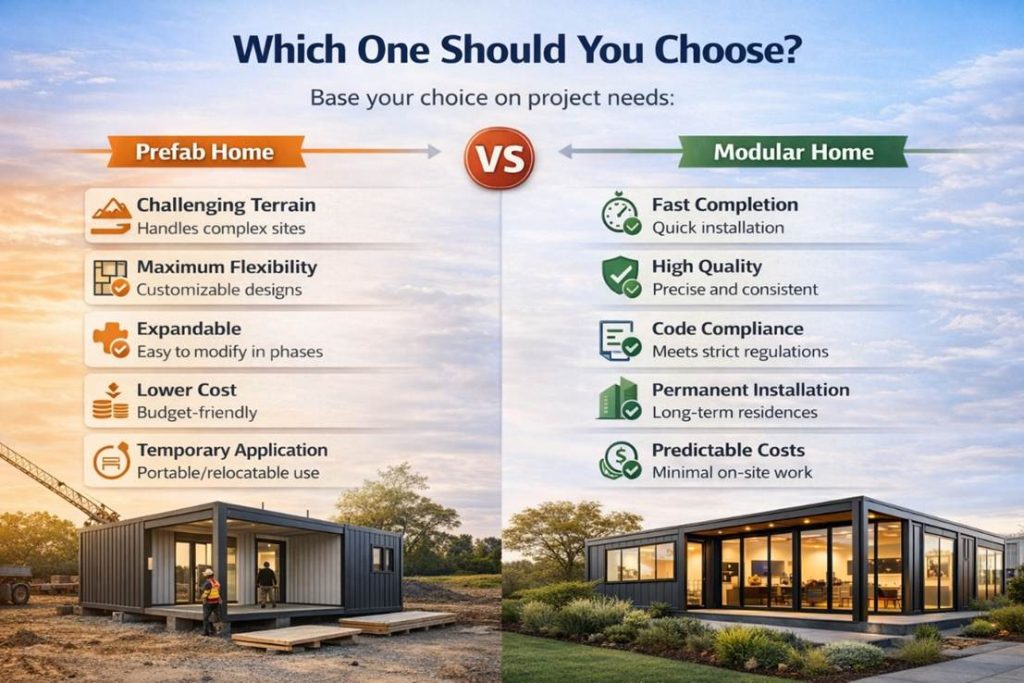
- Choose a Prefab Home if:
- Your project site has complex or challenging terrain where standardized modules are difficult to position
- You need maximum flexibility in the design and layout, including highly unconventional floor plans
- The project may be expanded or modified in phases over time
- You are working with a limited budget and want to minimize the upfront cost of the units themselves
- The application is temporary or relocatable and doesn't require high structural completeness
Choose a Modular Home if:
- Speed of construction is a priority — you need the building operational as quickly as possible
- High quality and structural consistency are essential, particularly for long-term residential or commercial use
- You need the building to comply with strict local building codes, where factory certifications simplify approval
- The project is a permanent or semi-permanent installation — a residence, hotel, office campus, or commercial facility
- You want predictable costs and minimal on-site labor
Why Modular Homes Are Becoming More Popular
In the last ten years, modular construction has gradually become a major method of construction from a simple method reserved for a few applications only.
This is a result of great advantages, first of all, time. In fact, it is hard to name another factor as attractive as time saving. The markets where construction deadlines are the main determining factor to generate revenue (such as hotels and commercial development as well as worker camps) or fulfil a human need (for example, housing for disaster relief or emergency medical facilities) benefit greatly from the possibility of reducing the time of construction from months to mere weeks.
The advantage of structural consistency, a feature that is inherent to modular construction, has turned it into a preferred way for developers who are obliged to duplicate a project in different locations to make a habit of modular, whether that is a chain of hospitality properties, a network of remote work camps, or a large residential development.
Lastly, sustainability is one of the major reasons for the growth of the modular market. Construction at the factory level, as opposed to on-site, greatly reduces the amount of material waste that is generated. Modular homes manufactured off-site by ZN House are highly engineered with features such as energy-efficient insulation, solar power (optional), rainwater harvesting, and greywater recycling systems, etc., which can all be associated with green building as per the international standards.
Further, the regulatory authorities are helping modular to gain a greater share of the market. The reason is that, since modular homes are inspected and certified at the factory, they can, in many cases, meet or even go beyond the standards stipulated by the local building codes more effectively than those built on-site, thus the regulatory hurdles and permitting delays are minimized.
Frequently Asked Questions
What is the difference between prefab and modular homes?
Prefab is a broad term used to categorize all types of construction done off-site. Modular homes are one kind of prefab where the house is put together in three-dimensional modules rather than assembled from flat panels.
Is modular the same as prefab?
All modular homes are prefab, but not all prefab homes are modular.
Which is cheaper: prefab or modular?
Panelised prefabrication is generally the cheaper option at the outset, but modular might turn out to be more cost-efficient if you take into consideration the savings in the on-site labour and time.
Are modular homes of better quality?
Generally, yes. Modular houses are constructed in highly controlled factory settings with top-notch precision and they have to be durable enough to go through the shipping process.
Which is faster to build?
Modular is the fastest, as the majority of the work is completed before the house even reaches the site.
Conclusion
First of all, what is the main difference between prefab and modular homes? They both fall under the same housing category, but prefab is the general term while modular is the highly sophisticated, complete-quality control form of the latter.
Prefab homes include a variety of factory-built construction methods and they definitely have a number of advantages over traditional construction in terms of speed, cost, and flexibility. If you want your project to be highly adaptable, to have accommodation for a complex terrain, or a phased development, then going for broader prefab approaches is still the very best thing to do.
Modular homes are essentially a step above the rest of the benefits of prefab housing. With a very high percentage of factory completion (80-95%), the ability to do site and factory work simultaneously, structural engineering that is of transportation-grade level, and stringent quality control at every single stage, building with modular construction is the most trustworthy and efficient way to a top-notch permanent or semi-permanent building.
Ready to Build? Let's Talk.
Similar Posts

Cladding Options for a Modular Container House
The exterior cladding of a modular container house plays a pivotal role in defining its aesthetics, durability,...
Regulatory Compliance and Permitting Protocols for Detachable Modular House in Urban Areas
Detachable modular houses, a major and eco-friendly method to address the problem of urban housing, have been...
Container Office Design & Price Guide: Plans, Fit-Outs & Setup Checklist
Why teams pick a container office A modern container office is a pre-engineered workspace that lands on...
How Many Flat Pack Container Houses Fit in a 40HQ?
Usually, a 40HQ container can fit around 6-10 sets of standard 20ft flat pack container houses....
Outdoor Living Spaces in Modular Shipping Container Homes
In the contemporary housing market, the integration of functional and aesthetic outdoor living spaces within modular container...
How to Choose the Right Container House for Your Project
Container homes have transformed greatly from just simple cabins on the building site. Nowadays, they are...


