



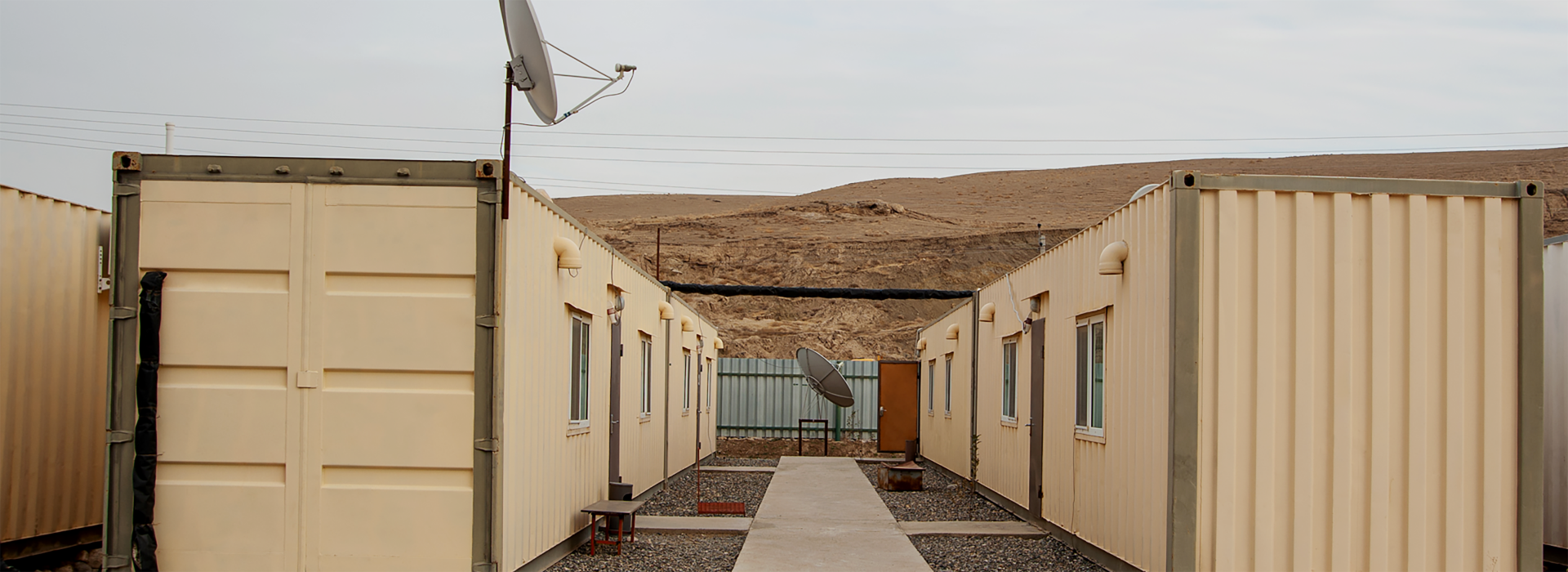
Camp Infrastructure
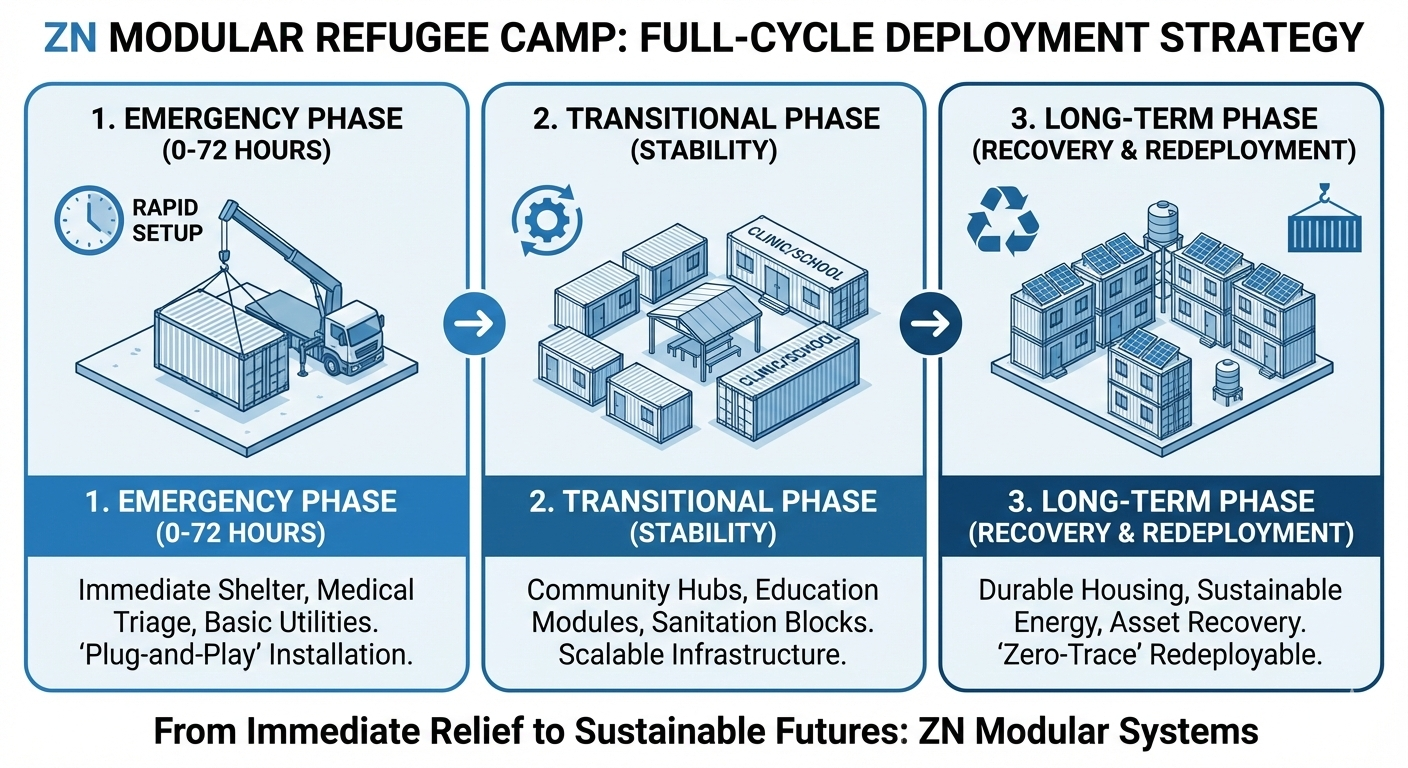
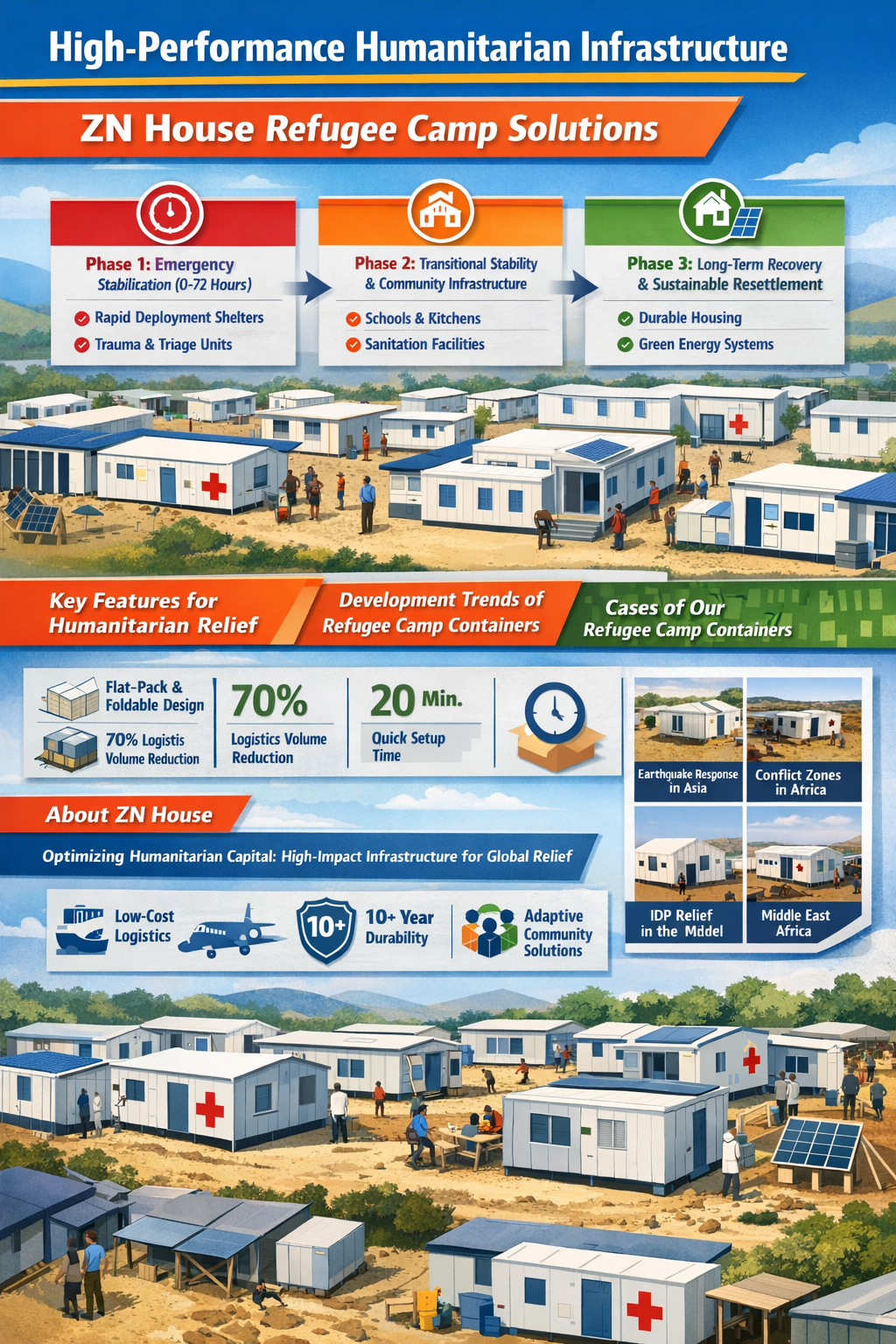
From Emergency Response to Urban Resilience: A Full-Cycle Humanitarian Solution
-
01Rapid Deployment for Critical Situations
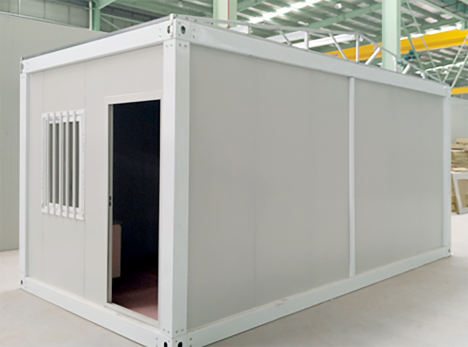
In emergencies, time is life—our easy assemble house technology cuts deployment time to 24 hours for a 50-unit camp. Using factory-prefabricated modules and foldable container designs, 80% of construction is completed off-site, reducing on-site labor to simple assembly with basic tools. This speed is critical for disaster zones: flat-packed units fit into cargo planes, reaching remote areas faster, while pre-installed utilities (electricity, plumbing) mean shelters are functional within hours. Ideal for earthquake, flood, or conflict response, our rapid setup ensures vulnerable communities have safe disaster relief housing when they need it most.
-
02Durable & Disaster-Resistant Design
Displacement sites often face extreme conditions—our containers are built to endure. Corten steel exteriors with C5 anti-corrosion coatings resist rust in coastal or high-moisture environments, while reinforced frames withstand 120mph winds and 8.0-magnitude earthquakes, meeting international disaster resilience standards (ISO 30419). Insulated with fire-resistant rock wool and double-glazed windows, units maintain safe temperatures in -40°C to +50°C, protecting residents from harsh climates without relying on scarce resources. For disaster relief housing, durability isn’t just a feature—it’s a lifeline.
-
03Sustainable & Resource-Efficient
We prioritize long-term viability in resource-constrained settings. 90% of materials are recyclable, including steel frames and insulation, while solar-ready roofs and wind turbine mounts enable off-grid energy self-sufficiency. Rainwater harvesting systems and low-flow fixtures reduce water consumption by 40%, critical for drought-prone regions. These eco-designs minimize environmental impact and operational costs, making our solutions suitable for sustainable displacement camps—even in areas with limited infrastructure.
-
04Customizable for Diverse Needs
No two crises are the same—our modular refugee housing adapts to unique requirements:
Family Shelters: 20ft units with partition walls for privacy, optional built-in storage, and child-safe layouts.
Medical & Education Hubs: Convertible modules equipped with sterilization rooms (for clinics) or modular desks/whiteboards (for schools), compliant with WHO and UNICEF standards.
Logistics Centers: Oversized containers with climate control for food storage or aid distribution, featuring roll-up doors for easy access.
This modular flexibility ensures one solution can serve as emergency shelter, community hub, or semi-permanent housing—evolving alongside the needs of displaced populations.
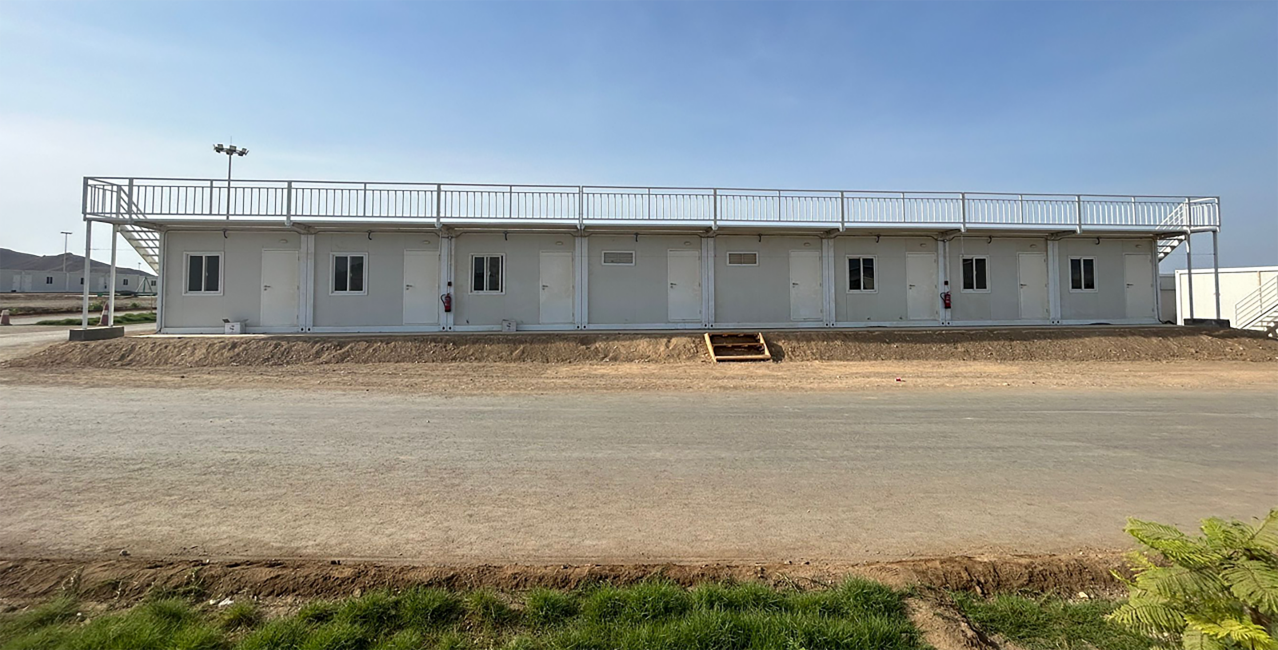
Camp Containers
-
 Schools
 -
Health Centers
-
Community Centers
-
Sanitation Facilities


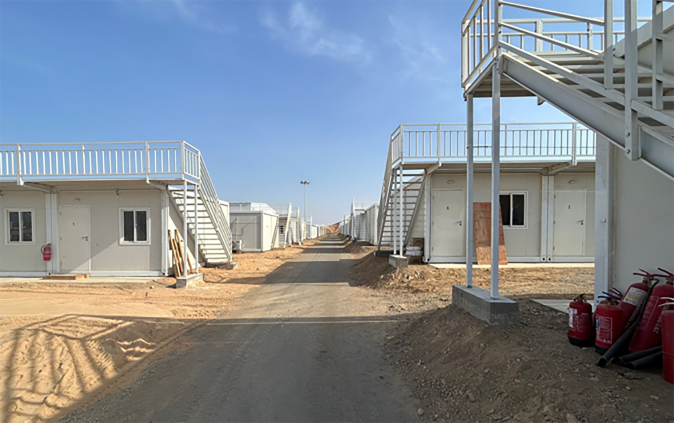
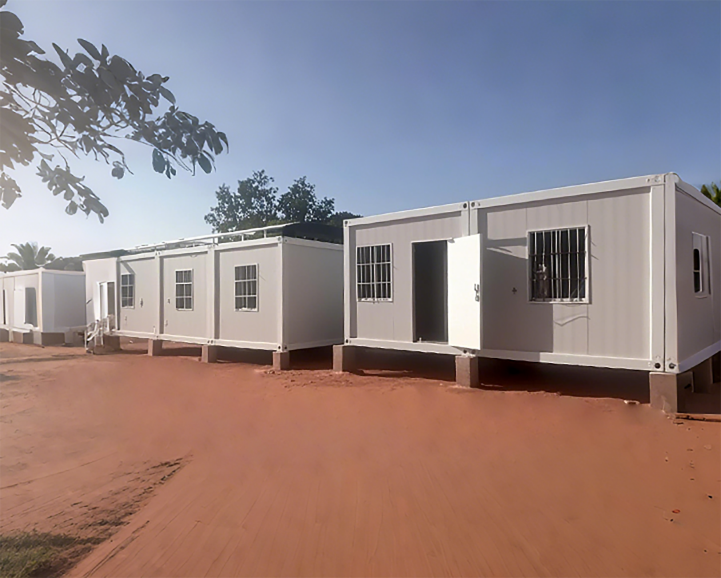
1. Burkina Faso School Project
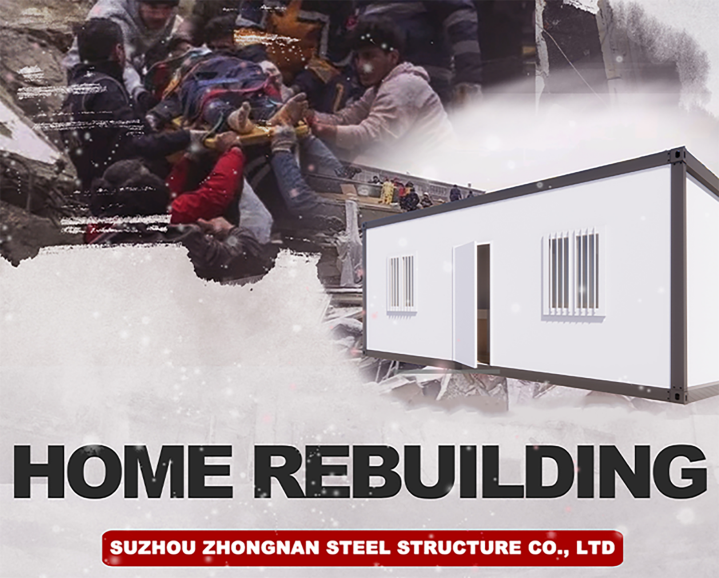
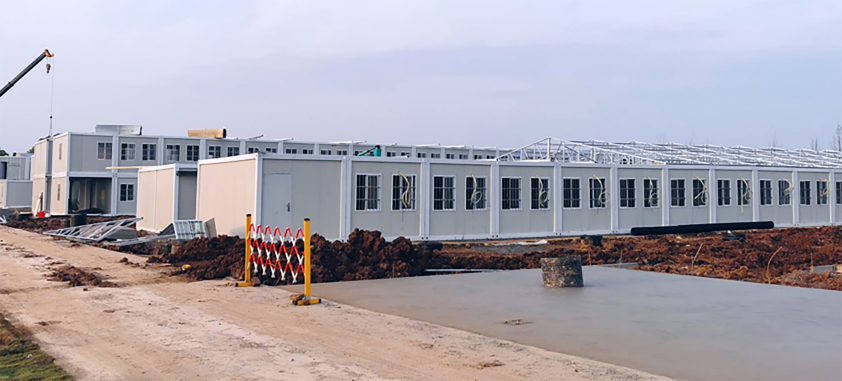
2. Emergency Camps in Turkey
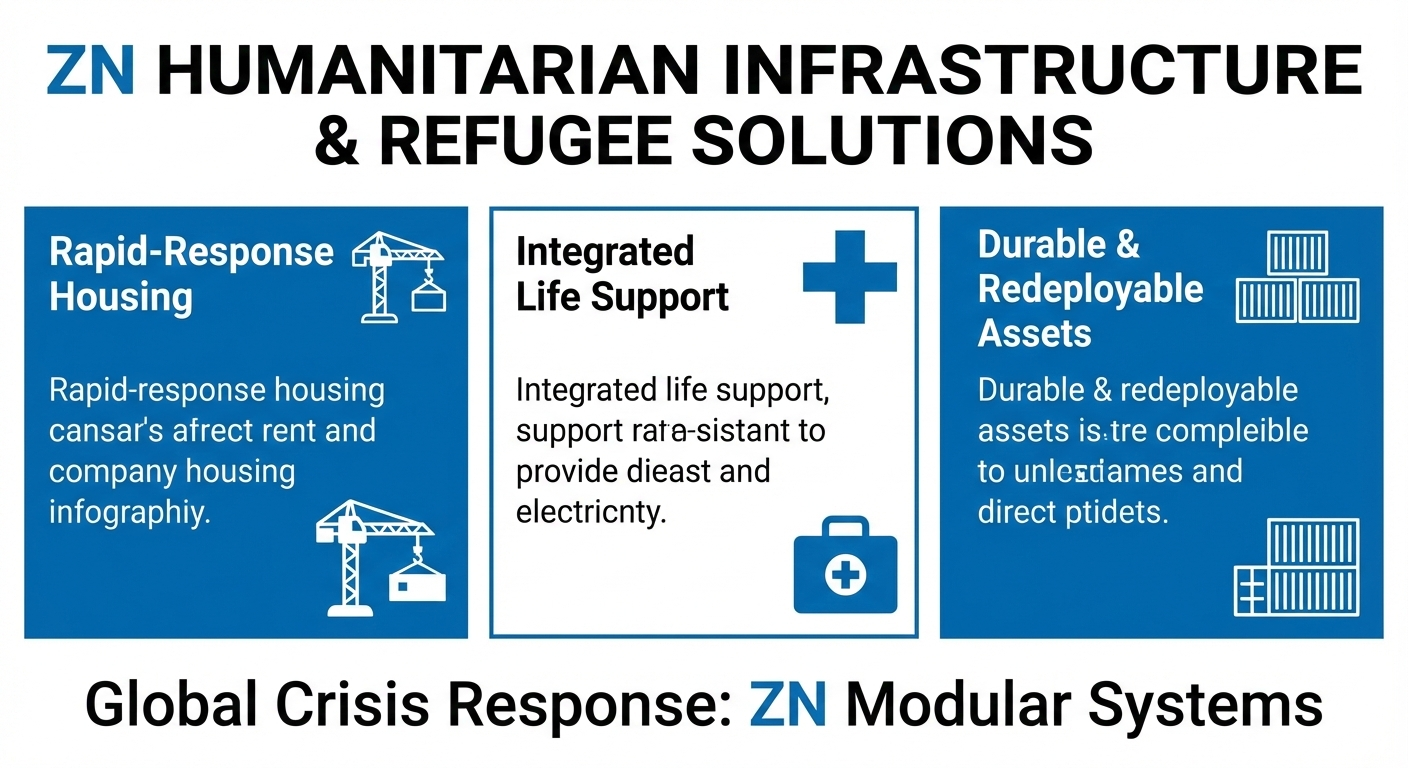
Optimizing Humanitarian Capital: High-Impact Infrastructure for Global Relief
-
How quickly can a ZN House refugee camp be operational after a disaster?
Speed is our main goal. Due to our 80% factory-prefabricated design, a normal housing module can be put together in as little as 2030 minutes by a small team of people. In case of large-scale deployments, a self-sufficient camp for 500+ people, including living units, medical stations, and sanitation blocks, can be up and running within 3 to 5 days of getting to the site, considering the ground conditions.
-
Do ZN House refugee modules meet international humanitarian standards?
Yes. Our units are engineered to exceed UNHCR and WHO (World Health Organization) field standards for emergency housing. We give priority to the dignity of the occupants by satisfying the minimum floor area requirements, offering excellent thermal insulation (R-30 rating), and providing good-capacity ventilation. Besides that, our medical and sanitation modules have been developed with the aid of non-porous, anti-microbial surfaces in order to keep up strict public health standards.
-
How do these containers perform in extreme climates, such as deserts or sub-zero regions?
ZN modules offer a "Hard-Shell" thermal barrier, unlike traditional tents. We employ 100mm high-density Rockwool insulation and double-glazed windows to keep the inside stable while the external temperature varies from -30 °C to +40 °C. Thus, the amount of energy needed for heating or cooling is greatly reduced, and such modules can be used in a high-altitude conflict zone as well as in an arid desert environment.
-
Are ZN House refugee units designed for relocation or permanent use?
They are meant for both purposes. The multi-cycle structural lifespan of our units is 15-20 years. Relief agencies thus have the option of utilizing these as emergency shelters for a short period and subsequently converting them into permanent community facilities such as schools or healthcare centers. In case a return to the place of origin is possible, the units may be disassembled, cleaned, and sent to a different area of need, thereby saving the initial donor investment.
Free Consultation
Start Your Personalized Gift Journey
Provide personalized gift customization services, whether it is personal or corporate needs, we can tailor for you. Feel free to contact us for a free consultation!


- English
- Françai
- Español
- Deutsch
- Română
- العربية
- 한국어
- 日本語
- Italiano
- Português
- Gaeilge
- Dansk
- Čeština
- Русский
- Afrikaans
- Euskara
- Català
- Esperanto
- हिन्दी
- Ελληνικά
- Bahasa Melayu
- Polski
- Српски
- Kiswahili
- ภาษาไทย
- Tiếng Việt
- Türkçe
- Svenska
- Cymraeg
- Slovenčina
- Latviešu
- Malti
- Magyar
- Galego
- ગુજરાતી
- Eesti Keel
- বাংলা
- Shqip
- беларуская мова
- Nederlands
- Tagalog
- ქართული
- Íslenska
- Kreyòl Ayisyen
- Lietuvių
- Norsk
- slovenščina
- தமிழ்
- Українська
- ײִדיש
- اردو
- తెలుగు
- فارسی
- македонски
- ಕನ್ನಡ
- Bahasa Indonesia
- עברית
- Suomi
- Hrvatski
- Български
- Azerbaijani