



What is a Modular Container House? A Complete Guide to Modern Modular Homes
Introduction
Modular container homes represent a disruptive innovation in construction design and methodology. The many positive attributes of modular homes include being eco-friendly, fast, and flexible compared with conventional, onsite construction methods. Modular homes are comprised of prefabricated sections and are intended to create high-quality, long-lasting living and work space while also minimizing the amount of time and money spent on construction. In this article, we will cover the advantages of modular containers, their structural integrity, and application, as well as the reasons behind their growing popularity as an alternative to traditional residential and commercial building projects.
Why are so many people opting for modular container homes as opposed to traditional buildings? One reason is that there is an increasing demand for quick-to-implement, cost-effective, and flexible housing solutions. Modular container housing provides these benefits because of the use of prefabricated components that are assembled on site. This results in a very short construction time, plus it gives you the ability to easily customize your modular home.
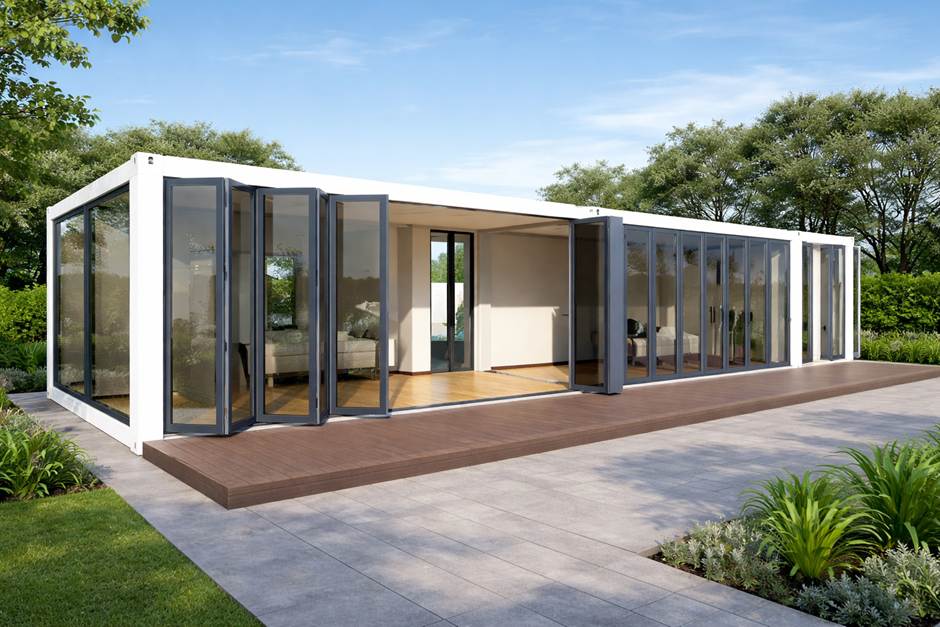
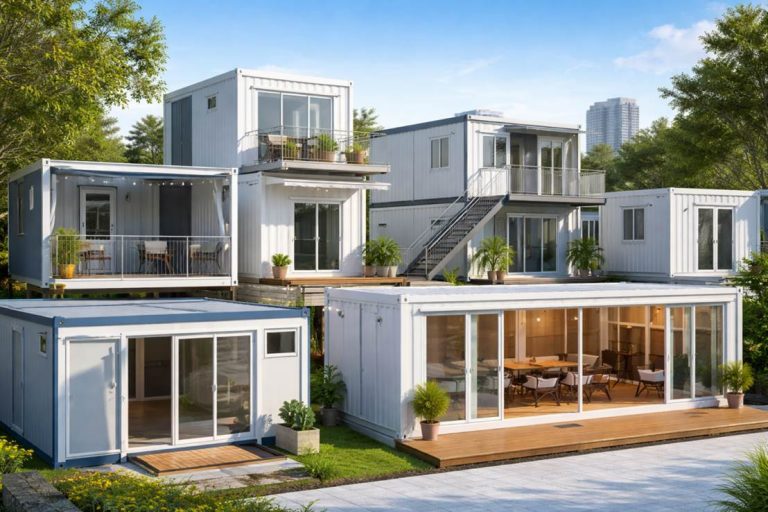
Fig. 1: Modern Modular Container House with Expansive Outdoor Living
With so many industries and projects needing housing solutions on short timelines, especially in remote and/or temporary locations, modular container houses have become an attractive option. Whether you require a residence, an office space, or a disaster relief shelter, you can have your modular container home up and running very quickly.
Definition of Modular Container House
Modular Concept
A modular container home consists of several standard modules made in a factory and shipped to the site for assembly. The modules can be vertically and horizontally stacked, combined, and extended, providing an infinite number of ways to customize them. Because of the interchangeable features of the modular designs, the use of modular homes can meet any project’s needs (from only one small space module to many larger application modules).
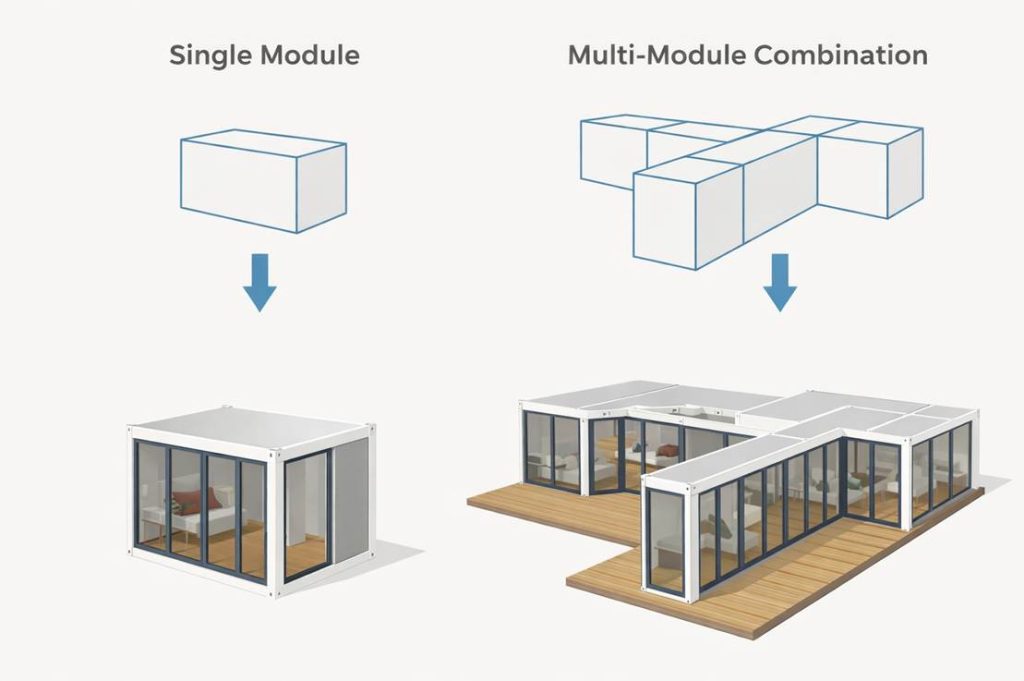
Fig. 2: Schematic Diagram of Single-Module and Multi-Module Modular Container House Configurations
Construction Materials and Structure
Container homes that have a modular design utilize top-quality building materials, including galvanized steel frames, insulated sandwich panels (which are excellent for insulating and soundproofing), cement board flooring, and PVC flooring. All these materials will provide excellent durability and will resist even the most extreme weather and protect against fire, thus ensuring the building will last for many years. By using prefabricated components, structure accuracy is greatly enhanced, which contributes to the overall quality of the final product.
Main Types of Modular Container Houses
Modular container homes come in a variety of types; each intended for a distinct purpose:
| Type | Features | Applicable Scenarios | Keywords |
| Flat Pack Container House | Flatbed transport, quick on-site assembly | Residential, office, construction site housing | Flat pack container, prefab modular container home |
| Folding Container House | Foldable transport, on-site unfolding | Emergency housing, dormitory, temporary office | Folding container house, portable modular house container |
| Detachable Container House | Detachable, reusable | Temporary office, relocatable projects | Detachable container house, modular office container |
| Expandable Container House | Small transport size, large on-site expansion | Large space requirements, restricted logistics | Modular expandable homes, expandable modular house |
| Prefab Modular Container House | Factory pre-assembled components, on-site assembly | Permanent residential, commercial space | Prefab modular container homes, prefabricated modular container house |
Table 1: Overview of Different Types of Modular Container Houses: Features, Applications, and Suggested Visuals
Advantages of Modular Container Houses
Modular container houses have several significant benefits, including:
Rapid Construction
Prefabricated module construction will allow for quicker construction, decreasing construction time by as much as 50%. The prefabricated components are made at an off-site location while the construction site is being prepared, which increases the overall speed of construction.
Flexible Design
There’s a great deal of design flexibility provided by modular homes, and they can also be easily altered to meet your specific requirements, regardless of whether you require one container for a single-family house or several containers combined to build an entire office complex.
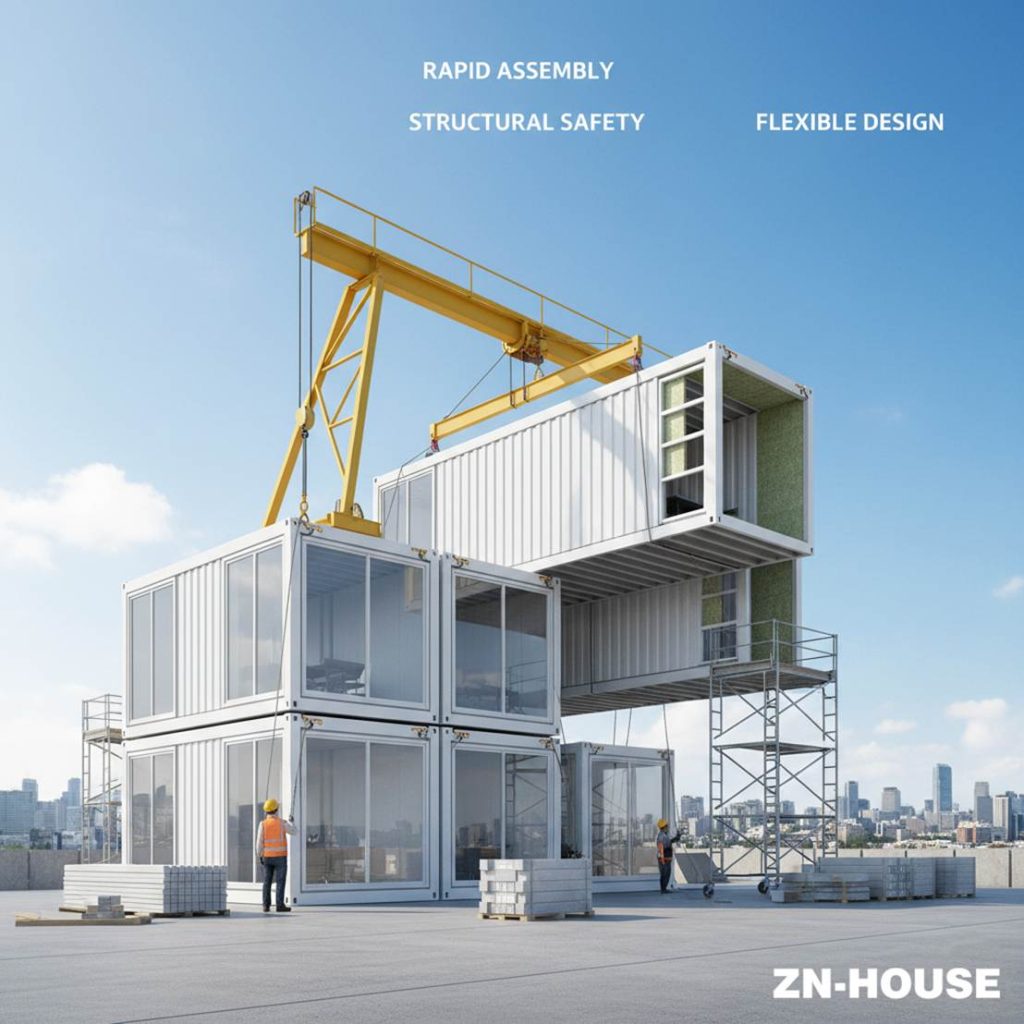
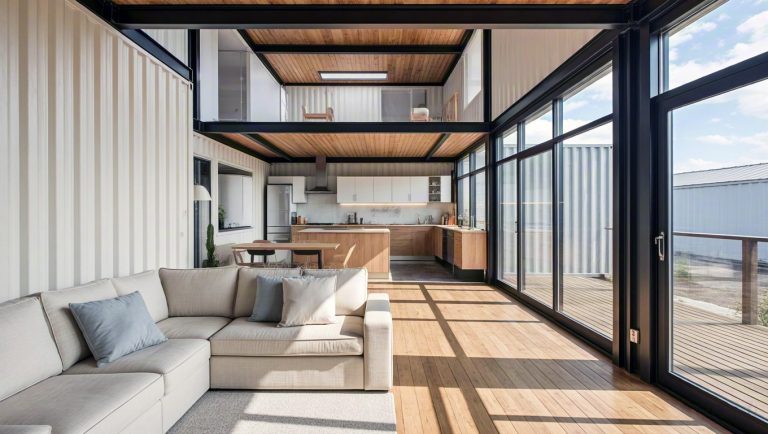
Fig. 3: Modern Modular Architecture: Rapid Assembly and Flexible Design
Cost and Environmental Benefits
Modular container homes are a typically less expensive way to build your next house than traditional construction methods. Materials used for modular container homes are environmentally safe and durable. The method by which you assemble modular container homes minimizes waste, so they are also considered a sustainable building option.
Durability and Safety
Container homes that are Modular are designed to endure, with a steel framework that gives excellent structural stability to each bit. Moreover, they’re able to withstand bad weather, i.e., wind/snow, etc., and can be fire-resistant based upon the type of material used to create them.
Application Scenarios
There are several uses for modular container homes:
Residential
These types of homes are perfect candidates for affordable housing scenarios, no matter if the pod will be used by an individual, a small family, or as a transition home. Prefabricated containers provide an economical means to provide housing at an affordable rate while still providing a high-quality product.
Commercial Office
Companies operating in sectors such as construction, mining, oil, and gas often use modular container homes for commercial buildings because they provide mobile, adaptable office space solutions for businesses needing temporary or flexible office space.
Temporary Facilities
Modular container houses must be used as temporary classrooms, housing for medical units, and dormitories in emergency situations. They can be deployed within minutes and are essential to disaster relief assistance.
Design and Construction Process
Planning and Design
Defining the module requirements and arrangement is the start of the design process, along with establishing the functional requirements of the modules. Due to the modular system, it is possible to customize easily based on the desired size and floor plan of the modules.
Factory Prefabrication
Although the design may be complete, before fabrication and transport of each modular component to the site, it will have been prefabricated in a factory, thus achieving high-quality and high-dimensional accuracy. Building structural reinforcement, structural openings, insulation, and other parts into each modular unit will take place before transportation.
Transportation and On-site Assembly
Once delivered to the site, standard equipment is used to create a module, which allows for the module to be assembled on site faster than would otherwise be possible, thereby minimizing the impact on the surrounding environment as well.
Interior Decoration and Delivery
Once all the modules have been assembled, we complete the interior spaces (the living areas), installing plumbing, electrical, and decorative materials to provide a “liveable” module.
Purchasing and Customization Guide
Before buying a modular container home, make sure to select a supplier that knows how to produce and assemble modular residences properly; these suppliers usually have years of experience. When evaluating potential suppliers, take note of the following considerations:
Customization: You need to determine if the size and layout of your new home will work with your needs.
Pricing: Compare prices across several suppliers to get the best value for your money.
Certification: Make sure the supplier complies with industry standards and regulations.
Future Trends
The future of modular container houses is looking very positive, particularly due to the rising focus on sustainability as well as smart design. The following are examples of future trends:
Sustainable Construction
As modular homes increase in popularity, so too do green building practices and the use of environmentally friendly materials to build them.
Smart Home Technology
As more people seek out modular home construction, there will also be a trend toward adding smart technology to produce a better living experience with an increase in thermal comfort and lower energy costs.
To know more about the modular container house of ZN House, please visit our Product Page here.
Conclusion
For flexible, fast, and durable solutions, nothing compares to modular homes. Whether you’re building a mining camp in the Philippines or a residential project in Australia, you’ll find that ZN House has the engineering knowledge and the quality of materials you need to construct a long-lasting structure.
Ready to build the future?
Visit ZN House to consult our design engineers for your next modular container home project.
Watch the following video on the ‘Testimonials of the Customers and Factory Insights of ZN House Modular Homes’:
Similar Posts

Foldable container house as a portable classroom
In regions facing educational infrastructure shortages, such as remote areas, disaster-stricken zones, and temporary resettlement communities,…
Mobile Office Pods: Work from Anywhere with Modular Containers Homes
In today’s rapidly evolving work landscape, the concept of a traditional office is being redefined. With…

Modular Container Houses: Smart, Scalable Solutions for Modern Living
As cities grow denser and housing needs evolve, more people are turning to unconventional yet highly…
What Is a Container House? Types, Advantages, and How to Choose the Right One
Introduction Over the past several years, the worldwide construction industry has been changed by advances in…
The Smart Choice in Container and Modular Buildings
The rise of container and modular buildings has transformed the construction industry by offering a practical, efficient,…
Upcycling Shipping Containers into Modern Homes
The rise of modular container homes for sale marks a transformative shift in sustainable architecture. By repurposing…


