



EPC Project Camp Construction — Practical Implementation of a Container-Based Approach
In outdoor Container Camps for EPC such as infrastructure, new energy, and mining, the efficiency and practicality of camp construction often directly affect the project’s start-up schedule and ability to support personnel. Traditional temporary panel camps are not only constrained by site conditions and weather during assembly, but also suffer from cumbersome long-term maintenance and limited adaptability. They increasingly fail to meet EPC projects’ dual needs for tight schedule control and cost management.
Compared with traditional camp solutions, containerized modular camps — with factory prefabrication, fast on-site assembly, and flexible adaptation — are becoming an efficient choice for EPC projects. They can be tailored to different site conditions and workforce sizes while offering clear advantages in delivery time and life-cycle costs. This article breaks down the practical implementation of the container approach for EPC project camps across three areas: matching needs, implementation process, and selection & maintenance, providing usable guidance for general contractors, procurement leads and decision-makers.
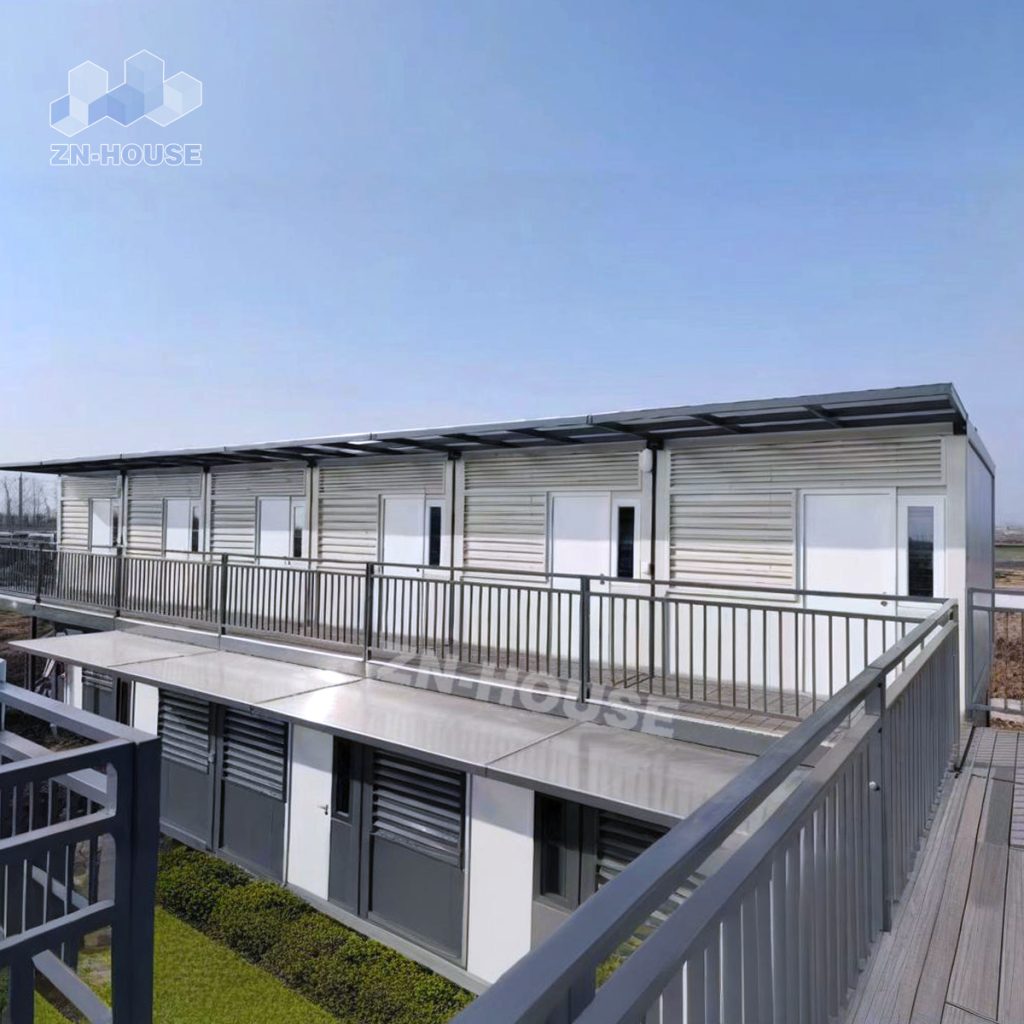
Early-stage needs matching: tailor the solution to the project scenario
Successful implementation starts with accurately matching the camp to the project’s real needs — avoiding one-size-fits-all solutions that waste resources or miss required functions.
Scenario fit: For mining projects, emphasize dust protection, explosion resistance, and vibration resistance — add protective structures around the container frame, doors and windows as needed. For remote wind or solar projects, prioritize thermal insulation and emergency power capabilities, and consider independent energy storage modules and thicker insulation layers. For overseas EPC projects, coordinate early with local authorities to ensure container dimensions and materials meet local customs clearance and construction rules.
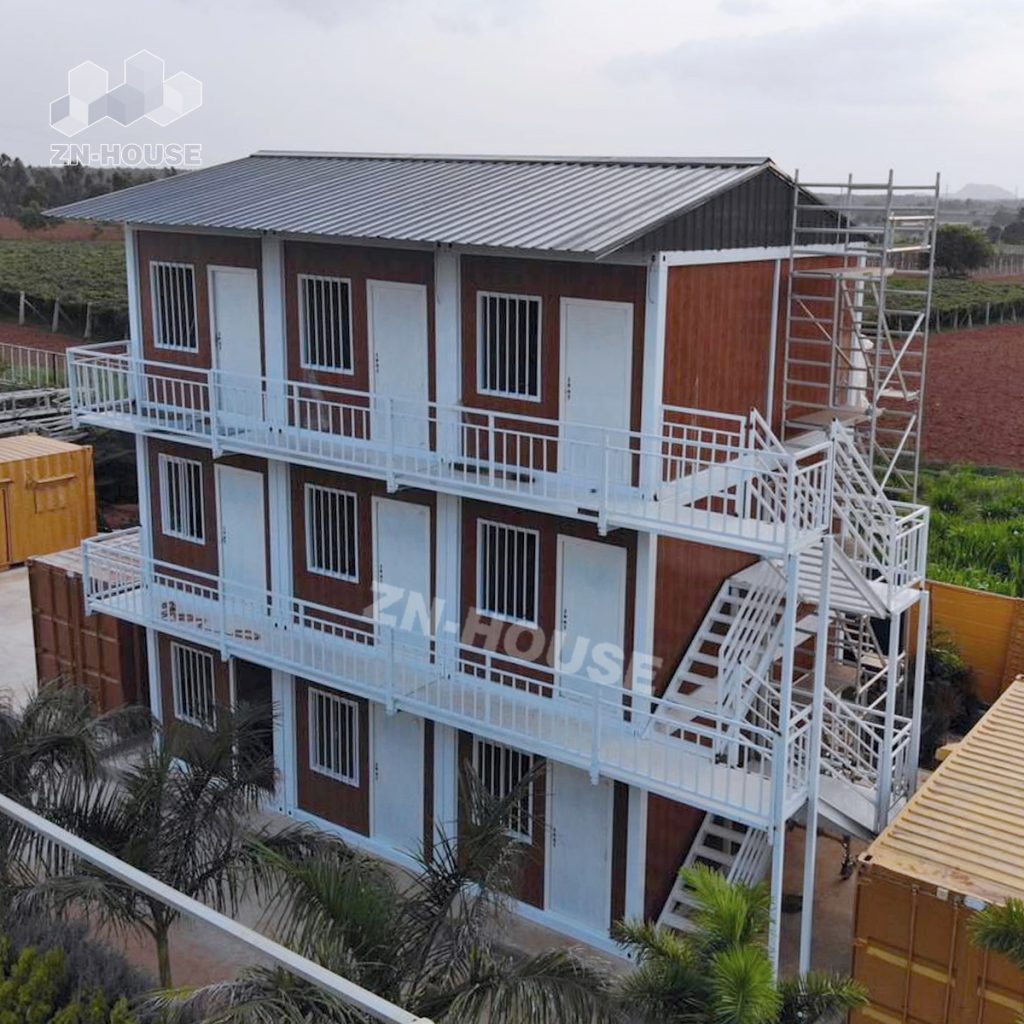
Scale fit: Combine accommodation, office and living modules flexibly according to the number of site staff. Small projects can use standard 20-foot container modules to house a few dozen workers; large projects can use custom multi-storey container complexes that integrate a canteen, sanitary facilities, a conference center and other full-service amenities for an all-in-one camp solution.
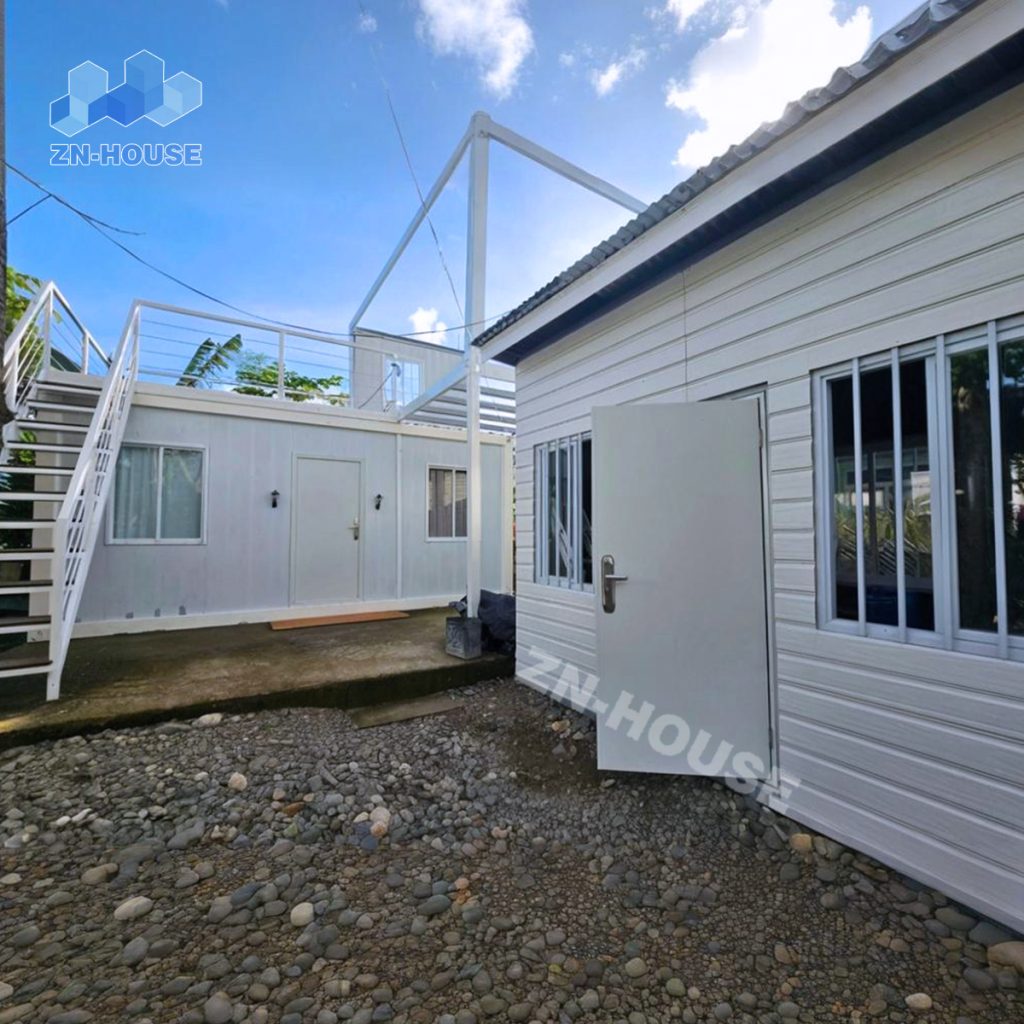
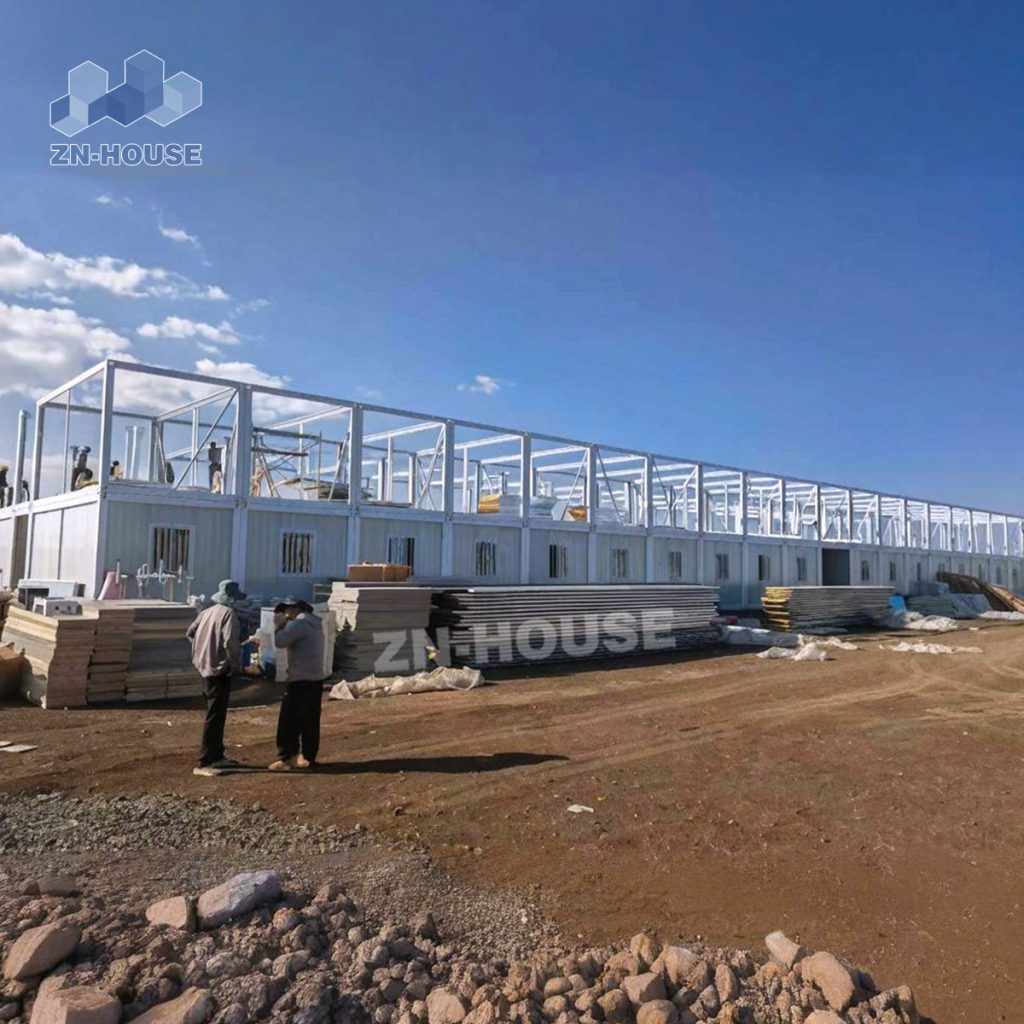
Core implementation process: simplify steps to deliver fast
The main advantage of container camps is the “factory prefabrication + rapid on-site assembly” model, which greatly shortens on-site construction time. The process can be divided into three key phases:
Factory prefabrication: After site survey and plan confirmation, the manufacturer begins production of container modules in the factory — steel structure welding, interior finishes, plumbing and electrical installations, and other core work. This can run in parallel with early site preparation, so it does not consume on-site construction time.
Transport and hoisting: Finished modules are shipped by road or sea directly to the site. Once site foundations and leveling are ready, modules are lifted and joined together. The assembly requires no complex on-site welding or masonry; a camp of typical size can be erected and made usable within one to two weeks.
Commissioning and handover: After assembly, only final tasks such as utility connections and security-system commissioning remain before acceptance and handover. If the project site later changes, container modules can be disassembled and relocated for reuse, lowering the camp’s total investment over the project lifecycle.
Container Camps for EPC Selection and O&M: secure long-term value
To ensure long-term, efficient operation, procurement and maintenance should focus on two key areas:
Selection criteria: First, prioritize structural stability — choose galvanized steel frames that meet local wind and seismic resistance requirements. Second, control material safety and environmental performance — interior finishes should use fire-retardant boards and environmentally friendly insulation to avoid excessive formaldehyde or other harmful emissions. Third, verify the manufacturer’s service capability — prefer suppliers who can provide end-to-end surveying, customization and after-sales maintenance to reduce later coordination costs.
Operations and maintenance: Introduce simple IoT monitoring devices for daily O&M to track water and power consumption and facility status in real time, enabling prompt fault diagnosis. For camps in extreme climates, carry out regular inspections for frame anti-corrosion treatment, door/window sealing and similar items to extend service life and ensure a stable living and working environment throughout the project. For EPC projects, the containerized camp model addresses efficiency bottlenecks through factory production, modular assembly and flexible adaptation. From precise needs matching in the early stage, to simplified delivery during implementation, and to scientific O&M afterward, this full-chain approach helps control schedules while preserving long-term value, laying a solid logistical foundation for successful project delivery.
Similar Posts
Why Is a Modular Container Toilet the Smarter Choice for Modern Sites?
Sanitation plays a fundamental role in the planning of any site. It is essential to have…
Top Types of Prefabricated Restrooms for Construction Sites, Camps, Schools, and Public Projects
At the end of the day, every new construction site, work camp, school or community center…
Prefabricated Resettlement Homes: A Reliable Solution for Government Housing Projects
Government housing programs are often caught in a dilemma of speed, cost, and quality. After natural…
How to Choose the Right Site Office Container for Your Construction Project
The construction industry, which operates in dynamic settings and under time pressure, demands the highest levels of…
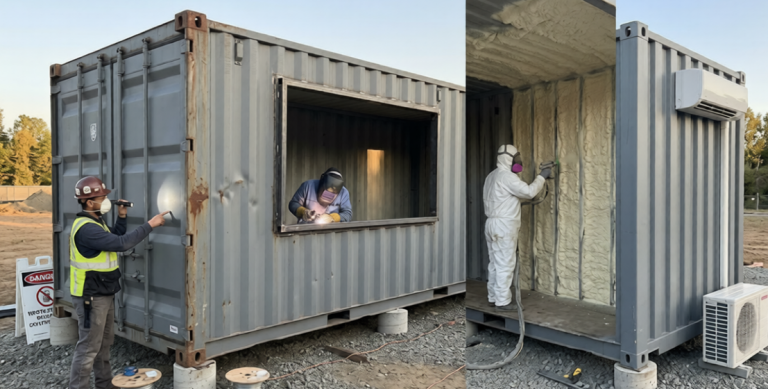
How to Build a Tiny House from a Shipping Container: 10 Steps
Building a tiny house from a shipping container requires more than adding doors, windows and interior…
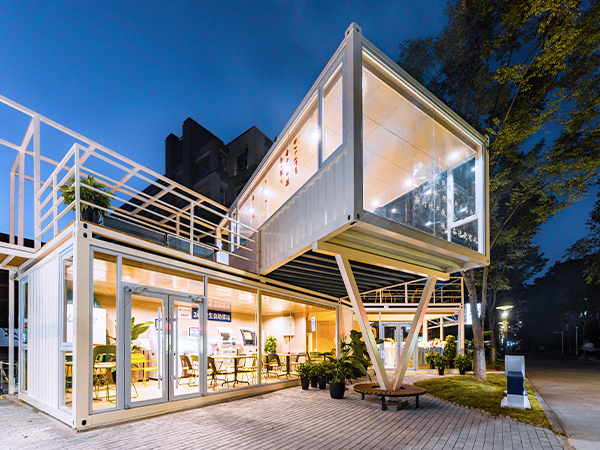
Beyond the Box: Key Modular House Design Trends—Open Concept, Multi-Unit, and Sustainability
According to Forbes, modular housing can reduce construction times by up to 50 per cent, costs…


