



Prefab Houses vs Traditional Construction: Pros, Cons, Cost, and Speed Comparison
Introduction
The decision to build is one of the most important and most expensive decisions anyone can make as an individual or as a company. Whether you're creating housing for your workers at a remote construction site, building a community for residential use, or constructing a facility for commercial use, how you go about doing it will dictate how quickly you can move into the building, how much it will cost you to do so, and how the building will perform over time.
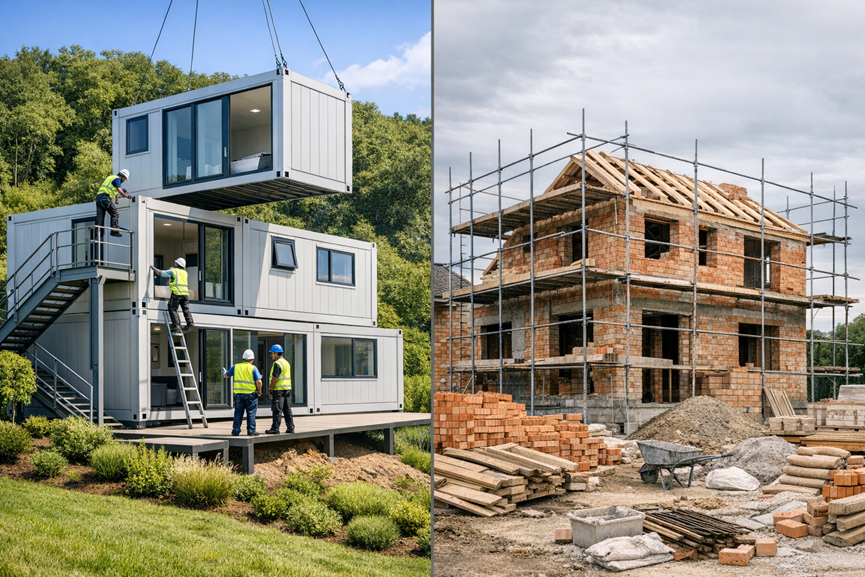
When it comes to building today, there are two major methods used: prefabricated houses and traditional construction. Each method has its own set of inherent advantages, but they each differ greatly in terms of the processes used to produce the final product, the location where the production takes place, the method by which costs accumulate during production, and the risks of failure associated with each method at the point of production.
This guide will assist you with comparing the primary methodologies of building along five fundamental attributes that must be considered as you evaluate which method is best suited for your project: cost, speed, quality, sustainability, and design flexibility.
What Is a Prefab House?
A prefab house (from "prefabricated house") is a type of structure that is primarily constructed at a factory and brought to another location to be assembled together. This way, instead of doing most of the construction work at the building site, prefab construction does the majority of the work indoors and then transports most of the work already completed when it arrives at the building site.
In a factory, modules, panels or entire room-sized units are produced with precise specifications. After completing the units at the factory, components are then shipped by either truck, ship or rail to the building site and assembled with bolts or connections into a final product (finished house) within a few days.
An example of this is ZN House - their prefab container homes are made of high-strength steel frames; they come from the factory, fully insulated (in addition to having all interior finished products, pre-wired for electrical components and plumbed for a drain system) will be shipped and be ready to assemble after arriving on site.
Typically, because parts produced as a prefab house are manufactured off-site (or at a factory), the major difference between a prefab home and a traditional home is where the construction takes place; i.e., construction of the parts takes place at the factory for prefabs (this is done by subcontractors), while in traditional homes, the construction of a home is done on your property.
What Is Traditional Construction?
Traditional construction is also known as site-built or stick-built. In this method of building, all of the different stages of building are conducted at the final building site. This includes pouring concrete for the foundation, putting together the frame of the house, adding insulation to the walls, and finishing the exterior of the house (roofing, plumbing/electrical) using subcontractors.
Materials are ordered and delivered in stages throughout the completion of the project. Work timelines are significantly impacted by factors like weather, labor availability, material lead times, and inspection sequencing. An unforeseen delay (i.e., heavy rain, supply chain disruption, conflict with the contractor) can create a domino effect through the entire project schedule.
Traditional construction has been around for a long time, has a well-established process, provides a lot of flexibility for building unique designs; however, it has a high degree of variability in costs, timing, and quality. This is often surprising to many owners.
Prefab vs Traditional Construction: Key Differences
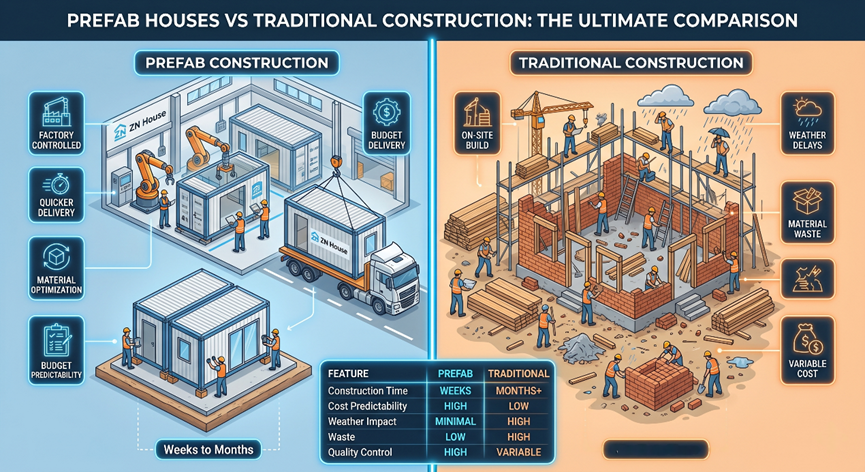
Here is a direct comparison of how prefab homes stack up against traditional on-site builds to give you a clear picture:
| Feature | Prefab Houses | Traditional Construction |
| Construction Method | Off-site factory build | On-site build from raw materials |
| Construction Time | Weeks to a few months | Several months to a year or more |
| Cost Predictability | High — fixed factory pricing | Low — subject to overruns |
| Weather Impact | Minimal | High — delays are common |
| Material Waste | Low (factory efficiency) | High (on-site cutting and offcuts) |
| Quality Control | High — standardized processes | Variable — depends on site crew |
| Design Flexibility | Modular customization | High degree of freedom |
| Environmental Impact | Lower waste & emissions | Higher waste and energy use |
| Scalability | Easily stackable/expandable | Requires new construction |
The ZN House Modular System is an example of prefabrication that makes the workflow more manageable and efficient. It also gets rid of the "surprise" costs and delays that are common in traditional projects.
Construction Time Comparison
For commercial projects like worker dormitories or emergency housing, time is often the most important thing.
Prefab Construction Timelines
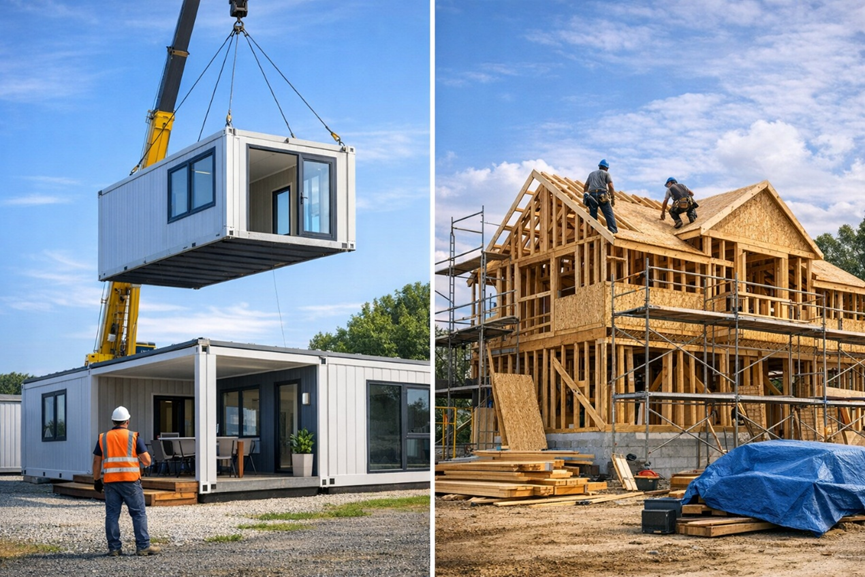
Prefab homes have many different features that provide efficiency through improved productivity at the point of manufacture, as well as by allowing concurrent work to be performed on other aspects of a project. For example, when the units are manufactured in a factory, the site preparation and foundation can be completed at the same time as your unit is being manufactured. The process of building your walls can occur regardless of whether the slab is still curing or if it has already been poured because the production does not stop, no matter what type of inclement weather may have occurred.
Traditional Construction Timelines
In addition to being sequential, conventional building has a high degree of government regulation that can add significant time and cost to a project. Federal and state regulations govern the design and materials used in a structure, safety, and health codes that are required to comply with existing laws. Government regulations are often seen as a necessary evil for construction, but many believe they slow down the process without contributing positively and can reduce the efficiency that builders seek.
A standard building will take a minimum of six (6) to twelve (12) months, while buildings with greater complexity generally take eighteen (18) to twenty-four (24) months. Typical delays to construction include delays due to the weather, labor shortages, or the delivery of materials.
Cost Comparison
| Prefab Houses — Cost Advantages Factory mass production reduces per-unit material costs Shorter timeline = lower labor and financing costs Minimal material waste reduces raw material expenditure Fixed factory pricing enables reliable project budgeting Reduced on-site labor requirements, lower headcount costs | Traditional Construction — Cost Risks High labor costs, especially for skilled trades Extended timeline creates ongoing financing exposure Weather delays and rework add unplanned expenses Material price fluctuations increase budget uncertainty Hidden costs: scaffolding, |
Cost predictability may also be just as important to clients as cost savings. A prefab manufacturer, such as ZN House can provide clients with detailed quotes specifying all costs related to the project — materials, production, delivery, and on-site assembly. You will not see any surprise labor costs at the end of month four and will not have to renegotiate, "we hit rock when excavating." Therefore, the budget you planned is much closer to the actual budget spent.
On the other hand, traditional construction is known for budget overruns. According to an article in Social Life Magazine, traditional builds usually cost 15% more than they were originally planned to.. For organizations using tight capital budgets, this is a serious strategic risk due to the uncertainty.
Quality and Durability
Construction quality control relies heavily on the environment in which the work happens. Conditions inside a factory, specifically temperature, humidity, lighting, and tooling, will deliver easily measured benefits in precision and repeatability.
ZN House prefab container houses are regulated by high-quality steel frames and are manufactured to withstand the rigors of international shipping. When structural members, wall panels, and connections leave the factory, they have been built with tight tolerances and assured of quality through inspection. When insulation layers, interior wall systems and pre-fitted fixtures leave the factory, they are protected from moisture damage during installation, since framing of a site-built structure is exposed to the weather for weeks while waiting for the building to close in.
Prefab container homes also have a very strong structural base. Because all container structures are designed to meet the same standards as freight containers, they must meet the ISO standards for structural integrity. This creates a baseline for performance that allows prefab container homes that have been put together properly to usually perform better than a traditional building that is built with the same amount of money.
There is a wide range of quality in traditional homes. On the other hand, if you have a skilled team of builders in good working conditions, the quality will typically be high. However, on-site construction projects are often at greater risk for human error, inconsistencies with the subcontractors, and fluctuations in material substitution. Compared with factory construction, these risks are not commonly seen in factory prefab homes. This makes quality control in traditional building a greater challenge than using prefab container homes; they do not have the same challenges when trying to produce a similar quality of finished product across multiple projects.
Sustainability and Environmental Impact
One of the leading causes of waste in the developed world is construction. Therefore, if an owner wants to be more environmentally conscious when constructing their building, they can use prefab versus traditional construction methods.
| Prefab — Environmental Advantages Factory material cuts are optimized — minimal off-cut waste Shorter construction timelines reduce energy-intensive site operations Advanced insulation systems reduce operational energy consumption Modular design enables disassembly and reuse at the end of life Lower transportation footprint vs. multiple material deliveries | Traditional — Environmental Challenges High material waste from on-site cutting and breakage Multiple deliveries from multiple suppliers = higher transport emissions Longer timeline increases energy use from site equipment Demolition at the end of life generates significant landfill waste Less consistent insulation installation = higher energy use in operation |
Design Flexibility
Prefab Houses
The following items are based on a typical modular design. You can alter the interior layouts, the windows (PVC or aluminum) or exterior cladding (wood grain or metal), but will basically be limited to the "building block" concept.
Traditional Construction
Traditional construction provides the largest amount of design flexibility and the option to create custom design features such as circular rooms or complex roof lines; however, this will result in very high costs and extended time frames.
Which Is Better: Prefab or Traditional?
The answer is not one-size-fits-all. The appropriate construction technique hinges on the unique priorities of your project. To help you decide, an effective framework is as follows:
Choose Prefab if:
- You need to build quickly (for example, workers' housing, natural disaster relief, or temporary offices for new launches).
- You have a very limited or set budget and do not want to exceed it.
- You are interested in obtaining your building materials through a completely green, environmentally friendly path.
- Your site lies in a very remote area where local labor is either very costly or totally not available.
Choose Traditional if:
- There are things about your architectural design that you want to personalize very much and simply do not want to have a modular solution (late for).
- You are creating a long-lasting luxurious mansion and a unique look is so important that you are not really worrying about time and/ or budget.
Why Prefab Houses Are Becoming More Popular
The prefabricated building sector worldwide is expanding swiftly. It is a result of the convergence of the following factors: higher construction costs, scarcity of skilled workers, the growing demand for environmentally friendly buildings, and the need for faster completions in work housing, hospitality, and industry sectors.
Quickness is one of the main reasons. As the land and capital costs rise, there is a direct financial benefit from minimizing the time between the investment and the occupancy. The study conducted by McKinsey & Company found that modular construction helps speed-up project timelines by 20% – 50% compared with the use traditional methods; thus providing the potential for preparation activities; such as site preparation works and building fabrication; to be completed simultaneously.
Controlling costs is even more important in a time of fluctuating materials prices and labor market unpredictability. The production in factories shields owners of projects against a lot of this instability.
The requirements for sustainability are increasing worldwide. Green building standards, ESG commitments, and carbon reporting requirements are driving organizations to prefer construction methods that have a significantly lower waste and emissions footprint. This is one of the advantages of prefab.
Prefab's capability has been fundamentally changed by the advent of new technologies. Safety and quality in modern factory production are ensured by integrating advanced composite panels, CNC cutting, smart pre-wiring, and building information modeling (BIM), helping to make high-performance structures with an unprecedented level of accuracy and complexity.
ZN House is at the forefront of all these changes. They export prefab container solutions to over 50 countries and have built worker dormitories in Africa, modular hotels in Europe, residential communities in Asia, and emergency facilities in South America.
Frequently Asked Questions
What is the main difference between prefab and traditional construction?
The primary difference is the place. Prefab is produced in a factory and then put together on the location; traditional is constructed in the area from the beginning.
Are prefab houses cheaper?
In general, yes. Despite using high-grade materials, the overall cost is considerably lower when labor time and material wastage are decreased.
How long does prefab construction take?
The finishing time for a prefab container can be as little as 2-4 weeks from ordering to assembling if it's a small one.
Are prefab homes durable?
Yes. Prefab containers are built to last 15 to 20* years and can withstand earthquakes and bad weather.
Are prefab houses more sustainable?
Yes. Prefab construction is better for the environment because it makes less waste, uses materials more efficiently, and uses less energy.
*15 to 20 years' Durability: Corten is an ISO-standardized weathering steel that has been used to build the structures of this site and will endure even the harshest marine conditions. Modular steel units built here with regular preventive maintenance will meet international building requirements regarding structure life and ability to withstand seismic activity due to the application of anti-corrosive coatings on each component.
Conclusion
Comparing the traditional construction with prefab houses by itself cannot give the answer about which method is globally better. It depends on the project which method will be more effective. But if the factors are speed, cost predictability, quality consistency, and environmental impact, prefab construction will be the winner in most cases by a wide margin.
Prefab can give you faster handover of a house, smaller budgets, higher quality from the factory, and less material waste. Traditional construction is the source of maximum architectural freedom and deep site integration but if we look at time and cost, then it is a high premium.
With the worldwide demand for affordable, fast, and sustainable buildings on the rise, prefab will definitely not be a niche alternative anymore. In fact, it is rapidly becoming the smart default for those projects that require to be carried out quickly, perform reliably, and spend money wisely.
Ready to Build Smarter?
Get a tailored prefab house quote for your project — fast turnaround, factory pricing, global delivery.
Similar Posts

Using folding container house for emergency shelter after natural disasters
Natural disasters, from earthquakes and floods to hurricanes, inevitably leave devastation in their wake, displacing communities...
Top 10 Benefits of Container Camps for Modern Living Solutions
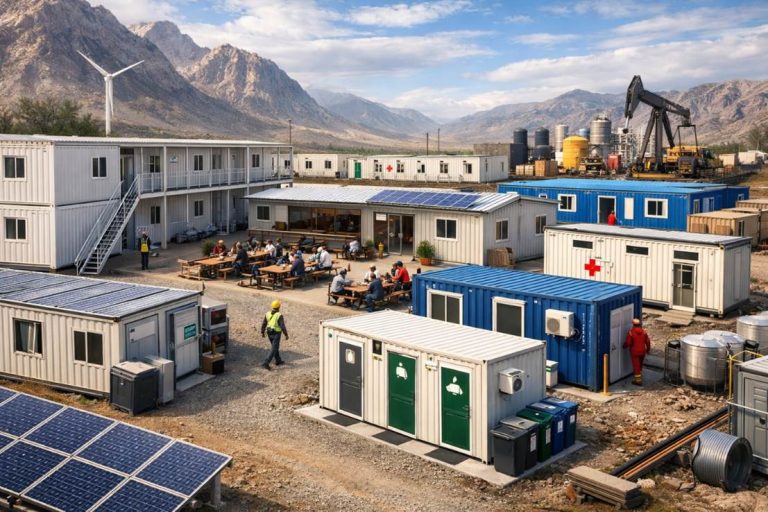
When construction starts on new infrastructure projects in remote desert regions, a new mine is developed...
What Are Prefabricated Office Buildings? The Complete Guide for Businesses
Construction sites, factories, warehouses, mining projects, and remote work camps often need office space faster than...
Earthquake-Resistant Container House: Key Seismic Features and Safety Guide
Introduction In earthquake-prone areas, building safety is one of the most important concerns for housing, offices,...
Modular Container House Revolution
Welcome to the future of flexible architecture with our cutting-edge modular container house designs! These aren't your ordinary...

How Much Does a Container House Cost
One of the first questions prospective buyers ask when considering a container home is, how much...


