



Container Office Design & Price Guide: Plans, Fit-Outs & Setup Checklist
Why teams pick a container office
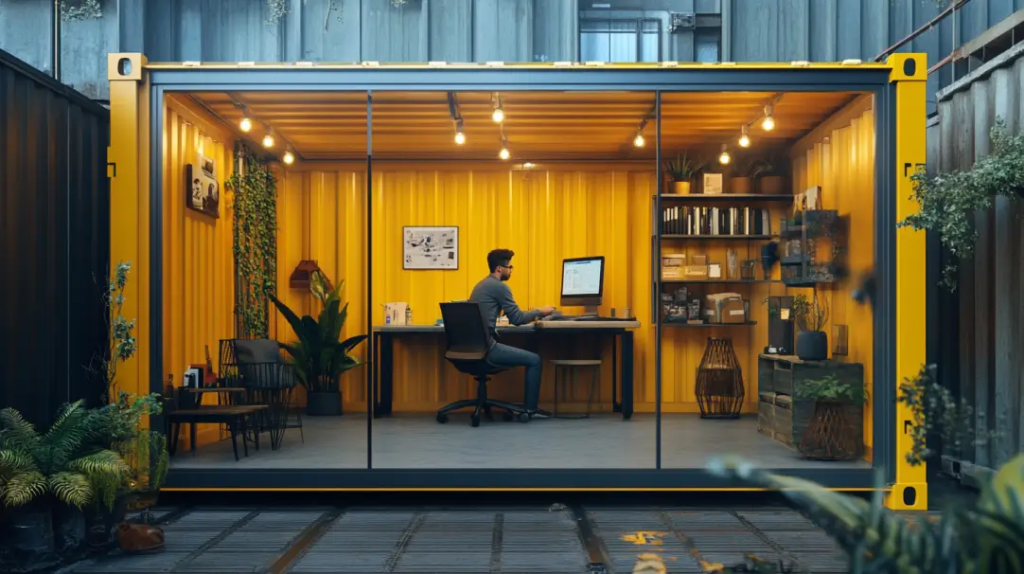
A modern container office is a pre-engineered workspace that lands on site ready to plug in. Compared with conventional builds, it offers:
- Speed: days to weeks from order to occupancy
- Flexibility: add, move, stack, or rent (office containers for rent)
- Predictable budgets: factory BOMs and fixed labor scopes
- Low disruption: minimal wet works; clean commissioning
Use cases span site office container hubs, mobile project rooms, pop-up sales suites, event command posts, and multi-storey container office building stacks.
Types of container offices (and when to choose each)
Flat pack container office
Panelized kits from a flat pack container house factory ship densely (great for container store shipping economics). Crews bolt frames, walls, and roof on pads/piers.
Best for: large fleets, standardized layouts, tight freight budgets.
Foldable (collapsible) office
A folded unit that unfolds on site—walls and roof hinge up, services pre-routed.
Best for: rapid mobilization, remote access sites, seasonal projects.
Expandable office
Slides out to increase width for meeting rooms and open plans.
Best for: long-term comfort, client-facing spaces, design-forward suites.
Converted shipping container office
Built from ISO boxes with structural reinforcement and new openings.
Best for: heavy-duty frames, stacked storage container office blocks, rugged aesthetics.
All are forms of prefabricated construction; the right pick depends on timeline, comfort targets, and local codes.
What drives container office price (without guessing numbers)
1) Structure & frame
Steel grade, frame gauge, stacking loads, anchoring kits for wind/seismic, and integrated light steel structure housing options.
2) Envelope & comfort
Insulation type (rockwool, PIR, or closed-cell foam), thermal breaks, double-glazed windows, door U-values, and shading. For quiet work, specify a soundproof shipping container package (higher-STC partitions, acoustic seals).
3) MEP services
Electrical amperage, distribution boards, earthing, LED lighting levels (300–500 lux), outlet density, data raceways, HVAC tonnage and fresh air, plumbing for pantries or WASH pods (container toilets for sale add-ons).
4) Interior fit-out
Wall finishes (washable board or laminated panels), flooring (SPC/vinyl, anti-static where needed), storage walls, blinds, acoustic ceiling, fire-rated doors.
5) Logistics & site
Ocean freight (if importing from container houses china or a container house factory), port and last-mile trucking, cranage, foundations, and commissioning. Bulk orders cut per-unit logistics and install time.
Tip: Request itemized quotes. If one offer is cheaper, check what was removed—often insulation thickness, glazing spec, or HVAC capacity.
Layout patterns that actually work
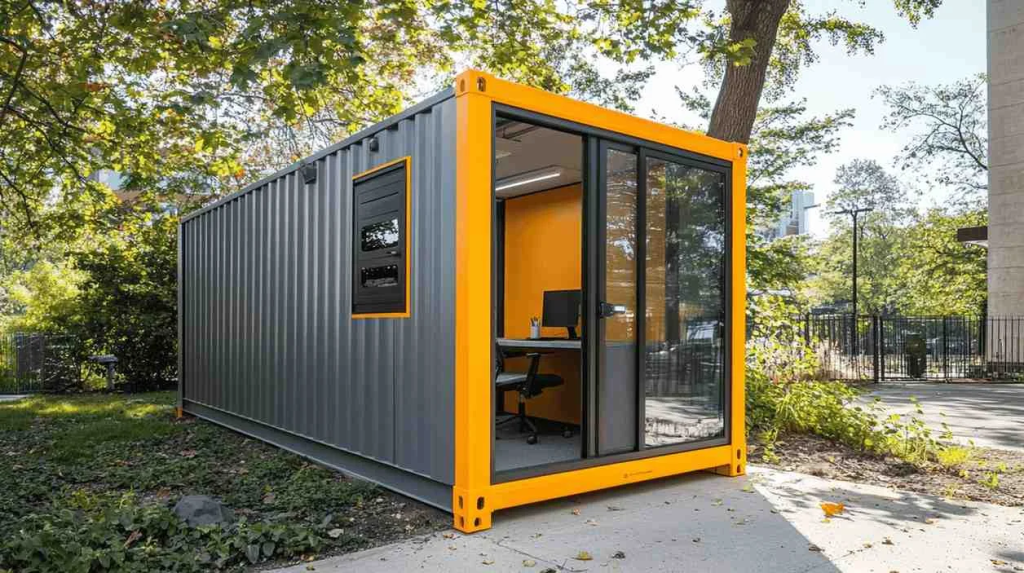
20-ft compact office
- Use: site supervisor, guardroom, sales kiosk
- Plan: desk row, storage, small pantry, split AC
- Notes: ideal portable office container with quick hook-ups
40-ft standard office
- Use: 4–8 desks, small meeting nook
- Plan: perimeter glazing, acoustic ceiling, data trunking
- Notes: the workhorse for mobile office container needs
Double-wide / expandable suite
- Use: client-facing HQ, design team room, project war room
- Plan: meeting room + open plan, pantry, WC, server cabinet
- Notes: choose thicker envelope and low-noise HVAC
Stacked office building
- Use: multi-team compound with container workspace clusters
- Plan: stairs/external walkways, code-compliant egress, shared WASH
- Notes: engineered frames and foundations for vertical loads
Ergonomics to lock in: glare-controlled daylight, 300–500 lux at desk height, background noise ≤35 dB(A), and cross-vent or fresh-air make-up.
Design specs you can hand to vendors
- Dimensions & occupancy: 20-ft/40-ft/double-wide; desks and meeting seats
- Envelope: R-values by climate; thermal breaks; low-U glazing; shading
- MEP: power capacity, outlet density, data points, HVAC tonnage, fresh-air rates
- WASH: integrated WC or nearby container toilet pod, non-slip coved floors
- Fire & egress: rated partitions/doors, exit widths, signage
- Security: reinforced doors/windows, access control, exterior lighting
- Finish palette: wall/ceiling boards, flooring, cabinets, blinds
- Docs: GA drawings, electrical schematics, BOM, material datasheets, warranty terms
Compliance, safety, and accessibility
- Zoning & permits: check temporary vs permanent use, setbacks, signage
- Fire safety: rated assemblies where required, smoke/CO detection, extinguishers
- Egress: compliant door widths, panic hardware, illuminated exit signs
- Accessibility: ramp slopes, thresholds, turning radii, fixture heights
- Energy: local code U-values, air-tightness, HVAC efficiency
Rent or buy?
Office containers for rent are perfect for short projects, capacity spikes, or try-before-you-buy scenarios.
Container office for sale suits long-term sites and custom branding. A hybrid path—rent base units and customised containers for client areas—often balances CAPEX and speed.
Domestic vs imports (and how to buy smart)
Domestic (e.g., folding house manufacturers USA):
- Pros: code familiarity, faster service calls, easy site visits
- Consider: higher list price, regional catalog limits
Imports (e.g., china container house, chinese container house, container house from china):
- Pros: scale, options (flat pack/foldable/expandable), strong pricing
- Consider: port logistics, lead time, pre-shipment inspections are a must
Due-diligence checklist:
- Factory credentials (ISO/QMS, weld certs), recent audits
- Drawings, BOM, test reports (electrical, watertightness, fire)
- Sample mock-ups (corner, door, bathroom) for approval
- Clear INCOTERMS (EXW/FOB/CIF), insurance, staged payments
- Spare parts kit (hinges, locks, seals) with delivery
Installation & commissioning checklist
- Site prep: soil bearing verified; leveled pads or pier blocks; anchoring points
- Delivery & cranage: road access and turning radii checked; taglines ready
- Placement: set, level, connect inter-module joints (if double-wide/stacked)
- Weathering: flashings, thresholds, sealants, roof edges
- MEP hook-ups: power, earthing, data, water, drainage; test loads
- Fire & safety: exit signage, extinguishers, alarms; access ramps
- Handover: O&M manuals, warranty cards, maintenance schedule
With trained crews, a standard 40-ft steel container office can be operational in days; stacked compounds follow a repeatable rhythm.
Climate-smart specs by region
- Hot-humid (Philippines, Malaysia): closed-cell foam + vapor control, corrosion-resistant coatings, mold-resistant finishes; tie-downs for cyclones.
- Hot-arid (Saudi Arabia): high-albedo roofs, deep shading, sand-proof filtration, UV-stable gaskets.
- Temperate (USA/EU): energy-code insulation, thermal breaks, ERV/HRV, snow/wind load checks.
These choices explain why container office price varies across geographies.
Add-ons that raise productivity
- Acoustic package: higher STC partitions, door sweeps, acoustic ceiling
- IT backbone: server nook with ventilation, rack, UPS, cable management
- Branding: exterior cladding, signage, glazing films
- Outdoor: covered deck or awning for heat/rain; motion-sensor lights
- WASH: integrated or adjacent container toilets for sale block
- Sustainability: cool roofs, solar pre-wire, low-VOC finishes
Common pitfalls (and easy fixes)
- Under-spec insulation/HVAC: heat and humidity kill focus—size systems properly.
- No acoustic plan: call centers and design teams need quieter rooms—add the package.
- Forgetting last-mile costs: cranes, escorts, and permits can erase savings—plan early.
- Vague scopes: “allowances” balloon—send a one-page spec so quotes match reality.
- Skipping QA: book inspections for customised shipping containers and specialty interiors.
When an office becomes a campus
The same platform builds meeting suites, canteens, storage, and even modular container houses for staff lodging. Pair offices with a container hospital first-aid pod and a container street of retail/service units. Scale in phases without redoing foundations.
FAQs (People Also Ask)
What size container office should I start with?
A 40-ft plan fits 4–8 desks plus a small meeting nook; add a double-wide or expandable unit when client-facing rooms are needed.
How long does installation take?
Single modules can go live in days; double-wides and stacked sets add time for joints, walkways, and inspections.
Is renting cheaper than buying?
Short projects favor renting; long-term sites favor buying—especially if you want branding and custom interiors.
Can I add toilets and a pantry?
Yes. Choose integrated WASH or a nearby pod. Specify waterproofing with coved skirting and proper vent stacks.
Are container offices hot or noisy?
Not if specified well. Use adequate insulation, low-U glazing, shading, and acoustic packages for quiet interiors.
Can they be multi-storey?
Yes—engineered frames, foundations, and compliant stairs/egress deliver safe container office building stacks.
Similar Posts
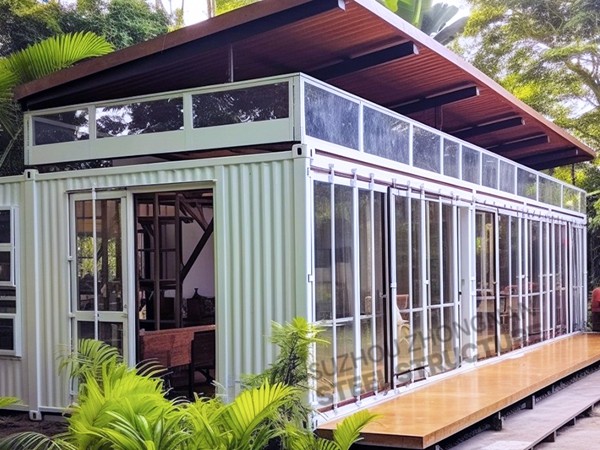
Modular Container House Revolution
Welcome to the future of flexible architecture with our cutting-edge modular container house designs! These aren’t your ordinary…
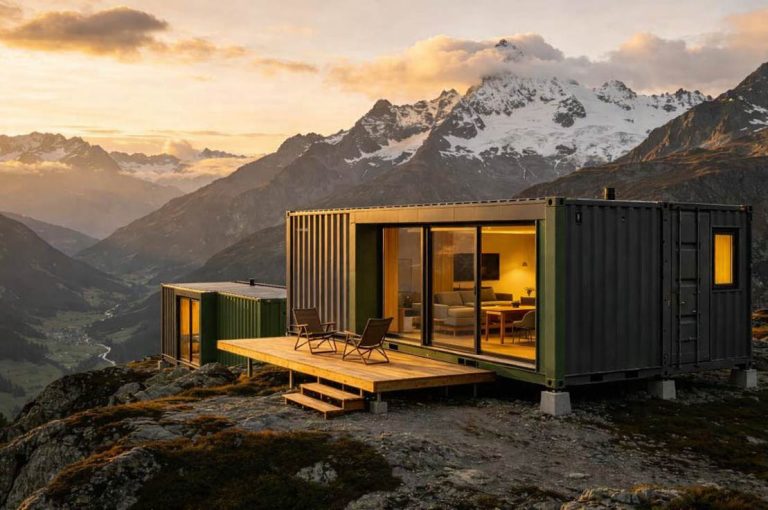
How to Choose the Best Container Camp for Your Outdoor Adventure
Container camps have changed outdoor experiences in many ways, allowing people to shift from tent camping…
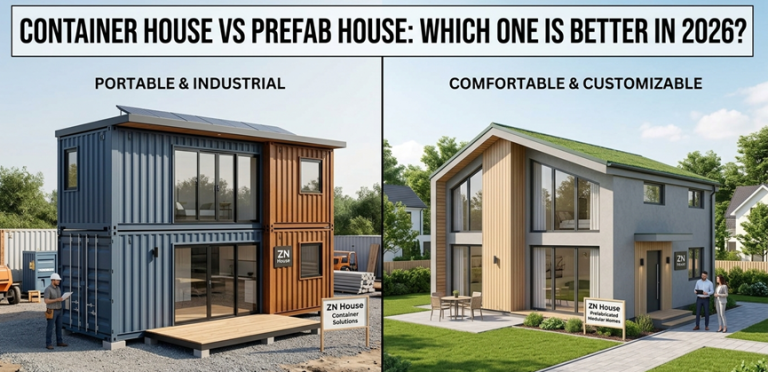
Container House vs Prefab House: Which One Is Better in 2026?
Introduction There was a recent increase in the use of modular construction within all types of…
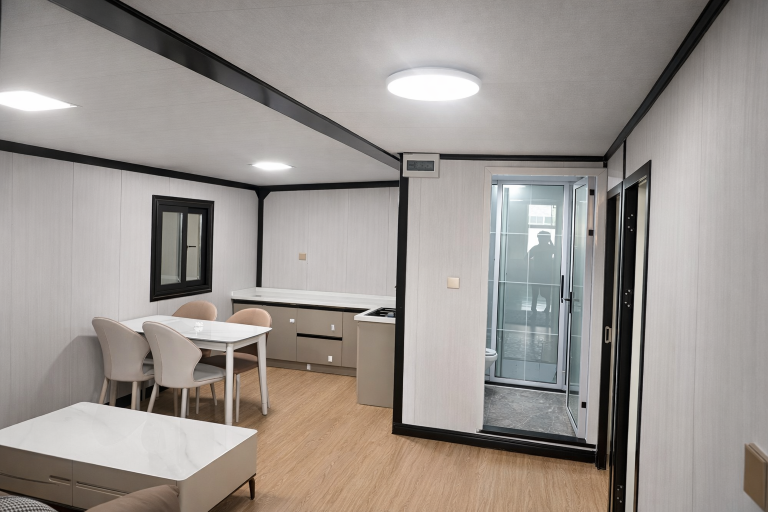
Prefab Homes Under 50K
Affordable housing is no longer a dream far removed from reality. You can even buy prefab…

Modular Container House Disaster Relief Deployment Tactics
Natural disasters demand rapid, resilient housing solutions that transcend traditional construction limitations. Modular container house systems have emerged…

How Much Does a Container House Cost
One of the first questions prospective buyers ask when considering a container home is, how much…


