



Container Classroom Prices & Layouts: A Practical Guide for Schools
Why schools are choosing container classrooms
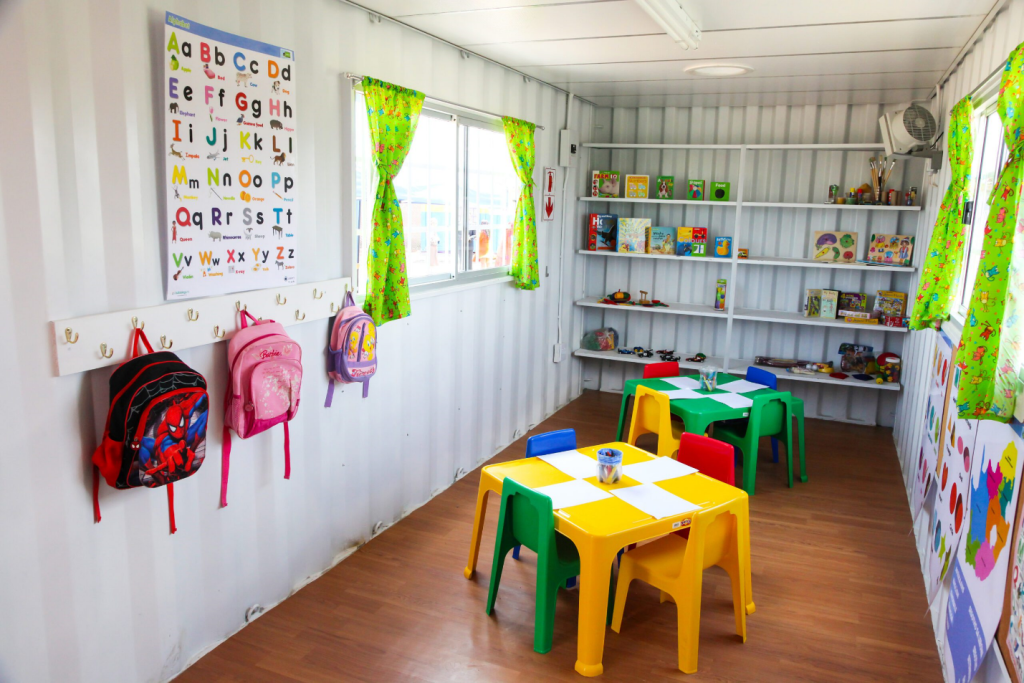
When enrollment spikes or buildings are under renovation, schools need space now—not in 12 months. Container classroom solutions arrive pre-engineered, pre-wired, and ready to teach with minimal site disruption. Compared with masonry additions, they offer:
- Rapid deployment (days to weeks)
- Predictable budgets (factory BOMs, repeatable assembly)
- Flexibility (move, stack, or repurpose later)
- Code-ready designs (egress, fire rating, ventilation)
You’ll see them marketed as shipping container classrooms for sale, modular container houses, flat pack container house kits, or foldable container house units. Different names—same goal: safe, comfortable learning space fast.
What really drives classroom containers prices
Searching “classroom containers prices” often returns a single headline number. In reality, your cost is shaped by six levers:
- Structure & frame
Gauge of steel, reinforcement for stacking, tie-down kits for wind/seismic zones. - Envelope & acoustics
Insulation type/thickness (rockwool vs closed-cell foam), thermal breaks, double-glazed windows, doors with low U-values, soundproof shipping container upgrades for quieter rooms. - MEPs (electrical, HVAC, plumbing)
Amperage, lighting levels (lux targets), outlets density, data raceways, split-AC tonnage, fresh-air rate, WASH modules (toilets/sinks). For wet modules, ask toilet container suppliers for non-slip floors with coved skirting and proper vent stacks. - Interior fit-out
Wall finishes (antimicrobial boards, washable paints), flooring (SPC/vinyl), teacher storage, whiteboard walls, glazing for daylight, blackout blinds for AV. - Compliance & paperwork
Fire ratings (wall/door), egress widths, accessibility ramps, energy code, local testing/certifications. These can add cost—but they also make the module pass inspection first time. - Logistics & site
Ocean freight (if importing), port fees, last-mile haulage, cranes, site office container yard staging, foundations (pads or piers), and commissioning.
Tip: When asking for quotes, send a one-page spec (layout + insulation + HVAC + electrics + WASH + fire/egress + delivery window). Vendors price accurately when details are clear.
Which build style fits your timeline?
Flat pack (panelized)
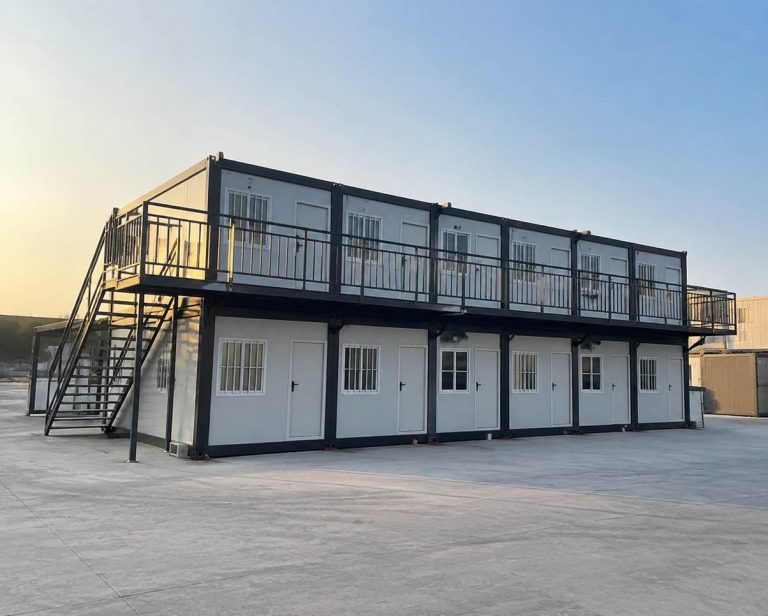
Ships as kits from a flat pack container house factory (often in Asia). Best for districts needing multiple identical rooms: the density per 40-ft container lowers freight cost, and local teams can bolt units quickly. Great for campuses building a cluster—also ideal if you plan shared WASH blocks.
Strengths: Scale, cost control, repeatable QC
Watch-outs: Schedule trained crews; protect panels from rain during assembly
Foldable (collapsible)
Arrives as a folded box; walls/roof hinge up. Ideal for emergency expansions or remote schools. One crew can deploy several in a day—perfect for exams season or temporary relocation.
Strengths: Fastest setup, minimal site disruption
Watch-outs: Hinge/lock maintenance; insulation is factory-set (verify R-values)
Expandable (slide-out)
Transports at ISO width, then slides to a broader classroom. Excellent for long-term comfort (better layouts, thicker insulation, quiet HVAC). Pair two units for a u shaped house-style sheltered court used as an outdoor learning area.
Strengths: Best livability, larger footprint per unit
Watch-outs: More mechanisms to maintain; lower freight density
Layouts that keep students focused
20-foot single classroom (compact)
- Capacity: 12–18 students
- Plan: Teacher wall, perimeter storage, operable windows, split-AC
- Use: Small groups, resource rooms, counseling, labs annex
- Notes: Works well as a portable folding house derivative with academic finishes
40-foot standard classroom
- Capacity: 20–30 students
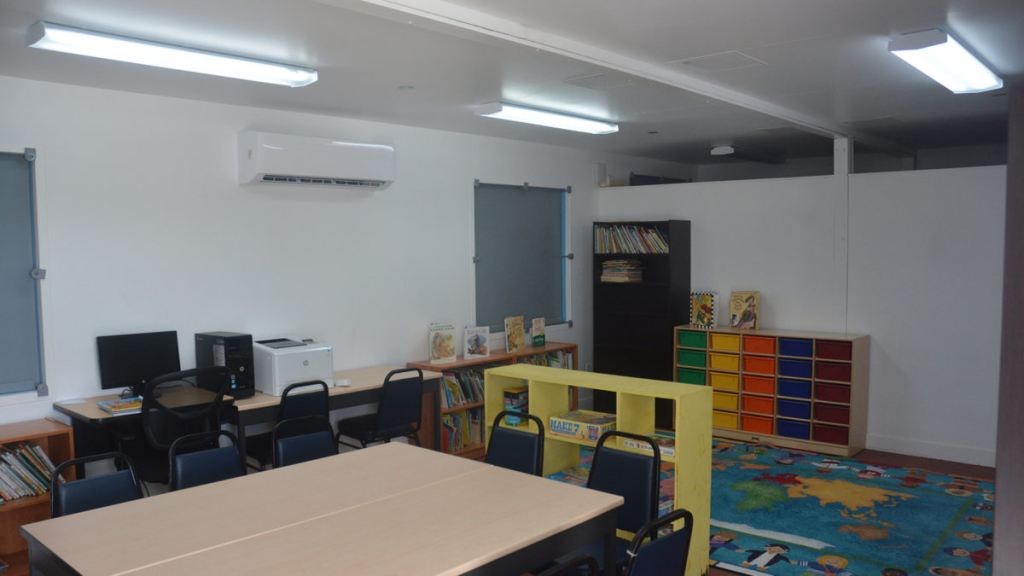
- Plan: 7–8m teaching wall, daylight on two sides, acoustic ceiling, data trunking
- Add-ons: Small WASH module; vestibule to cut heat gain
- Notes: The global “workhorse” room; easy to replicate across campuses
Double-wide or expandable classroom
- Capacity: 30–40 students or STEAM lab
- Plan: Central teaching zone + breakout corners, sinks for art/science, storage wall
- Notes: For long-term installs, specify thicker insulation, low-noise HVAC
Cluster with WASH & admin
- Composition: 3–6 classrooms + shared container toilets + staff room
- Circulation: Covered walkway; secure sightlines
- Notes: Budget-smart: shared WASH lowers per-room cost; code-friendly exits
Acoustic target: Aim for STC-rated partitions and background noise (HVAC) ≤35 dB(A).
Lighting: 300–500 lux at desk height, glare-controlled.
Air: Fresh air per student according to local standards; cross-vent windows help in mild seasons.
Climate-smart specifications (PH, MY, KSA & more)
- Hot-humid (Philippines, Malaysia): Closed-cell spray foam or high-density rockwool + vapor control; corrosion-resistant coatings; mold-resistant finishes. Wind/cyclone tie-downs.
- Hot-arid (Saudi Arabia): High-reflectance roofs, deep shading, sand-proof filters, UV-resistant seals; specify desert-grade coatings.
- Temperate (USA/EU): Energy-code insulation, thermal breaks, ERV/HRV for IAQ; snow-load checks where relevant.
This is why pricing differs by country—container classroom specs follow local climate and code, not just the steel box.
Buying guide: domestic vs imports
Domestic (e.g., folding house manufacturers USA):
Pros—easier inspections, local code familiarity, faster service.
Cons—unit price may be higher; fewer mass-production lines.
Imports (e.g., china container house, chinese container house, container houses china):
Pros—scale, cost advantages from a container house factory; breadth of options (flat pack, foldable, expandable, detachable container house).
Cons—lead time, port logistics, need for third-party inspections.
Best practice checklist:
- Factory credentials (ISO/QMS, welding certs)
- Drawings + BOM + test reports (fire, electrical, watertightness)
- Sample corner or mock-up approval
- Clear INCOTERMS (EXW/FOB/CIF) and insurance
- Pre-shipment inspection (punch list + spare hinges/seals)
- Local installer lined up for foundations and commissioning
Foundations & installation (the quick plan)
- Survey & utilities — verify power capacity, water/ sewer routing, and data backhaul.
- Foundations — leveled pads or pier blocks; anchor per wind/seismic.
- Lift & place — crane with taglines; protect edges.
- Seal & weatherproof — flashings, thresholds, membrane trims.
- MEP hook-up — electrician and plumber commission fixtures.
- Fire & egress — signage, hardware, extinguishers, illuminated exits.
- Handover — O&M manuals, maintenance schedule, warranty cards.
Well-planned installs turn container construction into a predictable, one-week campus project.
Safety & compliance essentials
- Egress: Two clear exits for standard rooms; panic hardware where required.
- Fire: Rated wall assemblies and doors per code; documented materials.
- Accessibility: Ramp slopes, door clearances, restroom fixtures at correct heights.
- IAQ: Low-VOC materials, adequate fresh-air rates, routine filter changes.
- Electrical: Proper earthing/grounding, RCD/GFCI where required, labeled panel boards.
How to compare quotes apples-to-apples
Ask every vendor to price the same spec pack:
- Room size and occupancy
- Insulation type/thickness & target U-values
- Window/door specs and quantity
- Lighting lux, outlet density, data points
- HVAC tonnage & fresh-air solution
- WASH module scope (fixtures, waterproofing)
- Fire rating & egress hardware
- Delivery, cranage, foundations, commissioning
- Warranty terms + response time SLAs
Then create a simple scorecard: Price (30%), Spec compliance (30%), Lead time (20%), Warranty/Service (20%). If a quote is cheaper, check what was removed—often insulation, glazing, or HVAC sizing.
Common pitfalls (and easy fixes)
- Under-insulating for climate → Raise R-values; add thermal breaks.
- No acoustic plan → Specify partitions and quiet HVAC; add carpet tiles or acoustic panels.
- Forgetting last-mile costs → Pre-book cranes; confirm road access and turning radii.
- Vague scope → Use a one-page spec to avoid “allowances” that inflate later.
- No QA → Always do pre-shipment inspections for customised containers and customised shipping containers orders.
When a classroom becomes a campus
The same ecosystem supports container dormitory, container van dormitory for teachers, container office for admin, container hospital pods for first-aid, and shared container toilets. Using standardized modules lets you phase growth without rebuilding. Many districts start with one classroom and evolve into a container street of learning, labs, and offices.
FAQs (People Also Ask)
How much does a container classroom cost?
There isn’t a one-size number. Your price depends on structure, insulation, HVAC, glazing, WASH, compliance, and logistics. Request itemized quotes tied to a clear spec.
Are container classrooms safe for kids?
Yes—when built to code: fire-rated assemblies, correct egress, ventilation, tested electrics, and anchored foundations.
How fast can we get one installed?
Foldable units can be taught in within days; flat pack clusters typically complete in 1–3 weeks depending on crew and inspections.
Can we add toilets and sinks?
Yes. Choose integrated WASH or a nearby container toilet block. Ensure waterproofing, vent stacks, and slip-resistant coved floors.
Can they be permanent?
With proper foundations, insulation, and finishes, many districts treat them as long-term classrooms. Verify local zoning and energy code.
What sizes are available?
Common 20-ft and 40-ft footprints, expandable double-wides for labs, and multi-room clusters with shared WASH and storage.
Similar Posts
Modular Container House Foundation Options
Modular container house—including durable modular shipping container house and customizable prefab modular container house variants—relies on stable, site-adaptable…
Upcycling Shipping Containers into Modern Homes
The rise of modular container homes for sale marks a transformative shift in sustainable architecture. By repurposing…

Folding Container House: The Future of Flexible and Sustainable Living
The folding container house is revolutionizing modern architecture by offering a blend of portability, durability, and innovative design….
Smart Living Starts with a Folding Container House
The housing industry is experiencing a wave of innovation led by efficient, mobile, and modular solutions….
Container Office vs Modular Office:Which Is Better for Your Project?
When comparing a container office vs modular office, the best option is determined by factors like…
Foldable Container House Lightweight Transport Advantages
Foldable Container House Lightweight Transport Advantages have revolutionized the mobility and cost-efficiency of modular housing, addressing…


