



Flat Pack House DIY Build Difficulty Levels
The global shift toward affordable, sustainable housing has propelled flat pack house systems into mainstream construction. These prefabricated solutions democratize building by enabling owner-led assembly—but complexity varies dramatically across designs. Since 2005, ZN House has pioneered this revolution from its Suzhou base, specializing in engineered container homes that balance DIY accessibility with structural integrity. Founded to address gaps in quality and safety, the company now exports to 50+ countries via 30+ international agents. Their modular ethos centers on galvanized steel frames and customizable insulation (EPS, rockwool, or glasswool sandwich panels), enabling configurations from single units to 4-story complexes. This article examines how design choices impact DIY difficulty, leveraging ZN House’s 19-year expertise in industrial-grade flat pack container house and flat pack tiny house solutions.
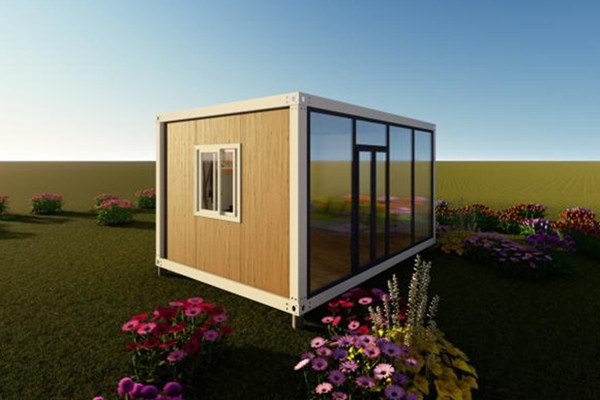
Foundational Complexity in Flat Pack House Assembly
All flat pack house kits demand foundational skills, but ZN House mitigates challenges through precision engineering. Unlike traditional builds requiring wet trades (concrete, plaster), their systems use pre-drilled components with numbered joinery points. A 20ft container unit arrives with pre-finished roof/floor panels, reducing tasks to structural bolting and panel insertion. However, ground preparation remains critical: uneven foundations amplify alignment issues. ZN House’s global experience shows DIYers typically complete base assemblies in 3–5 days using basic tools (wrenches, levels, electric drills)—faster than conventional homes yet requiring meticulous attention to manuals.
Structural Nuances of Flat Pack Container House Integration
Expanding beyond single units introduces complexity. Flat pack container house designs allow horizontal/vertical stacking (up to 4 floors), demanding understanding of load paths and inter-module connections. ZN House simplifies this via pre-welded corner castings and integrated lifting points, yet challenges persist:
- Sealing Joints: Weatherproofing inter-container seams requires precision application of butyl tape and silicone.
- Utility Routing: Pre-cut conduit channels ease electrical/plumbing runs, but cross-module integrations need planning.
- Insulation Integration: Sandwich panels slide into steel frames, yet corners require additional foam sealing for thermal efficiency.
These factors elevate difficulty to “intermediate,” necessitating 1–2 weeks for multi-unit projects.
Space Optimization Hurdles in Flat Pack Tiny House Kits
Flat pack tiny house builds maximize function within minimal footprints (under 400 sq ft), intensifying spatial planning demands. ZN House’s designs pre-install plumbing/electrical chases in walls, but micro-adjustments become critical:
- Multi-Functional Components: Foldable furniture and loft beds must align perfectly with structural supports.
- Ventilation Systems: Compact spaces require strategically placed HVAC cutouts in panels to prevent moisture buildup.
- Weight Distribution: Off-grid features (solar batteries, water tanks) require reinforced floor sections.
These constraints raise the skill ceiling, often requiring 10–14 days for optimized assembly.
Scalability Challenges in Multi-Unit Flat Pack House Projects
Large-scale deployments (e.g., worker camps or student housing) compound coordination demands. ZN House’s standardized components enable batch production, but DIY crews face logistical hurdles:
- Crane Operations: Stacking containers beyond two stories necessitates machinery and certified operators.
- Bulk Utility Management: Centralized water/electric systems require professional-grade connections.
- Regulatory Compliance: Multi-story builds often trigger local code inspections for fire exits and staircases.
While ZN House provides engineering certifications for permits, these projects typically require 3–6 weeks and cross-disciplinary collaboration.
FAQs About Flat Pack House Assembly
What defines a beginner-friendly flat pack house project?
Single-story, 20ft units with pre-attached flooring/roofing. ZN House’s bolt-together frameworks require only basic tools and 1–3 helpers, ideal for first-timers.
How does a flat pack container house withstand seismic activity?
Galvanized steel cross-bracing and moment-resistant corners absorb shocks. ZN House units meet ISO container standards, tested for wind loads up to 110 mph and seismic Zone 4 compliance.
Can flat pack tiny house designs include off-grid capabilities?
Yes. Pre-routed chases support solar wiring, composting toilets, and rainwater systems. ZN House reinforces walls for roof-mounted panels and floor joists for water tanks.
What insulation options exist for flat pack container house walls in extreme climates?
ZN House offers 50–150mm sandwich panels with EPS (-40°C), rockwool (fire-resistant up to 1,000°C), or glasswool (acoustic/thermal balance) cores.
Are flat pack house kits expandable post-assembly?
Absolutely. ZN House’s modular connectors allow adding units horizontally or vertically. Future expansions require unbolting end walls and integrating new modules.
Flat pack house systems democratize construction but present tiered difficulties: single-container builds suit novices, while stacked flat pack container house projects or space-constrained flat pack tiny house assemblies demand advanced skills. ZN House’s 19-year legacy refines this balance—standardized components reduce errors, yet site preparation, utility integration, and regulatory compliance remain pivotal. As the company scales, its engineered simplicity continues transforming global housing from DIY experiments into resilient, scalable communities.
Similar Posts
Integrating Prefab Container Houses into Urban Landscapes
Urban landscapes are constantly evolving, driven by the need for sustainable, efficient, and adaptable housing solutions….
Flat Pack Container Homes (2026 Guide): Sizes, Prices, Benefits & Applications
Introduction A contemporary version of modular, prefabricated housing, flat pack container homes offer an efficient way…
Container Home Builders and Sustainable Living
Container Home Builders and Sustainable Living are increasingly intertwined as global demand for eco-friendly, affordable housing…

Safety Features When You Assemble House Parts
Assembling a home—whether it’s a quick to assemble homes, a modular assemble house, or a durable…
Compact Flat Pack Tiny House Designs For Small Spaces
Suzhou Zhongnan Steel Structure Co., Ltd. (known as ZN House) was founded in 2005 in Suzhou,…
Discover the Future of Living with Assemble Houses
In today’s fast-paced world, the demand for flexible and efficient housing solutions has never been greater….


