



Flat Pack vs. Folding Container Homes: Which One Is Better for Your Project?
Introduction
Modular building is globally revolutionizing the construction industry through speed of construction time, eco-sustainability, and affordability of the finished product. Flat pack containers and foldable container homes are two cutting-edge examples used for both residential, commercial and industrial applications today. According to research by McKinsey, modular construction can accelerate project timelines by 20–50% while reducing overall costs by up to 20%, highlighting why container homes are becoming a preferred solution for many developers (Source: McKinsey).
Although both types are based on a steel frame and use modular construction, they differ significantly in structural integrity, transportability, installation time, and expected lifespan, making it imperative that you identify and select the appropriate model for your project.
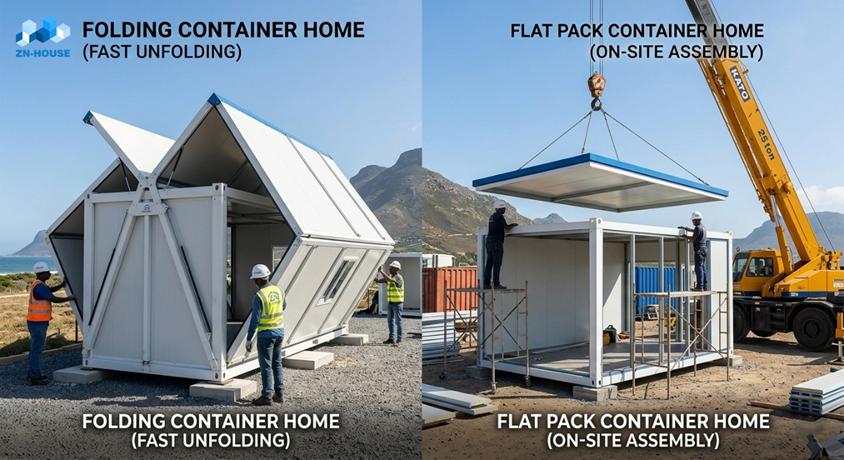
This expert guide from ZN House—drawn from years of actual engineering experience—will assist you in determining the best option for your project’s specifications. Using this guide, you will be able to make an informed decision about which alternative you should choose based on your specifications.
Fig. 1: Folding vs. Flat Pack Container Homes: Comparative Installation Study by ZN House
What Are Folding Container Homes?
Container homes made from folding modular steel have been built in various configurations that can arrive at the job site ready to fold down to a compact profile for shipping, and then be set up as a full-size container home in the field.
Definition
- A folding container home is an off-site manufactured modular building that comes from the manufacturer as a folded “box” and will be unfolded and assembled on-site once delivered to the site.
- The building comes with wall panels, roofs, floors, doors, windows, and often internal wiring, so pretty much all of the work has already been completed at the factory when the unit arrives on the project site.
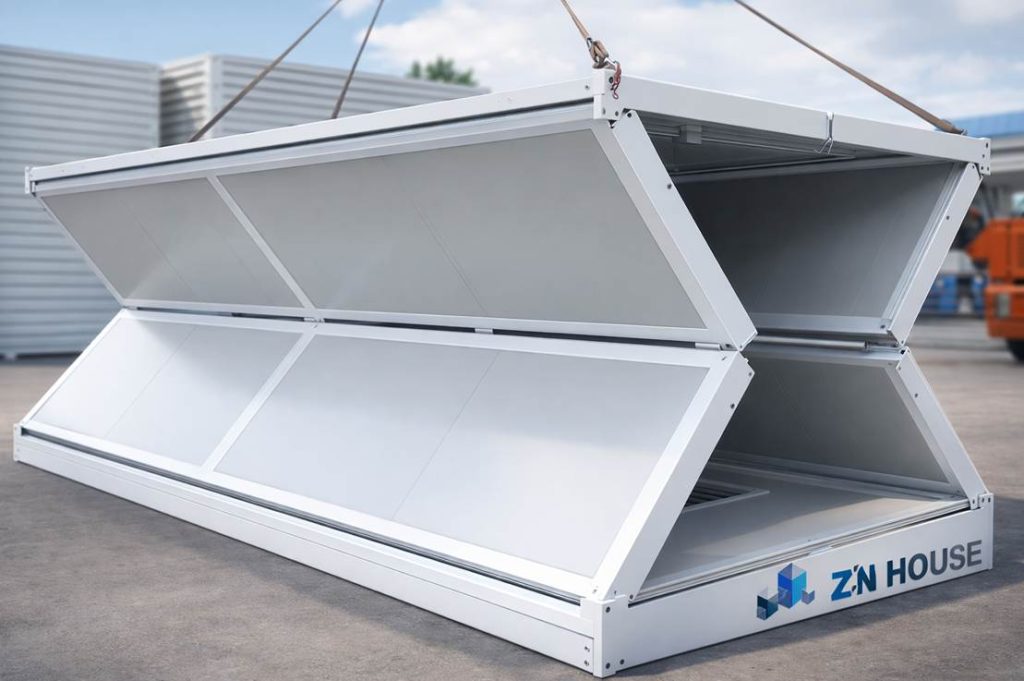
Fig. 2: A Standard Folding Container Home of ZN House
Key Features of Folding Container Homes
Fast installation: A typical folding container home can be unfolded and secured on site in about 10 to 30 minutes using a hinge-based system (ZN House specifies about 25 minutes with 2-4 workers and basic tools).
Compact Transport: When folded, the units are approximately 0.35 – 0.45m thick (approx. 1/6 of the total height) which reduces the shipping volume by approximately 70% vs full size assembled units.
Pre-Installed Components: The units have pre-installed doors, windows, roof, floor, and most walls. They also pre-engineer electrical wiring and insulation in various configurations to minimize site work.
Typical Size: Units have a standard footprint of approximately 2.4m x 5.8m (≈20 ft) to accommodate global shipping of standard lengths/widths of containers.
Structural Integrity and Performance
ZN House’s foldable container homes are designed to endure multiple iterations of folding, resist wind, and provide an architecturally based capacity for carrying the loads imposed by seismic activity without compromising structural integrity through the use of galvanized steel framing, sandwich wall panels, and architectural load-bearing design. The connection points between the folded sections utilize watertight and airtight detailing to ensure no water leakage occurs over time as well as not deforming due to pressure or environmental conditions; therefore, these units can be stacked to a maximum height of nearly three stories when properly installed with connecting hardware. Even though the architectural framing system is capable of carrying substantial weight, some building components need to remain thinner or articulated in order to be folded into place.
Typical Applications
Because they prioritize fast deployment and ease of movement, the folding container house is perfect for any situation where being able to deploy quickly and relocate is essential. Examples of these include:
- Disaster shelter and emergency housing
- Temporary dorms and/or project offices on construction sites
- Medical and/or command posts that are temporary in nature
- Event spaces, temporary retail/food outlets
- Short- to medium-term work camps and/or remote accommodations
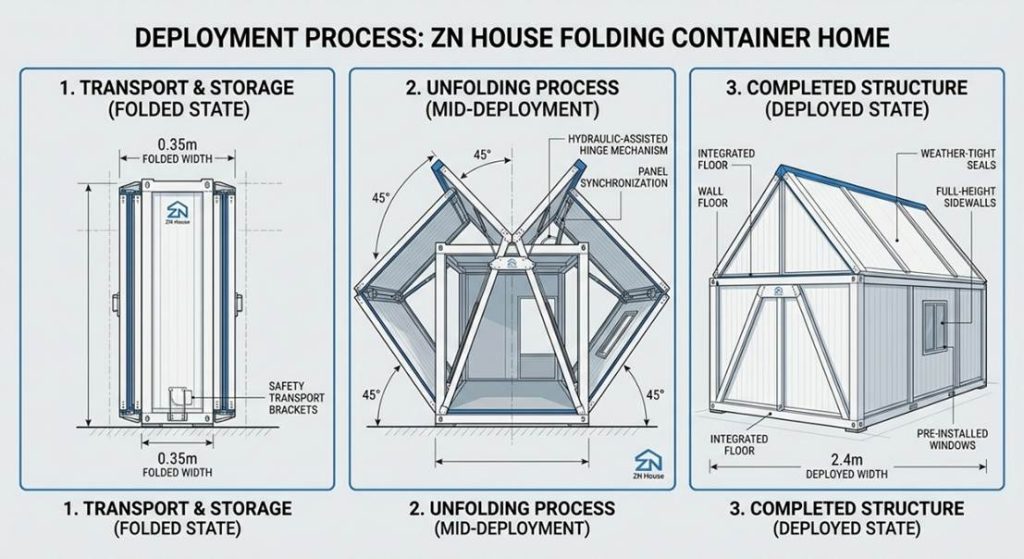
Fig. 3: Technical Schematic: ZN House 3-Step Rapid Unfolding and Deployment Process
Read this post from our blog on Folding vs Standard Container Houses: A Side-by-Side Comparison.
What Are Flat Pack Container Homes?
Modular steel structures known as flat pack container homes are delivered as a small “kit” that includes a floor, roof, columns, and panels that are assembled and bolted together on location.
Definition
- The main steel frame and sandwich panels are shipped flat and stacked in a flat pack container home, which is a prefabricated, panelized system that is assembled at the destination.
- For quick on-site assembly, ZN House provides prefabricated floors, walls, and roofs that are pre-cut and pre-engineered in the factory.
Key Features of Flat Pack Container Homes
High Transport Efficiency: Items can be transported using minimal space because, when disassembled and properly packed in a flat shipping container, they may take up less than 30% of the volume when assembled. This increases the number of homes that can be shipped in a 40-foot shipping container dramatically.
Flexible Modular Layout: The units can be combined both horizontally (e.g., by using modular building systems) and vertically (e.g., by stacking multiple modular units on top of one another), creating modular building configurations for corridors, stairs, core offices, dormitory wings, or classrooms.
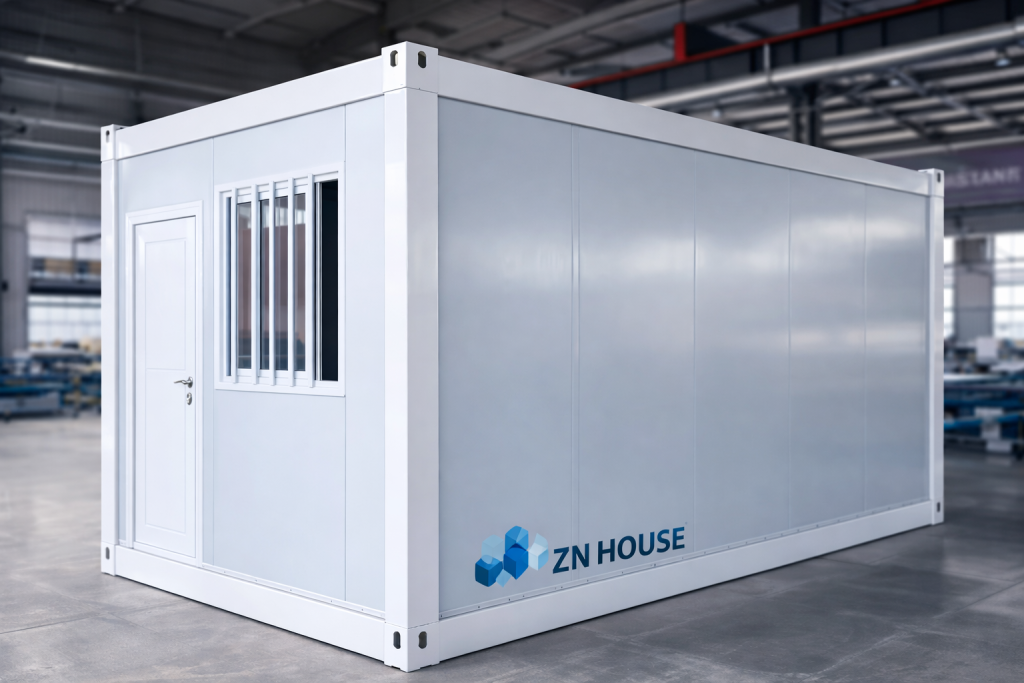
Fig. 4: A Flat Pack Container Home Manufactured by ZN House
Stronger Structure: The fact that nothing has to be folded allows for frames, columns, panels, and connections to be made thicker and stronger than folding units, creating a structurally stronger and stiffer overall unit.
Typical Dimensions A typical single module is approximately the same size as a 20-foot shipping container and has dimensions of approx. 2.4 m × 5.8 m × 2.8–2.9 m.
Structural Integrity and Performance
The flatpack container houses are made of a high-strength galvanized steel frame and fire-resistant (EPS, Rockwool, Glass wool) engineered sandwich panel material designed for large wind forces and seismic loads. ZN House aims for a design life of approximately 15-20 years or longer if properly maintained with corrosion-resistant coatings and sufficient bolted connections that do not lose their stiffness after constant use and stacking. The system does not have limitations based on hinge points, enabling it to offer more density of frames, thicker walls, and reinforced corners, which makes it suitable for long term use and/or multi-story buildings.
Typical Applications
All flat-pack homes can be easily and effectively utilized for projects that require durability, comfort, and the possibility of future development.
- Dormitories/housing for staff working on long-term projects
- Offices, shared workspaces, and project sites
- Schools, training facilities, classrooms
- Retail stores, clinics, cafes, and display areas
- Multi-block camps and large camps are set up for government or non-profit organization housing programs.
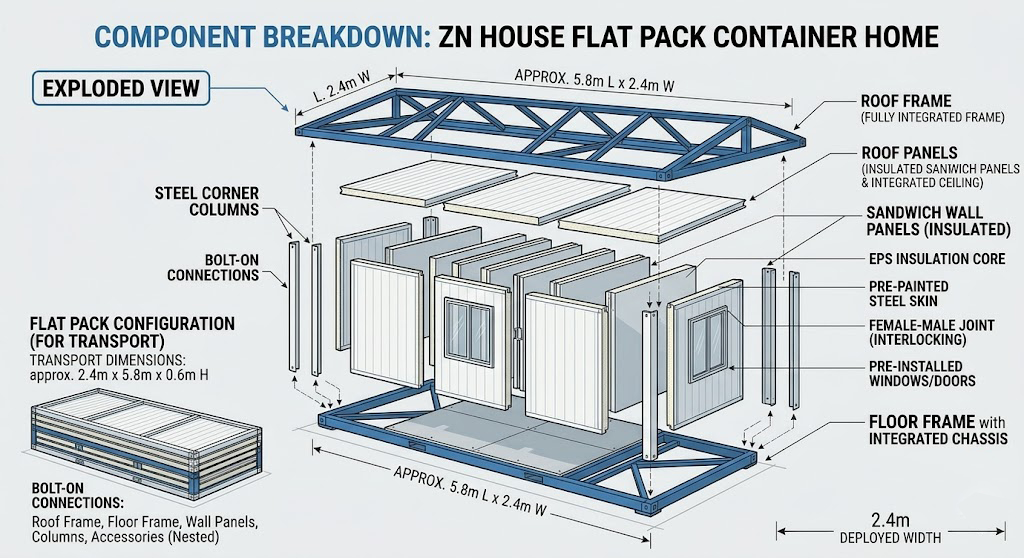
Fig. 5: Exploded View: ZN House Flat Pack Container Component and Structural Layout
Read another post from our blog on Flat Pack Container Houses vs. Traditional Housing: What’s the Real Difference?
Similarities Between Flat Pack and Folding Container Homes
While both ZN House Systems may use different methods, there are fundamental benefits to both systems as they are built from a container material; that being said, the two houses still share many of the same advantages as containers constructed with a container material.
Steel Structure
Both systems utilize a galvanized steel frame with composite (coloured steel) sandwich panel systems. As a result, both systems have tremendous strength-to-weight ratios and significant durability against wind uplift, seismic activity, and corrosion.
Modular Design
The modular design of both ZN House Systems provides users with flexibility, whether it comes to layout, stacking, linking, overall size planning, or repurposing the uses of the buildings.
Easy Global Transportation
Because both systems follow the International Standards (ISO) for shipping container footprints and stacking requirements, either system can be shipped via road, water, or rail to any location worldwide using the standard method for customs.
Fireproof and Waterproof
Both systems utilize a combination of non-combustible materials and waterproofing materials at the roof and joint connections to ensure the building’s performance regardless of geography, being either hot, cold, or humid, provided that appropriate insulation is installed.
Customizable Layout
Both systems can be laid out with varying internal partitions, door and window locations, and finish options, allowing for design flexibility to fit users’ designated use (i.e., one-bedroom units, dormitories, offices, clinics, cafeterias, luxury villas).
Sustainable Construction
Large purchasing volume and/or common usages may allow for large-scale replication of both systems, which allows for reduced on-site waste as well as better material use, and low-carbon, circular construction through recycling steel or insulation materials.
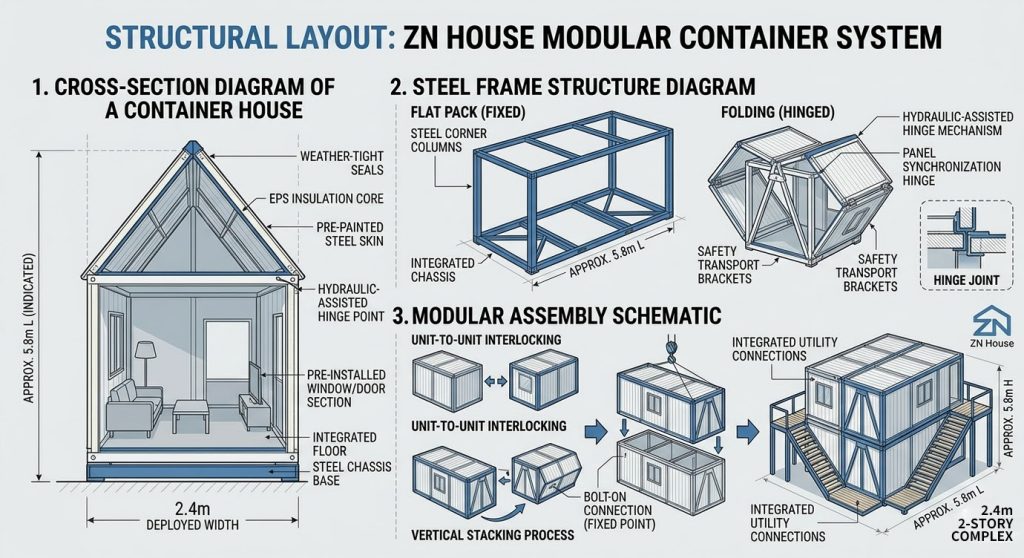
Fig. 6: Structural Layout and Core Engineering of ZN House Modular Container Systems
Flat Pack vs. Folding Container Homes: Key Differences
Folding containers and flat-pack homes each have their own benefits. Folding homes allow for fast, uncomplicated setup and are noted for their speed of deployment. Flat pack homes are more durable than folding homes, and have proven structural integrity over the long-term.
The differences between flat pack and folding container homes from a commercial and structural point of view are outlined in summary form below using ZN House’s specifications and industry standard benchmarks.
Core Feature Comparison
| Feature | Folding Container Homes | Flat Pack Container Homes |
| Installation Speed | Ultra-fast (10–30 mins) | Moderate (4–6 hours) |
| Transport Volume | Very Compact (0.35m thick) | High loading efficiency (Stacked components) |
| Structural Strength | Medium (Hinged system) | Strong (Fixed bolted frame) |
| Lifespan | 10–15 years | 15–20 years |
| Cost | Lower upfront cost | Higher, but better long-term value |
| Expansion | Limited (Standard units) | Highly Flexible (Stackable/Linkable) |
Table 1: Technical Comparison: Folding vs. Flat Pack Container Homes Performance Matrix
From a structural perspective, a flat-packed option offers a frame that is more “building-like” and thus offers better performance over time and under such conditions as heavy use and with complex combinations; whereas folding provides speed and relative simplicity for logistic purposes.
Transportation Efficiency Comparison
One of the primary factors influencing developers’ selection of modular container homes is transportation, and the two systems optimize this in different ways002E
Folding Container Homes
- An average folding unit has an area of 2.4 meters by 5.8 meters when unfolded and has a folded thickness of approximately 0.35 meters. Thus, reducing the height when folded to about one-sixth (1/6) of that of the unit when unfolded.
- Because they are designed to fold together as a single integrated “cassette,” a standard 40 ft high-cube container will contain approximately 8 units of folding units when stacked correctly.
- Consequently, there would be considerable savings in freight costs compared to shipping pre-assembled buildings, but the capacity would be slightly less than what can be achieved using a flat pack system, where the units disassemble and pack down further.
Flat Pack Container Homes
- The floor, roof, columns, and panels of flat pack units allow them to easily be stacked much more tightly than traditional construction, resulting in their compressed component volume being about 30%–40% that of an assembled unit.
- With respect to the standard module size of approximately (2.4m × 5.8m × 2.8m–2.9m), a 40 ft high-cube shipping container can carry approximately 10–12 flat pack units (i.e., shipping containers) worth of components, depending on specification and insulation.
- In larger-scale projects (several hundred units), flat pack container homes have a higher delivery cost per bed or square meter than traditional construction due to their greater loading efficiency.
Takeaway
- When shipping by freight is a major consideration for big projects (or international deliveries), flat-pack container homes typically provide a higher return on investment compared to other shipping methods.
- However, for small projects (or when quick and complete installations are important), flexible shipping containers will also deliver excellent shipping savings while requiring minimal on-site labour.
Installation Time Comparison
When it comes to installation time, folding container homes perform noticeably better than flat pack units.
Folding Container Homes
- Once the unit arrives at the location, workers will start by using the hinges to unfold the walls and roof of the structure. Once they are in the correct position, they will proceed to lock and seal the joints of the walls and roof together.
- According to ZN House, a typical unit can be completely deployed in approximately 10 – 30 minutes with an average time of 25 minutes using two to four workers and basic hand tools.
Flat Pack Container Homes
- You will need to put together the exterior structure, raise and attach wall and roof panels, and finish the sealing and detail work.
- ZN House states that it will typically take approximately 4-6 hours to assemble a 20 ft flat pack module (there are some FAQs about 6-12 hours depending on the size and ability of your crew).
Folding container homes offer a clear advantage in deployment speed for projects where every hour counts, such as pop-up camps, mobile clinics, and disaster relief.
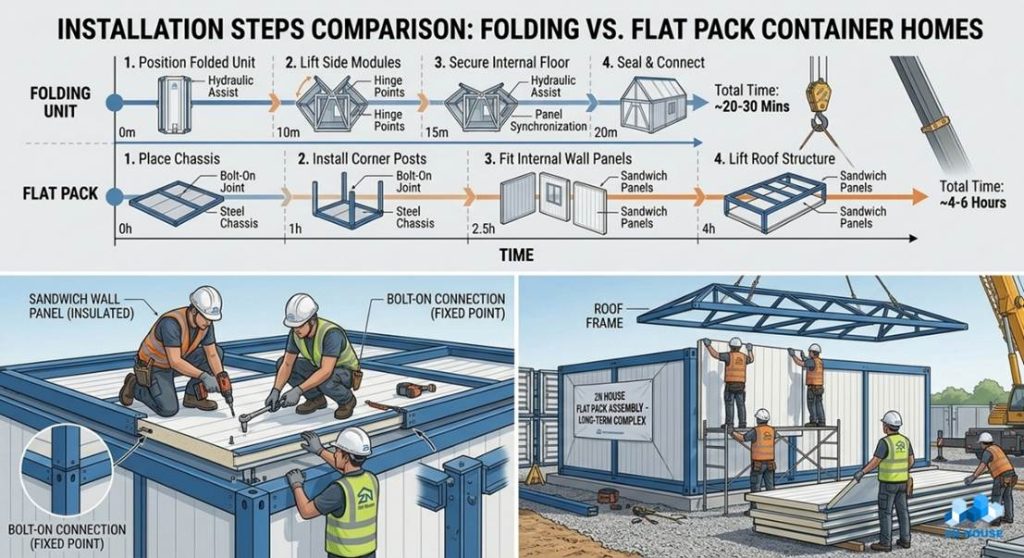
Fig. 7: Installation Workflow Comparison: ZN House Folding vs. Flat Pack Assembly Efficiency
Lifespan and Durability
Structural integrity and service life are important differentiators from an engineering standpoint.
Flat Pack Container Homes
- Employing dense framing materials and thicker or continuous materials within the structure allows for additional structural support at all connection points where materials come together. This results in joints being able to handle a larger load than if they were folded or bent.
- The average service life of modular buildings is between 15 and 20 years, and typically has been designed to accommodate high wind loads, earthquakes, and heavy use in extreme weather conditions.
- Better panel detailing, as well as corrosion protection (via galvanization, coatings, etc.), will result in less maintenance and increase the usefulness of modular buildings in an ongoing manner or as permanent structures.
Folding Container Homes
- Must maintain a lightweight, flexible shape while maintaining performance, so fewer parts are thinner and more articulated, resulting in less final rigidity than a conventional non-folding system.
- The normal design life is approximately ten-twelve years, especially in cases where the units are relocated regularly or have been folded/unfolded many times.
- ZN House designs its foldable container houses for long-lasting use, with heavy-duty hinges, reinforced joints, and waterproof seals appropriate to their intended environment.
In reality, long-term installations, multi-story complexes, and projects requiring a more building-like durability profile are better suited for flat pack container homes.
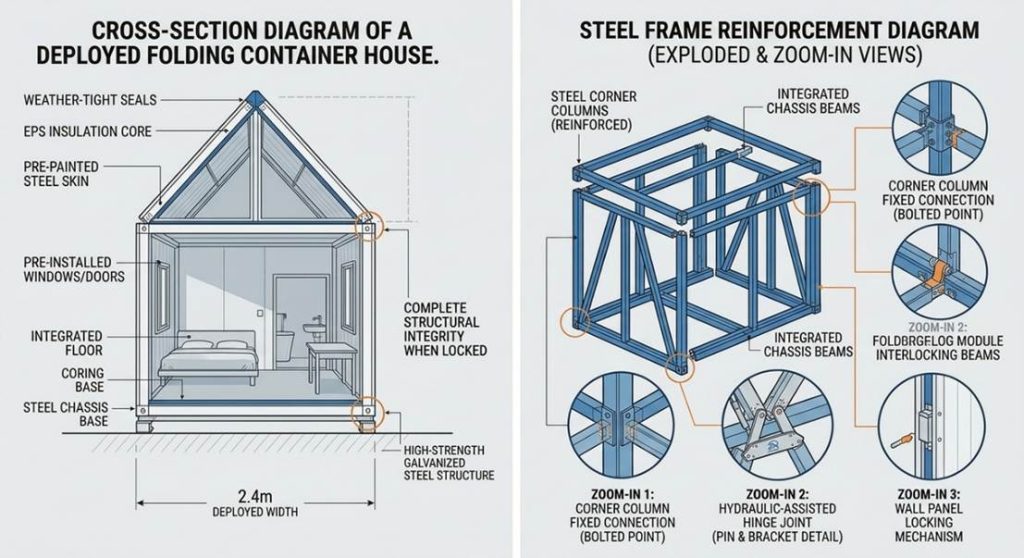
Fig. 8: Structural Integrity Analysis: ZN House Container Cross-Section and Steel Frame Reinforcement
Application Scenarios
Your use case is a major factor in the decision between flat pack and folding container homes.
Folding Container Homes: Best-Fit Use Cases
When speed, mobility, or short- to medium-term occupancy are the project’s top priorities, folding container homes are perfect:
- Disaster relief housing and emergency shelters
- Temporary construction workforce housing and site offices
- Event spaces, exhibitions, and pop-up stores
- Short-term medical posts and community outreach hubs
- Mobile food and beverage kiosks or micro-retail
Folding units are great for cyclic or seasonal use, where the same units are redeployed to different sites over several years, because installation is so quick and disassembly is simple.
Flat Pack Container Homes: Best-Fit Use Cases
For permanent or semi-permanent infrastructures that might grow over time, flat pack container homes are ideal:
- Long-term worker dormitories and residential compounds
- Office buildings, administration blocks, and co-working campuses
- Schools, training centers, and modular classrooms
- Clinics, field hospitals, and community centers
- Multi-module commercial clusters (retail streets, cafes, showrooms)
When you anticipate adding more floors or wings, or when comfort and longevity are crucial to the business case, flat pack systems are a better fit due to their stronger frame and simpler modular expansion.
How to Choose the Right Container Home for Your Project
When choosing between ZN House’s folding and flat pack container homes, make sure the system fits the logistics, scale, and time horizon of your project.
Rapid Deployment
If you want minimal on-site work and need a livable space within hours of arrival, go with folding container homes.
Long-term Use
For projects requiring 15 to 20 years of service life, greater structural robustness, and better long-term value, go with flat pack container homes.
Large-scale Projects
For large worker camps, housing programs, and commercial sites, flat pack container homes are preferred because they offer better modular expansion and superior transport efficiency (more units per 40HQ).
Short-term or Mobile Projects
When units are moved from site to site or used extensively for shorter periods of time, folding container homes are typically more affordable.
Developers frequently combine the two systems in their portfolios, using flat pack container homes for the project’s long-term foundation and folding container homes for emergency or pop-up uses.
Frequently Asked Questions (FAQS)
Which installs faster: folding container homes or flat pack container homes?
Folding container homes can be deployed much faster than flat pack (or kits) because they only require unfolding and some basic assembly with no further installation required; normally, a folding/home container is deployed in 10-30 minutes. Flat pack container homes need to have a frame built and panels installed (the flat pack container home will take about 4-6 hours to deploy).
Which container homes are better for long-term projects?
A long-term project is usually more viable with a flat-pack container house than with any other kind of container, because they have higher structural integrity and a better design life due to their non-folding frames and reinforced connections.
How long do flat pack container homes and folding container homes last?
With maintenance, flat pack container homes usually last approximately 15 to 20 years due to the construction being made from heavier frames and having corrosion protection. Folding container homes have an average lifespan of 10 to 15 years, especially if they are relocated or folded/unfolded often.
Are container homes suitable for extreme climates?
Yes. By using the appropriate insulation (EPS, rockwool or glass wool) and by properly detailing the design of the building, either a foldable or flat pack container home is capable of performing well in all three climate types (hot, cold, or high humidity) and in any area where there is a high degree of wind and seismic activity that meets the design specifications.
Which container homes are more cost-effective for large projects?
Flat-pack container homes are generally the most economical option for larger projects because they can hold more weight per 40HQ container; therefore, they offer better long-term durability, resulting in lower freight costs per unit and reduced life-cycle costs per sq meter.
Can flat pack container homes be expanded later?
Yes, container homes made of flat pack materials have a modular style, meaning they can be added together horizontally or vertically, allowing for future construction of larger office buildings, dormitories, classrooms, and commercial complexes.
To know more about the two types of container homes, visit our product page here:
Conclusion
Folding container homes and flat pack container homes both provide unique solutions to meet the needs of different types of projects. Depending on how and where you plan to use your containers determines which is the “best” container option for your project. For example, folding container homes are designed to be used as quickly as possible in the event of disasters or to create temporary housing or construction site facilities. However, flat pack container houses provide a stronger structure, longer life expectancy, and more options to expand (scalability), making them more appropriate for the long-term establishment of homes, schools, offices, or other large-scale modular complexes.
While flat pack container homes generally provide greater long-term value than folding container homes, it is important to evaluate the complete range of information available, including installation time, transportation efficiency, strength of structure, and expected life. In the vast majority of cases, a folding container home would be the best option for projects requiring rapid, short-term deployment, whereas a flat pack container home would be the best option for the construction of permanent, expandable infrastructures.
Are you set to select the best option for your location? If so, contact ZN House now for a tailored suggestion as well as an alternative configuration of flat pack containers, folding containers, or a mix of either type.
Watch the following videos regarding ‘Innovative Folding Container of ZN House: Unveiling the Manufacturing Process’:
Similar Posts
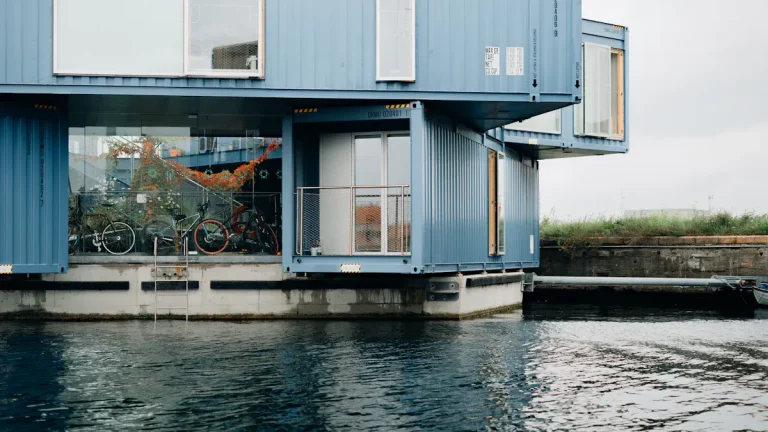
Container Construction How to Plan and Execute Modular Buildings
Container construction streamlines modular building projects with fast planning, cost savings, permit guidance, and flexible customization options.
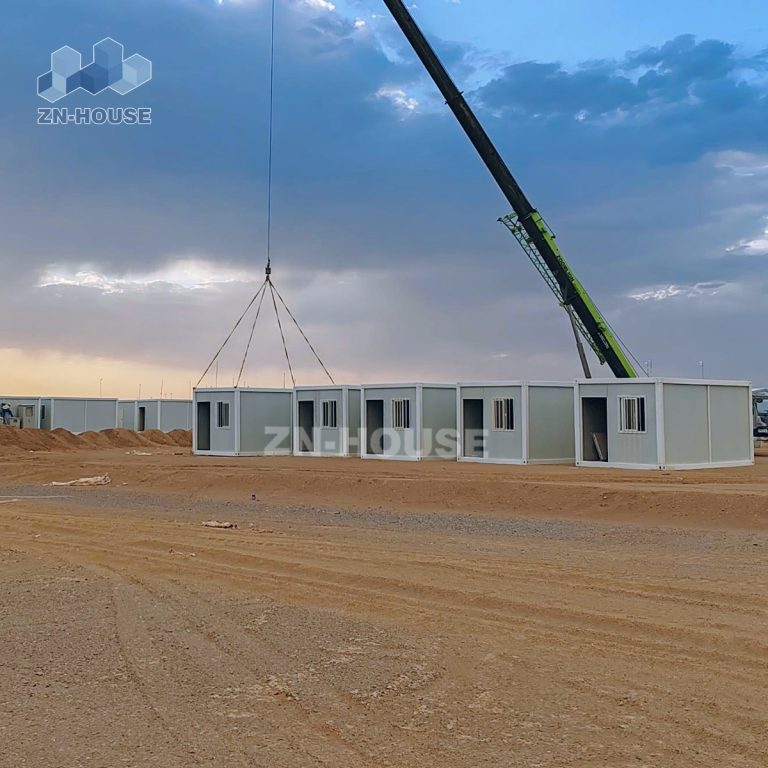
Get your Container House from China: Things You Need to Know Before Purchase
This article will inform you about questions that people concern most about getting container houses in…
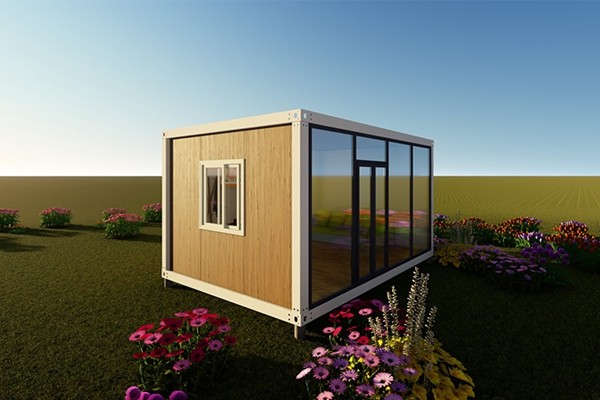
Transforming Modern Living with Innovative Flat Pack Homes
The architectural industry continues to evolve with groundbreaking solutions that challenge conventional construction methodologies through advanced flat…
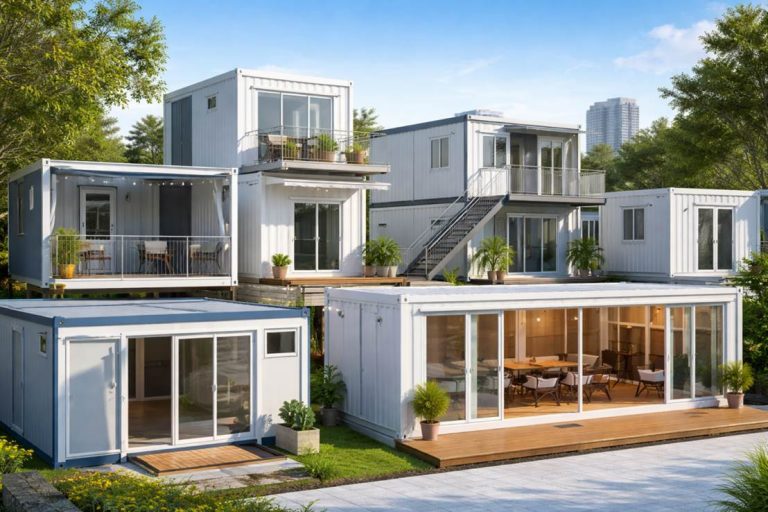
What Is a Container House? Types, Advantages, and How to Choose the Right One
Introduction Over the past several years, the worldwide construction industry has been changed by advances in…
Container house price facts every homeowner should knowFolding Container House
Container house price depends on size, design, and location. Learn key cost factors and how container homes compare to traditional housing.

Flat Pack Houses For Modern Living
In recent years, the idea of flat pack houses for sale has gained momentum worldwide. Many families…


