



Foldable Container House Electrical Wiring Guide
Electrical wiring is a critical component of any foldable container house—it powers lighting, appliances, and essential systems while ensuring safety and compliance with global standards. Unlike traditional fixed homes, folding container house and fold out container homes have unique wiring needs: their collapsible design requires flexible, durable wiring that can withstand folding/unfolding cycles without damage. Suzhou Zhongnan Steel Structure Co Ltd (ZN House), a pioneer in modular housing since 2005, specializes in crafting foldable container house models with pre-planned, safe wiring systems. Founded in Suzhou with a focus on high-quality, customizable container solutions, ZN House exports to over 50 countries and offers folding container house designs (1-bedroom, 2-bedroom, offices, kitchens) that simplify wiring installation. Their 90% factory-finished modular parts mean wiring components arrive pre-positioned—reducing on-site work to basic connections with simple tools (spanners, bolt drivers). This guide explores key principles, safety tips, and best practices for electrical wiring in foldable container house setups, helping wholesalers support clients in achieving efficient, safe electrical systems.
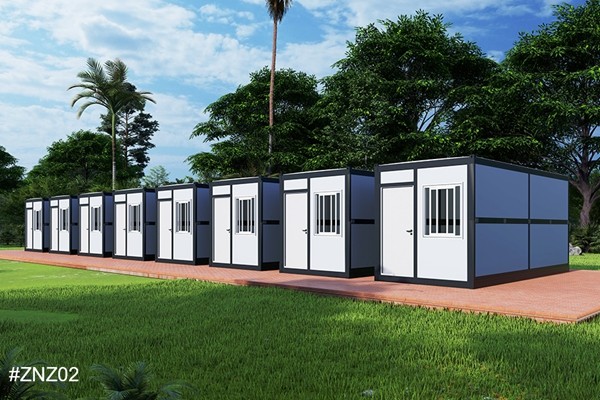
Wiring Design Principles for Foldable Container House
- Flexible Wiring Paths for Folding Container House: A folding container house’s collapsible structure demands wiring paths that adapt to movement—ZN House designs wiring channels along non-folding edges (e.g., fixed corner posts) and uses flexible, abrasion-resistant cables (rated for 10,000+ fold cycles). These cables are routed through PVC sleeves (embedded in the container’s steel frame) to protect against friction during folding. For example, in a fold out container homes model, wall-mounted wiring channels follow the container’s hinge lines without crossing them—ensuring cables never get pinched or cut when the unit is folded. Wholesalers can note that this design eliminates 80% of wiring damage risks compared to generic container homes.
- Pre-Wired Modular Components for Foldable Container House: ZN House’s foldable container house units arrive with 90% of wiring pre-installed in factory-finished modules—light fixtures, power outlets, and switch panels are already wired to junction boxes. On-site installation only requires connecting these modules via standardized plug-and-play connectors (no soldering or custom wiring needed). For a 2-bedroom folding container house, this cuts wiring time from 2–3 days (traditional) to 4–6 hours. This pre-wired approach is ideal for wholesalers serving clients with limited electrical experience: disaster relief teams, temporary workforce camps, or small-scale developers.
Safety Compliance for Folding Container House Wiring
- Weatherproof Wiring for Fold Out Container Homes: Fold out container homes often face outdoor exposure (e.g., construction sites, remote camps)—so ZN House uses weatherproof electrical components (IP65-rated outlets, UV-resistant cables) that withstand rain, dust, and temperature fluctuations (-30°C to 60°C). Junction boxes are sealed with rubber gaskets to prevent water intrusion, and outdoor-facing outlets include covers to block debris. Wholesalers can emphasize this to clients in harsh climates: the wiring system won’t short-circuit in rain or degrade in intense sunlight, ensuring long-term safety.
- Grounding and Circuit Protection for Foldable Container House: A foldable container house’s steel frame requires proper grounding to prevent electric shocks—ZN House integrates a dedicated grounding wire (connected to the frame) into every wiring system. Circuit breakers (rated for the container’s electrical load) are pre-installed in a central panel, tripping quickly if there’s an overload (e.g., too many appliances running). For example, a folding container house kitchen unit includes a 20-amp circuit for the fridge and a 15-amp circuit for small appliances—preventing overheating. This compliance with global standards (UL, IEC) gives wholesalers confidence that clients’ wiring meets local safety codes.
Wiring Requirements for Different Foldable Container House Types
| Foldable Container House Type | Key Electrical Need | Wiring Solution | ZN House Advantage |
| Foldable Container Office | Multiple outlets (laptops, printers); task lighting. | 4–6 outlets per wall + under-desk LED wiring; 20-amp circuits. | Pre-wired desk outlets + dimmable light switches. |
| Folding Container Kitchen | High-power outlets (fridge, microwave); GFCI protection. | GFCI outlets near sinks; 240-amp dedicated circuit for appliances. | Sealed junction boxes (waterproof) + overload protection. |
| Fold Out Container Homes (2-Bedroom) | Bedroom lighting + shared living area circuits. | Separate circuits for bedrooms/living room; USB outlets. | Modular wiring (add/remove USB ports easily). |
| Foldable Container Toilet | Vent fan + lighting; moisture resistance. | Low-voltage LED wiring + moisture-sealed switches. | IP67-rated components + corrosion-resistant cables. |
This table helps wholesalers match wiring solutions to foldable container house types, ensuring each unit’s electrical system meets its specific use case. It also highlights ZN House’s tailored design—no generic wiring, just solutions that fit the unit’s function.
On-Site Wiring Installation Tips for Foldable Container House
- Tools and Prep for Folding Container House Wiring: ZN House’s folding container house wiring only requires basic tools (spanner, screwdriver, wire stripper)—no specialized equipment. Before installation, advise clients to:
- Unfold the container fully and secure it to the foundation (prevents movement during wiring).
- Check that pre-wired modules are undamaged (ZN House includes a checklist for this).
- Test the central circuit panel (turn on breakers to confirm power flow).
This simplicity means a 2-person team can complete wiring for a fold out container homes unit in a single day—critical for wholesalers serving clients with tight timelines.
- Post-Installation Testing for Foldable Container House: After wiring, clients should perform 3 key tests (guided by ZN House’s manual):
- Continuity test: Ensure all cables are connected (no breaks).
- Ground test: Confirm the frame is properly grounded (use a multimeter).
- Load test: Run appliances to check if circuits handle the load without tripping.
ZN House provides a portable test kit with bulk orders, making it easy for clients to verify safety. Wholesalers can offer this as a value-add: clients avoid costly electrician fees for testing.
Foldable Container House FAQS
Can I Add Extra Outlets to a Foldable Container House After Installation?
Yes—ZN House’s foldable container house wiring is modular, so clients can add outlets easily. The pre-installed wiring channels have empty slots for extra cables, and plug-and-play connectors let you attach new outlets without rewiring the entire system. For example, adding a USB outlet to a fold out container homes bedroom takes 15 minutes: just run a cable through the channel, connect to the junction box, and mount the outlet. Wholesalers can note that ZN House sells compatible outlet kits for bulk orders, making upgrades simple.
Is the Wiring System in a Folding Container House Affected by Folding/Unfolding?
No—ZN House’s folding container house wiring is designed to withstand folding cycles. Flexible cables (rated for 10,000+ folds) are routed along fixed parts of the frame, and junction boxes are mounted in non-moving areas. During testing, ZN House’s units are folded/unfolded 500+ times to ensure wiring doesn’t fray or disconnect. Wholesalers can assure clients that frequent folding (e.g., moving the container to a new site) won’t damage the electrical system.
Do Fold Out Container Homes Require a Professional Electrician for Wiring?
Not necessarily—ZN House’s fold out container homes have pre-wired modules that only need plug-and-play connections. Clients with basic electrical knowledge can complete the wiring using the included manual. However, for compliance with local codes (some regions require professional inspection), ZN House provides documentation to simplify electrician visits. Wholesalers can advise clients: DIY installation is possible, but a quick inspection ensures code compliance.
What Electrical Load Can a Foldable Container House Handle?
A standard foldable container house from ZN House handles 120–240 volts (adjustable for global markets) with a total load capacity of 100–200 amps. This supports typical needs: 1–2 fridges, multiple outlets, lighting, and small appliances. For high-load units (e.g., folding container house with a washer/dryer), ZN House offers upgraded 300-amp wiring systems. Wholesalers can work with clients to assess their load needs—ZN House customizes the system to avoid overloads.
Where Can Wholesalers Source Foldable Container House with Safe Wiring?
Suzhou Zhongnan Steel Structure Co Ltd (ZN House) manufactures foldable container house, folding container house, and fold out container homes with pre-installed, safe wiring systems. Their 90% factory-finished modules, weatherproof components, and compliance with global safety standards make them a top choice for wholesalers.
Similar Posts
Combining multiple containers for a large shipping container house
The concept of repurposing shipping containers into residential and commercial structures has revolutionized modern architecture, offering…

Combining Multiple Flat Pack Tiny House Units
Combining multiple flat pack tiny house units has revolutionized modular living—turning compact, easy-to-transport modules into spacious, customizable…
Modular Container Homes Solar Panel Integration
At Suzhou Zhongnan Steel Structure Co., Ltd., our vision for modular housing goes beyond just space…

Smart Living Solutions with Pre Built Houses
In today’s ever-evolving housing market, homeowners are seeking affordable, flexible, and sustainable alternatives to traditional home…
Low Maintenance Advantages of Double Wide Manufactured Homes
As a prominent wholesaler in the construction industry, Suzhou Zhongnan Steel Structure Co., Ltd. understands the…

China Expandable Container House Exports
In the ever – evolving global construction and housing market, China Expandable Container House exports have emerged…


