



How Long Do Shipping Container Homes Last?
Introduction
Shipping container homes are an increasingly popular housing option that has become one of the major choices for constructors. One of the primary reasons for this is that these types of houses are quite affordable. Besides affordability, these homes are environmentally friendly. Also, container houses can be used in various construction projects. As people are moving towards alternative housing options, the question of how long container houses last becomes a major consideration.
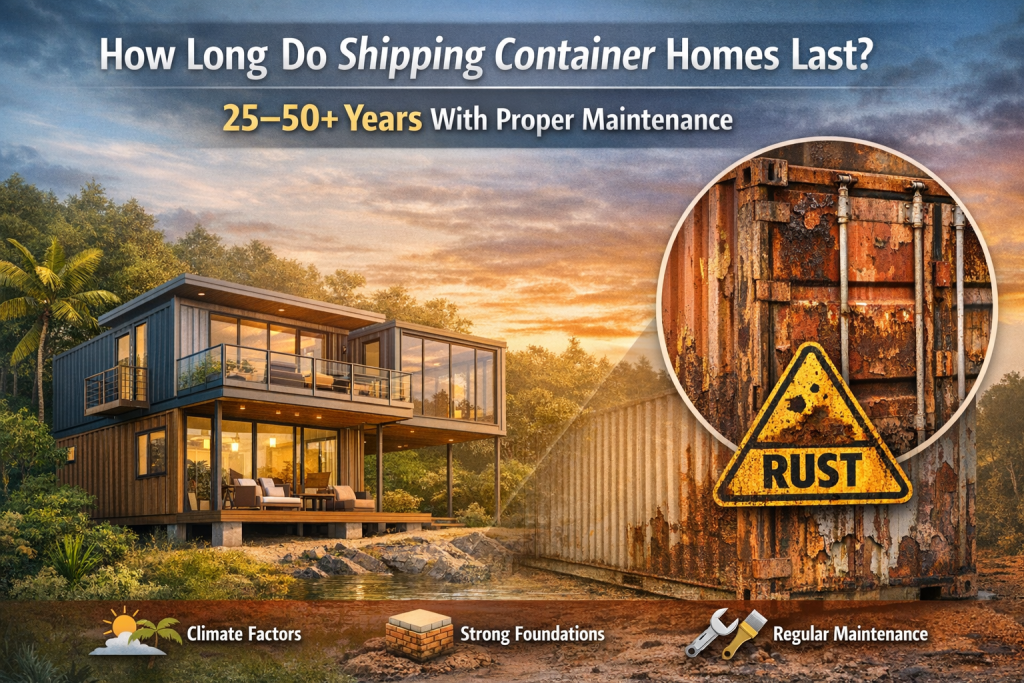
Industry experts say that well-built shipping container homes can last anywhere from 25 to over 50 years, depending on how well they are cared for, the weather, and the quality of the construction (Source: Container Stop).
Nevertheless, various factors may influence the longevity of your shipping container home, such as the design of the structure, the weather conditions in the area where you choose to build your home, and whether you continue to provide maintenance on your structure throughout its lifetime. In this article, we will discuss the materials that comprise shipping container houses, things that contribute to the life of your shipping container home. Additionally, some practical tips to help you keep your shipping container home for as long as possible.
What Materials Are Shipping Container Homes Made Of?
Materials play a vital role in saving the container home for years. Rather than being built with wood, like in a typical house, a container house is built with heavy industrial metal materials that will withstand the most extreme physical conditions on Earth.
Corten Weathering Steel and Its Importance
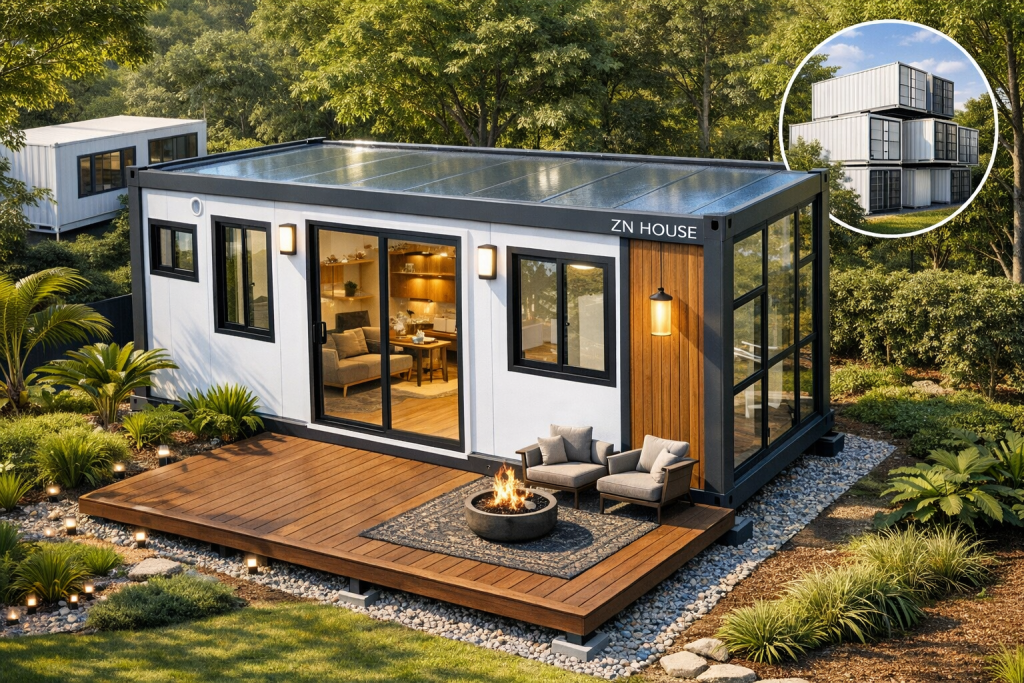
Corten weathering steel is the main material used to make shipping containers. It creates a protective oxidized layer that helps stop deep corrosion and makes the structure much stronger (Source: BIOGREEN). ZN House primarily creates its container homes by utilizing Corten weathered steel, which is made from a strong, long-lasting, corrosion-resistant metal that is made to endure extreme conditions. Corten steel develops a protective layer of rust on its exterior surface, protecting the steel from additional corrosion beyond that point (the by-product of oxidation) and providing additional capacity against future oxidation. As a result, all Corten structures maintain their strength for decades, even with minimal maintenance, in almost any difficult environment.
The Difference Between New and Used Shipping Containers
At the time of buying a shipping container for your home, you usually have two main choices: new and used containers.
- “One-Trip” shipping containers are almost brand new and have only been used once on the ocean (one trip). They have the greatest sustainability and structural quality for building houses.
- Used containers, while affordable, often have concealed rust, dents, and areas of weakness due to previous years of use in industrial locations. They may still be suitable for housing, but will likely take more restoration (surface repair) and reinforcement before they reach a similar lifespan as the one used in a one-way shipping container.
The Average Lifespan of a Shipping Container Home
Container housing has a possible lifespan that ranges from 25 years to 50 years, depending on the way it is constructed, but there are instances of container homes being well over 50 years old. Many engineered buildings will easily endure longer than 50 years, comparable to the life of a conventional permanent structure.
Why Do They Last So Long?
After a conversion of a shipping container into a home, it will be exposed to a drastically different lifestyle compared to the original stresses and strains during the container transit. While travelling on continental seas, containers may face several severe stresses, such as being stacked with heavy items, being moved by cranes, and continuous exposure to salt water. As a residence, with the container now bolted to a concrete pad and covered with a durable finish, there is much less stress on the steel, thereby maintaining its original design and strength for a longer period than if used in the commercial shipping business.
Steel vs. Wood Structure
Steel container dwellings are significantly better with regard to fire resistance, decay, and pest resistance compared to conventional wood-framed dwellings. Wood may become distorted or deteriorated due to moisture and various environmental factors, but an architecturally wrapped and treated container dwelling may not bring this type of deterioration because of the stiffness of the steel framing.
Key Factors Affecting the Lifespan of a Container Home
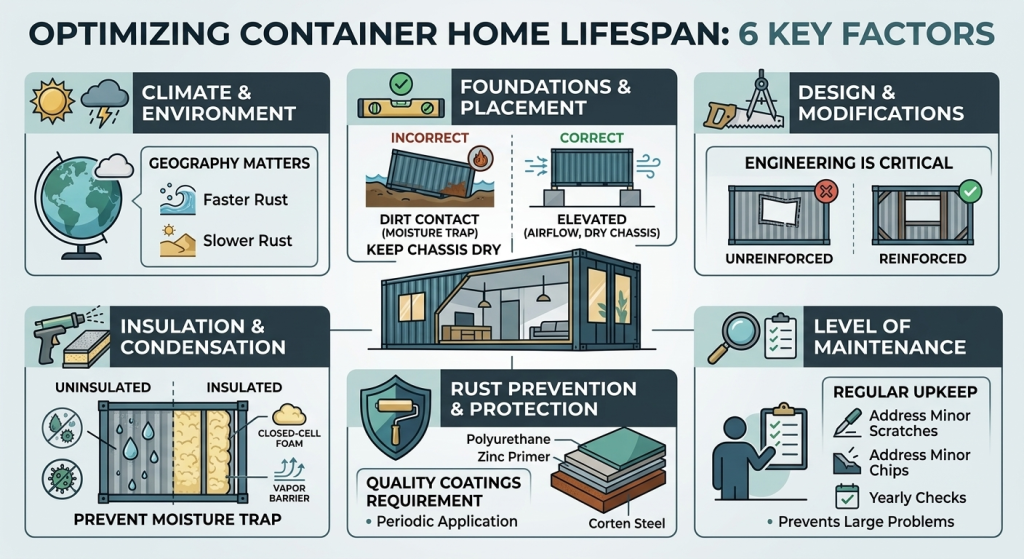
Long life is not considered as an accident; only careful planning brings longevity. If you’re curious about how long a container house lasts, think about these main things:
Climate and Environment
Corrosion rates are highly affected by geography.
High Humidity / Coastal Areas: Oxidation happens faster when there is constant moisture and salty air. Homes in these areas need to be checked more often and have special marine-grade coatings.
Dry Climates: In dry areas, the risk of rust is much lower, which naturally makes the steel last longer without much work.
Foundations and Placement
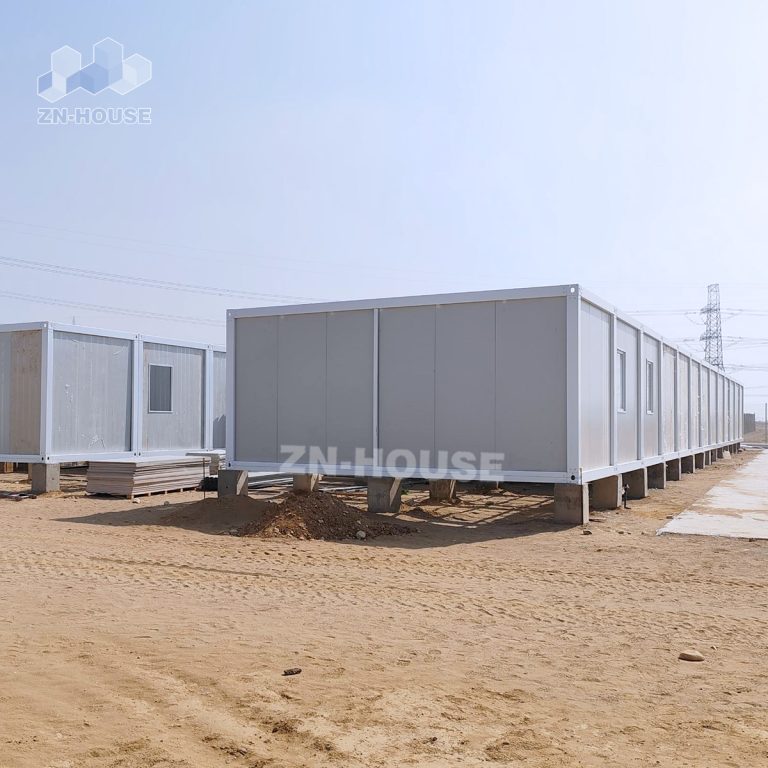
The position of the container on the ground is a significant factor in the longevity of the container. The direct contact between the container and the wet dirt/soil will create a condition under which the container will rust quickly. The direct contact between the container and the ground will create a trap of moisture on the bottom metal plate of the container. This will cause the container to rust very quickly. An elevated foundation will allow for air under the Container. This will keep the chassis dry and allow for easy access for inspection purposes.
Design and Structural Modifications
Every time you make openings (i.e., windows, doors) in an existing container by cutting, you make a major change in the structure of that particular container, which may cause the container to sag over time if no additional steel is added to reinforce the structure, thereby putting stress on the seals and causing leaks. Professional engineers must be brought in to ensure that these changes do not have a negative effect on the lifespan of the home.
Insulation and Condensation Control
The “silent killer” of steel buildings is condensation. The warm indoor air that comes in contact with the cold steel walls will create moisture on those surfaces. If not controlled, this moisture can create internal rust and mold. One of the best ways to reduce condensation is to use closed-cell spray foam insulation. This provides a continuous vapour barrier which prevents air from contacting the metal surface at all times.
To get an overall idea about the standard insulation process, read How to Insulate a Container House: Complete Guide (2026).
Rust Prevention and Protection
The quality of exterior coatings (zinc-rich primers/specialised polyurethane) plays an important role in determining how well a home will perform against weathering elements. Periodic application of high-performance paint and sealing methods provides a sacrificial barrier for the Corten steel.
Level of Maintenance
It is important to perform a yearly inspection on your container home to ensure that small scratches or chips don’t develop into substantial structural rust problems. A container-built house is not something that can be simply built and left alone.
Do Shipping Container Homes Rust?
The short answer is yes; all steel can rust. However, knowing how it works is the key to stopping it.
Why Rust Occurs
When moisture and breathing oxygen come together with steel, a chemical reaction occurs called rust. You will usually find rust happening in a container home at weld points, any scratches, or any flat top area where water is able to pool.
Is the Rusting a Serious Problem?
Not necessarily. Surface rust is cosmetic and can be corrected by sanding and repainting. The real issue is not the rust; it is the lack of maintenance, and this has caused the corrosion. If you take corrective action on the “hot spots,” you will maintain the integrity of the structure of your home.
How to Extend the Lifespan of a Container Home
Follow these steps to make sure your home lasts for the next fifty years:
- Select High-quality Containers: Use “one-trip” containers for the construction of homes.
- Apply Anti-corrosion Coatings: Apply both an industrial primer and a UV-resistant top coat to protect against rust.
- Elevate the Home’s Structure: Use a pier or pile foundation to keep the foundation from sitting on the moist ground.
- Install a Drainage System: Install a drainage system to move water away from the home through roof drainage (gutters) and site grading.
- Add a Roof or Exterior Cladding: Include a roof structure or exterior cladding to keep the steel walls from being directly exposed to rain and sun.
- Conduct Annual Inspections: Inspect your home every year to ensure seams (joints), seams (welded joints), corners, and corners are still okay after one year.
Click on the link in order to know How to Build a Shipping Container House (Step-by-Step Guide for Beginners).
Container Homes vs. Traditional Homes: Lifespan Comparison
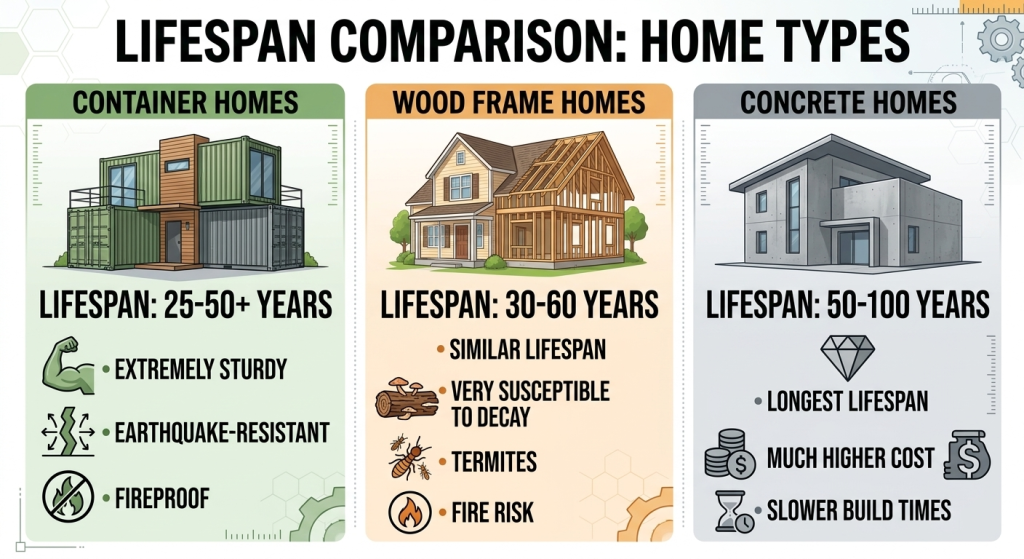
Container Homes: 25-50+ years. Extremely sturdy, earthquake-resistant, and fireproof.
Wood Frame Homes: 30-60 years. Similar lifespan but very susceptible to decay, termites, and fire.
Concrete Homes: 50-100 years. Longest lifespan, but comes with a much higher cost and slower build times.
Is a Container Home a Long-Term Investment?
Yes, a container home can be a good long-term investment if it is built and cared for properly.
Pros
- Low-cost and rapid construction speed;
- Eco-friendly construction with materials that have been used before;
- Modular and customizable design flexibility.
Cons
- Requires ongoing treatments to keep rust from forming and to insulate.;
- In some areas, there may be zoning or building code restrictions.
Frequently Asked Questions (FAQ)
How long do container homes last?
With the proper maintenance, shipping container homes can last from 25 to 50 years or even longer.
Do container homes rust?
Yes, mild surface rust can happen, especially in humid or coastal areas, but proper coatings and regular maintenance can easily stop serious corrosion from happening.
Does rust compromise structural safety?
Only if left for several years. Surface rust is quite easy to cure; structural failure occurs only when the metal is left to flake away completely.
Does climate significantly affect lifespan?
Yes. Saltwater and high humidity shorten lifespan, while dry places lengthen it.
How can I extend the lifespan of a container home?
An annual inspection is necessary for any property. Also, repaint the walls a couple of times every few years. Apart from that, if the foundation of your house is below the level of the surrounding area, it is a good idea to raise it. Last but not least, be sure of good drainage around the building.
Are container homes suitable for long-term living?
Absolutely. When equipped it proper insulation, structural design, and ventilation, they work exactly like regular houses.
How do container homes compare to traditional homes?
Mainly, container homes are built faster and are more resistant to natural disasters such as earthquakes; however, they still need a lot of attention to prevent rust.
How often is maintenance required?
An annual complete check should be done, and small fixes may be carried out from time to time.
To know more about shipping container homes, visit our Product page here.
Conclusion
The question of the length of time a container house will be able to withstand is largely a matter of the quality of the original construction and the diligence of the owner. With the proper foundation, expertly installed insulation, and a dedication to rust prevention, modern container houses can provide a solid residence for a period of 25 to 50 years, or even longer.
The strength of the Corten steel used in the construction of a container house is a foundation for a durable residence that wood cannot hope to match. If you are considering the construction of a container house, consulting a team of seasoned professionals can be a first step towards a durable residence. A review of the specialized construction techniques at the ZN House is a good place to start.
Contact ZN House now.
Similar Posts

Building a Home from Shipping Containers: A Quick and Easy Guide
In the world of sustainable and affordable housing, building a home out of shipping containers is…

What Is Container Farming?
The fresh product of “container farming” was formed under the background of the country’s efforts to…
Navigating Building Codes for Your Assemble Container House
The dream of owning a modern, efficient, and stylish home has found a compelling answer in…
What is a Modular Container House? A Complete Guide to Modern Modular Homes
Introduction Modular container homes represent a disruptive innovation in construction design and methodology. The many positive…

Assemble House Container Home Cost Breakdown
In the evolving world of housing, assemble house and assemble container house have emerged as popular alternatives, attracting…
Buying Container Houses from China: Factory vs Trader, QA & Incoterms
Why source from China (and what you can actually buy) Container Houses from China are becoming…


