



How Much Does a Container House Cost?
In recent times, container houses have emerged as one of the rapidly expanding segments in the worldwide prefab construction market. And the very first question most buyers ask is: the actual cost of a container house. In fact, different factors affect the price, like the size of the container house, type of insulation, specifications, level of customization and your delivery location.
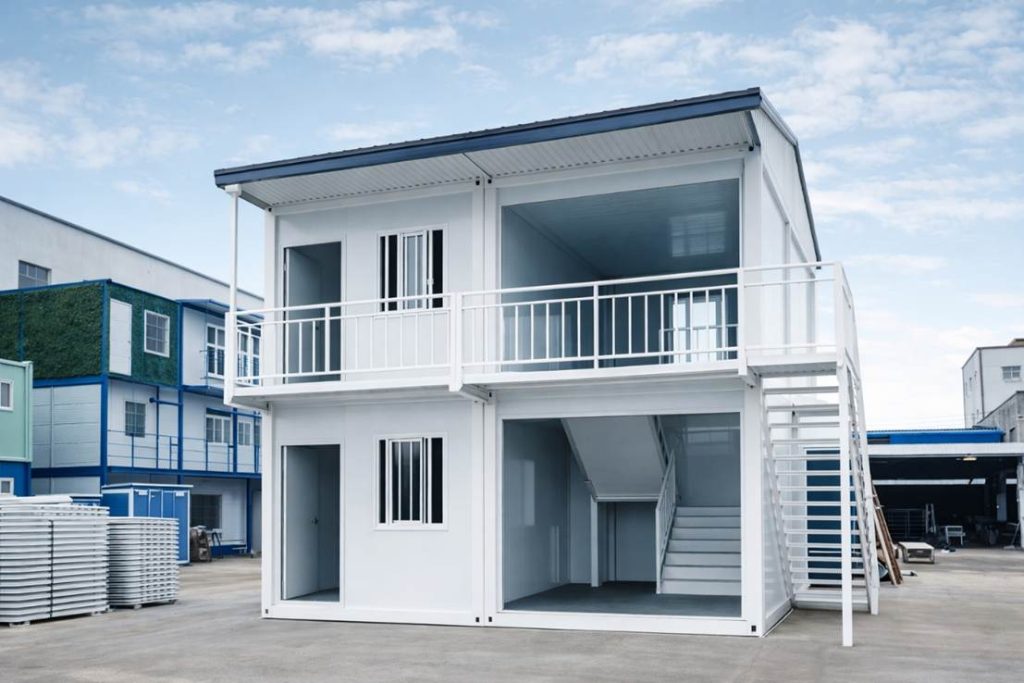
Unlike traditional building methods, container homes can be set up very quickly; it is easier to know how much they would cost, they need fewer workers, and they can be easily expanded through modular additions. First of all, if you are going to build a worker's hostel, a resort, a site office, or a residential container home, it will be good for you to know what factors can most affect the price so that you are able to make better decisions on purchase.
In this article, you will find the actual figures for the most typical set-ups, understand what really makes prices increase or decrease, and prepare your budget before placing a request for a quote.
Container House Cost at a Glance
The table below outlines indicative ex-factory price ranges (FOB China) for the most common container house types and sizes. The figures essentially represent standard factory configurations, excluding shipping, local permits, foundation work, and on-site installation.
| Type | Size | Price Range (USD, ex-factory) | Best For |
| Flat Pack Container House | 20ft (6×3m) | $2,200 – $2,700 | Worker Camps, Budget Housing, Resale, Disaster Camps |
| Assemble Container House | 20ft (6×3m) | $1,200 – $1,650 | Dorms, Mining Camps, Single House |
| Expandable Container House | 20ft folded (expands to ~40m²) | $7,000 – $12,000 | Rapid Deployment, remote sites |
| Expandable Container House | 40ft folded (expands to ~70m²) | $12,000 – $18,000 | Family Homes, Resort Cabins |
| Folding Container House | 20ft (6×3m) | $1,200 – $1,650 | Restaurant, Coffee Shop, Emergency Housing |
The prices mentioned above only reflect ex-factory (FOB Shanghai, China) approximate standard specification price ranges. Your final container house price will vary on factors like insulation level, interior finishing quantity, shipping port, and relevant customs taxes. Please ask for a formal quotation to get the pricing for your project.
What Affects the Cost of a Container House?
Container house prices have no fixed numbers; they run on a combination of factors that any keen buyer should know before asking for a quote. These are the 6 major things that really count in the use of container houses:
Size & Configuration
A 20ft shipping container is enough to fit about 15–18m² of interior space. Meanwhile, a 40ft container brings roughly twice that amount of space. Expandable container units are capable of taking the indoor area from a small footprint of a folded container up to 4070m. Besides, the addition of stacking or joining containers would be proportional to the increase in cost.
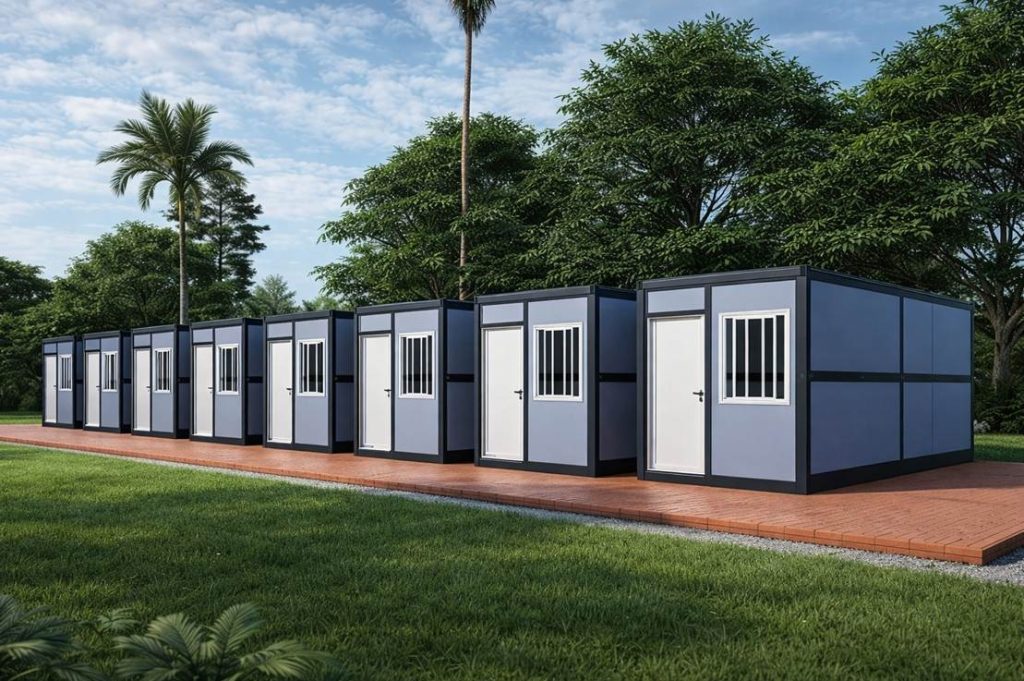
Insulation Type
Rock Wool sandwich panels (rated to -35°C) are good for areas that experience extreme cold conditions. EPS Sandwich panels are more affordable and weigh less. PU (Polyurethane) provides the greatest insulation capabilities for each millimeter of thickness. When upgrading your insulation, the cost ranges between $300 and $1,200 per unit depending on the specifications of your insulation.
Customization Level
Typical layouts allow for quicker delivery and are more economical. Still, tailor-made designs, unusual window placements, top-end interior decorations, bathroom pods, or solar readiness features will influence the price.
Order Quantity
Factory-direct pricing incentivizes larger quantities. The price per unit for a single unit is quite high. Yet, if you order 10, 50, or 100+ units, then these different quantity levels allow for a better pricing structure, so container housing, in particular, becomes a very economically viable option for camps and dormitory projects at the same time.
Shipping & Destination
FOB price is only the beginning. Shipping by sea from China to Africa, Southeast Asia, Europe, or the Americas will cost you extra money per unit based on the port you are shipping to, whether you load by container or not, and the latest freight rates.
Interior Fit-Out
The bare shell of a house (walls, roof, and floor) is the cheapest option. A complete unit furnished with beds, kitchen fittings, HVAC, electrical wiring, and plumbing will greatly raise the unit price, but it will cut down the labour time on the site.
Comparing Container House Types by Cost
Different container house systems are designed with different project priorities in mind. Here's a comparison of how the main types stack up against each other for cost, deployment speed, and suitability of application.
| Type | Relative Cost | Assembly Time | Stackable | Ideal Application |
| Flat Pack Container | ★★☆☆☆ Low | 2–4 hours / unit | Yes (2–3 floors) | Worker camps, schools, budget housing |
| Assemble Container House | ★★★☆☆ Mid | 4–8 hours / unit | Yes | Residential, site offices, clinics |
| Expandable Container House | ★★★★☆ Mid-High | 1–2 hours / unit | Limited | Remote sites, resorts, emergency relief |
| Modular Container Home | ★★★★★ Higher | Days (multi-unit crane) | Yes (multi-floor) | Hotels, mining camps, large complexes |
| Folding Container Conversion | ★★★☆☆ Variable | Weeks (custom) | Yes | Bespoke residential, commercial |
Container House Cost vs. Traditional Construction
Another very compelling point in favour of a prefab container house is the entire project cost, considering time, labour, and logistics - not merely the unit price.
| Traditional Construction | Container House (ZN House) |
| Higher on-site labour cost Material prices fluctuate mid-project Typical build: 6–18 months Difficult to budget accurately in advance Not relocatable once built Construction waste: high | Factory-controlled costs, fixed per unit Minimal on-site labour (80% pre-assembled) Deployment: days to weeks Predictable total budget Relocatable and reusable Construction waste reduced by 60%+ |
McKinsey industry research has reported that modular construction methods are capable of reducing building time by up to 50% and lowering overall project costs by about 20% in comparison with conventional site-built methods. The logistics savings alone in remote areas - mining camps, disaster relief centers, island resorts - often pay for the change to modular.
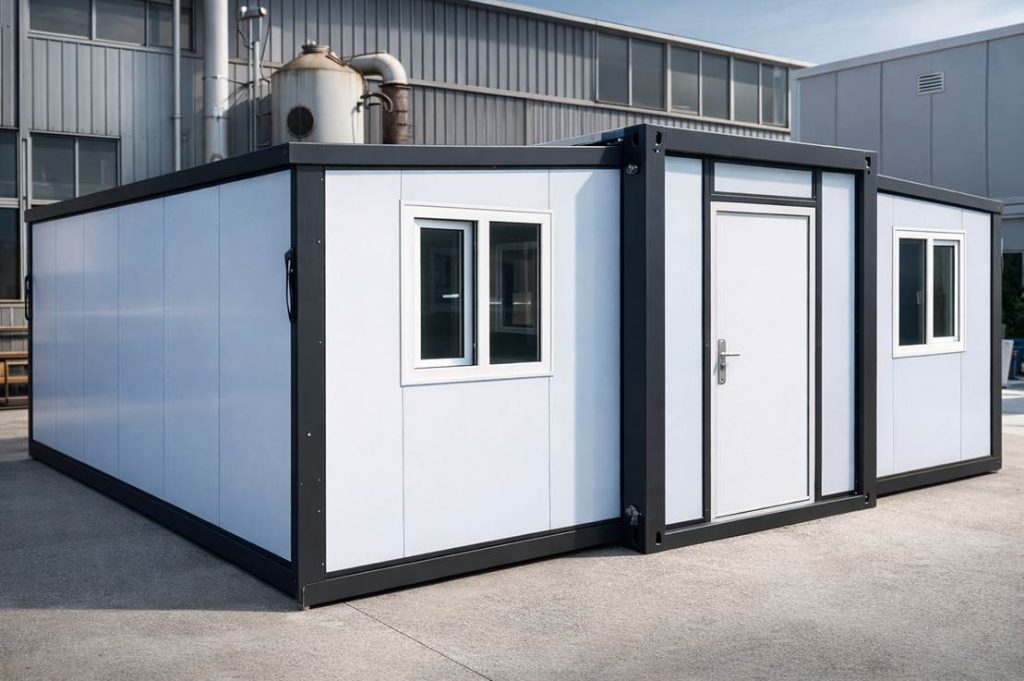
How to Optimize Your Container House Budget
From a single unit to a 200-unit mining camp in the sourcing, these practical steps will guide you on how to maximize your investment:
- Order by volume whenever possible. In fact, order consolidation of several small orders into a single shipment can greatly decrease the unit cost via production and transportation economies of scale.
- Match insulation to your climate. Avoid specifying beyond the necessary details. For example, a wall specification "tropical" wouldn't be appropriate for a Kazakhstan site. Over-insulating leads to wasted funds; under-insulating causes operational issues.
- Selecting flat-pack or folding models is a great idea, mostly for remote locations. Because of their small shipping size, the cost of freight per square meter of usable space gets quite a bit lower.
- Discuss your complete project scope right at the beginning. Sometimes, manufacturers can design a modular layout that effectively reduces the number of units in total but still complies with your floor area requirement.
- Consider the full landed cost. Request your supplier to help you visualize FOB price + ocean freight + destination port charge + inland haulage + installation support. That will be your actual container home price.
Why Factory-Direct Pricing Matters
At ZN House, all our units are made at our factory located in Suzhou, China, one of the main centers of steel structure and prefabricated production in the country. Our pricing represents real factory-direct costs without any distributor markups because of our deep understanding of the manufacturing process for 20 years, having completed more than 2,500 projects in over 50 countries worldwide.
Galvanized hot-dip steel with anti-corrosion treatment is used in the manufacture of our steel frame, while wall panels are designed for use in locations between −35ºC and +50ºC, which encompasses the majority of global job site conditions. Our products are shipped as 80% pre-assembled units so that they require less time and manpower for installation at job sites.
Real-World Project Cost Case Studies
The Remote Mining Labor Camp (High-Volume, High-Efficiency)
Project Profile: One of our mining clients in a very remote area needed long-lasting, safe accommodations for 200 workers in a region where winds can be very strong and the temperature can fall drastically without warning.
System Chosen: 50 sets of strong 20ft flat pack container houses will be connected to create the central modular dormitories.
Material Specs: Steel frames of galvanized Q235B with a thickness of 3.0 mm, 75 mm Rock Wool fire-resistant sandwich panels for walls, commercial-grade PVC floor coverings that are anti-slip, and heavy-duty insulated security doors.
Average Cost Per Unit: Approximately $1,200 - $2,300 USD (Factory-Direct Bulk Price).
The Takeaway: The client has been able to obtain full site occupancy within a few weeks while still strictly observing regional industrial safety and fire protection standards by using very highly standardized dimensions and ordering locally in bulk.
Frequently Asked Questions
What is the verified lifespan of a prefab container house?
A factory-made container home that uses a robust galvanized steel setup and is treated with anti-corrosion layers can have a lifespan of 15 to 20 years or more when used in typical industrial environments. If the outer walls are maintained periodically, the roof drainage system is given its due attention, and the worn-out parts are treated locally, this will not only maintain the original condition of the structure at that time but can in fact increase the number of years it stands.
Are container houses suitable for extreme hot or freezing cold climates?
Yes. The utilization of specialized thermal barrier insulation systems has provided these buildings the ability to perform very well in climates ranging from -35°C through +50°C. For extreme cold climates, thick, high-density (PU) sandwich panels or closed-cell spray foam insulation are used to maintain a comfortable internal temperature of 20°C with the least amount of heating system power. Reflective exterior coatings integrated into the design and passive ventilation loops are deployed in hot desert climates to reduce the risk of overheating.
Do I need a permit to install a container house?
Permit requirements differ from one country to another, and even from one region to another within a country. They also depend on the type of property you are using. For example, temporary structures for construction camps or disaster relief are usually less regulated than permanent residential dwellings. ZN House recommends checking the local rules with the architect or local authority before you make any decision on the specification. We are able to offer technical documentation, material certifications, and structural drawings which can help with the permit applications.
Please visit the product page of ZN House’s Container House for details.
Conclusion
For a long time, container houses have been considered just temporary shelters. But now they are really becoming a totally serious option for building homes, contractors, resort developers, and even charitable organizations. The biggest thing about costs is that they really do go down. When compared side by side with regular building, a portable container home is the only kind of house that can give you the certainty of prices, the shortest delivery time, and the least reliance on expensive on-site workers. If you are just figuring out your finances for one 20ft unit or you are going to design a 100-bed worker camp, the numbers are plain when you talk directly to the producer.
But the cost of a container house is not just a single figure. Your final investment is affected by factors like the size, the grade of insulation, the level of interior finishing, the shipping destination, and also your order quantity. It would be a great idea for those who are serious to completely stop looking for general prices and instead get a quote that is specific to the project - a quote that takes into account your actual specs, your destination port and your time frame.
ZN House has been building container homes for clients from over 50+ countries for more than two decades. Our experienced crew can prepare a detailed quote, floor plan options, and shipping estimation in just 24 hours after receiving your project brief.
The build starts with a conversation. Contact ZN House today to get your free quotation.
Similar Posts
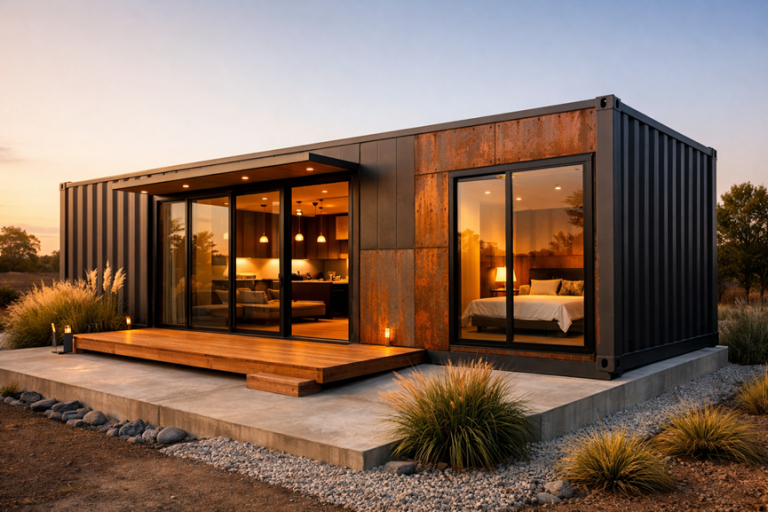
What Size Shipping Container Is Best for a House?
Due to their durability, affordability, rapid construction time and variety of customization options, shipping containers have...
Modular Container House: The Smart, Scalable Way to Build Fast
A modular container house is a prefabricated building made from steel modules that arrive on-site almost...
Expandable Container House vs Folding Container House: Which One Is Better for Your Project?
Introduction Modular building has grown very rapidly as a choice for new buildings in the majority...
Modular Shipping Container Homes for Sale Eco Features
In an era where environmental consciousness is at the forefront of consumer choices, modular shipping container homes...
Strategic Modular Workforce Housing Solutions: Efficiency and Comfort for Remote Sites
Managing remote operations in industries such as mining, oil, or construction demands much more than a...
How to Install a Flat Pack Container House: Step-by-Step Guide (With Tools, Timeline & Tips)
Introduction Flat pack container houses fall into the category of modular homes and have come a...


