



Maximizing Space in Flat Pack Tiny Homes
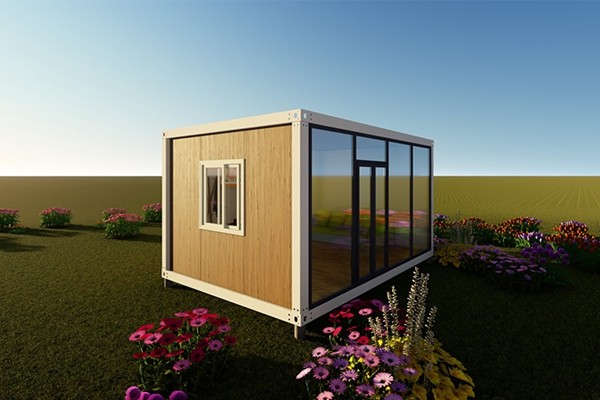
Flat pack tiny homes—a compact, versatile subset of flat pack building—have become a go-to solution for space-efficient living, remote workspaces, and temporary shelters, thanks to their customizable design and easy assembly. Unlike rigid traditional small homes, flat pack tiny house models leverage modular components and smart layout tricks to turn limited square footage into functional, comfortable spaces—critical for clients in urban areas, campsites, or disaster relief scenarios. For wholesalers serving developers, hospitality operators, or aid organizations, partnering with a manufacturer that excels in space-optimized flat pack tiny homes is essential. Suzhou Zhongnan Steel Structure Co., Ltd. (ZN House), founded in 2005 and a leader in modular housing, stands out here: they craft flat pack building solutions (including expandable flat pack container houses) with pre-finished roofs/floors and stackable 20ft units, making it easy to maximize space by combining or stacking units—all while maintaining high safety and quality standards. With exports to 50+ countries and 30+ international agents, ZN House is a trusted bulk partner for wholesalers seeking space-efficient flat pack tiny homes.
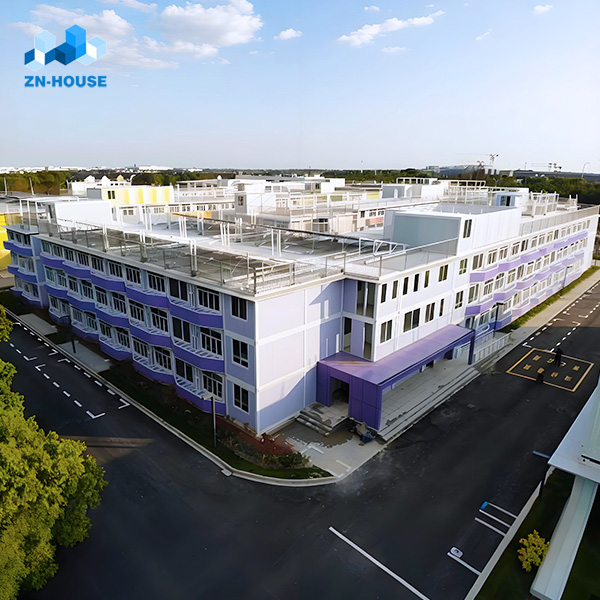
Modular Expansion for Flat Pack Tiny House
- Unit Combination for Flat Pack Tiny House: Flat pack tiny house (especially ZN House’s flat pack container variants) offers seamless unit combination to expand space without full-scale construction—a key advantage over fixed-size small homes. Each standard 20ft flat pack tiny house unit can be connected to others via pre-installed steel brackets, letting clients create larger layouts (e.g., 2 units for a 400sq.ft living space, 3 units for a 600sq.ft multi-room home). For example, a hospitality client using flat pack tiny homes for a glamping site can combine two units: one as a bedroom and one as a living area, creating a spacious guest retreat. Unlike non-modular flat pack building options, ZN House’s units require no custom modifications to combine—wholesalers can offer clients flexible expansion paths, letting them start small and scale up as needed (e.g., adding a third unit for a home office later). This adaptability appeals to clients with evolving space needs.
- Stacking Capabilities for Flat Pack Building: Flat pack building (including flat pack tiny homes) supports vertical space use via safe stacking—ZN House’s units can be stacked 3–4 floors high, ideal for dense areas (e.g., urban micro-housing or worker dormitories). The galvanized steel structure of each flat pack tiny house unit ensures stability, while pre-aligned stacking points eliminate the need for extra support beams. For instance, a construction firm needing worker housing can stack 4 flat pack tiny homes units, housing 16 workers in the same ground space as a single-story dorm. This vertical expansion cuts land use by 75% vs. single-story flat pack building solutions, making it perfect for clients with limited outdoor space. Wholesalers can market this feature to urban developers or organizations working in land-scarce regions.
Smart Built-In Storage for Flat Pack Tiny Homes
| Storage Type | Key Feature for Flat Pack Tiny Homes | Ideal Use Case | ZN House Advantage | Wholesaler Value |
| Under-Floor Storage | Removable floor panels; waterproof compartments (20–30sq.ft) | Camping gear, seasonal items | Pre-installed during factory production; no on-site work | Appeals to outdoor/remote clients |
| Wall-Mounted Shelving | Foldable steel shelves; weight capacity up to 50lbs per shelf | Books, kitchenware, decor | Integrated with wall panels; saves floor space | Caters to residential/office clients |
| Multifunctional Furniture | Built-in sofa beds (converts to queen-size beds); dining tables that fold down | Small living areas, studio layouts | Customizable to unit size; no extra furniture needed | Fits space-tight flat pack tiny house |
| Over-Ceiling Racks | Lightweight steel racks; accessible via ladder hooks | Luggage, bulky items (e.g., sleeping bags) | Doesn’t block ceiling height; easy to install | Appeals to temporary shelter clients |
Space-Saving Layout Design for Flat Pack Building
- Open-Plan Flexibility for Flat Pack Tiny House: Flat pack tiny house uses open-plan layouts to eliminate restrictive walls, making small spaces feel larger—ZN House’s designs include removable partition panels, letting clients switch between open and divided spaces. For example, a flat pack tiny house used as a home office can have an open layout during the day (for a spacious work area) and a partitioned section at night (for a fold-out bed). Unlike fixed-layout flat pack building options, these removable partitions require no tools to adjust—wholesalers can highlight this flexibility to clients who need multi-use spaces (e.g., a community center that doubles as a disaster shelter). The open-plan design also improves natural light flow, further enhancing the sense of space.
- Pre-Finished Components for Fast Space Setup: Flat pack building (including flat pack tiny homes) speeds up space readiness via pre-finished roofs and floors—ZN House’s units ship with fully installed flooring (vinyl or wood-veneer) and weatherproof roofs, so clients only need to assemble walls and add storage. This cuts setup time by 50% vs. flat pack tiny house models that require on-site finishing. For instance, a relief organization deploying flat pack tiny homes after a hurricane can have livable spaces ready in 4 hours per unit (vs. 8 hours for unfinished models), getting families into safe shelter faster. Wholesalers can emphasize this fast setup to clients in time-sensitive scenarios, as it reduces labor costs and minimizes downtime.
Flat Pack Tiny Homes FAQS
Can Flat Pack Tiny House Units Be Customized to Fit Odd-Shaped Spaces?
Yes— ZN House’s flat pack tiny house units offer semi-custom sizing (beyond the standard 20ft) to fit odd-shaped spaces (e.g., narrow urban lots or sloped campgrounds). The modular steel structure can be adjusted to shorter lengths (e.g., 16ft) or wider widths (e.g., 10ft instead of 8ft) without compromising durability. For example, a client with a narrow 10ft-wide urban plot can order a 16ft×10ft flat pack tiny house that fits perfectly, avoiding wasted space. Unlike rigid flat pack building options, these custom units use the same prefabricated components as standard models—wholesalers don’t need to manage separate inventory for custom sizes, making it easy to meet niche client needs.
How Much Weight Can Stacked Flat Pack Tiny Homes Support?
ZN House’s stacked flat pack tiny homes (up to 4 floors) support 500lbs per sq.ft on upper floors—enough for furniture, appliances, and occupants. The galvanized steel frame of each flat pack tiny house unit is tested to withstand vertical loads, while inter-unit locking systems distribute weight evenly across the structure. For example, a 3-story flat pack building with 6 units total can safely house 12 adults (2 per unit) plus furniture like beds, sofas, and small refrigerators. Unlike less durable flat pack building solutions, ZN House’s units meet international safety standards (e.g., ISO 12480 for container structures), giving clients confidence in stacked setups. Wholesalers can share these safety specs to reassure clients hesitant about vertical expansion.
Do Flat Pack Tiny Homes Have Enough Space for Appliances?
Absolutely— flat pack tiny homes are designed to fit compact appliances (e.g., mini-fridges, induction cooktops, washer-dryers) with dedicated built-in spaces. ZN House’s flat pack tiny house units include pre-cut openings for appliances and pre-installed electrical outlets, so clients don’t need to modify walls. For example, a 20ft flat pack tiny house can fit a 3.2cu.ft mini-fridge under a fold-down counter, a 2-burner induction cooktop in the kitchen nook, and a portable washer-dryer in the under-floor storage. Unlike some flat pack building models that lack appliance space, ZN House’s designs prioritize functionality—wholesalers can market these homes to clients needing fully livable spaces (not just temporary shelters).
Can Flat Pack Building Units Be Disassembled and Moved?
Yes— flat pack building (including flat pack tiny homes) is designed for disassembly and relocation, a major advantage over permanent small homes. ZN House’s flat pack tiny house units use bolted (not welded) connections, so they can be taken apart with basic tools, packed into standard shipping containers, and reassembled at a new site. For example, a client using flat pack tiny homes for a seasonal farmworker camp can disassemble the units in fall, store them, and reassemble them at a new farm in spring. This portability cuts waste (no need to build new units each year) and saves money—wholesalers can highlight this to clients with mobile operations (e.g., seasonal businesses or disaster relief organizations).
What Insulation Options Are Available for Flat Pack Tiny Homes?
Flat pack tiny homes (especially ZN House’s flat pack container units) offer three insulation options to maximize comfort in any climate: EPS (cost-effective, ideal for mild climates), rockwool (fire-resistant, great for cold climates), and glasswool (soundproof, perfect for noisy areas like urban centers). The insulation is pre-installed in the sandwich panels of each flat pack tiny house unit, so clients don’t need to add it on-site. For example, a flat pack tiny house in a snowy region can use rockwool insulation to stay warm in winter, while one in a busy city can use glasswool to block street noise. Unlike one-size-fits-all flat pack building solutions, ZN House lets wholesalers offer climate-specific options, ensuring clients get the right insulation for their location.
Similar Posts
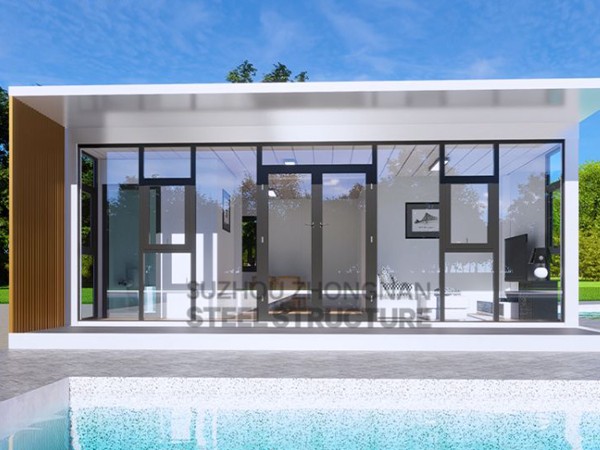
Prefab Homes: Affordable and Convenient Housing Solution
In recent years, prefab homes have become a highly popular choice for individuals looking for affordable, quick,…
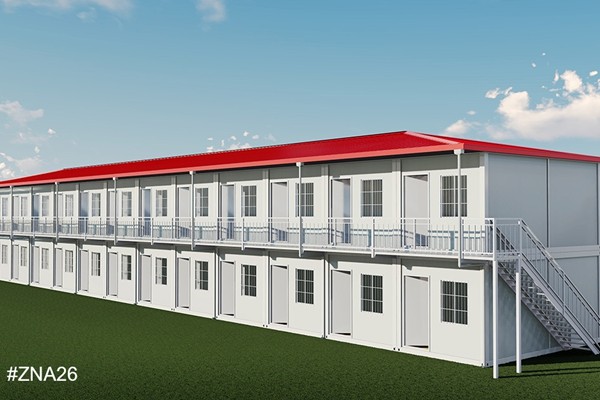
Assemble House Time Estimation Guide
In the dynamic realm of modern housing solutions, assemble house projects have gained significant traction due to their…
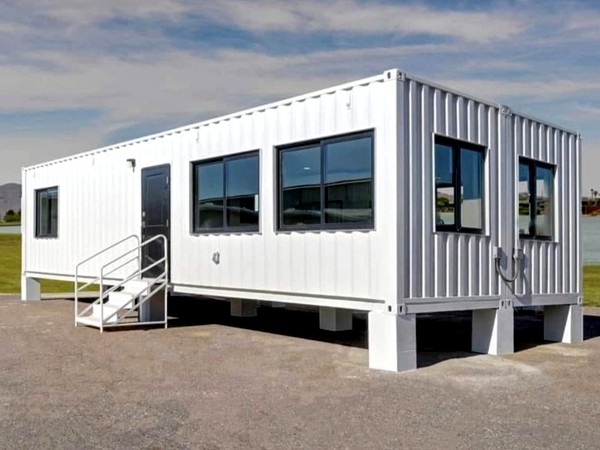
From Cargo to Cozy: How Shipping Containers Houses Become Modern
The transformation of humble steel cargo containers into luxurious and functional living spaces is a remarkable…

The Future of Living: Prefab Container Houses
Are you looking for a modern, affordable housing solution? Prefab container houses are rapidly becoming a…

Flat Pack Tiny Homes Portable Comfort
In the ever – changing housing landscape, flat pack house, flat pack container house, and flat…
On Flat Pack House: Economy and Limitations of Modern Architecture
Flat Pack House, Also known as modular housing or prefabricated housing, it has gradually become a…


