



Prefab Container House Communities
Prefab container house communities are redefining affordable, sustainable, and flexible housing—offering a solution to urban housing shortages, temporary shelter needs, and rural community development. Unlike traditional housing communities that require years of construction, prefab container house models (including versatile prefab house and prefab homes) let developers build cohesive, functional communities in months, not years. These communities blend modular design, cost-effectiveness, and durability, making them ideal for student housing, worker dormitories, disaster relief settlements, and even permanent residential neighborhoods. Suzhou Zhongnan Steel Structure Co Ltd, a professional container manufacturer founded in 2005 in Suzhou, specializes in crafting high-quality prefab container house solutions. With products exported to over 50 countries, supported by 30+ international agents, and a focus on high-safety, custom designs, ZN House is a trusted partner for wholesalers seeking to supply prefab communities globally. This article explores prefab container house communities, highlighting key design elements, community types, and why ZN House’s prefab homes stand out for scalability and livability.
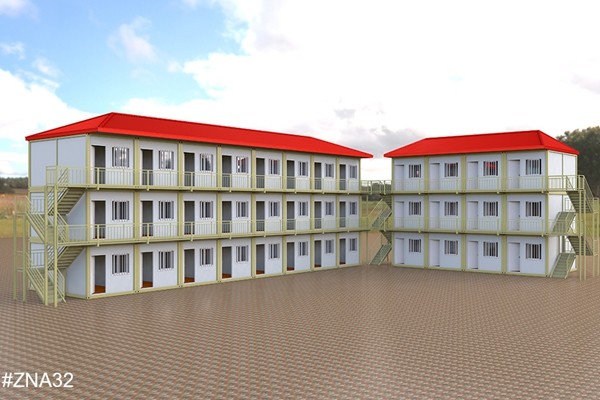
Design Elements of Prefab Container House for Community Living
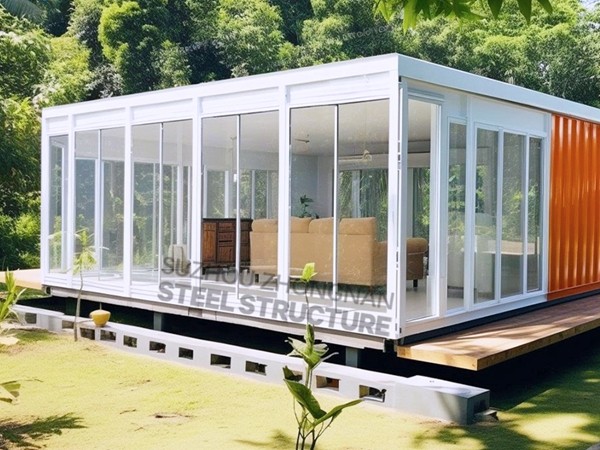
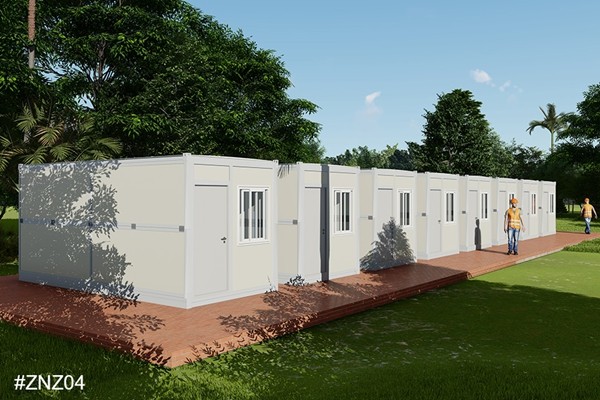
- Modular Layouts for Prefab Container House Communities: A prefab container house’s modular design is the foundation of cohesive communities—ZN House’s models can be linked horizontally or stacked vertically to create row houses, apartment-style buildings, or mixed-use spaces (with ground-floor shops and upper-floor residences). The company’s steel-framed prefab house units use bolted connections, making it easy to expand communities as needed—for example, adding 10 more units to a worker dormitory community as a project scales. Wholesalers can note that this modularity ensures communities stay flexible, adapting to changing population needs without rebuilding from scratch.
- Shared Space Integration in Prefab Homes Communities: Prefab homes communities thrive with shared amenities—and ZN House designs communities to include communal areas like playgrounds, gardens, or shared kitchens. The company’s prefab container house models can be customized into “amenity modules” (e.g., a container converted into a community center or laundry facility) that blend seamlessly with residential units. For example, a student housing community might pair 50 residential prefab house units with 2 amenity containers (a study room and a gym), creating a balanced, livable space. This focus on community well-being makes ZN House’s designs appealing to wholesalers serving social housing or campus development clients.
Key Advantages of Prefab House for Community Construction
- Rapid Installation of Prefab House Communities: Prefab house communities are built in a fraction of the time of traditional communities—ZN House’s units are prefabricated in factories (with walls, roofs, and basic fixtures installed) and assembled on-site in weeks. A 30-unit worker dormitory community, for instance, can be fully operational in 6–8 weeks, compared to 6–12 months for a brick-and-mortar equivalent. This speed is critical for wholesalers serving clients with urgent needs, like disaster relief organizations or construction companies needing temporary worker housing. ZN House’s bolted steel structure and lightweight sandwich panels (rock wool or EPS-filled) further speed up installation—no heavy on-site concrete work required.
- Cost-Effectiveness of Prefab Container House Communities: Prefab container house communities offer significant cost savings—ZN House’s factory production reduces material waste by up to 30%, while rapid installation cuts labor costs. Additionally, the steel structure and durable sandwich panels of prefab homes lower long-term maintenance expenses (resisting rot, pests, and weather damage). For wholesalers serving budget-conscious clients (e.g., rural governments building affordable housing), this cost-effectiveness makes prefab communities a viable alternative to traditional housing.
Prefab Container House Communities for Different Use Cases
| Community Type | Key Need | Ideal Prefab House Design | ZN House Advantage |
| Worker Dormitories | Low cost + quick installation + durability. | 20ft prefab container house (shared bedrooms); shared bathroom modules. | Bolted structure for fast assembly; pest-resistant steel. |
| Disaster Relief Settlements | Rapid deployment + weather resistance. | Lightweight prefab house (single-unit); windproof sandwich panels. | Easy transport via truck/ship; quick-assemble parts. |
| Student Housing | Shared amenities + scalability. | Stacked prefab homes (2–3 stories); study room/gym modules. | Modular linking for expansion; soundproof EPS panels. |
| Rural Affordable Housing | Long-term durability + low maintenance. | 40ft prefab container house (2-bedroom); energy-efficient windows. | Rock wool insulation for temperature control; steel frame longevity. |
This table helps wholesalers match prefab container house communities to client use cases, ensuring each design meets specific functional needs. It also highlights ZN House’s material and design advantages that enhance community livability and practicality.
Customization Options for Prefab Homes Communities
- Layout Customization for Prefab Container House: ZN House offers prefab container house layout customization to fit community needs—from compact 1-bedroom units for disaster relief to 3-bedroom family homes for rural communities. The company’s design team adjusts room sizes, window placements, and fixture layouts based on client requirements. For example, a student housing community might need bunk-bed layouts in bedrooms and large common areas, while a family-focused community would prioritize separate bedrooms and small yards. Wholesalers can work with clients to share their community’s demographic data, and ZN House creates 3D models to visualize the final layout—ensuring spaces are functional and welcoming.
- Material Customization for Prefab House: Prefab house communities can be tailored with region-specific materials—ZN House offers sandwich panels with rock wool filling (for fire resistance and soundproofing, ideal for urban student housing) or EPS filling (for lightweight insulation, perfect for rural areas). The company also uses corrosion-resistant steel for coastal communities (preventing saltwater damage) and adds energy-efficient windows for cold climates. This material flexibility ensures prefab homes communities perform well in any environment, a key selling point for wholesalers serving global clients.
Prefab Container House FAQS
Can Prefab Container House Communities Be Converted to Permanent Housing?
Yes—ZN House’s prefab container house communities are designed for both temporary and permanent use. The durable steel structure and high-quality sandwich panels (rock wool or EPS) meet long-term safety standards, and communities can be upgraded with permanent fixtures (e.g., concrete foundations, landscaping, or solar panels) to become permanent neighborhoods. For example, a rural community built as temporary housing can be converted to permanent homes by adding insulation upgrades and permanent utility connections. Wholesalers can emphasize this versatility to clients seeking future-proof housing solutions.
Are Prefab Homes in Communities Suitable for Extreme Climates?
Absolutely—ZN House’s prefab homes are customized for extreme climates. For cold regions, communities use rock wool-insulated sandwich panels (retaining heat) and double-glazed windows; for hot, humid areas, EPS panels (reflecting sunlight) and cross-ventilation designs prevent overheating. Coastal communities get corrosion-resistant steel frames to withstand saltwater, while storm-prone areas have windproof bolted connections. Wholesalers can assure clients that prefab container house communities perform reliably in snow, heat, wind, or humidity.
How Scalable Are Prefab Container House Communities?
Prefab container house communities are highly scalable—ZN House’s modular design lets clients start small (e.g., 10 units) and add more units as needed, with no disruption to existing residents. New units use the same bolted connections and utility hookups as existing ones, so expansion takes just weeks. For example, a construction company might start with 20 worker dorm units and add 15 more as the project grows. Wholesalers can note that scalability eliminates the need to overbuild upfront, reducing initial investment costs.
Do Prefab House Communities Require Special On-Site Infrastructure?
No—ZN House’s prefab house communities use standard on-site infrastructure (water, electricity, sewage) and require no special systems. The company’s units have pre-installed utility connections that link to existing or temporary infrastructure (e.g., portable generators for remote areas). For communities with no access to municipal sewage, ZN House can add septic tank modules that integrate with residential units. This compatibility with standard infrastructure simplifies installation, making prefab homes communities feasible in even remote locations.
Where Can Wholesalers Source Prefab Container House Communities?
ZN House, a leading manufacturer since 2005, supplies high-quality prefab container house communities—including prefab house and prefab homes models—with global export capabilities (50+ countries) and 30+ international agents. Their custom designs, durable steel structures, and rapid installation make them ideal for wholesalers serving diverse client needs.
Similar Posts
Flat Pack Cabin Homes: The Future of Affordable Living
As the world moves towards more sustainable and affordable living options, flat pack cabin homes have emerged…
Benefits of Collapsible Container House
In the dynamic landscape of modern housing solutions, folding container house price, fold out shipping container…
Custom Shipping Container Builders 3D Printing
In the ever-evolving landscape of construction, 3D printing technology has emerged as a game-changer, especially for…
The Growing Popularity of Container Homes
The world of housing is undergoing a major transformation, and one of the most exciting trends…

Assemble House Container Home Cost Breakdown
In the evolving world of housing, assemble house and assemble container house have emerged as popular alternatives, attracting…
Folding Container House Revolution: Instant Space Wherever You Need It!
Meet the future of flexible living with our innovative folding container house solutions! These revolutionary collapsible container house units transform…


