



Prefab House Energy Efficiency Advantages: Building Smarter For Sustainable Future
In an era of rising energy costs and environmental urgency, the quest for sustainable living solutions has never been more critical. Traditional construction, often plagued by waste, long timelines, and unpredictable energy performance, is increasingly contrasted with the innovation and efficiency of prefabricated building methods. Leading this revolution is ZN House, a pioneering force founded in 2005 in Suzhou. Starting with a mission to fill the market gap for high-quality, high-safety prefab container house solutions, ZN House has grown into a global leader. Driven by the purpose of “Building Mobile Homes for the World,” the company leverages team-driven collaboration and years of international trade expertise to deliver exceptional modular solutions. With products exported to over 50 countries and supported by a network of more than 30 international agents, ZN House embodies innovation and reliability. Their commitment isn’t just to structures; it’s to creating intelligent, energy-efficient habitats that minimize environmental impact while maximizing comfort and cost savings. The inherent design and controlled manufacturing processes of prefab house systems, particularly prefab container house units and large prefab homes, unlock significant energy efficiency advantages, making them the smart choice for the eco-conscious homeowner, developer, and community.
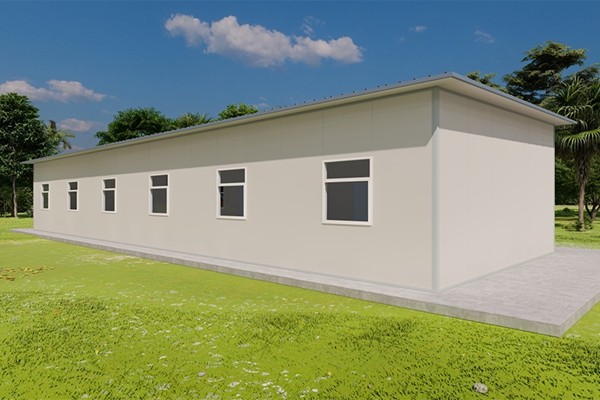
Energy Efficiency Fundamentals in Modern Prefab House Design
The superior energy efficiency of prefab house construction begins long before modules arrive on-site. Unlike traditional building, exposed to variable weather causing material swelling, shrinkage, or moisture damage, prefabrication occurs within climate-controlled factories. This precision environment is fundamental. Walls, floors, and roofs are assembled horizontally on production lines, allowing for meticulous installation of insulation materials without gaps, compression, or voids – common culprits of thermal bridging and heat loss in stick-built homes. Advanced materials like Structural Insulated Panels (SIPs) or vacuum-insulated panels (VIPs), seamlessly integrated during factory construction, achieve exceptionally high R-values unattainable with conventional methods. Furthermore, the inherent airtightness of prefab house modules is a game-changer. Factory assembly enables perfect sealing of joints using specialized tapes, gaskets, and sealants before modules leave the factory. This eliminates the drafts that plague many site-built homes, drastically reducing uncontrolled air infiltration and exfiltration – major sources of energy waste. Windows and doors are also precision-fitted in the factory, ensuring optimal installation for maximum thermal performance. This controlled, systematic approach translates directly into reduced heating and cooling loads, lower energy bills, and a significantly smaller carbon footprint from day one. It’s a foundational shift towards building physics optimized for conservation, not just construction speed.
The Sustainable Edge: Advantages of Prefab Container House Construction
Prefab container house solutions, like those pioneered by ZN House, represent a pinnacle of sustainable and efficient construction, particularly suited for modern demands. Repurposing steel shipping containers provides a robust, readily available structural skeleton, inherently reducing the need for virgin materials and minimizing initial resource consumption. However, the true energy efficiency magic lies in the transformation process. Within ZN House’s controlled facilities, these steel boxes are meticulously upgraded into high-performance dwellings. Key to this is comprehensive insulation. Advanced spray foam, mineral wool, or panel systems are applied uniformly to all interior surfaces – walls, ceiling, and floor – creating a continuous thermal envelope that eliminates cold spots and dramatically reduces heat transfer. High-performance, double or triple-glazed windows with low-emissivity (low-E) coatings are standard, maximizing natural light while minimizing solar heat gain in summer and heat loss in winter. Furthermore, the inherent compactness and modularity of prefab container house designs often lead to a reduced surface-area-to-volume ratio compared to sprawling traditional builds, inherently minimizing the area through which heat can escape. This, combined with the potential for easy integration of renewable energy sources like solar panels onto the flat, sturdy roof, positions the prefab container house as a uniquely eco-efficient building block.
Beyond core energy performance, prefab container house construction offers compelling practical advantages that align with sustainability goals:
| Advantage Category | Key Benefits |
| Rapid Deployment | Significantly faster build times reduce on-site energy use (generators, equipment), labor costs, and overall project carbon footprint. Ideal for urgent needs. |
| Cost-Effectiveness | Factory efficiency, reduced labor hours, bulk material purchasing, and minimized waste translate to lower costs without sacrificing build quality or energy performance. |
| Versatile Design | Modularity allows for endless configurations, enabling designs optimized for passive solar gain, natural ventilation, and site-specific energy efficiency strategies. |
| Reduced Site Disruption | Minimal on-site construction time means less noise, dust, traffic, and energy consumption disturbance for neighbors and the local environment. |
| Eco-Friendly by Design | Utilizes recycled materials (container structure), minimizes construction waste through precision manufacturing, and enables high energy efficiency in operation. |
The versatility of the prefab container house extends to its wide range of applications, all benefiting from these efficiency advantages:
| Application Sector | Examples of Use |
| Residential & Labor Accommodation | Energy-efficient, comfortable homes for families or workforce housing, reducing long-term utility costs. |
| Office & Commercial Spaces | Sustainable retail pop-ups, clinics, or workspaces with lower operational overheads and a green brand image. |
| Vacation & Tourism Infrastructure | Eco-lodges, cabins, or resort amenities offering guests comfort with minimal environmental impact. |
| Humanitarian & Emergency Response | Rapidly deployable, thermally efficient shelters for disaster relief or refugee situations. |
| Industrial & Logistics Hubs | Secure, insulated site offices, equipment storage, or modular workshops requiring climate control. |
Maximizing Efficiency at Scale: The Power of Large Prefab Homes
The energy efficiency advantages of prefabrication amplify significantly when applied to large prefab homes. Scaling up doesn’t dilute the benefits of factory precision; it leverages them more extensively. Constructing a substantial residence off-site allows for an unprecedented level of holistic energy system integration during the manufacturing phase. Ductwork for high-efficiency HVAC systems is meticulously planned and installed within walls and ceilings before modules are closed up, ensuring perfect sealing and optimal airflow design that minimizes energy loss. Plumbing runs for solar thermal systems or heat pump water heaters can be pre-installed with precision. Wiring for smart home energy management systems, advanced lighting controls, and renewable energy integration (like solar inverters and battery storage conduits) is seamlessly woven into the structure. This integrated approach eliminates the field coordination errors common in traditional large-scale builds that lead to energy-wasting compromises. Additionally, large prefab homes benefit from advanced design software optimizing the entire structure for passive solar principles. Strategic window placement, roof overhangs calculated for seasonal sun angles, and optimized building orientation are all finalized in the virtual model before production begins. The thermal envelope consistency achieved in the factory – uniform insulation, perfect air sealing – is maintained throughout the entire large structure, something incredibly difficult to achieve reliably on a complex, large-scale traditional construction site. The result is a spacious home where comfort is even, drafts are non-existent, and the energy required per square foot is dramatically lower than a comparable site-built mansion, proving that size and sustainability can coexist beautifully.
FAQs About Prefab House Energy Efficiency
Understanding the energy-saving potential of prefabricated homes is key. Here are answers to common queries:
How energy efficient is a prefab container house?
Prefab container house units are exceptionally energy efficient when properly insulated and upgraded. The steel structure provides a robust shell, and within ZN House’s factory, they receive comprehensive high-performance insulation (like spray foam) applied uniformly to all interior surfaces, creating an excellent thermal envelope. Combined with energy-star rated windows and doors, and options for solar panel integration, these homes achieve superior airtightness and insulation levels, leading to significantly lower heating and cooling costs compared to many traditional builds, especially older properties. Their efficiency rivals, and often exceeds, conventional construction standards.
Do large prefab homes cost more to heat/cool?
No, well-designed large prefab homes typically cost less to heat and cool per square foot than comparable traditional large homes. The critical factor is the superior, consistent thermal envelope achieved through factory precision: impeccable air sealing and uniform high-grade insulation throughout the entire structure. This minimizes heat loss in winter and heat gain in summer. Additionally, the integrated design allows for optimally sized and installed high-efficiency HVAC systems and seamless incorporation of renewable energy sources, further reducing operational energy consumption and costs despite the home’s size.
What makes prefab houses more eco-friendly?
Prefab house construction is inherently more eco-friendly due to multiple factors. Factory-controlled manufacturing drastically reduces construction waste through precise material cutting and recycling programs. Reduced on-site construction time lowers energy consumption from equipment and transportation. The core energy efficiency of the homes themselves means significantly lower operational energy use and carbon emissions over the building’s lifetime. Furthermore, prefab container house models specifically utilize recycled steel structures, adding another layer of resource conservation. Sustainable material choices are also more easily standardized and implemented in the factory setting.
Can prefab houses withstand extreme climates efficiently?
Absolutely. Modern prefab house designs, including large prefab homes and prefab container house units, are engineered for high performance in diverse climates. Factory construction allows for the consistent application of climate-specific insulation levels (higher R-values for cold, reflective barriers for heat) and the installation of robust, energy-efficient windows and doors rated for extreme weather. The inherent strength, particularly of steel-framed prefab container house structures, combined with superior sealing, makes them highly resistant to wind, moisture, and temperature extremes while maintaining interior comfort efficiently.
Are prefab houses customizable for energy savings?
Yes, customization is a major strength. Prefab house design, whether for a compact prefab container house or a sprawling large prefab home, is highly adaptable for energy optimization. You can specify higher insulation values, select top-tier energy-efficient windows and doors, choose advanced HVAC systems (like geothermal or air-source heat pumps), integrate solar panels or solar water heating, and incorporate smart home energy management systems. Orientation and window placement can also be tailored for passive solar gain, maximizing natural heating and lighting to reduce energy demand. ZN House specializes in tailoring solutions to maximize efficiency for your specific site and needs.
ZN House stands at the forefront of this energy-efficient building revolution. From their origins in Suzhou focused on redefining the prefab container house, to delivering sophisticated large prefab homes globally, their commitment to “Building Mobile Homes for the World” is intrinsically linked to sustainable innovation. The evidence is clear: the controlled factory environment, precision engineering, advanced materials, and integrated systems inherent in prefabrication create structures that are fundamentally superior in energy performance. Whether it’s the rapid deployment and versatility of the prefab container house or the scalable efficiency and comfort of large prefab homes, these methods drastically reduce operational energy consumption, lower utility bills, and minimize environmental impact. Choosing a ZN House prefab house isn’t just choosing a place to live or work; it’s an investment in a sustainable, cost-effective, and comfortable future. Embrace the efficiency revolution. Discover how ZN House can build your energy-smart dream.
Similar Posts
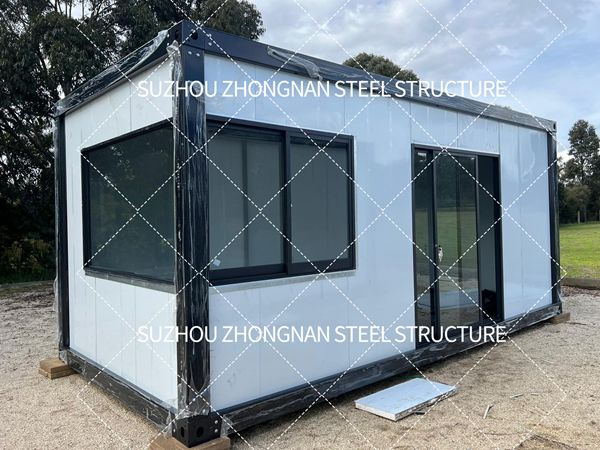
Container Prefab Homes for Sale: Global Choice
In the global supply chain of prefabricated building products, wholesalers need a reliable partner that delivers…

Flat Pack Homes: The Perfect Solution for Off – Grid Sustainable Living
In the modern era of sustainable living and innovative construction, flat pack houses have emerged as a…
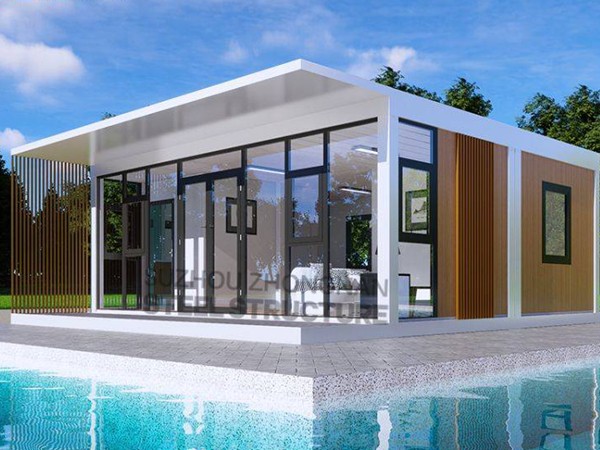
The Engineering Behind Durable and Safe Modular Container Homes
The rise of modular container house and container house modular solutions has revolutionized modern construction by combining innovative engineering with…

Discover the Flexibility of Folding Container Home
Transform your living experience with our innovative Folding Container House solutions. Designed for versatility, efficiency, and ease of…

Prefab vs. Folding Container Homes
For contractors prioritizing logistics and on-site flexibility, folding container houses for sale offer unparalleled advantages. Unlike traditional…
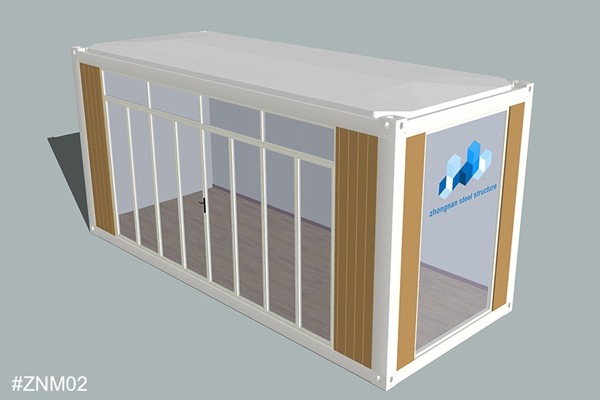
Techniques to Save Time When Assembling a House
Assembling a house, whether it’s a traditional build or an innovative assemble container house, can be…


