



Prefabricated Hotel Rooms: How Factory-Built Construction Is Reshaping Hospitality Development
Manufactured hotel room modules are used in various prefabricated hotels. These pre-constructed hotel modules are sent to the location of the project site, where the entire assembly of the hotel building takes place. The use of modular hotel rooms means that there is no issue of framing, wiring, and finishing hotel rooms on-site since the developers work with modules that are delivered almost complete and ready for installation.
The change in the hotel construction paradigm suggests that the trend of constructing hotels from prefabricated modules has gone beyond the experimental scope of construction. This trend will show itself as a practical response to the issue of how much time it takes to build hotels and the problem of finding qualified workers in the construction industry.
This article describes the concept of prefabricated hotel rooms, considers the reasons for the growing popularity of the method among developers, as well as typical budgets for prefabricated hotel construction. In addition, the author shares the experience gained during the implementation of the hospitality project that used prefabrication technology. Throughout the text, an analysis will be done of the differences between the concept of prefabricated hotels and traditional construction techniques with the intention of pointing out some aspects of the decision-making process before starting the project.
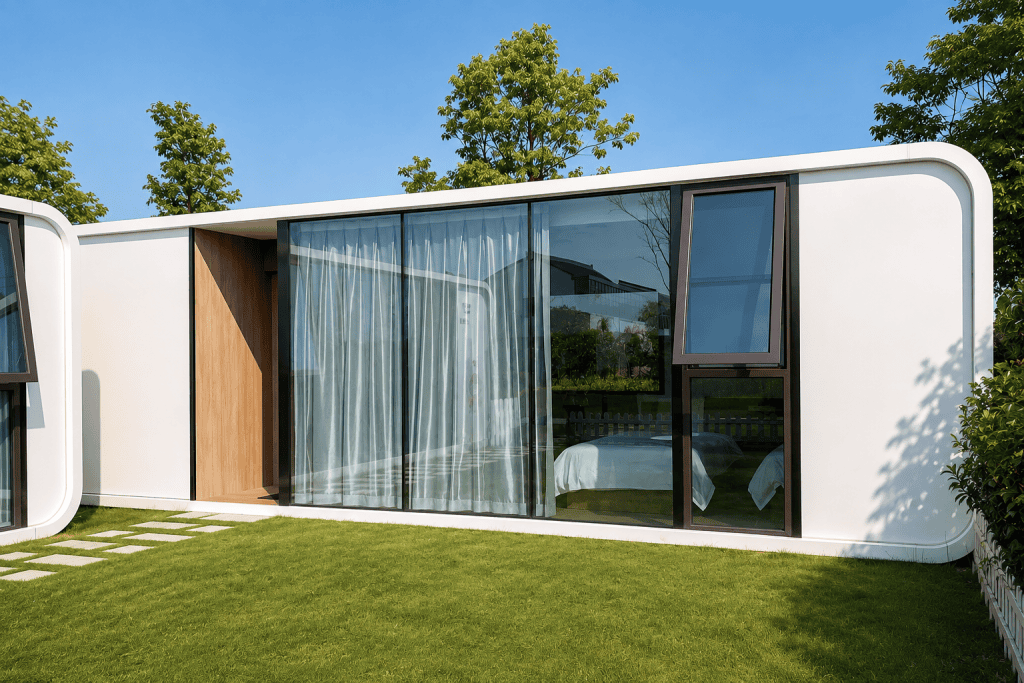
What Is a Prefabricated Hotel Room?
A prefabricated hotel room is a fully equipped lodging unit that is created in a factory and brought to the location in a near-ready condition. Based on what is required, a prefabricated hotel room can be delivered with bathroom units and plumbing, flooring, electrical fittings, lighting, wall preparation, and even pieces of furniture.
This is quite a change from traditional hotel construction, where all operations, such as construction, plumbing, electrical work, tiling, and painting, have to take place separately in the same area. The process of prefabricated hotel room construction greatly reduces this sequence as it employs a production line in a factory where many rooms can be completed at the same time.
The outcome is a hotel room that acts, in a structural and visual way, like an on-site-built room in a conventional hotel, but which still can be completed and delivered to the customer in just a short time. Developers exploring prefabricated hotel room solutions will find the approach applies to everything from small boutique properties to large-scale resort expansions.
Why Hospitality Developers Are Turning to Prefab Hotel Construction
Three forces are causing builders to progress to modular hotel building: short schedules, uncertain availability of skilled labor, and the requirement for uniform quality in many rooms that are almost identical.
According to the Modular Building Institute, in 2025, hospitality and lodging ventures constituted a small fraction of the modular construction industry, but they became the fastest-growing segment of it, with hospitality expected to grow at an annual rate of 9.2 percent in the following five years, surpassing growth in the building sector as a whole. The growth is due in large part to the rising demand for extended-stay hotels, as well as to the increasing need for hotels located at places where conventional construction labor is either hard to find or too expensive.
Separately, industry research on the U.S. hotel construction sector notes that with an array of contractors chasing a single pool of skilled tradespeople, the situation has negatively affected industry revenues recently. However, since the majority of the work is done indoors, on schedule, and with a stable factory labor force, factory-built hotels escape this predicament.
For developers, this translates into three practical advantages.
Faster Hotel Project Delivery
As site preparation and foundation work occur simultaneously with the production of a room, timelines for overall projects become significantly shorter than those involving the traditional building method, where the building of rooms is done separately from the project.
Factory-Controlled Production Quality
Standardized manufacturing reduces the variation in fit and finish that is common when many separate trade crews work across a large, open site.
Reduced On-Site Complexity
Prefinished rooms require a lot less labor on site. This makes it a lot easier to coordinate and reduces the possibility of having to deal with delays caused by the weather or the site being too busy.
Traditional vs. Prefabricated Hotel Construction
| Factor | Traditional Construction | Prefabricated Hotel Construction |
| Typical timeline | Sequential, often 12–24 months | Parallel factory and site work, often 40–60% faster |
| Quality consistency | Varies by crew and weather | Standardized factory process |
| Labor requirement | Large, shifting on-site workforce | Smaller site crew for installation |
| Weather exposure | High — delays are common | Low — most work is indoors |
| Site disruption | Extended noise, traffic, and debris | Reduced installation window |
Types of Prefabricated Hotel Rooms
Not every hospitality project needs the same room. Manufacturers typically offer several prefab hotel room categories; each suited to a different guest profile and budget.
Regular modular hotel rooms are designed specifically for use in enabling the specific guest experience required by operators, which incorporates private baths, built-in utilities, HVAC-compliant systems, and various wall finishing materials. They are attractive because of their use in hotel management in the business segment, tourist accommodation sector, and budget-friendly hotels. The luxury modules are designed to provide high-quality experiences in a hotel or boutique hotel equipped with balconies and glass walls and smart room management technology.
Double-occupancy rooms are designed for higher-capacity projects, including tourist hotels and remote hospitality or workforce accommodation developments where efficient layouts matter.
The apartment-style hotel type combines the comforts of living accommodations with the convenience of hotel features by adding furnishings like kitchenettes and living space and giving long-term residents additional storage area.
Prefab Hotel Room Types at a Glance
| Room Type | Key Features | Best Suited For |
| Standard Room | Private bathroom, HVAC prep, flexible finishes | Business and budget hotels |
| Luxury Suite | Balcony, premium finishes, smart systems | Resorts, boutique hotels |
| Double Occupancy | Higher-capacity layout | Tourist and workforce accommodation |
| Apartment-Style Unit | Kitchenette, living area, storage | Serviced and long-stay apartments |
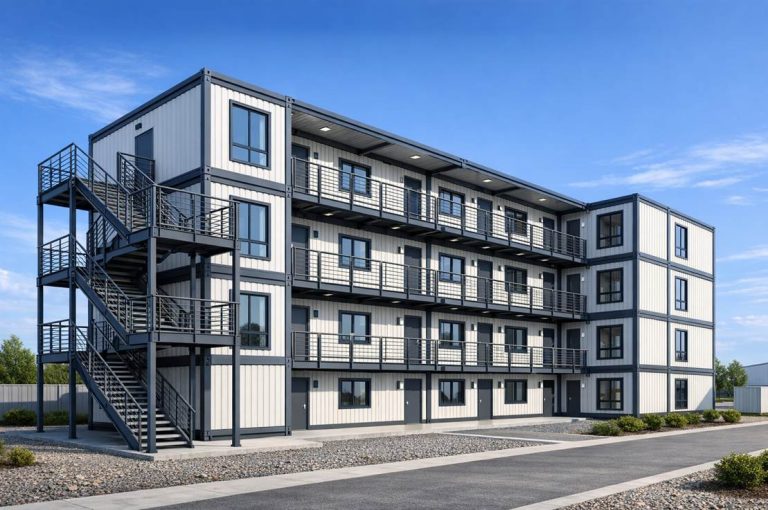
Smaller-scale operators sometimes start with a simpler option such as a container motel before scaling up to a full prefabricated hotel program, while larger resort and mixed-use developments often move directly into modular hotel buildings designed for multi-story assembly.
What Affects Prefabricated Hotel Room Cost
The price of hotel rooms made from prefabricated materials is not stable; it changes depending on project parameters. It depends on many factors such as room dimensions, interior design, level of complexity of bathroom facilities, type of furniture set and materials of building used, distance from production plant, and installation process.
The expenses of luxury suites and high-end resort suites are relatively high as they take larger space and require higher-quality finishes than many other types of construction. On the other hand, workforce housing and budget hotel constructions focus more on saving money and mass-producing the facilities.
Key Cost Factors for Prefabricated Hotel Rooms
| Cost Factor | Why It Matters |
| Room size and layout | Larger footprints require more material and structural support |
| Interior finish level | Luxury finishes and fixtures raise unit cost |
| Bathroom configuration | Full wet-room systems cost more than shared facilities |
| Transportation distance | Remote or overseas sites add logistics cost |
| Site conditions | Difficult terrain increases foundation and crane requirements |
Taking into account all these factors, prefabricated construction of hotels is expected to save on costs of the project, compared to conventional construction. A shorter timeline means that the construction process has less time to get delayed, material waste is lower (thanks to the more accurate factory production), and site management costs diminish (because of the shorter installation times). Many developers will appreciate this combination, as it can significantly increase the efficiency of the projects and accelerate the return on investment.
Factory Manufacturing and Installation Process
Prefabricated hotel rooms normally pass through four phases before arriving at the job site. The first stage focuses on the engineer’s design, room layout and technical drawings. The second stage involves the process of constructing steel frames and room shells. The next stage is the interior assembly, where the work is done on all major systems and components that go into the room. The last stage is bringing assembled and packed rooms to the work site.
Upon arrival at the location, prefabricated hotel modules are generally assembled using crane assembly, which happens to be much quicker than conventional sequential construction methods. Meanwhile, the on-site crew does the hookup of utilities, securing the modules to the foundation, and doing any outer cladding or landscaping work, as there is little to no work left to be done on the manufactured rooms. For projects where structural flexibility matters, some developers pair prefab hotel rooms with a light steel structure building frame to support lobbies, corridors, or multi-story configurations, allowing a resort or hotel to combine modular guest rooms with more customized common areas.
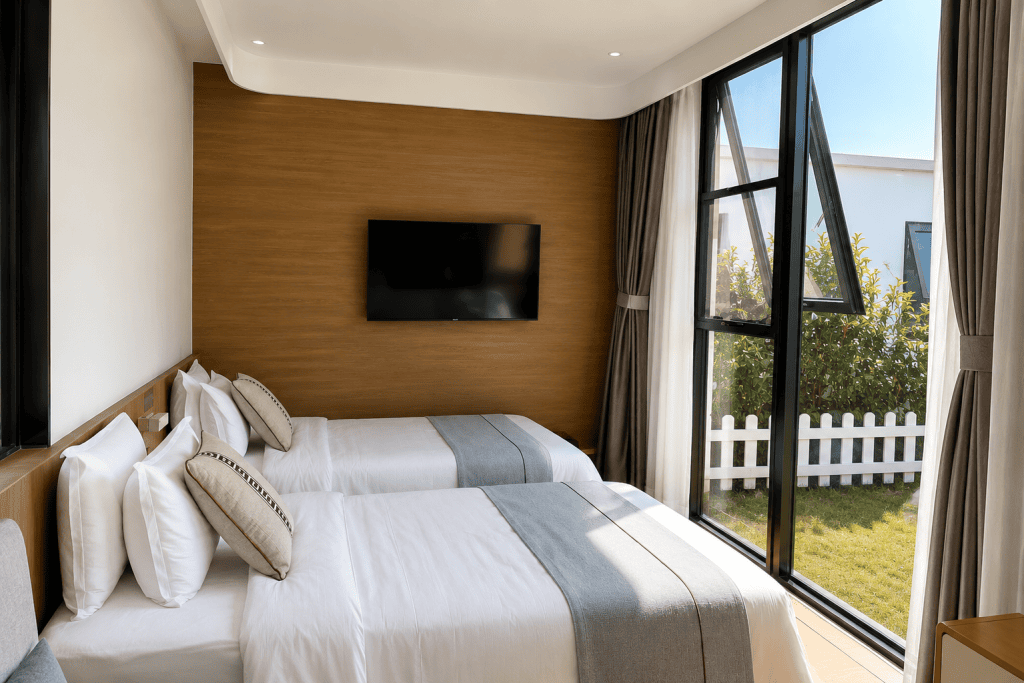
Case Study: A Remote Resort Race Against the Season
A boutique resort operator in Southeast Asia required the completion of 24 guest rooms five months before the peak tourist season. The site was situated on a coastal plot with limited access by road, high humidity and no local pool of experienced hospitality-construction labor.
The important hurdles were simple yet serious: transporting construction materials to a remote site without any delays that would last several months, ensuring that the interior finishes would not be damaged by the tropical humidity during their transportation and storage, and completing the installation without too much disturbance of the narrow road that was used by the community surrounding the area.
ZN House solved this by producing the guest rooms as fully assembled, modular units with moisture-proof walls and flooring materials appropriate for coastal areas in their factory. This way, the units could be dispatched according to the availability of cranes on the job site, thus avoiding the need for on-site storage in an area with very little covered space. The installation was also planned to be done at times when there are fewer cars on the access road where the residents live nearby.
The installation of the 24 rooms was completed and connected to utilities six weeks after the delivery date. This timely schedule allowed the operator to complete the development before the busy season, using resilient materials suitable for a humid coastal environment, exactly as was indicated in the project plans.
Frequently Asked Questions
Is a prefabricated hotel room as durable as a traditionally built one?
Yes. Prefab hotel rooms use structural steel framing and standard building materials, and they are engineered to meet comparable durability and safety requirements to site-built rooms, provided they are manufactured to recognized construction standards.
Can a prefabricated hotel be expanded after it opens?
In most cases, yes. Because units are modular, additional rooms can often be manufactured and installed later, allowing a property to expand in phases as occupancy or investment grows.
How long does it take to install a prefabricated hotel room on site?
Individual room installation is typically measured in days rather than weeks, though the full project timeline depends on room count, site access, and how much structural work is needed before rooms can be placed.
Disclaimer
The technical data, specifications, and materials referenced in this article are based on ZN House’s own manufactured container and modular products. Actual specifications, materials, and technical details may vary by project, region, and configuration. Readers should confirm current specifications directly with the manufacturer before making project decisions.
Ready to Explore a Prefabricated Hotel Project?
The construction of hotels using prefabrication is a smart way to achieve a shorter opening time frame, improve quality control, and save costs for many different kinds of hotel projects. Whatever the hotel concept, whether it is a lifestyle resort, hotel apartment, or staff accommodation project, ZN House builds hotel room modules to meet the deadlines without losing any quality in the décor and finishing.
To see what a completed project looks like in practice, watch this walkthrough of a ‘3-floor Container House Hotel’:
Similar Posts
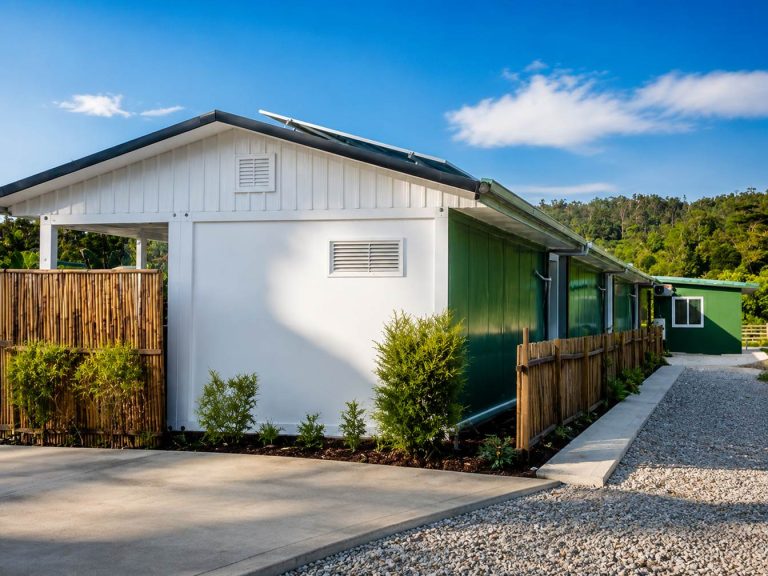
Are Prefab Container Houses Worth It?
Yes, prefab container houses are often worth it for those projects that have to be completed…
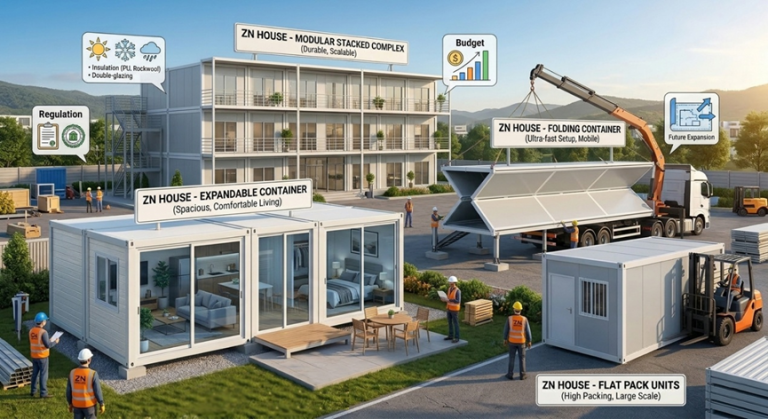
How to Choose the Right Container House for Your Project
Introduction Container house solutions are rapidly changing how we construct buildings on a global level, allowing…

Top 10 Global Container House Design Trends 2025
Introduction to Container Home Trends 2025 The container home trends of 2025 are redefining residential architecture,…
The Strategic Evolution of Modular Portable Living Units: A Professional Guide to Rapid Deployment Structures
At a time when speed, mobility, and resilience are the most important features of everything, the…
What Are the Benefits of a Shipping Container Office?
Introduction: Why Businesses Are Switching to Container Offices Workplace environments are evolving quickly in today’s world,…
What Is a Container Dormitory?
Introduction Container dormitories are modern prefabricated housing units that are constructed using modular container components. They…


