



What Is a Container Camp? The Complete Guide to Modular Workforce Accommodation
All major construction sites share one relentless challenge: Where are workers supposed to sleep while they work on their project? Typical building techniques (i.e., brick walls, poured concrete, wood frame) cannot be utilized if you are located 300 km from the nearest town in the desert, 3000 meters up a mountain plateau or on an offshore oil rig; they take too long, cost too much and cannot be taken down and reused when the job is over.
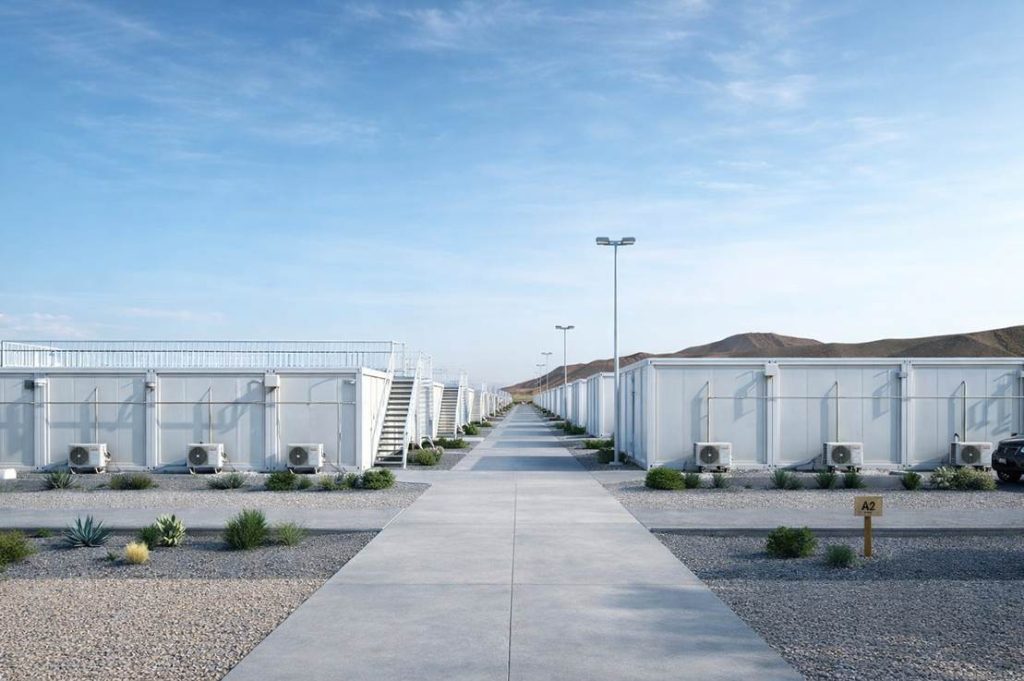
The problem with this location has been the driving force behind a silent revolution in worker accommodation over the past 20 years. Container camps, prefabricated modular living and working arrangements built from multiple shipping containers, have become the preferred choice for project owners, EPC contractors, mine owners and humanitarian organizations around the world.
This guide will explain exactly what a container camp is, why container camps have been so widely adopted across all industries, their configuration and what to consider when choosing a supplier of modular camps.
What Is a Container Camp?
Container camps are a fully integrated accommodation and operations system that consists of several prefabricated container houses, modular buildings, and prefab units put together to build a functioning community. Unlike a portable cabin or row of site offices, a container camp is an entire ecosystem; it includes all the functions that a workforce needs to live, work, eat, sleep, and maintain personal hygiene in an engineered, controlled footprint.
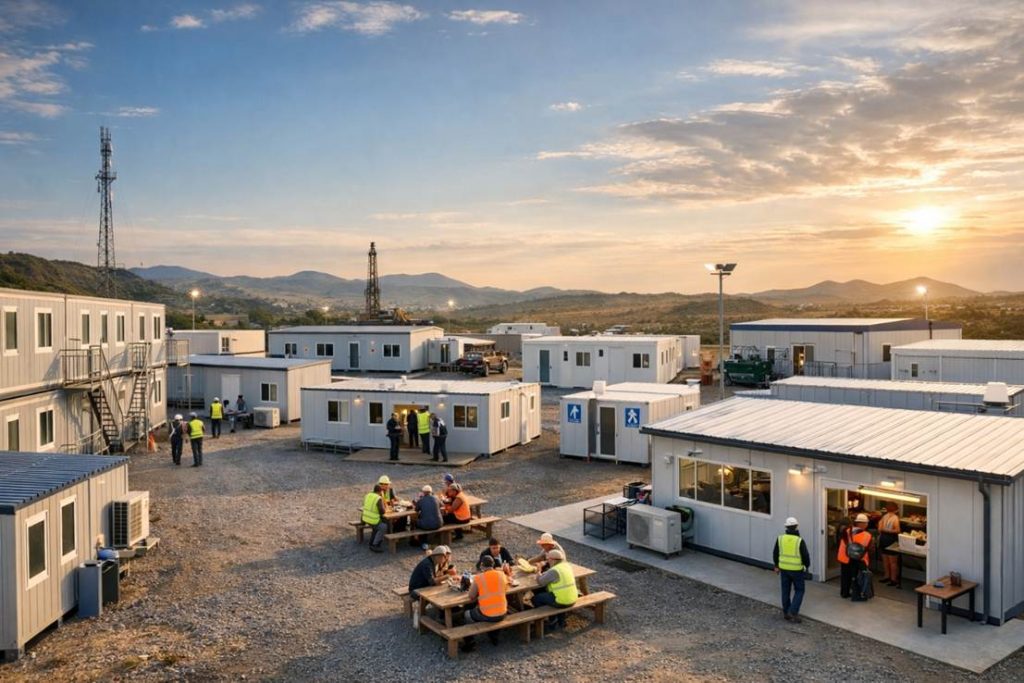
Typical components of a configured container camp include:
- Dormitory units — single, double, or multi-bunk sleeping quarters for workers
- Office units — project management rooms, meeting rooms, and administrative spaces
- Dining hall and kitchen — industrial-grade food preparation and communal eating areas
- Toilet and shower blocks — centralized or per-unit sanitary facilities
- Laundry rooms — washing and drying facilities for workforce clothing
- Recreation areas — rest lounges, TV rooms, gyms, and communal spaces
- Medical and first-aid rooms — on-site health facilities, especially for remote deployments
- Storage and utility rooms — equipment storage, electrical rooms, water treatment spaces
An engineered, modular camp distinguishes itself from an ad-hoc cluster of mobile homes. The factory-built units are made to exact specifications and then shipped to the site for assembly according to a pre-determined layout plan. This process produces a solution for workforce accommodation that can be expanded as needed, not just a collection of temporary buildings.
The words modular camp, labour camp, or prefab camp are frequently used interchangeably with the term container camp in B2B project environments. All three terms refer to the same idea, an accommodation system that is built in a factory and can be rapidly deployed and expanded.
Why Are Container Camps Becoming Popular?
The worldwide increase in container camps is not based on being something new or innovative; it’s based on reason. Project owners across many industries are choosing to use modular camps instead of traditional construction methods because it makes it easier for them to fulfil their delivery requirements due to the current economic conditions and logistical challenges.
Fast Installation
Traditional camp construction can take several months to finish, especially for remote locations where delivery of supplies or lack of workers can delay progress. Modular camps, however, are pre-fabricated in an off-site factory before being shipped and assembled.
This approach offers several benefits:
- Reduced on-site construction work
- Faster project mobilization
- Lower labor dependency
- Improved quality control
Flexible & Expandable
Project requirements often change throughout their lifecycle. There can be increases in the number of employees working on a project, as well as the possibility of new departments being created or the geographical location of a project changing.
Due to their modular nature, container camps provide a high level of flexibility. Adding additional accommodation units, offices or sanitary facilities to a container camp can be accomplished with ease without having to rebuild the entire camp.
This scalability makes modular camp systems particularly suitable for:
- Long-term infrastructure projects
- Mining operations
- Temporary engineering sites
- Seasonal industrial activities
Modular buildings are also re-usable, providing greater long-term return on investment.
Cost-Effective
Cost control is a major concern for engineering and construction companies.
Container camps are helping to cut down on costs compared with traditional temporary buildings:
- Labour costs
- Material waste
- Project duration
- Cost of maintenance
- Costs of moving back and forth
Factory manufacturing will also enhance efficiency and reduce downtime caused by weather when constructing a facility. Many companies find that the lower life cycle cost of a container camp is an economically advantageous option for providing workforce housing.
Suitable for Remote Locations
Container camps have been specially designed for locations where traditional building construction cannot occur or cannot take place due to the extreme environment. They are constructed from high-quality materials and can withstand extreme weather patterns:
- Mining Areas — open-pit operations in arid, seismically active, or extreme-cold zones
- Oil Fields — desert and offshore environments with high temperatures and dust
- Deserts — locations with no infrastructure, requiring off-grid power and water systems
- Mountainous Areas — sites accessible only by smaller vehicles, requiring compact shipping formats and lightweight assembly
Premium container camp systems are engineered to withstand wind loads of 120 mph (193 km/h) and seismic forces of up to a grade of 8, and to be operational between -40°C and +55°C. No conventional temporary structure would be able to meet these requirements.
Common Applications of Container Camps
Container camps have a multitude of uses across numerous industries, projects, and facilities (storage, office, retail, etc.). Knowing the various applications of container camps will help procurement teams choose an appropriate configuration for their own application.
Construction Site Camps
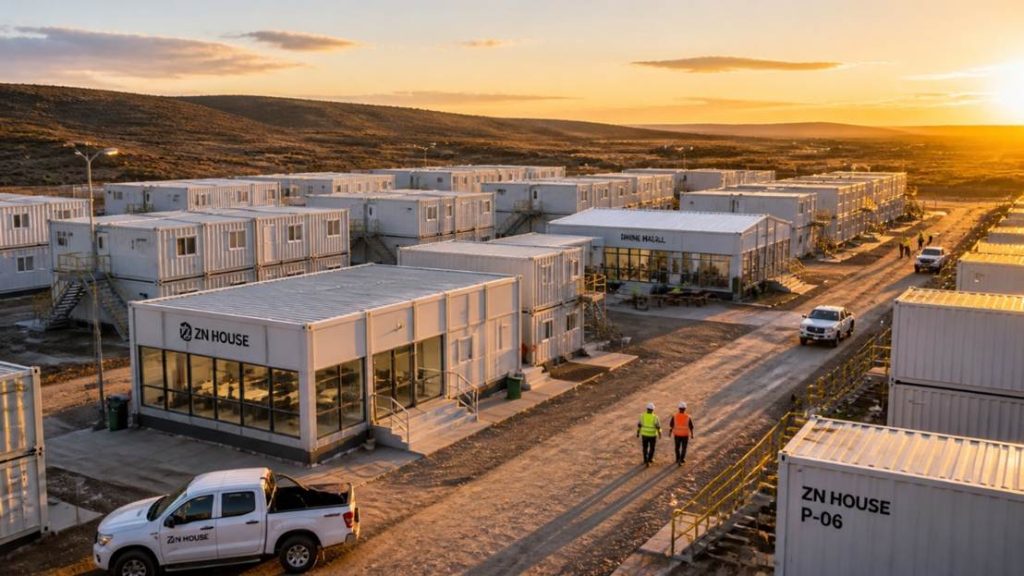
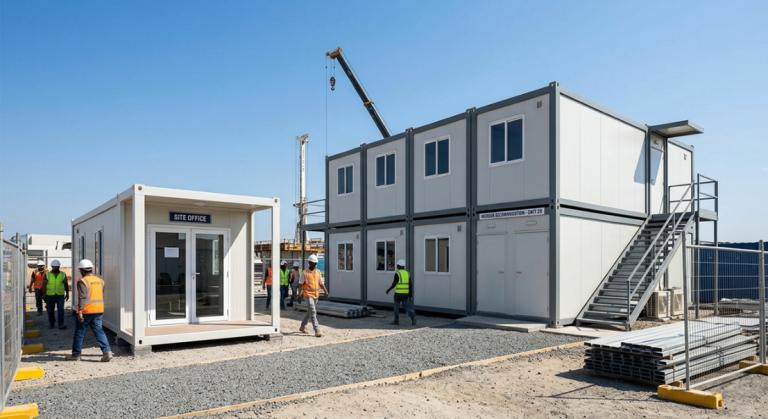
The construction site container camp is utilized for worker accommodation and for providing the infrastructure necessary for daily operations at the construction sites where infrastructure, industry, and commercial buildings are built. Most site camps have shared/single housing units for workers (dormitories), project offices for managers and engineers, temporary meeting and training rooms, canteens, and sanitary facilities to support site work. The ZN House’s construction container camps are designed as high-density, stacking units to be deployed in days (up to three stories), thus occupying a small footprint on crowded construction sites and accommodating fast-paced construction schedules.
Mining Camps
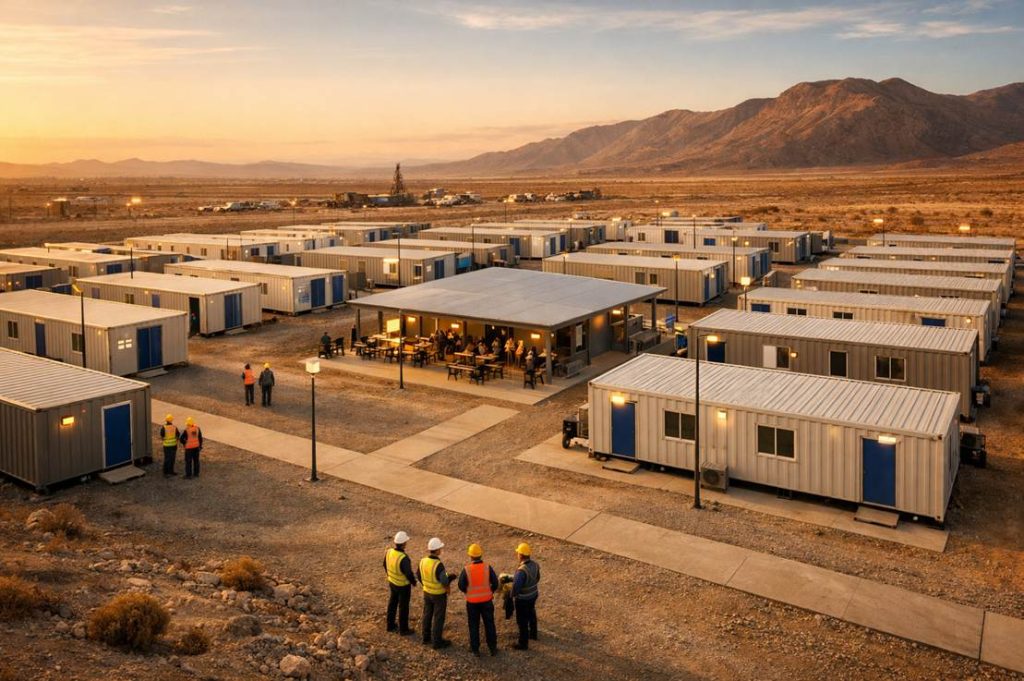
The hardest container camp requirements are placed on remote mining locations. A mining container camp needs to be big enough to accommodate between 50 people and several thousand people, and it can be placed hundreds of kilometers away from the nearest community, at extreme altitudes or in temperature regions with extremes in heating and cooling.
Housing for the remote workforce on a mining site is much more than just an adequate shelter. Employees typically have long rotations (often for 28 days) at a site and thus the quality of the dwelling they occupy relates directly to their health, productivity, and likelihood to remain employed. Therefore, in addition to providing dormitories for employees, mining camps must also have facilities for recreation, food services, medical assistance, and communication.
The structural requirements for mining camps are also extremely demanding. Units used for mining camps must withstand the dust, vibration, and extremes of temperature found in typical mining operations. Accordingly, the best quality mining camp solutions typically utilize heavy-gauge galvanized steel framing (Grade Q355B), Class A1 fire-rated rockwool insulation, and highly weather-resistant cladding systems as standard specifications.
Oil & Gas Camps
Oil and gas camps must provide rapid implementation and be safe and comfortable in both oil and gas projects and oil fields. Using ‘plug-in to play’ modular units, ZN House has included HVAC, electrical and plumbing systems already installed so that oil field camps can be implemented quickly at desert-like or Arctic-like conditions without the need for extensive onsite fit out. With such high resistance to wind and thermal control, ZN House’s modular camp solutions keep the indoor environment comfortable for workers from approximately -40°C to +55 °C, which is critical for maintaining employee health and productivity levels under extreme climatic conditions.
Emergency and Disaster Relief Camps
When natural disasters (like floods and earthquakes) or crises (like war) occur and displace large groups of people, the immediate need for safe, weatherproof shelter is critical. Well-designed portable disaster relief camp options can provide that shelter on a large scale, more quickly than any other possible solution.
Portable, foldable and modular units can be transported in large quantities with a regular shipping convoy of several hundred units stacked in shipping containers, making it possible to provide shelter at scale promptly. These units exceed the minimum standards set by the Sphere Project for humanitarian uses, which is the global standard within the humanitarian community for providing shelter to displaced individuals.
The use of a Modular Container Camp provides a substantial advantage over traditional tent-based disaster relief shelters when it comes to durability. Modular Container Camps can be used for many years, as opposed to weeks with tented shelters, providing a stable option for LDCs (Least Developed Countries) to transition through their various levels of displacement. The entire ecosystem of the Modular Container Camp includes medical facilities, administrative offices and toilet/bathing facilities (sanitation).
Main Components of a Container Camp
A container camp is more than just a cluster of sleeping quarters. It is an engineered environment for living, and understanding all of the aspects of the container camp is key to procurement teams when creating a complete solution.
Accommodation Units
Dormitory units form the foundation of every container camp. They can come in many configurations, from 1-person executive style rooms to 4-8 bunk beds for labour accommodation. All units include a bed, locker, vent, light, plug and climate control. High specification projects will have an en-suite bathroom, better soundproofing and upgraded finishes for managers and technical staff.
Office Units
Dedicated space to conduct project management and administrative functions must be distinct from space used for living. With container office units, there is a dedicated workstation; a dedicated meeting room; a dedicated communications infrastructure; a dedicated server rack (for IT-intensive operations); and a dedicated command centre facility. At large sites, office modules are generally connected in rows or stacked up, thereby forming multi-story administration buildings.
Dining and Kitchen Area
A functional catering operation is critical for productivity and employee health. The dining or kitchen modules are designed as commercial kitchens that can accommodate your requirements, and are each comprised of industrial-quality cooking equipment, freezer or freezer storage, food preparation zones, ventilation systems, and fire suppression. Dining areas are configured to meet the required seat number based on anticipated use, typically accommodating large workforces by utilizing shifts throughout the day. Modular growth will allow for catering capacity to expand based on camp population.
Sanitary Facilities
Toilet blocks (toilet & shower) typically serve a ratio of 1:8 – 10 workers (shower or toilet). Toilet blocks will have water-resistant flooring and walls, ventilation, hot water systems and are designed to be accessible. Premium facilities will have toilet and shower facilities built into each dormitory. The quality of sanitation infrastructure is directly related to the health of a workforce and compliance with regulations.
Storage and Utility Rooms
Every campsite has a dedicated space for storage of equipment, electrical distribution equipment, water treatment equipment, generator sets and fuel storage. These utility modules are safety engineered – electrical rooms with the right fire rating, fuel storage units with containment systems, and water treatment units with the appropriate filtering and sterilization processes. These storage units will also protect against the elements and theft.
Container Camp vs. Traditional Camp Buildings
To appreciate the benefits of container camps over traditional forms of temporary construction, we should make a direct comparison between the two on the factors that matter most to project planners.
| Item | Container Camp | Traditional Buildings |
| Installation Speed | Fast (3–7 days) | Slow (weeks to months) |
| Flexibility | High | Low |
| Mobility | Strong — fully relocatable | Weak — site-fixed |
| Capital Cost | Lower (30–50% savings typical) | Higher |
| Scalability | Easy — add or remove modules | Difficult — requires construction |
| Lifespan | 20–25+ years | Similar, but non-relocatable |
| Material Waste | Minimal — factory controlled | Higher — on-site cutting and waste |
| Environmental Impact | Lower — recyclable, solar-ready | Higher — site disruption |
| Asset Recovery | High — resale and relocation value | Low — demolition cost |
| Remote Deployment | Excellent | Impractical |
Not every comparison is in favor of one side only – traditional construction might be the right choice for permanent infrastructure. But, when it comes to temporary, remote, or scalable workforce accommodation needs, container camps clearly deliver a better mix of rapidity, adaptability, cost-effectiveness, and eco-friendliness.
How to Choose a Container Camp Supplier
Because dozens of manufacturers around the world offer container camp solutions, the procurement teams have a plethora of available suppliers. The following criteria can be used to identify capable, reliable suppliers as opposed to subpar suppliers.
Engineering Experience
Look for an established container camp supplier who is competent in both your industry and the appropriate climatic conditions to ensure they have the engineering credentials you require. ZN House has designed container camp units since 2005 (over 3000 camp projects), throughout all industries, including mining, oil and gas and construction workloads. ZN House’s extensive experience has developed into the development of a strong, durable and reliable structure; as well as efficient design of Mechanical, Electrical and Plumbing (MEP) systems; and thorough planning of how the unit will be deployed to your site, especially if it is difficult to access or if has challenging construction conditions.
Customization Support
A good modular design manufacturer can offer you the customization of layout for the units in your modular camp, adaptation to local climatic conditions, as well as design requirements for specific functions such as command centres or medical suites. ZN House utilizes Building Information Modelling (BIM) along with Computer-Aided Design (CAD) to provide custom floor plans (2D) and/or 3D models for the campsite, and modify your unit types, insulation levels and interior layouts to accommodate your number of workers and your project specifications.
Compliance with International Standards
Meeting international and/or local building code requirements is a key aspect of the success of global projects. The ZN House’s structural elements meet ISO certification standards. The ZN House is built according to CE, UL, and BV requirements, which provides assurance about the quality of our products and makes obtaining building permits easier in numerous jurisdictions. Fire protection is enhanced by the addition of Class A1-rated rockwool insulation as well as additional components that include emergency lighting and sprinkler systems.
Transportation and Installation Support
The provider of the container camps needs to have the ability to design for cost-effective transportation and provide assembly assistance once on site. ZN House optimizes freight by fitting up to 7–12 units into one 40HQ container (flat-pack/foldable systems), therefore reducing logistical expenses up to approximately 40%. The plug-and-play system, along with overseas engineering and support teams, allows for small crews to install in an expedited process.
Complete Camp Solution
Beyond just providing modular space, leading suppliers are now also providing their customers with complete camp living and working ecosystems. Suppliers are becoming “Environmental Engineers” by delivering complete solutions that include the provision of core shelter, kitchen facilities, clinics, laundry facilities, and recreation areas in a camp setting.
ZN House has differentiated itself by offering complete “Turnkey” Camp and Temporary Living Environment operational solutions that combine structural engineering, logistics support, and long-term technical support, allowing clients to concentrate on their primary business functions.
Future Trends in Container Camps
The construction sector has shifted to a factory-first paradigm where the job site serves as an assembly area. The following are a few major trends for 2026 that will redefine the capabilities of container camps:
Intelligent Camp Management (IoT & AI)
The evolution of modern camps has given rise to “smart villages” through the incorporation of Internet of Things (IoT) sensors in their modular units, which allow project managers to monitor energy consumption, water usage and even structural health, all in real time. Additionally, the integration of smart thermostats and artificial intelligence (AI) technology-powered climate controls into these types of buildings has enabled them to decrease the energy used for heating or cooling by as much as 30%.
Energy Self-Sufficiency & Green Integration
As technology has developed, diesel generators have become less common in rural areas where they used to play a significant role. The current trend is to incorporate both Mobile Solar Containers and Battery Energy Storage Systems (BESS) into the camp grid directly. ZN House provides multiple options for looking into solar roof systems with hydrogen energy storage for a completely off-grid operation.
Zero-Footprint Sustainability
It is now required for future camps to follow the concept of circular building. Future constructions will be built with 100% recyclable elements. Low-VOC products and non-toxic insulation will be incorporated into camp carcass materials; therefore, any construction site will have to be returned to its original condition upon completion of the project.
Enhanced Human-Centric Design
As a result of increasing numbers of workers requiring modular accommodation because of the worldwide housing crisis, the focus has also changed to include both mental health and indoor air quality. Newer versions of these modular units have triple-glazed windows for soundproofing, and also have more sophisticated thermal envelopes (0.048W/m. K) that will provide comfort for occupants during the hottest and coldest climates.
Conclusion
From the furthest reaches of the mining industry across sub-Saharan Africa to emergency response teams deployed after an earthquake, to the construction of megastructures, and the development of oil extraction facilities in the desert, portable container accommodation has become one of the default solutions for worksite accommodation in some of the most challenging locations for housing a workforce. The benefits of container camps are more than just practical; there are structural and fiscal advantages as well. Container camps are faster to set up, are highly scalable, provide significant savings in labour cost and can be used in areas where traditional construction methods are not possible. This is why owners or operators of construction, energy, mining and infrastructure facilities around the world have made modular camp solutions their standard business practice for worker housing.
Choosing the right modular camp manufacturer is critical to the success or failure of your project. The key features that differentiate the manufacturers that can support complex projects using their modular camps, from those that can only support simple projects, include: engineering expertise; ability to meet customer specifications; ability to provide integrated logistics; complete solution delivery capabilities; and ability to provide a single point of contact for customer services.
Ready to specify a container camp for your next project?
Since 2005, ZN House has engineered and manufactured container camp solutions for mining, oil and gas, construction and humanitarian use. To date, ZN has completed more than 3,000 container camp projects in over 50 countries. The 7-Stage Integrated Delivery System developed by ZN covers a full range of services involved in delivering container camps, including site-specific technical consultation, precision manufacturing, global logistics, rapid onsite assembly and lifetime support.
Get a free consultation and project quote →
FAQs
What is the purpose of a container camp?
Container Camps are used to supply temporary or semi-permanent housing and working facilities for labourers and project teams at isolated or industrial areas.
How long does it take to install a container camp?
The installation time for a campsite varies, given its size and site conditions. Besides, modular container camps are usually able to be rapidly deployed because these units are built in factories.
Are container camps suitable for remote areas?
Yes. Based on an engineer-designed model, container camps can easily be placed where traditional structures cannot be built, which is why they are so practical for use in remote or developing parts of the world.
What facilities can be included in a container camp?
Container camps can comprise dormitories, offices, dining halls, kitchens, toilets, showers, laundry rooms, recreation areas, storage rooms, and utility spaces.
How much does a container camp cost?
Cost depends on these factors: camp size, customization needs, insulation requirements, utility needs, transport options and setup difficulty.
Similar Posts

Insulated Folding Container House Designs
In an era where flexibility, sustainability, and efficiency define modern living and working spaces, insulated folding…
20ft vs 40ft Container House: Which Size Is Right for Your Project?
20ft and 40ft container houses mainly differ in the amount of usable space. A 20ft container…

Using folding container house for emergency shelter after natural disasters
Natural disasters, from earthquakes and floods to hurricanes, inevitably leave devastation in their wake, displacing communities…
Classroom Container Prices: How to Future-Proof Your Investment
What Are Classroom Containers? When schools face space crunches or tight budgets, many educators are discovering…
What Are Prefabricated Office Buildings? The Complete Guide for Businesses
Construction sites, factories, warehouses, mining projects, and remote work camps often need office space faster than…
Why Is a Modular Container Toilet the Smarter Choice for Modern Sites?
Sanitation plays a fundamental role in the planning of any site. It is essential to have…


