



What is Mine Site Accommodation?
Accommodations for mine site personnel refer to specially constructed, onsite lodging with and without lodging and related amenities for employees who live and work in remote mining areas. In many cases, modular container offices will form part of the construction process since they can be rapidly deployed, easily customized, and expanded as the operation increases in size.
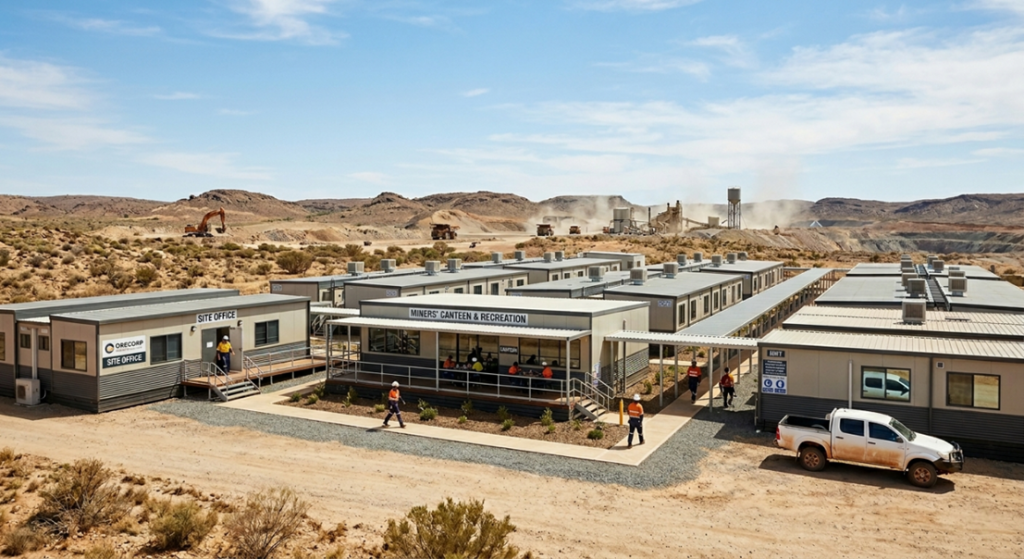
Mine site facilities usually consist of, but are not limited to, accommodations for employees, offices, buildings for preparing meals, washrooms, laundries, recreational areas, and hospitals supporting the employees. The design of these facilities contributes to the comfort of the workforce, the ability to maintain adequate operational continuity, and improved efficiency while reducing the daily transport of employees to and from work.
Why Mining Operations Need Mine Site Accommodation
Accommodation at the mine site often ends up being more than just a basic option - it's a key piece of planning. Remote locations lack roads, power, and local services, so living quarters must handle everything on their own. Crews rely on them for safety and daily operations. In practice, this means housing needs to support both routine life and heavy labour schedules. Still, it's not about comfort, and it's about meeting strict operational demands.
Challenges of Remote Mining Locations
Problems like extreme weather, poor power supply, and broken telecom links make running remote mines tough. Workers can't easily live nearby or travel daily due to distance and terrain. Setting up a full-fledged camp onsite covers housing, water, medical care, and communication - cutting down on logistics headaches mostly.
Workforce Retention & Productivity
Housing that provides comfort to workers and offers common areas with a range of functions helps businesses find employees with the skills they need in a competitive marketplace. Workers who have private, safe bedrooms or comparable living spaces, steady temperature control, access to meals, and adequate resting areas will perform more consistently than if they did not have those things. Temporary worker accommodations are therefore an operational strategy, rather than simply a housing choice.
Types of Mine Site Accommodation
Mining projects have a diverse range of lengths, budgets, and amounts. Each mining project will create a need for different types of accommodation based on the specific needs of that site. Some mine sites require quick deployable portable mining camps, while other mine sites would benefit from more permanent modular mining accommodations, which would allow for continued production on a more ongoing basis. The type of accommodation selected will depend on how many workers are needed, how long the site will be operated for, and what type of flexibility the project has.
Container-Based Mining Camp Accommodation
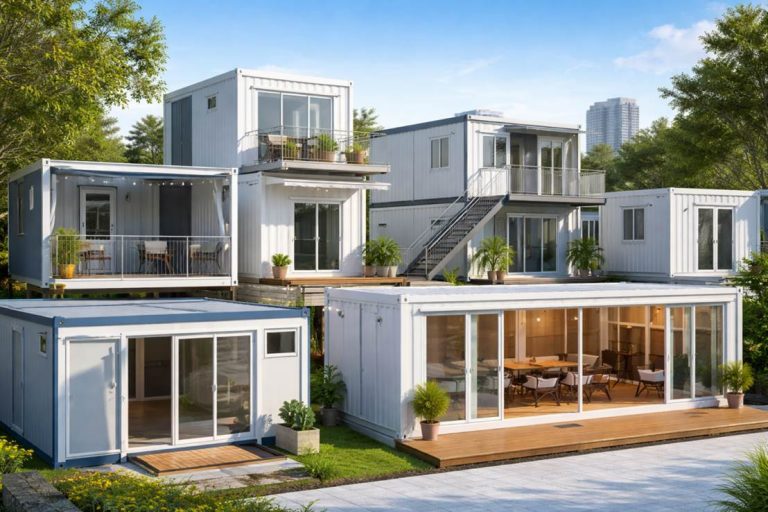
Container-style living units are highly sought after as they provide durability, cost efficiency, and ease of transport to the site/area. This form of mining camp accommodation allows a practical balance between comfort and deployment speed for projects that require this. They also support a phased expansion approach to allow for those projects that may need to scale over time.
Modular Mining Accommodation
Prefabricated building systems can be put together in modular mining accommodation for larger areas to create sleeping quarters (dormitories), workspaces (offices), food preparation areas (cafeterias), and other types of service areas. Modular buildings usually give their occupants more comfort than a basic container set-up and have a more home-like environment. Their benefits make them an excellent choice for those needing to establish a long-term infrastructure and prioritising worker health and well-being.
Portable Mining Camps
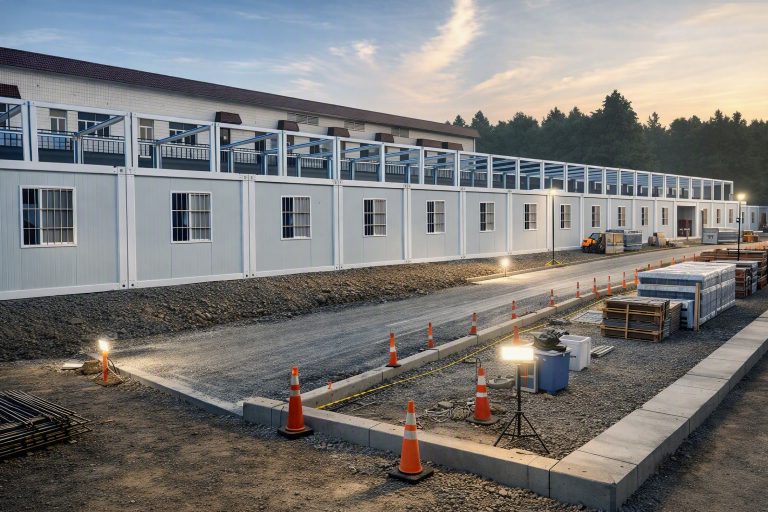
Portable mining camps can be installed at new locations to accommodate the prioritization of sites with respect to existing operations or as the priority is established with new construction work. They are generally used in temporary work zones and are perfect for exploration and other fast-moving industrial development; however, they have the greatest value in establishing operational centres rapidly due to the ability to create operational bases much faster than through traditional means.
Temporary Workforce Housing Solutions
Prefabricated housing is ideal for projects with limited timeframes and/or seasonal requirements. These types of complexes are designed to allow quick occupancy without requiring the development of long-term infrastructure. The short duration of a project or difficulty in determining its completion date makes prefab housing an excellent choice. Temporary work camps can be relocated at a later time.
Key Features of Modern Mining Camp Accommodation
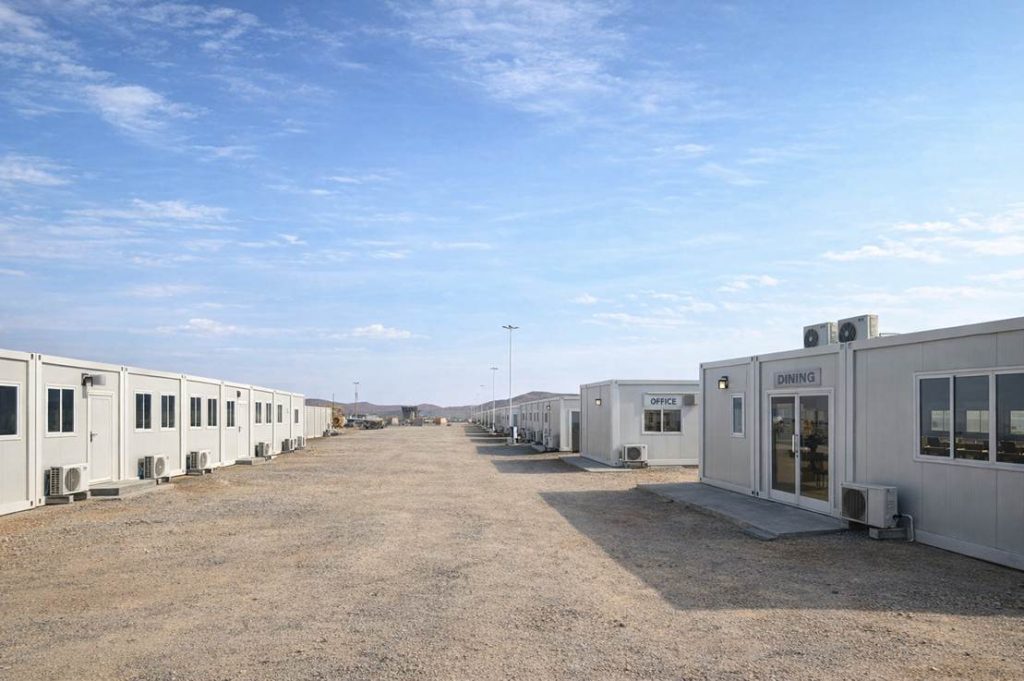
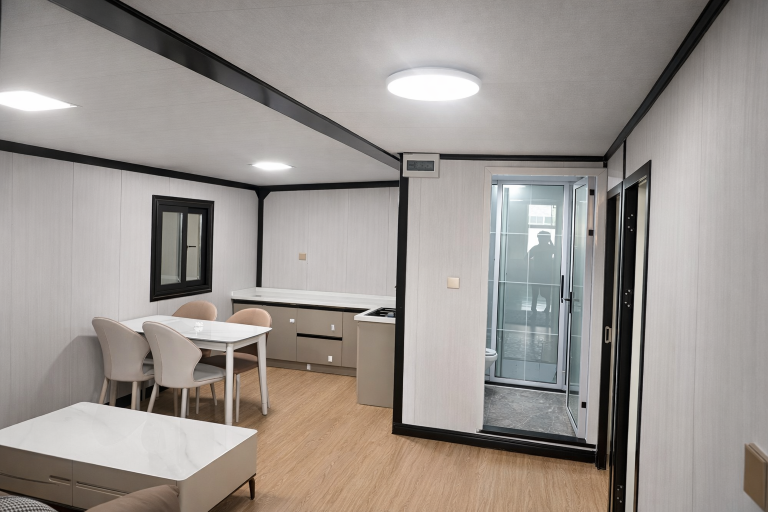
The accommodation provided to miners at today's mine sites is designed to support miner safety, comfort, and health, while being built to withstand the harsh climate conditions of the site and the work environment. That means building robust insulating properties (both thermal and acoustic), being weather resistant, and creating reliable mechanical systems for both hot and cold climates. This also means that provisions have been made to accommodate more than just sleeping areas for miners; all the day-to-day needs of those who consider themselves miners have been taken into account when designing the site installations.
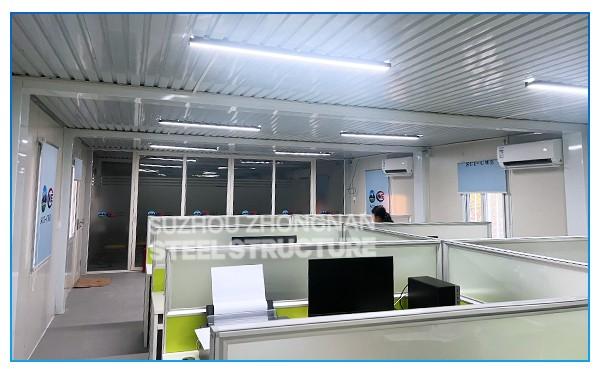
Examples of some common features of modern mine site accommodations are: air conditioning units, internet access (WiFi), private bathrooms, controlled access (card lock systems), and shared facilities (canteen, medical facility, and recreational areas). In many cases, the accommodation will also include office and meeting spaces so that mine site managers can effectively coordinate mine site operational activities without needing to leave the accommodation building. All these types of amenities support the physical comfort and operational efficiency of the mine site’s workers.
Benefits of High-Quality Mine Site Accommodation
A properly built accommodation camp has a direct impact on business because it influences worker morale and attendance, and affects the flow of work (i.e., how well things are done in relation to each other). Accommodated workers experience a greater sense of comfort and security while living at a camp, resulting in workers remaining productive and engaged for longer periods of time during their rotation. By providing a safe and comfortable place to stay, mine site accommodation makes it less likely that workers will leave their jobs and makes mine operations more stable.
The high level of accommodation quality will also decrease costs associated with transportation, lodging off-site, and downtime related to fatigue. In remote projects (e.g., Nunavut, Ontario, etc.), using portable mining camps provides companies with the ability to keep teams together and minimizes interruptions during the workday because these camps are located close to the work area. The end result is that the work environment for the workforce is much more efficient and resilient.
Mining Camp Accommodation for Sale
Mining companies looking for durable accommodations, not just a temporary solution, will find that purchasing a mining camp makes the most sense for an organization with long-term planning. By purchasing the camp, the camp owner can customize how the camp operates and redeploys the units to different jobs. When you own the accommodation outright, it is also easier to accommodate particular site requirements.
There are numerous options when it comes to mining camp accommodations; they include single to modular construction options with container units and modular-style structures. The variety of options makes this type of accommodation perfect for all sizes of projects, whether the project requires only a remote temporary base or a permanent work site complex.
How to Choose the Right Mine Site Accommodation Solution
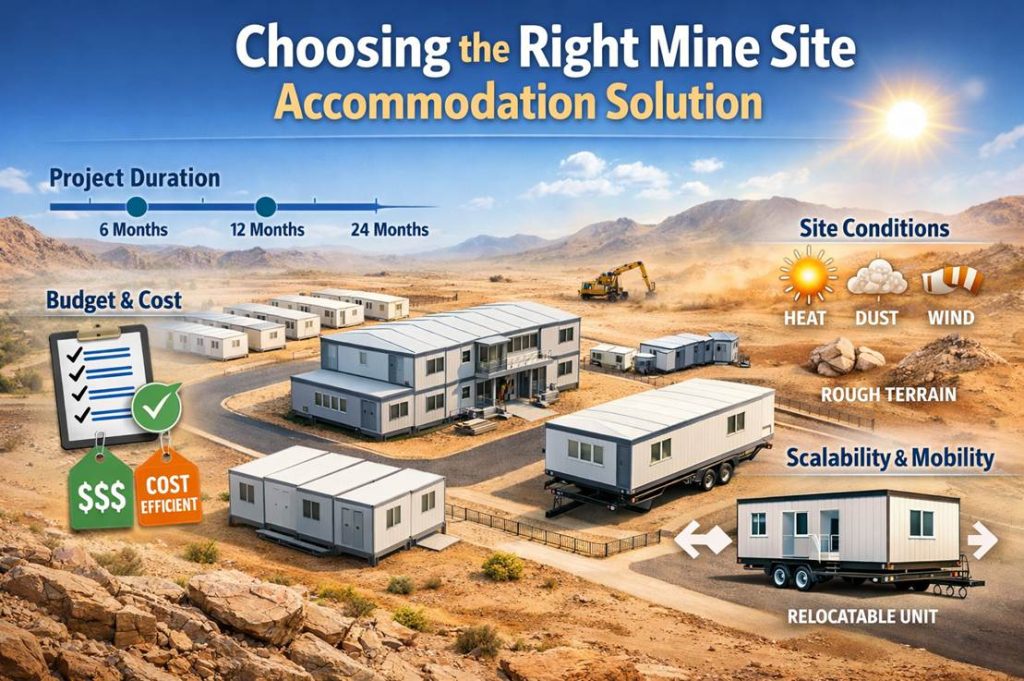
The appropriate solution is reliant upon three things: duration of the project, the number of workers that will need a place to live, and the severity of the site's conditions and environment. A temporary housing solution is best for a project that has a short duration, whereas a modular housing option that is more durable will work better for a project that has a long duration. Either way, the housing must be designed pursuant to actual operational requirements.
Project Duration
Projects of shorter length tend to look for aspects regarding swiftness and moving around; however, projects of medium length and those that will last long will focus more on making sure their items perform well over time and therefore have a higher lifecycle value. This is the point where modular mining accommodations become a key player again, allowing some degree of flexibility in either expanding or altering them as the mine site matures. As a guideline, time should be the first element to review when selecting a supplier.
Budget & Cost Efficiency
While you may have budget considerations, purchasing the least expensive option may not be the best financial decision. Before deciding on an asset, you should consider the purchase price, installation costs, maintenance costs, and how easy it would be to relocate your equipment later.
For operators looking for mining camp housing, buying rather than leasing can be an advantage due to the reduction in recurring rental expense and the fact that you will own your asset to recycle or reuse in future projects.
Site Conditions
The optimal architectural layout for a campsite is affected by heat, wind, moisture, dust, and the distance from the primary working surface. Therefore, a well-designed camp in a temperate region may not be appropriate for use in a desert or a mining area that is frequently subjected to high winds; therefore, materials, insulation, and the structure itself need to be evaluated as early as possible during the design process.
Scalability & Mobility
Camps are set up where expansion happens, not where movement is needed. For sites with shifting plans, portable setups work well because they shift easily. At steady locations, modular units grow over time without much fuss. Realistically, the right option depends on how things change over time.
Case Study: Mining Camp Accommodation for 200+ Workers
Project: Remote Iron Ore Project, Western Australia.
The Challenge: There was a project site 400 kilometers from the nearest town that needed housing for 200 workers and a central management hub.
The Solution: ZN House set up a hybrid solution that included 100 modular living units and an office complex made up of two shipping containers.
The Results: The client saved 30% on construction time by using portable mining camps instead of more traditional methods. The good living conditions at the mining camp led to a 15% increase in the number of workers who stayed on after the first year.
To know the details of the Container Camp for Mining Sites, please visit our Product Page.
Conclusion
Most mine camps aren't just places to sleep - they're active hubs where safety and productivity hang in the balance. Container setups, modular tents, or quick-hire housing can make a real difference in how crews feel and perform on the job. Mostly, treating worker living space like core equipment helps keep operations steady and cost-effective. Still, many teams still treat it as something tacked on at best. For better or worse, ignoring it leads to fatigue and missed deadlines. A well-run camp actually pulls output forward without much extra effort.
Contact us for mining camp solutions.
Get a custom quote today.
Watch the following video on the “Container Camp Project” of ZN House:
Similar Posts
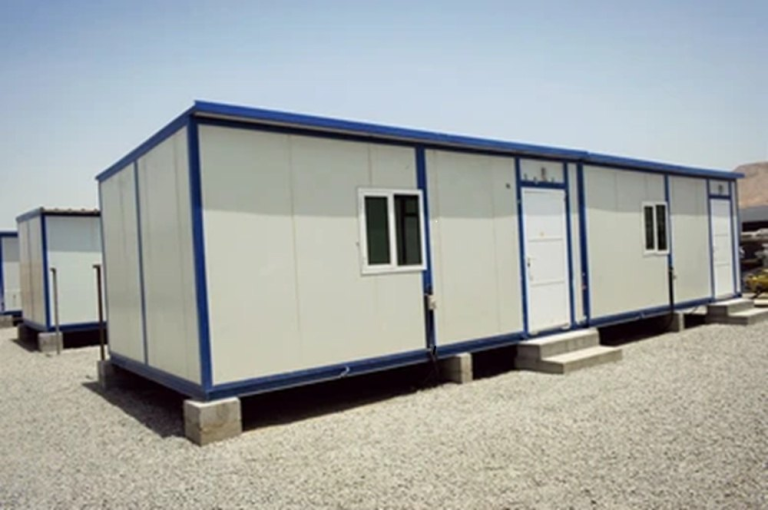
Container Camps & Dormitories: Fast, Safe Housing for Workforces and Relief
Container camps deploy in days, not months. Start with a clear program—sleeping, WASH, kitchen, clinics, admin,...

What Is Container Farming?
The fresh product of "container farming" was formed under the background of the country's efforts to...
What Is a Container House? Types, Advantages, and How to Choose the Right One
Introduction Over the past several years, the worldwide construction industry has been changed by advances in...
Container House Construction: Expert Advice on for Urban Spaces
Container house construction offers fast, affordable, and eco-friendly urban housing with flexible layouts and strong steel frames.
Prefab Homes Under 50K
Affordable housing is no longer a dream far removed from reality. You can even buy prefab...
Refugee Camp Container Housing: Building Faster, Safer, and More Dignified Emergency Shelters
The provision of safe and reliable accommodation has always been among the main requirements in humanitarian...


