



How Much Does a Container Dormitory Cost in 2026?
Housing often presents the most significant logistical challenge in the rapid development of infrastructure and the management of remote sites. Managers, regardless if working with a large-scale hydroelectric site or a small-scale urban infill site, must be able to provide safe, comfortable and compliant housing for their workforce; there simply is no negotiating when it comes to providing safe, compliant housing for your workers. The greatest challenge for project managers and procurement is maintaining budget control.
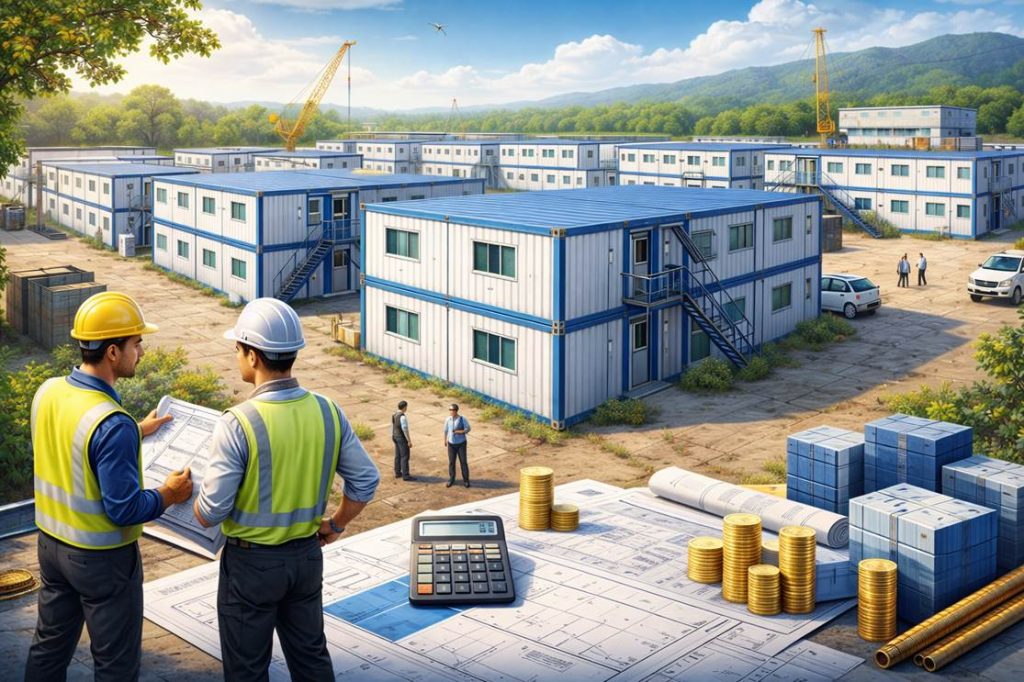
Construction projects require quick deployment of high-quality living accommodations, yet traditional (brick-and-mortar) construction methods generally take too long and cost too much. This leads to the primary question for those making decisions: What is the cost of a container dorm? A comprehensive understanding of the financial structure of modular housing will be critical to maintaining a healthy bottom-line. ZN House specializes in providing high-efficiency modular systems that are a value between affordability and durability. Throughout this in-depth resource, we will provide a detailed price breakdown, identify influencers on container dorm pricing, and assist decision-makers with calculating the complete cost of investing in worker camps.
How Much Does a Container Dormitory Cost?
Container dormitories typically run between $2,100 and $9,500 per unit for standard 20ft modules. From an HR point of view, costs per person range from $550 to $2,500; density of the layout and number of amenities affect the final cost.
There's a broad range of prices due to the wide array of qualities, technologies, and configurations. A basic "flat-pack" unit designed for a temperate climate will fall at the lower end of the spectrum, while a high-spec, heavy-duty container dormitory with additional thermal insulation, private bathrooms and premium materials that meets fireproofing standards to accommodate severe climates and weather conditions (such as snow or extreme heat) will be at the high end of the scale. In addition, shipping costs can vary widely based on whether you order a folded container (which has lower shipping volume) or fully assembled container.
Container Dormitory Cost Breakdown (Per Unit & Per Person)
In order to construct an accurate financial model, one needs to evaluate the expenses from three perspectives: unit level, tenant level, and overall camp infrastructure.
Cost per Unit
At ZN House, our standard 20ft container dormitory units are the building blocks of any camp.
- Standard Economy Units: $2,100 – $3,500. Ideal for temporary sites and large-scale labor accommodation.
- Premium/High-Insulation Units: $4,000 – $9,500. Features Rockwool insulation, thicker steel frames, and integrated electrical systems.
Cost per Bed / Person
This is the metric most procurement teams use to justify the ROI of worker housing.
- High-Density (8 persons per unit): ~$550 per person.
- Standard (4 persons per unit): ~$1,100 per person.
- VIP/Executive (2 persons per unit): ~$2,500 per person
Cost for Full Camp
A complete campground comprises more than just places to sleep. Shared amenities such as a kitchen, laundry facilities, and communal restrooms must also be factored in. A camp of 100 people will generally cost between $80,000 and $150,000, depending on whether the site requires any preparation or shipping.
Example: Budget for a 100-person dormitory
Using twenty-five (25) units of four (4) workers each plus an additional five (5) units for restrooms and management offices gives you thirty (30) units. With a unit cost of approximately $3,500, the core hardware expenditure will total **$105,000**.
What Factors Affect Container Dormitory Cost?
There are many factors that affect what your final price will be. By understanding these factors, you’re able to prioritize your spending based on what matters the most.
Dimensions / Shape of your Office: The 20′ x 6 (20ft x 6metres) is the standard size in the industry. Any custom size would add extra complexity and costs to produce.
Materials and Insulation Type: The three types of insulation available will have an effect on your price – EPS Foam, Glass wool and Rockwool. ZN House recommends using Rockwool for its better fire rating and thermal properties than the other types of insulation when exposed to extreme hot/cold.
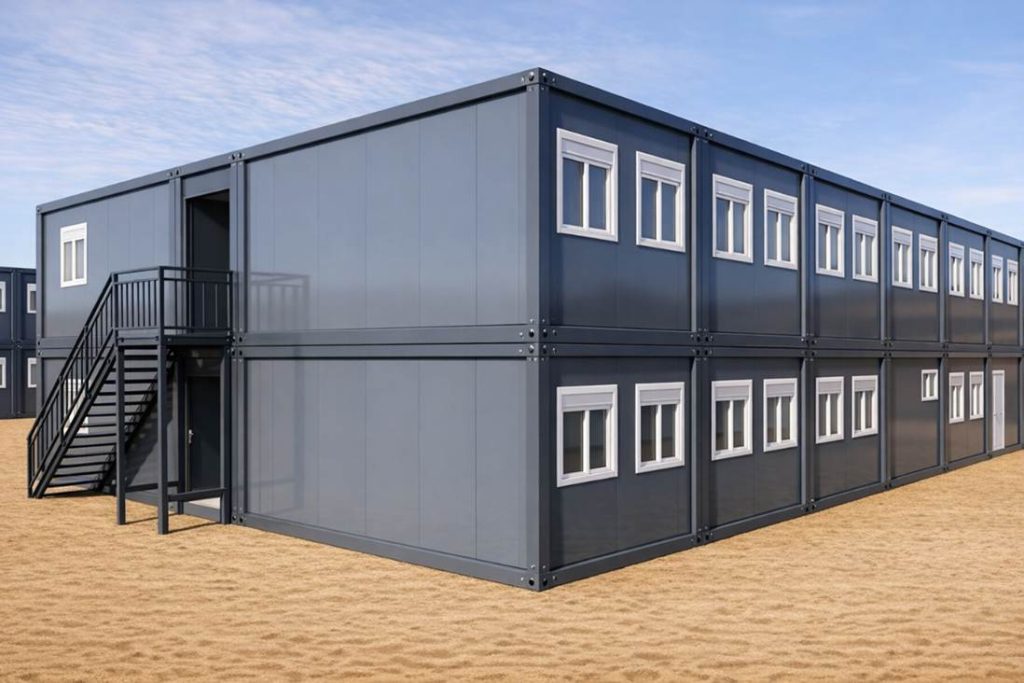
Quantity: As quantities increase, so do manufacturing efficiencies — orders greater than 50 units will typically get you significant discounts on each unit.
Transportation and Logistics: Costs play a major role here and can significantly impact the total landed cost of each unit. Flat pack or foldable units can be shipped in one 40HC container, allowing for shipping between six (6) and ten (10) units in each shipment.
Installation Cost: Some units require a five (5) person installation team with a crane, while ZN House’s foldable units can have an installation time of less than ten (10) minutes with only two (2) people, thus saving thousands of dollars in labor for your organization.
Customization: If you add any type of internal partition, or specify a custom type of flooring and/or brackets for air conditioning units — each customized item will add incremental costs to each unit price.
Container Dormitory Costs by Layout Type
The internal layout is your main "trigger" to change the amount of funding available to you.
| Room Type | Configuration | Estimated Price Range (Per Unit) |
| 2-Person Room | 2 single beds, desk, wardrobe, AC | $4,500 – $8,000 |
| 4-Person Room | 2 bunk beds, lockers, shared desk | $3,000 – $5,000 |
| 6–8 Person Room | 3–4 bunk beds (Industrial/Site use) | $2,100 – $3,500 |
The cost per person is higher when using two person rooms over four person rooms, however, having two person rooms for Senior Engineering and Project Management has historically been necessary in order to maintain retention and create an ambience that leads to comfort. Four Person Rooms provide the most cost effective option while also providing a living environment that meets or exceeds the requirements for general labour.
Shipping and Installation Costs for Container Dormitories
The sticker price of a container is only part of the story. You must account for the journey from the factory to the site.
Shipping Efficiency:
Because we have "air" to ship in traditional shipping containers, the cost to move them is high. The ZN House System uses Flat-Pack and Folding technology to reduce the cost of shipping.
Folding Units: When folded, these units reduce to a height of 40 cm - 50 cm. As a result of their compactness, you can also fit more of these units on a truck or in a sea container, resulting in savings of up to 75% on your shipping costs.
Installation Labor:
Labor at a facility can be costly, particularly if you work in an area that is hard to reach.
Typical modular buildings will require approximately two days to construct each one.
ZN House Solutions are intended for immediately deployable structures for very rapid growth. Thus, by constructing the outside walls and roofs in advance, there is less requirement for highly-skilled labor to do the same work on a traditional job.
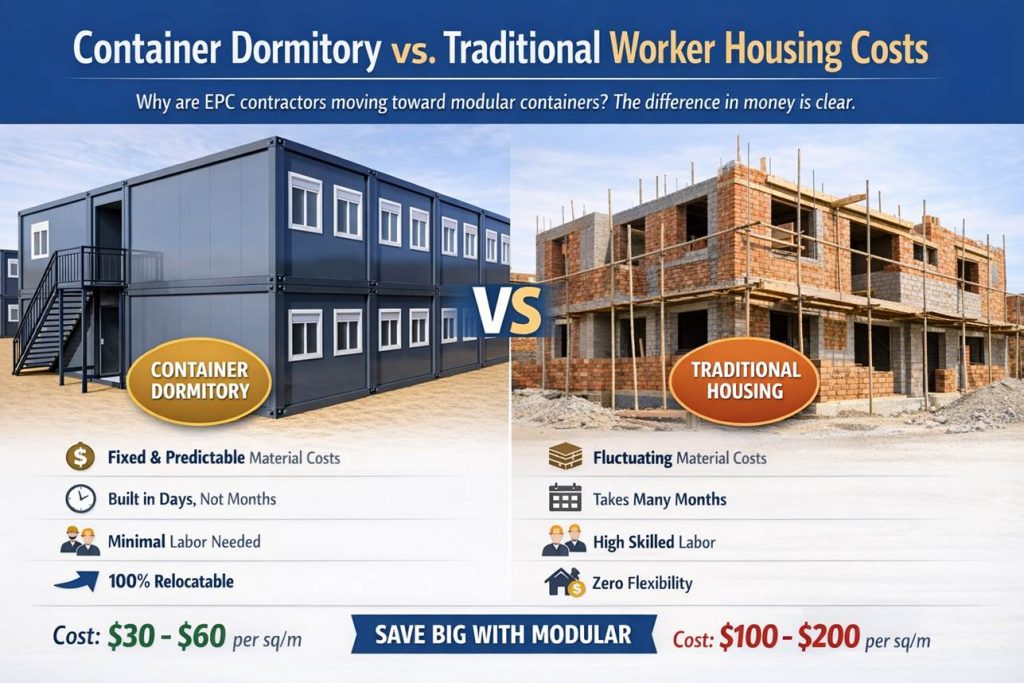
Container Dormitory vs. Traditional Worker Housing Costs
The McKinsey Report on Modular Construction Cost Savings and Faster Delivery says that modular construction can cut project timelines by 20% to 50% and may also lower overall construction costs when used on a large scale.
Why are EPC contractors moving toward modular containers? The difference in money is clear.
| Feature | Container Dormitory | Traditional Brick/Mortar |
| Material Cost | Fixed & Predictable | Fluctuating (Cement/Steel/Wood) |
| Build Time | Days/Weeks | Months |
| Labor Requirement | Minimal (Unskilled) | High (Skilled trades) |
| Flexibility | 100% Relocatable | Zero (Sunk cost) |
Example: Cost of a 100-Person Container Dormitory Camp
For a "Comfort Standard" camp layout, an example of 2026:
Accommodation Units: 25 units (4 people per unit) @ $3,500 = $87,500
Sanitary Units: 4 communal shower/toilet blocks @ $5,000 = $20,000
Office/Dining Unit: 3 combined units @ $4,000 = $12,000
Total Hardware Cost: $119,500
Cost Per Person: $1,195
Thus, there is a $1,100 plus per worker cost for 25 x 4 = 100 total workers with a common daily working facility.
Hidden Costs You Should Consider
Make sure you factor in these common costs that are overlooked when determining your cost for a work camp:
Site Preparation: Containers do not require a deep foundation; however a level gravel pad or concrete pier will be required.
Permits: Temporary housing permits and fire safety inspections will have administrative fees associated with this based on the jurisdiction.
Utilities: Connecting the camp to the local utility grid or installing industrial generators and water tanks will incur costs.
Maintenance: Budgeting 1% to 2% of the total cost of the project is recommended for sealants and HVAC servicing for long-term camps as they are low maintenance.
How to Reduce Container Dormitory Costs
When your project has serious financial limitations, use these strategies to save money on your project without sacrificing safety:
Stick to Standard Models: Customizing window locations or door sizes will slow down the automated manufacturing process. To get the best price for your building, use ZN House’s standard 20-foot dimensions.
Bulk Order: We use tiered pricing. When you consolidate your order into one large purchase, both the per-unit cost and the freight cost per unit will be lower than when you purchase multiple smaller orders.
Optimize the Layout: Use community bathrooms instead of ensuite bathrooms. This will simplify the plumbing process and minimize the amount of expensive “wet area” containers needed.
Reduce Customization: Only plan for external cladding or painting for branding purposes; for the remainder of the building, use standard galvanized steel finishes as they are the most cost-effective.
The World Economic Forum: How Modular Construction Makes Things More Productive and Circular
shows how off-site modular systems make things more efficient, cut down on waste, and help build infrastructure that lasts longer.
FAQs – Container Dormitory Costs
What is the average container dormitory cost per person?
On average, the cost for a standard mid-range camp is between $800 - $1,500. If you want to go to a high-density industrial camp, the cost can be as low as $550, while for an executive level camp it may exceed $2,500.
Is a container dormitory cheaper than traditional housing?
Yes, significantly. A container dormitory is cheaper because it doesn't need a lot of work or foundations on site. Compared to traditional building methods, you can save 30% to 50%.
How much does a 100-person worker camp cost?
A basic camp for 100 people usually costs $80,000. A fully equipped camp with kitchens, offices, and high-quality insulation usually costs between $120,000 and $160,000.
What is included in the container dormitory cost?
Our standard price at ZN House includes the steel frame, insulated wall panels, fireproof flooring, doors, windows, and basic electrical wiring (lights and outlets).
How do I calculate the total cost of a container dormitory project?
To figure out the cost, use this formula: (Number of Units × Unit Price) + (Shipping Fee) + (Site Preparation) + (Local Installation Labor). Always plan for a 5% extra cost for utility connections.
Conclusion: Investing in Scalable Infrastructure
The basic economics of the container dormitory concept is based on the maxim, Efficiency = Savings. Having the capability to quickly deliver both comfortable and inexpensive housing solutions will provide construction and mining companies a competitive edge in 2026. Modular building options mean you're not simply purchasing "boxes"—you're also purchasing a reusable resource that decreases your project lead times and maintains the well-being of your greatest asset: your workforce.
ZN House blends a commitment to price transparency with a wealth of experience in manufacturing. We can deliver all your needs whether it’s a simple 10-person unit or a large 1,000-person camp with engineering expertise to meet any budget.
Ready to start your project?
- Get a free cost estimate today
- Request a formal quotation
- Download our 2026 Dormitory Layout Plan
Similar Posts
How to Buy a Shipping Container for Your Shipping Container Home
Shipping container homes have surged in popularity as a sustainable, cost-effective, and innovative housing solution. Whether...

Container houses China bring nature closer to you
Container houses China offer eco-friendly living, blending modern comfort with nature, flexible design, and sustainable features for a healthier lifestyle.
Container Toilets: The Portable Sanitation Solution Built for Every Jobsite
Anyone who has overseen a construction site, coordinated an outdoor film festival or organized humanitarian aid...
The Innovative World of Folding Container Houses
As the demand for flexible and efficient living spaces grows, folding container houses are emerging as...

Modular container house is long-lasting
The architectural landscape is witnessing a paradigm shift, moving towards construction methodologies that prioritize efficiency, sustainability,...
Expandable Container House vs Folding Container House: Which One Is Better for Your Project?
Introduction Modular building has grown very rapidly as a choice for new buildings in the majority...


