



Top 10 Benefits of Container Camps for Modern Living Solutions
When construction starts on new infrastructure projects in remote desert regions, a new mine is developed in an elevated plateau, or disaster response teams work to accommodate hundreds of families that have lost their homes, housing and working solutions are typically difficult to find, as the requirement remains unchanged: where do people live and work? Typically, conventional construction solutions have been the answer; however, there are many issues that arise from traditional construction. The long construction cycles (weeks to months), high labor and material costs, and little or no flexibility in use once the structures have been built are increasingly leaving customers unsatisfied with traditional construction, especially with the demands placed on modern projects that must contend with reduced lead times, rapid demand changes, and extreme environmental conditions.
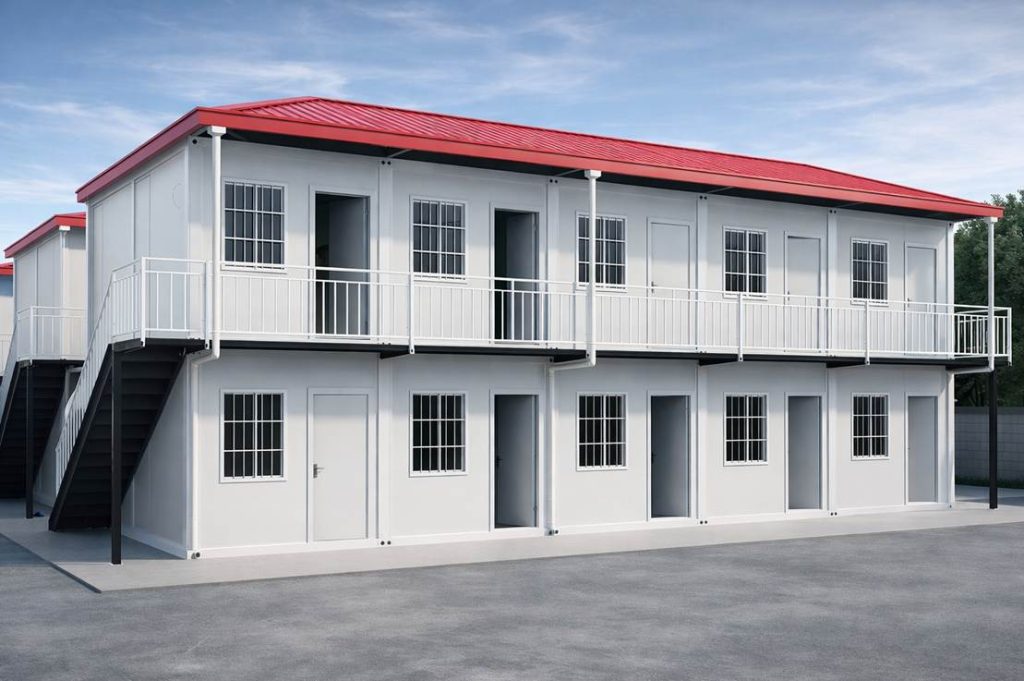
Thus, camp containers (modular, pre- manufactured, repurposed shipping containers or engineered prefabricated units) are changing the way that industries house their workforces across a variety of industries including infrastructure development projects, oil and gas, mining, and disaster response. Companies are now turning to container camps as a solution for projects that need housing and operational solutions fast.
This article discusses the 10 major benefits of container camps compared to traditional construction as well as how to select the best supplier for your next project.
What Is a Container Camp?
Container camps (or modular labour camps) are used to house temporary workers and provide complete access to facilities and operations. They are completed in large blocks of pre-assembled modules (typically, prefabricated panels such as cargo containers) and assembled on-site into a fully equipped residential living facility.
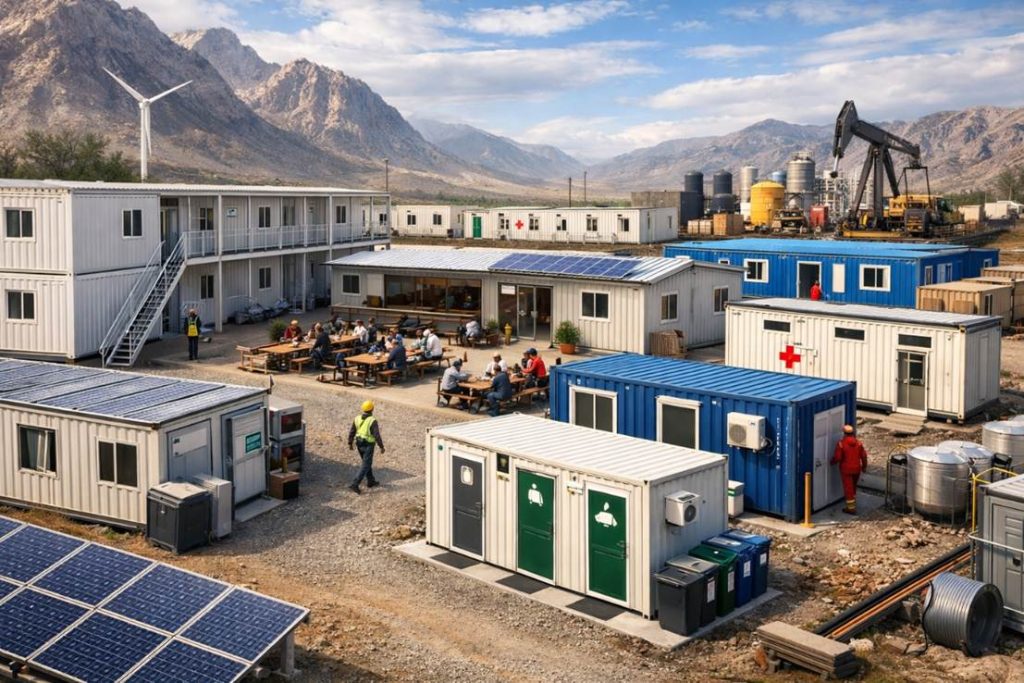
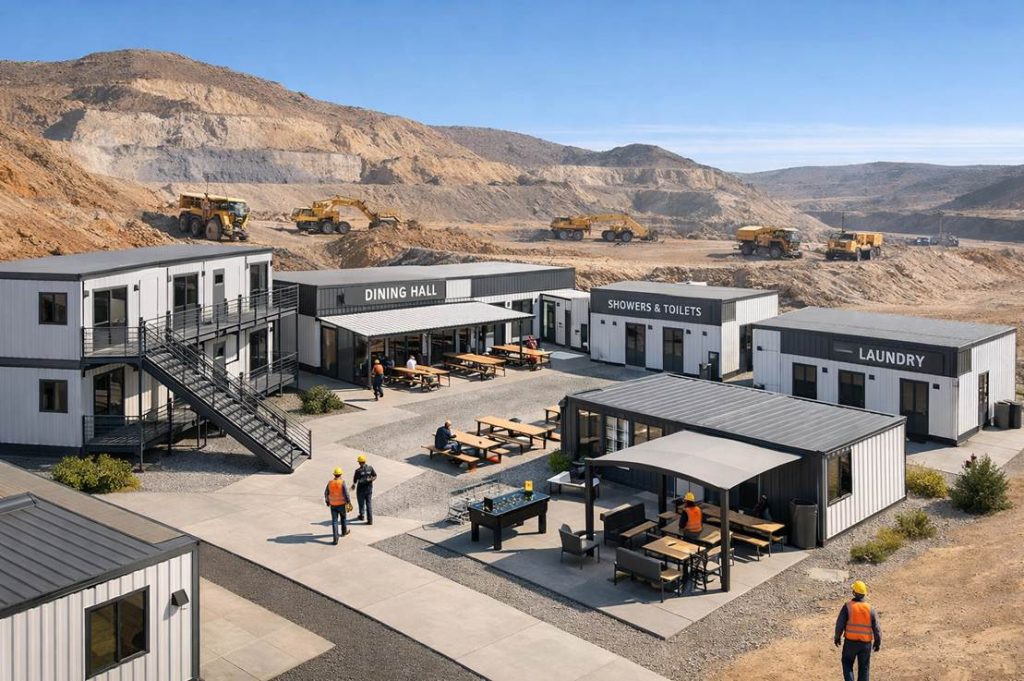
A complete container camp typically includes:
- Worker Dormitories — bunk-style or private rooms with climate control
- Offices and Command Centers — for project management and administration
- Dining Halls and Canteens — with full commercial kitchen facilities
- Toilet and Shower Blocks — with hot water and proper drainage systems
- Laundry Rooms — with industrial-grade washers and dryers
- Recreation Areas — gyms, common rooms, and outdoor spaces
Why Are Container Camps Becoming Popular?
All large-scale industrial projects have a similar set of requirements around the world: they require shelter that can be quickly deployed, can be scaled in a flexible way, can be moved easily, and can be provided at a cost many times less than traditional construction methods. The same can be said for large infrastructure builds in Southeast Asia, oil and gas developments in the Middle East, mining camps in sub-Saharan Africa, and even temporary housing for emergency relief after a natural disaster. All of these types of developments are faster-moving, more dispersed, and need to be completed more cost-effectively than they did in the past. Containerised accommodation camps fulfil all of these requirements, which is why they are being adopted so rapidly by almost every type of industry that has a presence outside of a permanent urban location.
Top 10 Benefits of Container Camps
1. Fast Installation & Deployment
The speed of a container camp is one of its most significant benefits. All of the components of each container unit are prefabricated: roof, walls, insulation, MEP systems, and interior fittings, in an environment that has strict quality controls and is located in the factory. Because of this, the time taken to assemble the container units on-site is significantly reduced. With some manufacturers, such as ZN House, the time taken to construct a project on-site can be reduced by as much as 80% when compared to traditional construction methods. Container camps are generally ready for occupation and use within three to seven days after delivery, in comparison to traditional masonry or wood frame buildings, which can take 30 days or longer.
For project managers whose schedules are measured in weeks, rather than years, this speed of construction changes the game completely. An instant-on workforce can be housed and begin work as soon as site preparation is completed. As a result, productivity is not lost as a result of delayed project start-up activities.
2. Cost-Effective Living Solution
Container camps provide a high level of cost savings over the life of the project from initial procurement through to ongoing operations.
Initial Capital Savings: Container Camp Modular Systems have consistently been able to reduce upfront capital investment by 30-50% compared to traditional masonry or timber structures on a like-for-like basis.
Lower Labor Costs: With 90% factory-complete units arriving on-site and ready to install, using ZN House’s plug-and-play design will eliminate the need for many of the specialized trades that would normally be required for construction of other types of buildings, thus reducing labor costs up to 60% on-site.
Logistics Efficiency: Flat-pack and foldable container camps can provide significant reduction in logistics costs (70% reduction in volume for international shipping) by allowing for up to 12 container camps to be shipped together in a 1 x 40HQ container; therefore, reducing international shipping costs by up to 40% when compared with traditional shipping methods (i.e., using a standard 1 x 40HQ container for pre-assembled units).
Long-term ROI: Unlike traditional buildings, modular container camps are reusable mobile assets that can be easily disassembled and relocated; therefore, they can be reassembled at a different project site using 95% or more of their original parts and will preserve up to 70% of their original asset value during the multiple cycles of the project lifecycle.
3. Flexible & Scalable Design
Because they’re modular, container camps can grow to meet the demands of your job rather than standing in the way of your success.
Do you need to start with housing for 50 and eventually house 500? No problem! The units can be added as the project grows, and when construction is completed and you no longer need the capacity, simply remove and store the units for future use. Would you like to have dormitories, offices and dining facilities on one site? It’s easy; you can arrange the units however you like so that they fit your site.
The units can be stacked three stories high without any need for additional structural supports, allowing the creation of a maximal horizontal footprint even with limited vertical space. This type of vertical scalability is critically important for construction sites in urban areas or mining sites, where available land is at a premium.
The modular nature of container camps allows for an incredible amount of design flexibility that no other type of permanent building can match. With the ability to expand horizontally (by adding units next to the current ones) and vertically (by stacking units up to three stories), container camps have an unprecedented level of architectural versatility compared to traditional construction methods.
4. Easy Transportation & Relocation
Container camps are specifically designed for maximum movement and adaptability. Flat-pack units can be folded to the specifications of standard ISO containers (which are universally accepted by all major shipping organisations, logistics service providers and customs agencies around the globe) and compact enough to be transported via sea to remote locations on another continent with low levels of complexity; they also can relocate from a tunnelling operation in Southeast Asia today and to a mining operation in Central Africa after completion of an earlier job.
For the most remote deployments (island, mountain or poorly developed areas), flat-pack containers can also be moved using smaller vehicles or helicopters, whereas fully assembled modular containers cannot.
5. Durable for Harsh Environments
Container camps are not meant to be temporary. They are designed for long-lasting durability in some of the harshest environments on the planet.
The ZN House container camp units are constructed from Q355B galvanized steel frames, which are the same steel grades found in marine and industrial applications. These frames are exceptionally durable and resistant to corrosion, impacts and structural failure. Performance specifications include:
- Temperature Range: Designed to maintain interior comfort from -40°C to +55°C in external conditions
- Wind Resistance: Rated to withstand wind loads of 120 mph (193 km/h)
- Seismic Resistance: Certified for Grade 8 seismic activity
- Structural Lifespan: Engineered to last 25+ years with minimal maintenance
Regardless of whether a project site is situated in one of the world’s inhospitable locations, as well as in extreme conditions such as the Sahara Desert or the Arctic, a well-designed container camp can provide excellent service over the entire project and long after.
6. Eco-Friendly & Sustainable
The construction industry is under increasing pressure to reduce its environmental footprint – and container camps have a compelling sustainability story.
Reduced Carbon Emissions: Compared to similar construction methods of creating on-topic works, the modular manufacturing cycle results in 60% lower CO2 emissions because of higher production efficiencies, reduced amount of waste generated during processes, and the lack of the need for large equipment to support the construction process at site locations.
Recyclable Materials: ZN House container camp units consist of a large percentage (95%) of recyclable materials, such as galvanized steel frames, EPS or rock wool insulation panels, which can be retrieved and reused when the unit is no longer in service.
Solar-ready Design: Each building unit has been constructed to be “Solar-Ready” – this means that rooftop solar is capable of being installed without any additional structural renovations. Thus, enabling complete energy independence from the utility grid in areas that do not have or cannot afford traditional grid power.
Reduced Site Disruption: Since only minimal site prep is required (simple concrete piers or leveling will usually do), this results in less civil work, less land clearing, and less long-term disruption of the property than is true for a permanent building.
7. Comfortable Modern Living Experience
The modern container camps are no longer just basic shelters. Today, these are complete homes, and as workers’ comfort levels have become much more important indicators of project productivity, safety, and retention of employees, the market now recognizes that modern container camps designed by ZN House have many, if not all, of the features found in traditional residential buildings.
Some examples of what a modern container camp created by ZN House will include:
- Air conditioning and heating — with climate control systems appropriate to the local environment
- Private or semi-private bathrooms — with hot showers, proper drainage, and waterproofed wet areas
- High-speed WiFi — with fiber or satellite connectivity, depending on site location
- Commercial kitchens and dining halls — capable of serving hundreds of meals per shift
- Common areas and recreation facilities — gyms, TV lounges, outdoor seating, and sports areas
8. Suitable for Multiple Industries
Across many different areas and types of use, container-based construction camps have displayed their versatility since their introduction. This versatility is a key competitive advantage for container-based construction camps.
Construction Camps: High-density, efficient temporary housing for your workforce when working on civil and infrastructure projects. The stackable units can be stacked three high to provide minimal impact to a site in an urban location or where space is limited.
Mining Camps: – Constructed to endure harsh weather changes, highly abrasive soil conditions, and tough transportation logistics.
– Intended for usage as an exploration base (capacity 50) or as a permanent mine settlement (capacity 1000+) in remote locations.
Oil & Gas Camps: Designed for hazardous areas with fire-rated materials and explosion-resistant specifications to comply with offshore and onshore safety codes.
Disaster Relief Camps: The flexible configurations can be rapidly deployed and easily moved to an assembly point where they will hold hundreds of families that may become homeless in less than 48 hours. These flexible configurations are compatible with Sphere Project international humanitarian standards.
Infrastructure Project Camps: Building of railway, road, dam and port projects in remote corridors requiring heavy and long-term housing needs for the workforce.
9. Customizable Layout & Functions
All projects vary from one another and a quality container camping company will also realize that a single or standard layout may not be able to fulfil all of the operational requirements of all of their customers.
ZN House specialises in providing the best full architectural customisation using BIM (Building Information Modelling) as a means to create specific and custom-built camp environments for customers who have specific operational requirements. Some customisation options we can provide include:
- Room Configuration — private singles, twin-share, or multi-bunk dormitory layouts
- Office and Command Areas — including IT server rooms, raised flooring, and dedicated cooling
- Medical and Laboratory Suites — with HEPA filtration, anti-microbial surfaces, and clinical layouts
- Executive VIP Quarters — enhanced soundproofing, luxury finishes, and en-suite bathrooms
- Commercial Food Service — modular kitchens with commercial-grade equipment and proper ventilation
- Entertainment and Wellness — gyms, recreation rooms, and outdoor facilities
10. Ideal for Modern Workforce Accommodation
The direct link between the quality of worker accommodations and the performance of a project is well documented. Companies that invest in creating safe, comfortable, and dignified accommodations for workers continuously achieve superior safety records, reduced employee turnover rates, and significantly better on-site productivity.
Today’s businesses competing for skilled labour within their particular labour market — whether to recruit experienced miners in Australia, construction personnel in the Middle East, or technical specialists for large infrastructure development projects throughout the world — know that the quality of worker accommodations directly impacts their ability to recruit and retain talented workers.
The design and construction of a container camp using current methods provides for all the essential elements that workers value with respect to accommodations: safety (certified structural performance and fire-rated materials), comfort (climate control, proper sanitation facilities, and recreational areas), and dignity (private or semi-private living quarters and quality communal areas).
For project owners and EPC contractors, the investment in the quality of worker accommodations is not an expenditure; it is a competitive advantage that is integral to the successful on-time delivery of the project.
Container Camp vs Traditional Buildings
| Factor | Container Camp | Traditional Building |
| Installation Cycle | 3–7 days (standard camp) | Weeks to months |
| Flexibility | High — modular, reconfigurable | Low — fixed once built |
| Mobility | Strong — relocatable 95% intact | Weak — permanent asset |
| Scalability | Easy — add or remove units | Difficult — major construction required |
| Cost | 30–50% lower initial CapEx | Higher baseline cost |
| Logistics | ISO-standard, globally shippable | Not transportable |
| Asset Recovery | Up to 70% resale value | Near zero |
| Environmental Impact | 60% lower CO₂ vs traditional | Higher carbon footprint |
| Lifespan | 20–25+ years | Variable |
Common Applications of Container Camps
Construction Site Camps: They provide temporary accommodation, offices and storage facilities to construction workers and management teams.
Mining Camps: They provide sturdy remote workforce accommodations in geographically isolated mining areas.
Oil & Gas Camps: They help operational teams that are engaged in offshore, desert or remote exploration activities.
Temporary Workforce Housing: They are ideal for infrastructure projects, manufacturing expansions, and seasonal labour accommodations.
Emergency Shelter Camps: They provide quick and easy-to-set-up shelters for the victims of natural disasters or humanitarian crises.
How to Choose the Right Container Camp Supplier
The wrong choice of a supplier for a container camp project carries serious project risk. Thus, choosing the right container camp supplier is crucial for project success.
A reliable container camp manufacturer should provide:
- Customization capabilities
- International quality standards compliance
- Engineering support
- Large-scale project experience
- Global shipping capability
- Integrated camp solutions
Businesses should also evaluate:
- Structural material quality
- Insulation performance
- Installation support
- Delivery timelines
- After-sales service
Partnering with experienced modular building manufacturers can contribute to both project efficiency and long-term operational value.
Future Trends of Container Camps
Camp containers are changing from low-tech to high-quality/high-tech and sustainable assets. There is a growing trend towards smart camps, or integrated ecosystems utilising Internet of Things (IoT) sensors, which will allow us to monitor energy consumption, air quality and predictive maintenance of these facilities, while providing us with real-time data.
Innovation is being driven by sustainability. We are beginning to see the development of solar-powered camps designed with integrated storage batteries and water recycling capabilities, thus making total off-grid autonomy feasible for remote locations. Additionally, the focus on human-centred design has resulted in improved acoustic comfort, natural daylighting and the use of “green” materials to create better mental health and retention of workers.
The Verdict: Container camps of the future are no longer simply a temporary solution; they’ll be sustainable, intelligent, and modular, and they will provide the same level of environmental consideration as they do for employees’ well-being.
Conclusion
Container camps have undergone a quiet revolution. It was initially a merely functional measure to house the workers in out-of-the-way locations, but it has now become a well-designed, highly engineered, and commercially attractive substitute for conventional construction across lots of projects and industries.
Everything considered, these 10 advantages of container camps described here, from quick set-up and cost-effectiveness to environmental credentials and high living standards, together account for container camps not being just a temporary measure but a basic means of modern project accommodation.
Whether you are organizing a mining operation in an isolated area, a large infrastructure project in an emerging market, or an emergency response anywhere in the world, a container camp crafted per your requirements by a reputable manufacturer will result in better outcomes delivered sooner, at a lower cost, and also in an eco-friendly way than any conventional building method.
Ready to explore container camp solutions for your project? Contact the ZN House team for a free technical consultation and customized project quotation.
Frequently Asked Questions (FAQs)
What is a container camp?
A container camp is a modular housing system of prefabricated container units for large-scale accommodation, offices and service facilities.
What are the benefits of container camps?
The primary advantages include rapid installation, cost savings, easy relocation, high durability, and full customization.
How much does a container camp cost?
Container camp prices vary as many factors, including the type of unit (whether fully modular or flat-pack), the number of units, the level of specification (insulation grade, wet areas, HVAC systems), and logistics to the site. Generally speaking, ZN House container camp solutions are approximately 30-40% less expensive than equivalent traditional temporary buildings. ZN House can provide a project-specific quotation upon direct contact.
Are container camps suitable for remote areas?
Yes, they are designed for easy transport to remote mining, oil and construction sites.
How long does it take to install a container camp?
A standard camp can be up and running within a few weeks of arriving on site, depending on size.
Can container camps be customized?
Absolutely. Each component from the interior design, insulation materials, to the exterior look can be tailored to fit your project requirements.
Similar Posts
How to Insulate a Container House: Complete Guide 2026
Container houses are becoming increasingly popular for residential homes, site offices, workforce accommodation, mining camps, and…
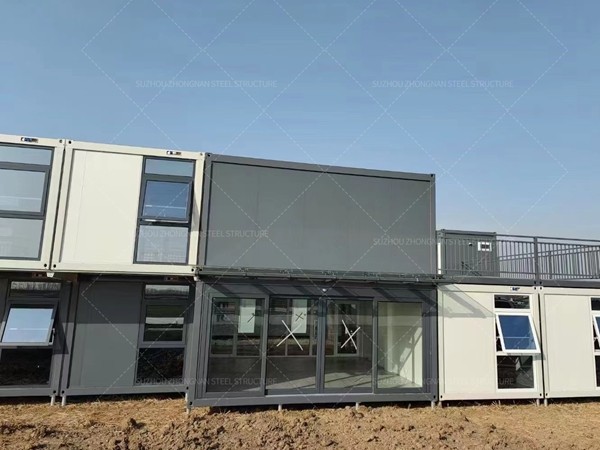
Foundation Options for a Modular Container House
The rise of prefabricated and sustainable construction has positioned modular units as a leading solution for…
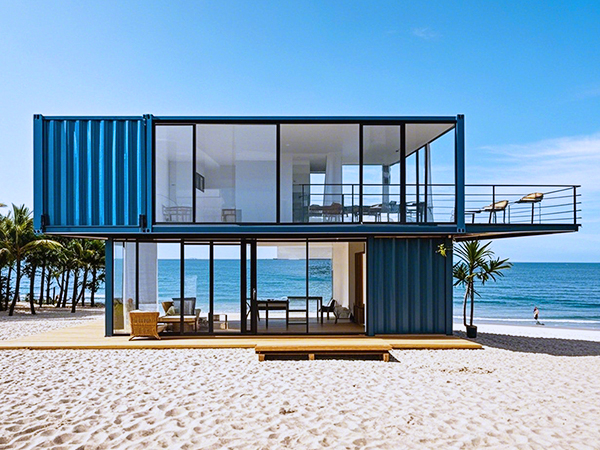
Modern Modular Container House Design Trends
The housing industry is undergoing a revolution with modular container homes for sale leading the charge in sustainable,…
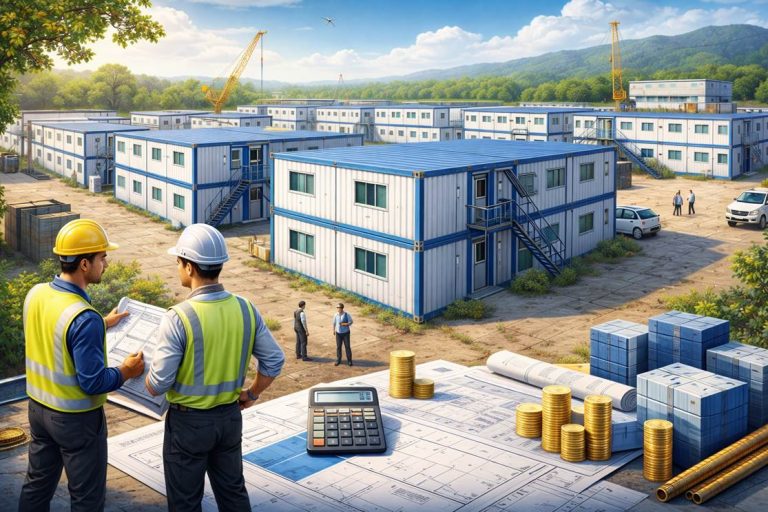
How Much Does a Container Dormitory Cost in 2026?
Housing often presents the most significant logistical challenge in the rapid development of infrastructure and the…
Insulated Modular Container Houses For Sale Cold Climates
In the harsh landscapes of cold climates, where freezing temperatures, heavy snowfall, and biting winds dominate…
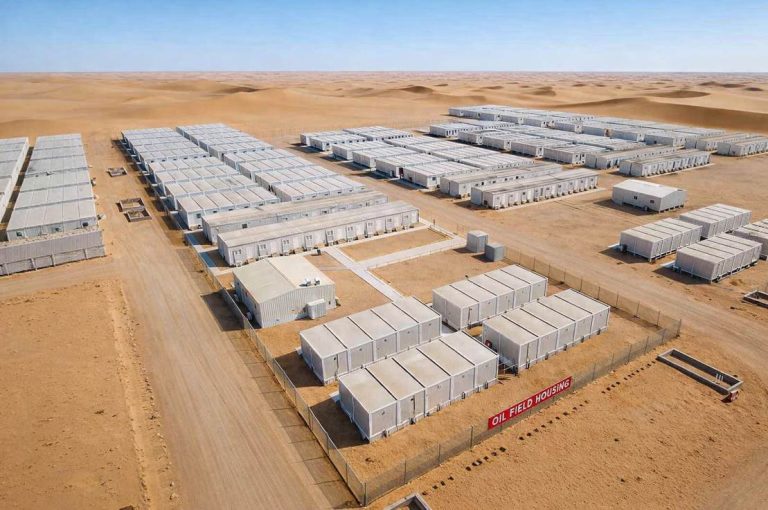
Oil Field Homes: Modular Container Housing for Remote Oil & Gas Projects
Oil field homes are types of dwelling units that provide accommodation and support the working staff…


