



What Is a Modular Classroom? Benefits, Costs & Modern School Building Solutions
Today, more pressure is placed on the schools than at any other time. Crowded classrooms, overcrowded campuses, shrinking budgets and the current demand for accelerated, more intelligent construction programs. The traditional means and methods used to build a school building are normally range from 12 to 24 months. By the time students are sitting in new classrooms, enrolments have increased, funding accounts have already been reduced and the building project has disrupted staff and students.
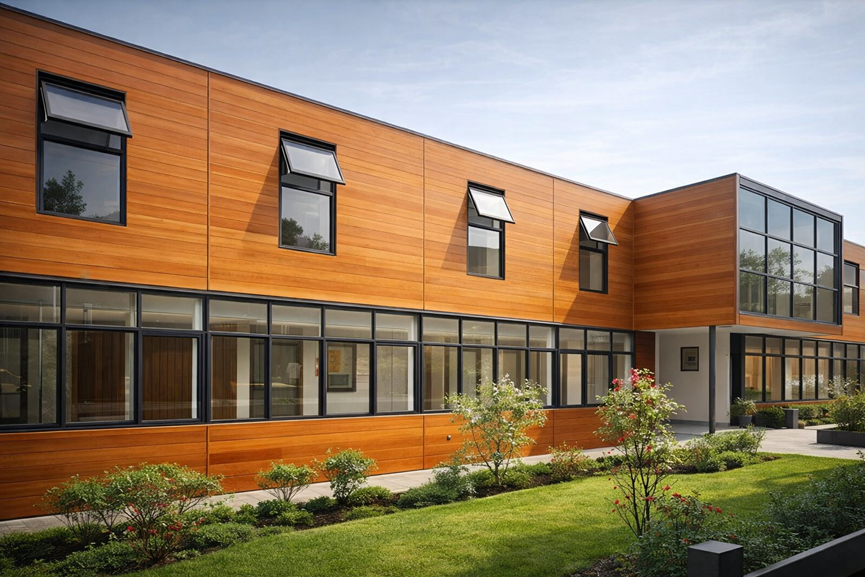
Modular classrooms provide an answer to this issue. School districts and governments all around the world, including Asia, Africa, and Southeast Asia, are increasingly turning to prefabricated, factory-built schools as a way to create additional classroom space in a matter of weeks rather than months. But what is a modular classroom? Why are so many schools and educational institutions choosing it over traditional methods of construction? Are modular classrooms safe and durable for long-term use?
This guide answers these questions and demonstrates the features of a fully-engineered modular school solution.
What Is a Modular Classroom?
Modular Classroom Definition
Modular classrooms are pre-manufactured surfaces that can be quickly transported and set up at a local school site. The module classroom is built in a factory environment with controlled conditions and no building work is carried out on-site and it will take many months of work as in a traditional construction project. This will involve producing the machined parts of the building, like walls, floor, roof, insulation and all fittings and fixtures at the factory. Modular classrooms can serve as:
- Permanent School Buildings: Designed to match or exceed the lifespan of conventional structures
- Temporary or Portable Classrooms: Deployed quickly when enrollment spikes or buildings are under renovation
- Emergency Learning Facilities: Installed rapidly in disaster-affected or underserved communities
How Modular Classrooms Are Built
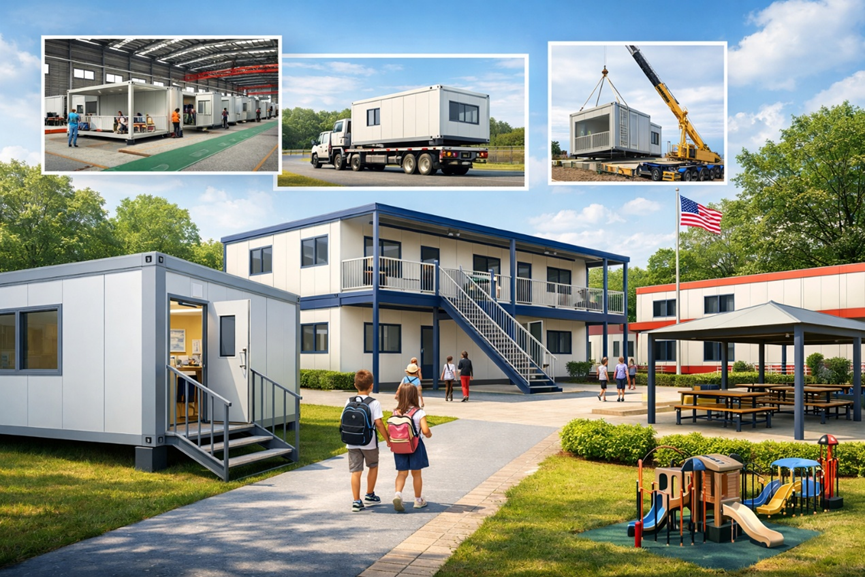
The construction of a modular classroom is different from traditional methods in that it is constructed to maximize efficiency and minimize error. The timeline moves linearly through four distinct industrial phases:
Factory Fabrication ──> Delivery & Transportation ──> On-site Assembly ──> Utility Connection & Ready to Use
Factory Fabrication: Inside a controlled environment facility, raw materials are converted into standardized or custom modules. Structural steel frames are welded, insulation panels are installed, and initial wiring/plumbing hooks are installed.
Delivery & Transportation: Modules, either finished or in flat-pack form, are loaded onto transport vehicles and delivered directly to the school site.
On-Site Assembly: Modules are lifted by crane or special equipment into place on a pre-prepared foundation. The units are bolted together very securely.
Utility Connection (Ready to Use): Electrical, data, plumbing and HVAC systems are all connected and tied into primary municipal or campus lines. The classroom is ready for students right away.
Types of Modular Classrooms
Schools have different needs, so they need different modular solutions. Here’s a basic breakdown:
| Type | Best Application |
| Permanent Modular Classroom | Long-term school buildings with decades of use |
| Portable Classroom | Temporary expansion during growth or renovation |
| Container Classroom | Remote areas, disaster zones, and rugged environments |
| Multi-Classroom Modular Building | Large-scale campus development projects |
Depending on the region and the context, they also have related names: modular school building, portable classroom and prefab classroom are all part of the same family of solutions.
Why Schools Are Choosing Modular Classrooms
Faster Construction Time
Speed is among the most compelling reasons schools choose modular construction. Modular projects can be completed in a fraction of the time of traditional builds, with factory fabrication and site preparation taking place simultaneously.
Unlike typical school construction that can take 12 to 24 months, a modular classroom building can be delivered and put into use in as little as 6 to 12 weeks. For a school experiencing a sudden increase in enrollment or a damaged facility, this difference isn’t just convenient — it’s essential.
Weather delays and on-site material shortages have far less impact on the overall timeline with simultaneous workflows.
Lower Construction Costs
Modular classrooms are always less costly over the long term than comparable traditional buildings. The reasons are structural:
- Less labor: Factory assembly is more efficient than on-site construction
- Less Material Waste: Controlled manufacturing environments produce far less waste than open construction sites
- Faster Occupancy: Schools begin using the space sooner, reducing reliance on temporary alternatives
The cost advantage of a modular classroom is not a minor consideration for school districts with tight budgets — it is often the deciding factor.
Minimal Disruption to Students
Traditional construction is noisy, dusty and unsafe. Traditional building projects cause ongoing disruptions that can affect learning and staff morale for schools trying to grow their campus while maintaining a normal academic calendar.
That is where modular classrooms come into play… most of the building is done off campus and construction on campus will include only foundations, crane set-up, and utility hook-ups.
By using modular classrooms, students and teachers will experience much less dust in their environment, and will also have reduced safety risks.
Flexible & Expandable Design
School expands. Changes in Enrollment. Teaching methods change. A modular classroom system is designed to change as those things change.
Individual modules can be added, reconfigured or removed without major structural work. A levelled classroom unit can be turned into a six-classroom wing. Modular systems allow for the expansion or modification of the Administration Block to provide library, staff room and science laboratory purposes, among other things. Due to this scalability, modular school buildings will provide longer-term solutions than short-term solutions.
Energy Efficiency & Sustainability
Today’s modular classrooms operate effectively. Many design factors are incorporated into these buildings, including: insulated walls, thermally broken frames, and energy-efficient HVAC systems, which reduce operating costs and make for a more comfortable building for staff and pupils to work in all year.
From a sustainability point of view, the construction of the factory produces a lot less waste than building on site. Pre-galvanized steel components are corrosion-resistant without chemical treatments. Modular buildings give options for relocating or repurposing these modules so that they produce less waste when the project ends. Schools that desire to be good stewards of the environment can also utilize this type of construction.
Modular Classroom vs Traditional Classroom
| Feature | Modular Classroom | Traditional Building |
| Construction Speed | Fast (Weeks to a few months) | Slow (Many months to years) |
| Cost | Predictable and significantly lower | Variable with high risk of overruns |
| Expansion | Easy (Add or subtract modules seamlessly) | Difficult (Requires structural demolition/rebuild) |
| Site Disruption | Minimal (Assembled in days/weeks) | Significant (Long-term dust, noise, safety hazards) |
| Relocation | Possible (For portable/container variants) | Fixed (Permanent structure cannot move) |
| Sustainability | Higher (Recyclable materials, low factory waste) | Lower (High on-site waste, heavy environmental impact) |
Slight structural advantages of modular classrooms are noted by this comparison and, when combined with fixed costs, time and budget requirements, or long-term expansion plans, give modular construction an edge.
How Much Does a Modular Classroom Cost?
Main Cost Factors
Several variables shape the cost of a modular classroom:
- Classroom size — larger units with more square footage cost more
- Interior finishes — standard finishes vs. customized materials and fittings
- HVAC systems — climate control requirements vary significantly by region
- Transportation — distance from the factory to the site affects logistics costs
- Installation — foundation type, crane requirements, and utility connection complexity
Estimated Modular Classroom Costs
| Classroom Type | Estimated Cost |
| Single Modular Classroom | $10,000 – $30,000 |
| Portable Classroom | Lower-cost option for temporary use |
| Multi-Classroom Building | Project-based pricing — contact for a custom quote |
Those are initial points of reference. Actual pricing will depend on location, specifications, and the size of the project. ZN House will give you a quotation based on your campus requirements that includes layout design, delivery and full installation.
Are Modular Classrooms Safe?
Safety is a non-negotiable standard in school construction and modular classrooms are built to meet that standard.
Structural Strength
ZN House modular school buildings feature structural frames made from high-strength steel, engineered for real-world conditions.
This includes:
- Wind Resistance: Tested to handle typhoon-level wind loads in high-risk regions
- Earthquake Resistance: Steel frame systems have inherent flexibility that performs well under seismic stress
- Load-bearing Capacity: Multi-story modular configurations are designed to the same structural standards as conventional school buildings
Modular construction, with steel frames, is long-lasting. These are not temporary trailers; they are engineered buildings.
Fire Safety & Building Standards
The ZN House modular classrooms are designed to meet all relevant building and fire code regulations. Fire-resistant wall assemblies, suitable means of egress and electrical systems are immediate design features, not upgrades.
Modular buildings will follow the same building regulations as normal-built schools so schools can be assured that they will meet the necessary standards.
Comfortable Learning Environment
A safe classroom is also a comfortable classroom. ZN House modular classrooms are built to ensure year-round occupant comfort:
- Insulation: Multi-layer wall and roof assemblies maintain thermal comfort in both hot and cold climates
- Ventilation: HVAC-ready layouts support fresh air systems appropriate to each environment
- Lighting: Window placement and optional skylights support natural daylighting strategies
- Acoustics: Wall assemblies can be specified with acoustic performance in mind, reducing noise between rooms
Applications of Modular Classrooms
Modular classrooms have a wide range of applications. The same building system is adaptable to a wide range of educational scenarios:
| Application | Solution |
| School Expansion | Permanent or semi-permanent modular classrooms |
| Temporary Campus | Portable classrooms deployed during construction |
| Remote Education | Container classrooms — rugged, transportable |
| Disaster Relief Schools | Flat-pack classrooms for rapid emergency deployment |
| Vocational Training Centers | Modular education buildings with customized fit-outs |
This versatility is leading many governments, NGOs and private schools in Asia, Africa and other regions of the world to consider modular construction as a solution for emergency and permanent educational facilities.
Modular Classrooms for Tropical & Remote Areas
Modular classrooms are especially suited to difficult environments – and ZN House has a lot of real-world experience in this area.
Built for Tropical Conditions
School buildings in hot, humid climates have unique challenges: moisture penetration, heat gain, corrosion and mold. The ZN House modular schools address all of these through:
- Moisture-resistant Materials: Pre-galvanized steel and sealed panel systems resist humidity and water infiltration
- Thermal Insulation: High-performance wall and roof assemblies reduce heat transfer, keeping interiors cooler
- Typhoon Adaptability: Structural systems tested to resist high wind loads common in coastal and island environments
Designed for Remote Deployment
Where road access is limited or the labor pool is too small, traditional construction methods are simply not an option. Modular classrooms can be shipped in containers, trucked by flatbed to remote locations and assembled with minimal skilled labor on site.
This makes ZN House modular schools an especially strong solution for:
- The Philippines: Coastal and island schools vulnerable to typhoons and flooding
- Southeast Asia Broadly: High-humidity markets including Indonesia, Vietnam, Malaysia, and Myanmar
- Africa: Rapidly growing school populations in countries with limited construction infrastructure
For example, a coastal primary campus built for the Philippines used modular units, with raised floors and hard-wearing cladding, to minimize the risk of flooding and was finished far more quickly than any traditional building method could have managed.
Modern Modular School Building Solutions
A modular classroom is the beginning — not the whole answer.
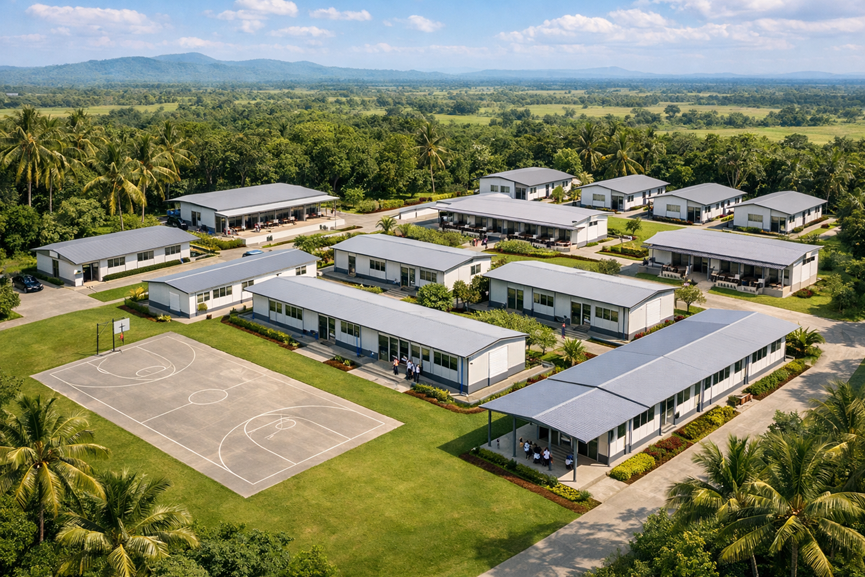
Complete modular education campuses are offered by ZN House and are far more than just classrooms.
A full school project might include:
- Classrooms: Single or multi-room configurations to any required capacity
- Administrative Offices: Staff rooms, principal’s office, reception
- Dormitories: Safe, comfortable boarding facilities for students and staff
- Libraries: Purpose-designed reading and resource spaces
- Cafeterias and Canteens: Full kitchen and dining modules with food safety compliance
- Toilet and Washroom Buildings: Hygienic sanitation blocks to serve any campus size
Being able to design and deliver a complete modular campus from a single manufacturer streamlines procurement, ensures design consistency and reduces the total project cost.
ZN House has delivered complete modular school solutions for projects in the Philippines, Kenya, Brazil, Norway and Australia, all customized to the climate, site and educational needs of their respective location.
ZN House can design and deliver anything from a single portable classroom to a 20-room modular school campus.
How Long Do Modular Classrooms Last?
One of the most common questions schools have is: Are these buildings really permanent?
Yes, if engineered correctly.
ZN House modular classrooms are built from structural steel erection, which is flux-coated in blue-galvanized zinc. This process gives protection from corrosion without requiring chemical treatment, as is necessary for a typical ‘paint’ finish. An erected modular school building can provide a 25–50-year life span, comparable to or superior to conventionally erected school buildings.
Key factors in long-term durability include:
Structural frame quality: High-strength steel with anti-corrosion treatment
Weatherproofing: Sealed joints, appropriate drainage, and weather-resistant cladding
Routine maintenance: Periodic inspection of structural connections, roofing, and seals
Modular buildings are perceived as ‘temporary’ due to old technology. Today’s engineered modular school buildings are designed to last for decades of continuous use.
Conclusion
Modular classrooms have outgrown the phrase “temporary solution.” They are now central to how modern schools plan, build and adapt to change.
For institutions facing enrollment growth, budget pressures, limited site access or tight timeframes, a modular classroom system offers a range of benefits that traditional construction just cannot compete with: faster delivery, lower cost, less disruption and long-term flexibility.
ZN House designs, manufactures and delivers complete modular school solutions from single classrooms to entire campuses with the experience, engineering capability and global project history to support it.
Ready to explore modular classroom solutions for your school or project?
- Get complete school building layouts and pricing
- Explore multi-classroom, dormitory, and campus configurations
- Customized modular education projects available for Southeast Asia, Africa, and beyond
Contact ZN House to discuss your modular school project →
Frequently Asked Questions (FAQs)
What is a modular classroom?
A modular classroom is a factory-built educational building that is constructed on-site for temporary or permanent educational use.
How long do modular classrooms last?
With regular maintenance and corrosion protection, properly engineered modular classrooms can last a number of decades.
Are modular classrooms safe?
Yes. Modular classrooms today are built to code and engineered for structural safety, fire resistance, and a comfortable learning environment.
How much does a modular classroom cost?
Prices vary with size and customization. The price of modular classrooms can range from $10,000 to $30,000 for one unit. Larger projects will need custom pricing.
Can modular classrooms be expanded?
Yes. Modular classrooms are very flexible and can be expanded, reconfigured or relocated as the needs of the school change.
What is the difference between portable and modular classrooms?
Portable versus modular classrooms: Modular classrooms serve both temporary and permanent educational purposes. Portable classrooms are generally portable and temporary.
Are modular classrooms suitable for tropical climates?
Yeah. Modern modular classrooms can be constructed with moisture-proof materials, insulation and typhoon-resistant engineering for tropical and remote environments.
Similar Posts

Modular Container Homes for Sale Custom Layouts
In the dynamic world of modern housing solutions, modular container homes for sale have emerged as a revolutionary…
Compact To Spacious: Expandable Modular House Transformations
The dream of flexible, affordable, and sustainable living is reshaping modern architecture. Gone are the days…
How Much Does a Container Dormitory Cost in 2026?
Housing often presents the most significant logistical challenge in the rapid development of infrastructure and the…
Is a Hurricane-Proof Modular Home the Safest Investment for Coastal Living?
Coastal homeowners have to deal with a distinct challenge every year. To keep their homes safe,…
What Are Prefabricated Office Buildings? The Complete Guide for Businesses
Construction sites, factories, warehouses, mining projects, and remote work camps often need office space faster than…

Modular Container Houses: Smart, Scalable Solutions for Modern Living
As cities grow denser and housing needs evolve, more people are turning to unconventional yet highly…


