



Oil Field Homes: Modular Container Housing for Remote Oil & Gas Projects
Oil field homes are types of dwelling units that provide accommodation and support the working staff of oil and gas near the worksites of drilling oilfield pipeline projects, and other industrial operations in remote areas. Unlike typical residential houses, oil field homes are designed for immediate deployment, multiple uses, ease of transport, and living conditions aligned with the sun’s environment, with some hours of darkness, rough winds, and general remoteness. Most of the time, modular container buildings are converted into oil field houses since the purposes of living units like dormitories, offices, toilet facilities, washing areas, kitchens, eating halls and even worker camps can be met.
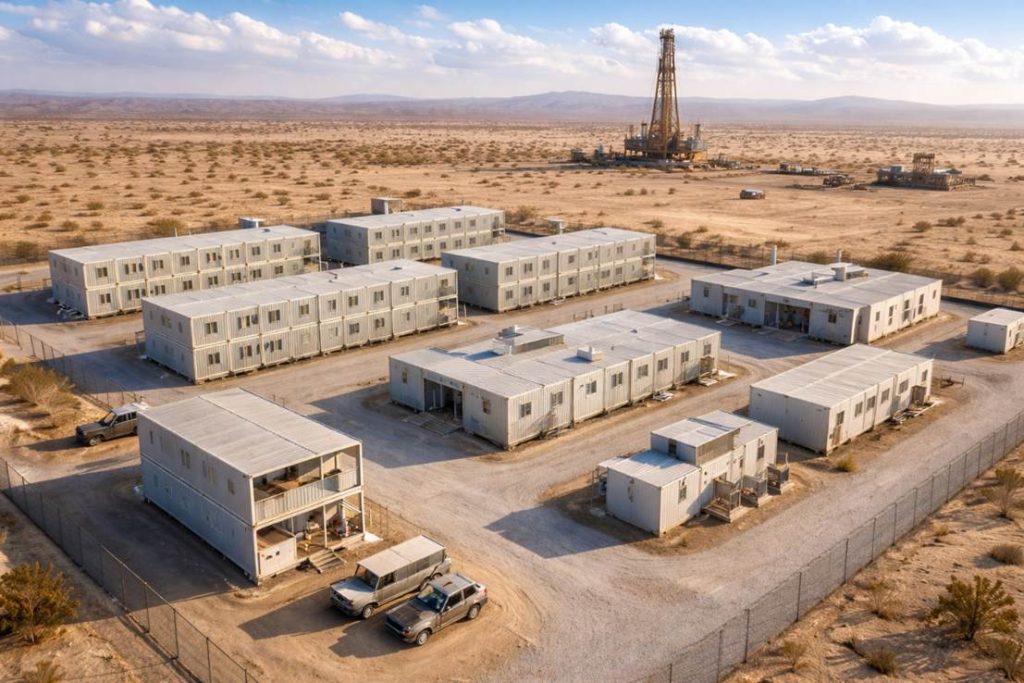
For project buyers, the choice of the right oil field housing solution can change worker comfort, site productivity, safety, project cost, and delivery schedule.
What Are Oil Field Homes?
Oil field houses refer to residential and support buildings where oil and gas industry workers live and work. These homes can be situated close to drilling sites, oilfield areas of pipeline construction, refineries and project camps. These houses vary from being temporary, movable or semi-permanent depending on the length of the project.
In practice, the term covers several common forms of workforce accommodation, including:
- Modular workforce housing
- Container dormitories
- Flat pack container houses
- Prefabricated cabins
- Man camp housing
- Mobile office and living units
- Skid-mounted or relocatable buildings
- Complete container camp systems
It is better to explain here that “oil field homes” commonly mean the accommodations provided to workers and other support buildings on a site rather than private houses, just normal houses. The aim is to have efficient and standardized housing units that can be put up fast and are suitable for many projects.
Why Oil Field Projects Use Container and Modular Housing
Oilfields are usually in distant locations where there may be little or no local housing available. Yet, workers will still require safe, clean and near-to-their-working-place accommodation. Besides, conventional building can be both a slow process and a very costly one when it comes to reaching a remote site. Besides, oil and gas projects may relocate or undergo changing of their scope, which definitely has turned flexibility into a necessity rather than a luxury.
Very often modular units may be deployed, enlarged and moved around a lot more easily than the ones made on the spot, and the container-based structures are very nice for going by sea and for camp planning. The truth is they travel, are able to be stacked and connected in a quite predictable manner.
For isolated oil and gas projects, the workforce housing must be finished rapidly and adjusted to the changing site conditions. Container and modular buildings allow the project staff to build accommodations, office and support facilities near the work area without relying on the local permanent infrastructure.
Common Units in an Oil Field Housing Camp
An oil field camp that is functioning properly is hardly just a place where people sleep. It is a tiny self-sufficient community where the administrative, sanitary, dining, rest, medical and security functions are working in harmony.
| Unit Type | Function in Oil Field Projects |
| Container Dormitory | Worker sleeping rooms and shared accommodation |
| Modular Living Quarter | Longer-term living space for field teams |
| Container Office | Project management, administration and site meetings |
| Command Center | Operations control, communication and coordination |
| Toilet and Shower Unit | Sanitary facilities for workers |
| Kitchen and Dining Unit | Meal preparation and dining area |
| Laundry Unit | Washing and drying for workers’ clothing |
| Recreation Room | Rest space for workers after shifts |
| Storage Unit | Tools, supplies and site materials |
| Clinic or First Aid Room | Basic medical support for remote sites |
| Security or Guard Room | Camp access control and site security |
Table 1: Typical units that make up a complete oil field housing camp.
When oil field housing is treated as a complete camp system instead of just a single dormitory product, it helps in better site planning and results in a more accurate budgetary estimate right from the beginning.
Oil Field Homes vs Man Camp Housing: What Is the Difference?
Oil field homes and man camp housing are very similar concepts, and actually, many buyers use these two terms as if they meant the same thing. Man camp housing generally refers to huge workforce camps housing industrial workers working in remote locations, whereas oil field homes range from simple dormitories to modular living quarters, offices and even full support facilities.
| Item | Oil Field Homes | Man Camp Housing |
| Main Meaning | Housing for oilfield workers and site teams | Large workforce camp for remote projects |
| Typical Use | Oilfields, drilling sites, pipeline projects | Oil, gas, mining, construction and remote worksites |
| Unit Types | Dormitories, offices, kitchens, toilets, living quarters | Dormitories, dining halls, offices and support buildings |
| Project Duration | Temporary or semi-permanent | Often short-term or project-based |
| Best For | Oil & gas workforce accommodation | Large remote workforce management |
Table 2: How oil field homes and man camp housing compare — the two terms frequently overlap in real projects.
The distinction is useful to understand the scale and emphasis, but it ought not to be considered as a rigid limit. In the majority of practical projects, the concepts are intertwined, and one single camp might even be characterized in both ways based on the perspective of the EPC contractor, housing supplier, or the operator.
Key Requirements for Oil Field Homes
Fast Deployment
Once a drilling schedule or construction window is confirmed, oil and gas projects generally require rapid mobilization. Modular container units can be delivered and put together in a shorter time than conventional buildings, since most of the major structural and finishing work is done in a factory rather than at the site. Besides, flat pack systems are very handy for sending abroad and delivering in bulk, as they shrink shipping space per unit.
Durability for Harsh Environments
The oilfield locations may be subject to extreme heat or cold, strong winds, dust, rain, or uneven surfaces, often in different combinations. The building cladding, roofing, and waterproofing materials should be selected based on the project’s climate of the specific location rather than assuming that there is one solution for all.
Comfortable Living Conditions
Worker housing ought to have sleeping quarters, ventilation, insulation, lighting, sanitary facilities and rest areas. Having nicer accommodation is not a matter of luxury it can help in boosting worker morale and productivity, especially when they have a long shift rotation.
Scalability
Camps may have to be enlarged if, for example, the number of crew changes drastically from one phase of the project to another. Modular layouts give the freedom to put in a few more dormitories, offices, or support units even at a later stage without the need of coming up with a completely new design for the camp.
Relocation and Reuse
An oil or gas project may be relocated from one site to another, for example as drilling continues or a pipeline is laid. Relocatable units are devices that reduce the overall cost of a project by enabling the same housing facilities to be used at the next site rather than being reconstructed.
Safety and Site Planning
Camp layout should consider access routes, fire separation, sanitation, power, drainage and emergency exits as a complete system rather than isolated requirements. Buyers should confirm local safety and compliance requirements with their safety engineering team or regulator directly when it comes to special hazardous zones, since requirements vary greatly by country and by hazard classification. High-risk sites might require specially rated or blast-resistant buildings; this is a project-specific specification which should be defined by the buyer’s safety requirements and then the manufacturer should be contacted to confirm it rather than it being assumed.
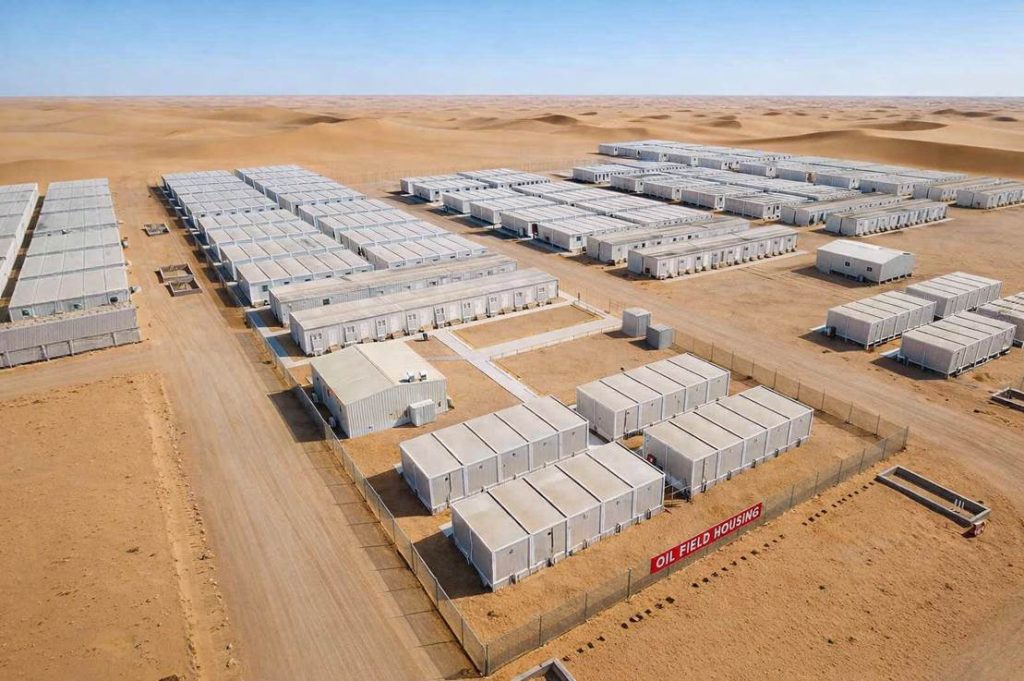
Layout Options for Oil Field Worker Housing
Single-Room Worker Dormitory
Suitable for small crews, temporary drilling sites and short-term accommodation. A typical unit includes:
- Beds
- Lockers
- Lighting
- Ventilation
- Shared sanitary facilities nearby
Multi-Person Dormitory Unit
Suitable for larger crews, worker camps and cost-effective accommodation at scale. A typical unit includes:
- Multiple beds
- Shared storage
- Central walkway or room layout
- Nearby toilet/shower units
Office + Accommodation Unit
Suitable for site managers, supervisors and engineering teams who need to combine a workspace with a place to sleep. A typical unit includes:
- Working area
- Sleeping area
- Meeting space
- Optional bathroom
Complete Oilfield Camp Layout
Suitable for long-term oil and gas projects, remote sites and large workforce accommodation. A complete layout typically includes:
- Dormitories
- Offices
- Kitchen and dining
- Toilets and showers
- Laundry
- Recreation room
- Clinic
- Security room
- Storage
Flat Pack vs Modular Units for Oil Field Homes
Choosing the correct delivery method is equally important as choosing the right floor plan, in particular for projects abroad where the cost of shipping and the time of arrival have a direct effect on the timeline.
| Option | Best For | Advantages |
| Flat Pack Container House | Overseas oilfield projects and bulk delivery | Lower shipping volume, efficient loading, flexible layout |
| Modular Container Unit | Fast camp assembly and scalable layouts | Can be combined into offices, dormitories and support areas |
| Fully Assembled Unit | Local delivery or small projects | Faster use after unloading, but higher shipping volume |
| Skid-Mounted Unit | Sites needing relocation without permanent foundation | Easy movement and temporary deployment |
| Wheeled Unit | Highly mobile short-term sites | Fast relocation between job sites |
Table 3: Comparing delivery formats commonly used for oil field housing.
ZN House main products are flat pack container houses and modular container units for overseas oilfield camp delivery that reduce the shipping volume and support bulk container loading. Within these formats, units are capable of being configured into dormitories, offices, toilets, showers, kitchens and dining areas to build up a complete camp. Skid-mounted and wheeled configurations are mentioned above as part of the broader market landscape; buyers who, in particular, require these formats should confirm current availability directly with the manufacturer.
Oil Field Homes for Different Oil & Gas Applications
Drilling Site Housing
They usually have to set up drilling sites very quickly, so worker dormitories, site offices and sanitary units should be delivered in time for the crew to be mobilized, not after them.
Pipeline Construction Camps
Usually, pipeline projects proceed along the length of a route over time, making relocatable accommodation and a modular layout of supporting facilities along the project route much more practical than fixed buildings.
Remote Oilfield Workforce Housing
With sites located at a great distance, comprehensive camp planning that integrates accommodation and support functions can greatly decrease the number of separate logistics trips required to keep a workforce operational.
Refinery or Petrochemical Project Support
At refinery and petrochemical sites, during the construction or turnaround phases, it is common that temporary offices, staff accommodation as well as site sanitation and dining support will be required for a certain project duration only, not permanently.
Emergency or Expansion Housing
If a project calls for rapid additional capacity, e.g., a temporary increase in the workforce or a schedule acceleration, modular units can be installed in an existing camp to support the project schedule without the need for a complete camp redesign.
How to Plan an Oil Field Housing Project
Designing an efficient oil field housing solution depends heavily on crew size, project duration, site location and required facilities; buyers should consider these factors first. A fully equipped camp will, besides dormitories, have offices, toilets, showers, kitchens, dining rooms, laundry and storage areas.
| Information Needed | Example |
| Project Location | Country, port, oilfield or project site |
| Project Duration | Short-term, long-term or relocatable |
| Crew Size | Number of workers and managers |
| Unit Types | Dormitory, office, toilet, shower, kitchen, dining |
| Room Layout | Single room, multi-person room, office + accommodation |
| Climate Conditions | Hot, cold, dusty, rainy or windy site |
| Wall Panel Requirement | EPS, rock wool, PU, PIR or custom |
| Utility Requirements | Electrical, plumbing, drainage, HVAC |
| Quantity | Number of units or total camp capacity |
| Shipping Method | Flat pack, container loading or local transport |
| Installation Support | Self-installation, local team or project assistance |
Table 4: Key information to gather before requesting an oil field housing quotation.
Cost Factors for Oil Field Homes
There are many factors for different unit types, sizes and layouts, wall panels and insulation specification, steel structure, interior finishes, bathroom and kitchen configurations, utility systems, quantity, shipping destination, installation and site conditions that oil field housing cost may rely on.
| Cost Factor | How It Affects the Budget |
| Dormitory Layout | Multi-person rooms may reduce cost per worker |
| Bathroom and Shower Units | Plumbing and waterproofing increase cost |
| Kitchen and Dining Units | Require equipment, ventilation and utilities |
| Climate Specification | Better insulation or stronger structure may increase cost |
| Quantity | Bulk orders can improve cost efficiency |
| Shipping | Flat pack loading can reduce transportation cost |
| Installation | Site labor, foundation and equipment affect total cost |
Table 5: Factors that influence the total budget for an oil field housing camp.
In the case of oil and gas projects, simply choosing the lowest price per unit would be an incorrect decision most of the time. A buyer has to do more than just look at individual prices for a product. They have to consider total camp costs, which include the cost of transport, installation, the connection to utilities, the maintenance, and the potential for long-term reuse.
Why Choose ZN House for Oil Field Homes?
ZN House creates modular container housing solutions for the oilfield construction, mining, and remote workforce industries. We assist customers in planning container dormitories, offices, toilets, showers, kitchens, dining units, and complete camp layouts based on crew size, project duration, destination, and budget.
Our modular container houses are manufactured using a galvanized steel setup and laminated waterproof panels. For greater resistance to corrosion, one can optionally use Corten steel. Besides, all the main elements like the roof and floor are pre-assembled to accelerate installation on-site. There are various sizes of units offered, and these can be horizontally or vertically combined. This way, one can simply start from one office plus accommodation unit and go all the way to a complete camp.
Capabilities relevant to oil field housing projects include:
- Flat pack container house solutions
- Container dormitory and worker accommodation
- Modular container camp planning
- Container office, toilet, shower, kitchen and dining units
- Custom layouts for project needs
- Bulk shipping and loading support
- Suitable for overseas oil and gas projects
- Project-based quotation
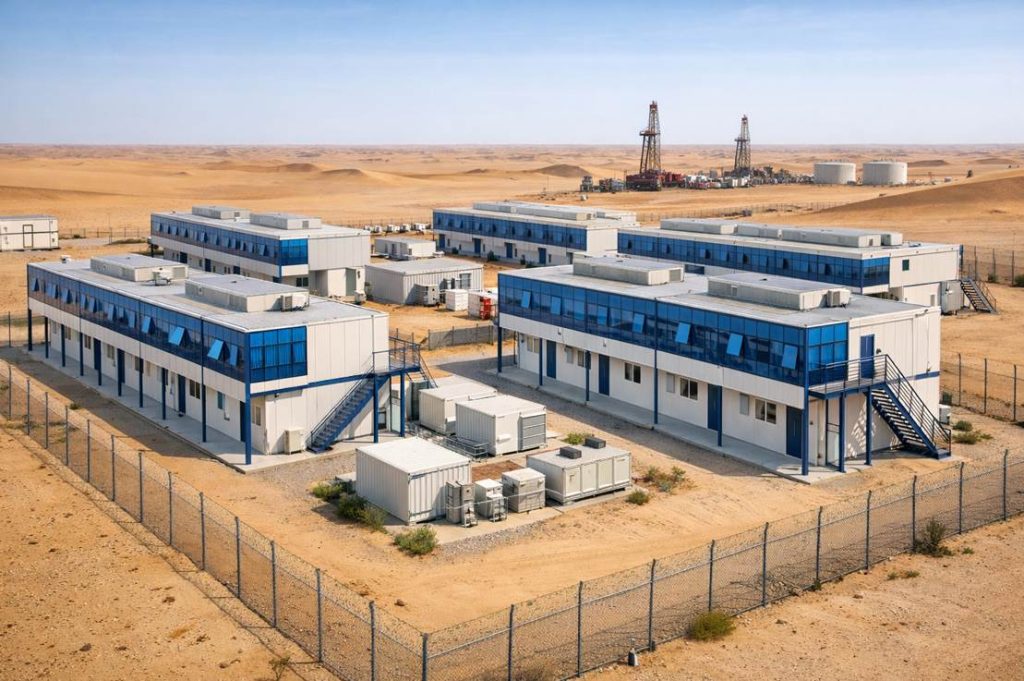
Case Study: Modular Camp Support for a Remote Project Site
A contractor handling a remote site construction project had to set up a workforce camp in the shortest possible time. Still, the local building capacity was very limited. They needed dormitory units for the crew, a combined office and accommodation unit for the site management team, and shared toilet and shower facilities, all within a very short delivery time frame linked to the project schedule.
In collaboration with ZN House’s modular container house line, the project team specified multi-person dormitory units alongside an office plus accommodation unit for supervisors and wall panel insulation was matched to the climatic conditions of the site. Units were shipped flat packed to reduce shipping volume, then assembled on site with the roof and floor sections pre-fitted from the factory. The contractor was able to bring the camp into use very close to the start of the mobilization window than if using a traditional building approach, and the modular units were also considered for future relocation to the next project site.
FAQ About Oil Field Homes
What are oil field homes?
Oil field homes are mainly temporary or semi-permanent housing for workers living near oilfields, drilling sites, pipeline projects and other oil and gas operations. Typically, they are conceived as accommodation for remote workforces rather than residential living of individuals or families.
Are container houses used for oil field housing?
Yes. Container houses and modular buildings are quite popular for oil field housing because of their advantages in transportation, installation, expansion, and relocation when compared with traditional buildings.
What units are included in an oil field housing camp?
An entire oil field housing camp could be comprised of dormitories, offices, toilets, showers, kitchens, dining rooms, laundry rooms, storage units, recreation rooms, clinic rooms and guard rooms.
What is the difference between oil field homes and man camps?
The term oil field homes generally denotes the residential structures and other facilities used by the oil and gas employees. Large personnel camps in deserted areas are known as man camps. Often in oil and gas projects, both terms are very much interrelated and sometimes one can include the other.
Are flat pack container houses suitable for oilfield projects?
Yes. The reason why flat pack container houses are perfect for overseas oilfield projects is that they can not only reduce the bulk of shipping and support bulk delivery but also be assembled on site for dormitories, offices and camp facilities.
Can oil field homes be relocated?
Many modular or container-based oil field housing units can be relocated or reused, based on the structure, installation method and project requirements.
What information is needed for an oil field housing quote?
Prospective purchasers are expected to supply details of project location, crew size, project duration, types of units needed, layout, wall panel specification, utilities quantity, destination and installation plan.
Can ZN House provide complete oilfield camp solutions?
ZN House is capable of containerized oilfield camp layout planning which may include dormitories, offices, toilets, showers, kitchens and dining units, and other support buildings as per project needs.
Similar Posts
How Much to Build a House from Shipping Containers?
The idea of owning a home is changing. With traditional housing costs still going up in…
What Are Prefabricated School Buildings? Types, Benefits, and Project Planning Guide
With increasing student enrollments, decreasing budgets, and schools that cannot be closed for construction, the whole…
Discover the Versatility of Modular Container Homes
Transform your living experience with our innovative Modular Container House solutions. Designed for flexibility, efficiency, and ease of…
Container Office Design & Price Guide: Plans, Fit-Outs & Setup Checklist
Why teams pick a container office A modern container office is a pre-engineered workspace that lands on…
What Is a Construction Container? Uses, Types, and Benefits Explained
Eventually, every construction site hits that one problem: finding spots for the project team to work,…
Top 10 Container Home Manufacturers in China (2026 Updated Guide for Global Buyers)
Introduction With increasing global demand for sustainable, cost-effective, and flexible housing solutions, container homes have become…


