



Top Types of Prefabricated Restrooms for Construction Sites, Camps, Schools, and Public Projects
At the end of the day, every new construction site, work camp, school or community center renovation, park or garden redevelopment, or public activity will end up raising the same pragmatic question: how far would people have to travel to reach the nearest bathroom and how fast can that bathroom be completed? Prefabricated toilets have proven to be the most convenient solution for different construction managers because they are produced off-site, tested before being transported, and set up in less time than the standard way which involves plumbing and masonry works done at a building site.
Contrary to a single-purpose portable toilet which is just a toilet, a prefabricated restroom is a purpose-designed building or unit - steel-framed, insulated, and pre-plumbed and pre-electrically wired - that can be placed on a pre-leveled base and be ready to use within hours. Some are intended to be relocated to different projects over the coming years, whereas other types of prefabricated toilets are more specifically made for permanent use by the public. The purpose of this article is to explain and highlight the different types of prefabricated restrooms available on the market, the most appropriate environment for each one, and the best approach to pick a layout considering the number of users, the time frame of a project, the availability of site utilities, and your budget.
What Are Prefabricated Restrooms?
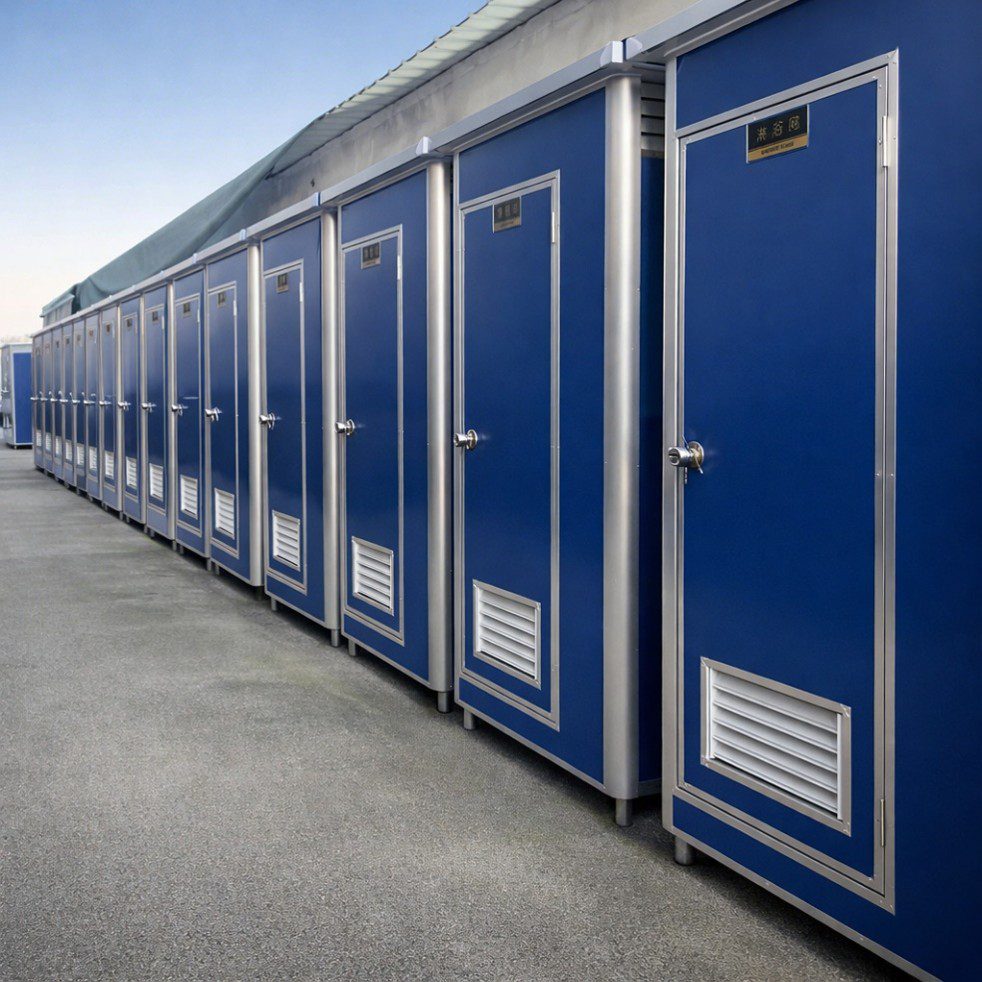
Factory-built sanitation facilities are a type of restroom construction where the building is made in a factory, then it is moved to the construction site for the final installation. These types of restrooms vary in size as well. From the toilet alone to an entire room equipped with sinks, showers, toilets, plumbing, electrical wiring, ventilation, insulation, flooring, and wall panels, all are possible. Besides, an optional water tank or septic connection may be included so that even in areas without municipal water and sewer lines, one can have a comfortable toilet facility.
In general, a factory-built restroom is a single-unit toilet cabin or a multi-unit toilet area, which may have separate male, female, and disabled sections. As for construction technologies, some of the factories use the method of building around a standard freight container, which is made of steel, while the other option is to ship flat panels, which are assembled later at the construction site and fixed by bolts. Besides that, there is also a design option that the whole unit is a modular box, so all the customer has to worry about is just getting the crate into the designated area by crane. Prefabricated units are typically quicker to install, cause less labor to the plumbing and electric trades at the construction site, and as they are consistently manufactured in the factory, their quality remains unaffected by various outside conditions.
Why Choose Prefabricated Restrooms?
Fast Installation. Because the structure, plumbing, and wiring are completed at the factory, on-site work is typically limited to foundation preparation, lifting the unit into place, and connecting water, power, and drainage — often achievable within a single day for a standard unit.
Lower Site Disruption. Prefabricated restrooms cut down on wet trades and extended construction activity on site, which matters for schools, parks, hospitals, and other locations where ongoing disruption is not acceptable.
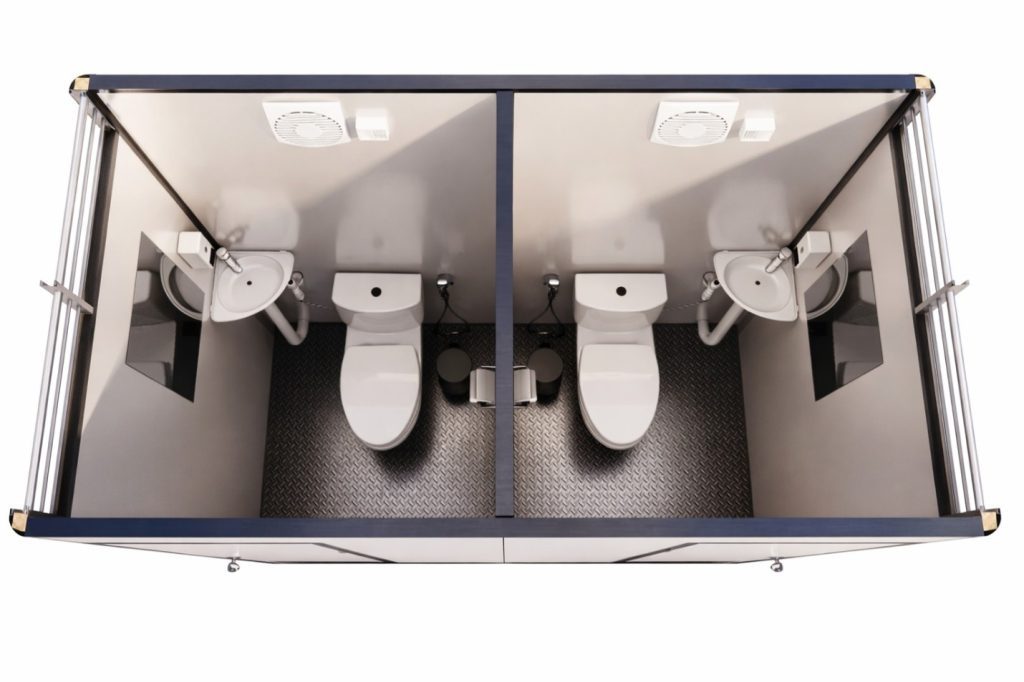
Flexible Layout. Interiors can be configured with separate male and female sections, shower rooms, accessible stalls, handwashing stations, and storage, depending on the project brief.
Suitable for Temporary and Permanent Use. The same manufacturing approach can produce a short-term site facility or a long-life public restroom building, depending on the materials and finish level specified.
Easy Transportation and Relocation. Flat-pack, containerized, and portable modular designs in particular are built to be moved between sites, which is valuable for contractors and camp operators running multiple projects over time.
Top Types of Prefabricated Restrooms
Prefabricated restrooms are not a single product, they span a range of construction methods and durability levels. The eight categories below cover most of what buyers encounter when sourcing a modular restroom solution.
1. Modular Restroom Buildings
The prefabricated restroom that is most commonly seen is a modular restroom. These types of restroom units are usually employed for medium- to long-term purposes. Instead of being a mere toilet cabin, they are made into a code-compliant restroom building so that they can be adapted for separate stalls, enclosed shower areas and access-friendly setups etc.
Best for: schools, parks, industrial parks, public facilities, construction site living quarters, and large camps.
Because they are designed with more comfort and durability in mind than a basic portable unit, modular restroom buildings tend to suit projects where the facility will be used daily by the same group of people for months or years, rather than a short-term event.
2. Containerized Restroom Units
Containerized restrooms are manufactured either as shipping containers or on a heavy steel frame basis. That means that these kinds of restrooms will easily be the solution for remote, harsh-environment projects or projects that require high durability. In such cases, the steel frame is a big asset because it makes a strong base for repetitive lifting by crane, transporting over roads, and stacking of the units. And with their sealed construction, they provide excellent dust, heat, and moisture resistance protection.
Best for: construction sites, mining camps, oil and gas projects, remote work areas, temporary offices, and disaster relief zones.
Containerized restroom units are especially suitable for remote or heavy-duty projects where durability, mobility, and fast deployment matter more than architectural finish. They also pair naturally with container offices, dormitories, and canteens on the same site.
3. Flat-Pack Restroom Cabins
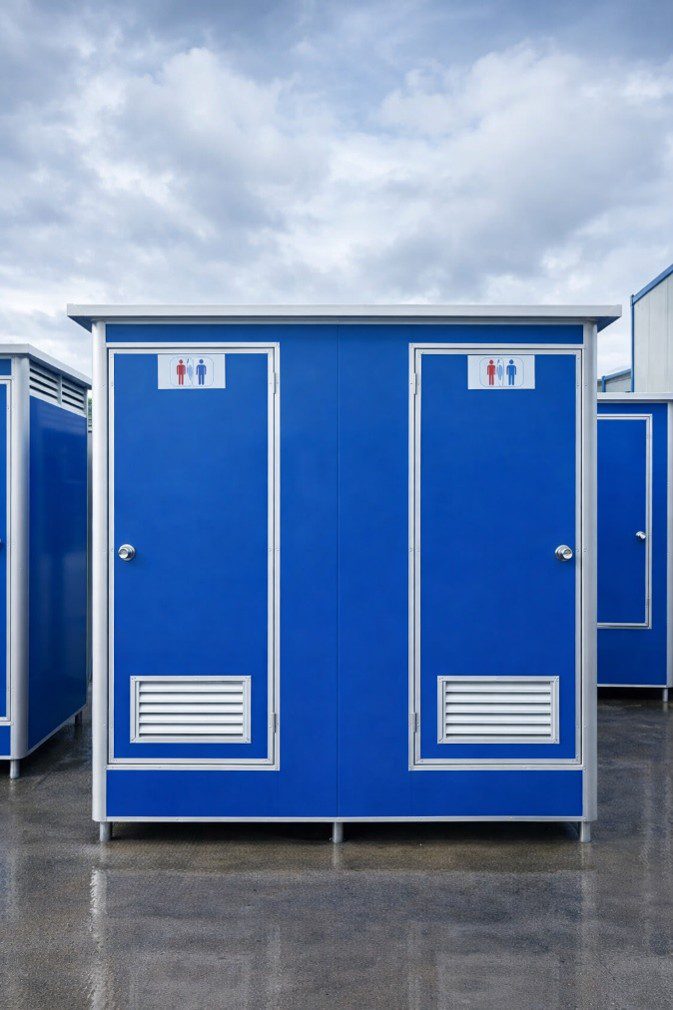
A flat-packable restroom cabin is a kit containing all the pre-cut pieces necessary for assembly of a small, complete, and functional bathroom unit. Usually, one-piece flat packings are packed as a disassembled unit or panelized and shipped, then assembled and screwed together on site. Flat-pack restrooms help reduce transport costs since you can transport them in a folded form, taking almost 1/3 of the space. The flat-pack category suits mostly those who live abroad and buy a unit on their own or those who need the units in mass quantities.
Best for: overseas construction projects, work camps, temporary schools, agricultural projects, remote camps, and bulk-purchase programs.
For international buyers, flat-pack restroom cabins can help reduce shipping costs compared with fully assembled restroom units, since more units can be loaded into a single 40-foot high-cube container. On-site assembly is typically straightforward with basic tools and a small installation crew, and the units can be disassembled again for relocation to a new project.
4. Portable Modular Restrooms
Portable modular restrooms stand a bit better than standard plastic portable toilets but maintain the same fast and easy deployment feature. But they are equipped with a stronger and more durable structure that can accommodate genuine hand-washing facilities, indoor light, air circulation, and water supply systems.
Best for: temporary events, short-term construction sites, exhibitions, sporting events, short repair projects, and emergency deployments.
Because they are lighter and easier to move than a modular building or container unit, portable modular restrooms are often specified when a project needs restrooms available for days or weeks rather than years, and where units may need to be repositioned as work progresses across a site.
5. Prefabricated Toilet and Shower Blocks
Sanitation and washing facilities are combined in toilet blocks and shower blocks that are manufactured off-site and transported to the location. Such units are needed for projects that require the provision of housing facilities for workers. A correctly designed toilet and shower block has separate toilet areas, shower rooms, a changing area, wash basins, a water heater, a drainage system, ventilation, and anti-slip flooring.
Best for: worker dormitory areas, mining camps, oilfield camps, military-style camps, outdoor camps, and disaster resettlement sites.
Accommodation projects cannot only plan for sleeping quarters, but sufficient toilet and shower capacity has to be sized alongside the number of beds. This category is closely linked to container dormitory and worker accommodation planning, since sanitation ratios directly affect how comfortable and compliant a camp layout will be.
6. Permanent Prefabricated Public Restrooms
These permanent public restrooms are built to be used by the public over an extended period of time. They are not limited to a single project only. Due to their nature of constant, high usage by different people, materials that can withstand such conditions are generally employed, as well as good internal airflow systems, anti-theft fixtures, surfaces that are easy to clean, and plumbing that is dependable.
Best for: parks, schools, public plazas, transit stations, stadiums, government projects, and tourist attractions.
This type is closer to a conventional building in terms of expected service life, but it retains the speed advantage of factory manufacturing, which is valuable for municipalities and developers working against tight construction schedules.
7. Eco-Friendly or Solar-Ready Prefabricated Restrooms
This classification includes ready-made restrooms whose design aims at minimizing the impact on the environment without requiring that they be entirely independent of utility supplies. Besides, if the project itself allows and the budget does allow, the designs may include sunlit lighting, fixtures that save water, a ventilation system, a facility to catch and use rainwater, a composting toilet facility if needed, and materials that do not need a lot of maintenance.
Best for: tourist attractions, eco-parks, campsites, nature reserves, and remote areas without a stable power supply.
Buyers should treat these features as configurable options rather than a default specification; most eco-friendly prefabricated restrooms are still connected to a water supply and standard drainage where available, with solar or water-saving components added to reduce running costs and support sites with limited infrastructure.
8. Luxury or High-End Modular Restroom Suites
At the upper end of the market, luxury modular restroom suites are built for hospitality, resort, and premium event use, where the restroom experience is part of the guest experience rather than a purely functional facility.
Best for: hotels, resorts, weddings, VIP events, upscale tourist sites, and premium commercial pop-ups.
These units typically feature better interior finishes, mirrors, upgraded lighting, air conditioning, private stalls, premium flooring, and a more hotel-like restroom experience. This is a smaller share of most manufacturers' order books, but it broadens the range of prefabricated restroom solutions available to buyers with different priorities.
Comparison Table: Which Prefabricated Restroom Type Should You Choose?
| Type | Best For | Mobility | Long-Term Use | Key Advantage |
| Modular restroom building | Schools, parks, public projects | Medium | Yes | Durable and customizable |
| Containerized restroom unit | Construction, mining, remote sites | High | Yes | Strong steel structure |
| Flat-pack restroom cabin | Export projects, camps | High | Medium/High | Lower transport cost |
| Portable modular restroom | Events, temporary sites | Very high | Medium | Fast deployment |
| Toilet and shower block | Worker camps, dormitories | Medium | Yes | Complete sanitation support |
| Permanent public restroom | Cities, parks, stations | Low | Yes | Long service life |
| Eco-friendly restroom | Parks, resorts, remote sites | Medium | Yes | Sustainable options |
| Luxury restroom suite | Hotels, events, VIP sites | Medium | Medium/High | Better user experience |
How Many Restroom Units Does a Project Actually Need?
Undersizing a restroom order is arguably the top planning misstep made on construction sites and camps; it not only frustrates users with lines and bad smells, but also leads to complaints, and worse, in some cases, violations of compliance laws. An excellent approach to calculating the number of container-based toilets for a project that will last longer than, say, a month is by determining the maximum number of people who will use the restrooms during the height of the project, the number of days the project will run, and so on:
Units ≈ (Peak Workers ÷ 25) × Duration Factor + Safety Buffer
| Project Duration | Duration Factor | Suggested Buffer |
| 6–12 months | 1.0 | +1 unit |
| 1–3 years | 1.2 | +2 units |
| 3+ years | 1.5 | +3 units |
Example: For a mine camp with 80 workers over two years, the total number of toilet facilities needed is approximately 4 base units plus a duration-based adjustment leading up to 5 units plus the two-unit buffer; that would be around seven toilet units of container type in total. Use this as a planning benchmark and cross-check the final numbers with the relevant local code or standard, since requirements differ a bit for places and project types.
Common Applications of Prefabricated Restrooms
Construction Sites
Workforce numbers on a construction site can swing significantly week to week, so contractors need restroom capacity that can scale up quickly and relocate as work fronts move across the site.
Mining and Oilfield Camps
Remote camp environments demand durable, self-sufficient sanitation with integrated shower capacity, since workers are typically housed on site for extended rotations. This need is closely tied to broader mining camp and construction camp planning, where accommodation, dining, and sanitation are designed as one system.
Schools and Temporary Classrooms
Campus renovation and expansion projects need restroom facilities that can be installed quickly without disrupting the school calendar. This mirrors how prefab classroom buildings are typically phased in alongside temporary sanitation to avoid interrupting term time.
Parks, Campsites, and Tourist Areas
Public-facing sites place more weight on appearance, environmental footprint, and ease of maintenance than a construction site would, since these restrooms are part of the visitor experience.
Emergency and Disaster Relief Projects
Relief operations need restroom capacity that can be deployed within days, meet basic hygiene and dignity requirements for displaced populations, and function without relying on damaged local infrastructure.
Public Infrastructure Projects
Transit stations, plazas, and civic spaces need restroom buildings that can handle continuous high-traffic use over many years, which is where permanent-grade modular units and broader light steel structure building methods overlap with restroom construction.
Real-World Example: Scaling Sanitation for a Large Camp Project
For a significant mining site providing accommodation for thousands of workers, the operator required a proper sanitation system to be set up before the main workforce mobilized - a time frame that made use of the traditional on-site plumbing and masonry building methods highly unlikely. ZN House provided for the project both container restroom units as well as toilet and shower blocks. These units were fully fitted at the factory with plumbing, ventilation, and drainage connections, so that the on-site works were only preparation of foundations, raising the units by crane, and utilities connection. With factory manufacturing of building elements, the construction of sanitation infrastructure for the camp was put up only within a few days compared to the weeks normally required by an equivalent on-site method, showing how containerized and modular restroom units have gradually become the most popular options for massive and tightly scheduled camp projects.
How to Choose the Right Prefabricated Restroom
1. Confirm the Number of Users
Start with daily headcount and peak headcount, the expected male-to-female ratio, and whether showers are needed, to determine how many stalls and units are actually required.
2. Decide Temporary or Permanent Use
Short-term projects are usually better served by portable, flat-pack, or containerized units, while long-term public projects are better matched to modular or permanent restroom buildings.
3. Check Site Utilities
- Water supply
- Sewage or septic system
- Electricity
- Drainage
- Foundation type
- Access road
- Crane or forklift access
4. Consider Transportation and Installation
For overseas procurement, weigh assembled delivery against flat-pack delivery, confirm how units load into 20ft, 40ft, or 40HQ containers, and check local labor availability, installation tools, and any site access restrictions before finalizing the order.
5. Choose the Right Materials
- Steel frame
- Sandwich wall panels
- Anti-slip flooring
- Waterproof ceiling
- Corrosion-resistant fittings
- Easy-clean wall surfaces
6. Plan Custom Features
- Shower room
- Water heater
- Accessible restroom for disabled users
- Ventilation fan
- Exhaust window
- Water tank
- Septic tank
- Solar lighting
- Air conditioning
- Separate male/female layout
Prefabricated Restrooms vs Traditional Restroom Construction
| Factor | Prefabricated Restrooms | Traditional Construction |
| Construction speed | Faster | Slower |
| Site work | Less | More |
| Relocation | Possible for some types | Usually not movable |
| Customization | Flexible | Flexible but slower |
| Quality control | Factory-controlled | Site-dependent |
| Best for | Temporary, remote, modular, public projects | Permanent urban buildings |
Compliance Note: Sanitation Standards Buyers Should Know
In the United States, construction-site sanitation is governed by OSHA's 29 CFR 1926.51 standard, which sets minimum toilet counts by crew size and requires that facilities be kept in a sanitary, readily accessible condition; OSHA's restroom and sanitation guidance also specifies that handwashing facilities must provide running water, soap, and proper hand-drying, with hand sanitizer alone not considered a substitute.
For humanitarian and disaster-relief deployments, sanitation planning is commonly benchmarked against the Sphere Handbook, the widely used inter-agency reference for minimum water, sanitation, and hygiene standards in emergency response. Buyers sourcing prefabricated restrooms for relief or camp settings should confirm which local code or international standard applies to their specific project before finalizing unit counts and specifications.
Frequently Asked Questions
What is a prefabricated restroom?
A prefabricated restroom is a factory-built restroom unit or building that is manufactured off-site and then delivered to the project site for installation, rather than being constructed entirely in place.
Are prefabricated restrooms suitable for construction sites?
Yes. They are especially well suited to construction sites, worker camps, temporary offices, and remote projects where fast installation and easy relocation are priorities.
Can prefabricated restrooms include showers?
Yes. Toilet and shower block configurations are commonly used for worker camps and dormitory-style accommodation projects that need both sanitation and washing facilities in one unit.
Are flat-pack restrooms suitable for export?
Yes. Flat-pack designs reduce shipping volume compared with fully assembled units, which lowers freight costs and makes them a practical option for overseas container shipping.
Can prefabricated restrooms be used permanently?
Yes, depending on the structural design, materials, foundation, local building codes, and ongoing maintenance plan. Permanent-grade units are typically built to a higher durability specification than temporary or portable models.
How do I choose the right prefabricated restroom type?
Base the decision on expected user numbers, project duration, available site utilities, transport method, budget, and the specific environment the units will operate in.
Conclusion
Prefabricated bathrooms have diverse options, ranging from pre-assembly toilet cabin kits and container solutions to completely erected restrooms and toilet-shower compartments. The most suitable one is the one that considers the nature of the project, the number of people who are expected to use the restroom, availability of water and electricity on the site, the type of vehicles you will be using to transport the restroom, and the degree of comfort the facility needs to give users.
For construction sites, mining camps, schools, parks, and remote projects, choosing a suitable prefabricated restroom solution can improve hygiene, reduce installation time, and support smoother site operations. ZN House designs and manufactures containerized and modular restroom units alongside its wider range of container houses, offices, and camp buildings — get in touch to discuss unit counts, layouts, and site requirements for your project.
Disclaimer: This article is provided for general informational purposes only and does not constitute engineering, legal, or regulatory advice. Sanitation unit counts, materials, and compliance requirements vary by project, jurisdiction, and local code. Always confirm specifications and applicable standards with a qualified engineer or the relevant local authority before finalizing a project design.
Similar Posts

Modular Container House for Sale
The demand for innovative, efficient, and cost-effective housing solutions has led to the rise of the...
Modular Healthcare Buildings: Types, Benefits, Applications, and Planning Guide
Hospitals, clinics, governments, NGOs, and emergency response organizations often need medical space faster than traditional construction...
Are Container Homes Fireproof? Everything You Need to Know
Container houses have been a good alternative to buy a new house recently. These have become...
Container Office vs Traditional Office: Cost, Time and Flexibility Compared
Choosing between a container office and a traditional office really comes down to a number of...
Modern Prefab House Guide: Designs & Building Process
Why Modern Prefab Houses are Revolutionizing Modern Living? The global container home market is growing at 6.5%...
20ft vs 40ft Container House: Which Size Is Right for Your Project?
20ft and 40ft container houses mainly differ in the amount of usable space. A 20ft container...


