



Container Motel vs Container Hotel: Which Modular Build Fits Your Project?
The essential difference between a container motel and a container hotel relates to their locations and purposes. A container motel is often a low-rise motel with basic services, designed for transient guests who need a quick place to stay. A container hotel is usually a larger building serving guests who plan to stay in a location longer. Both, however, use prefabricated steel boxes, although they target different customers and offer different amenities.
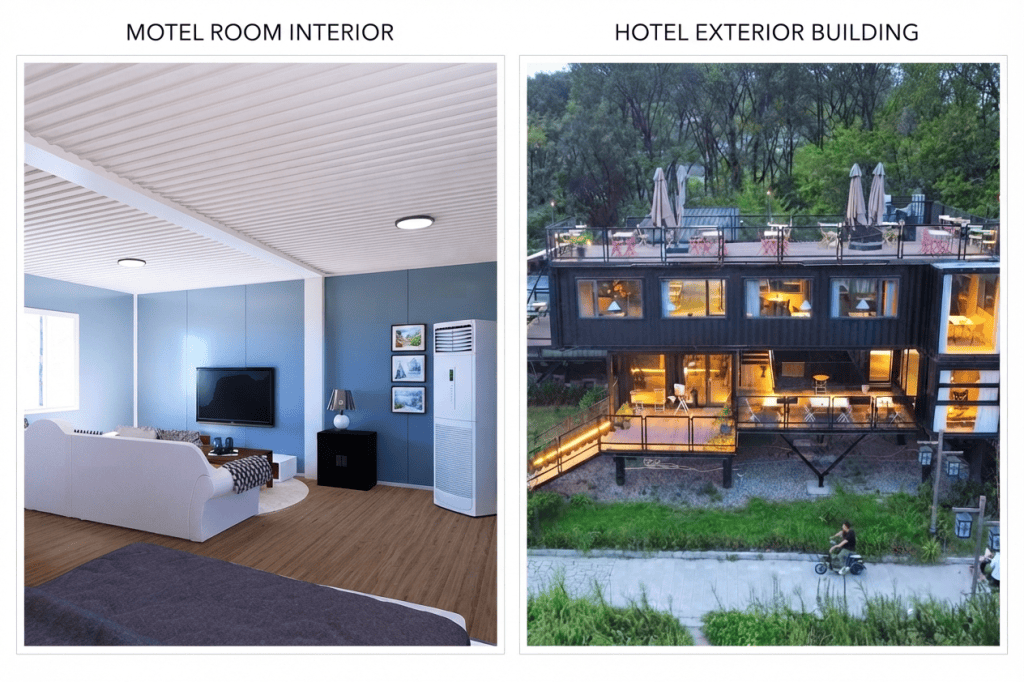
This distinction is important in a number of ways. Misunderstanding the distinctions between motels and hotels can lead to overbuilding a simple roadside rest stop or underbuilding a comprehensive hotel facility, both of which can lead to costly mistakes. This goes to show that this distinction is important from a financing, staffing, and marketing perspective after the project opens, as motel patrons behave differently from hotel patrons when it comes to searching the internet, booking a room, and spending money. The article goes on to delineate what makes a container motel different from a container hotel, in which situation each one works better than the other, and what one can expect in terms of cost, layout, customization, and timeline.
What Is a Container Motel?
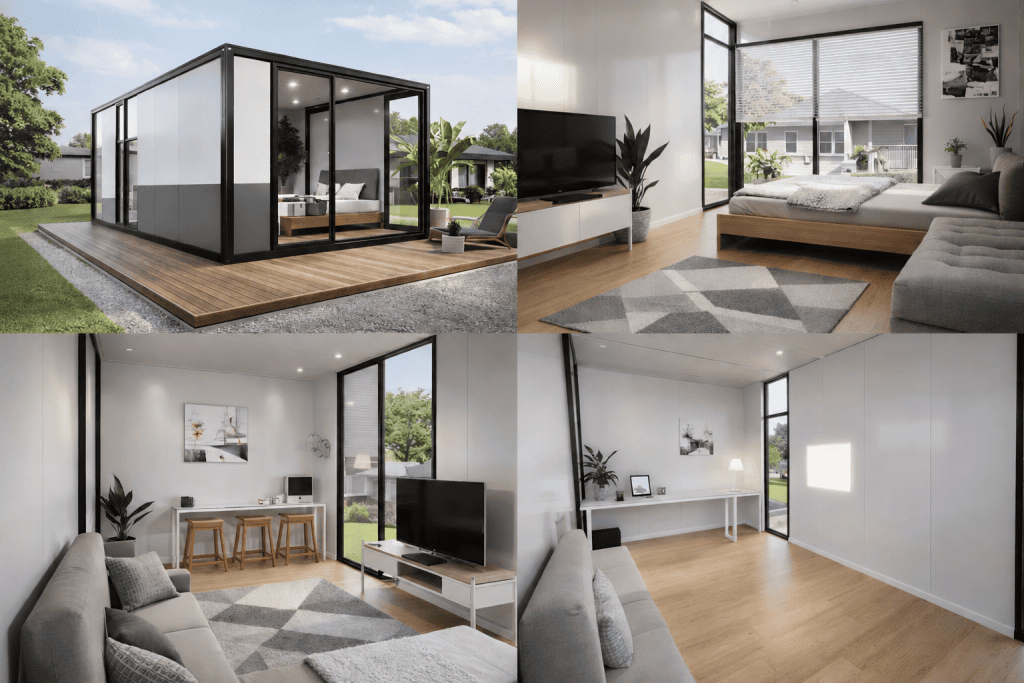
A container motel is a modular accommodation building made from prefabricated steel modules or repurposed shipping container structures. Units are manufactured off-site in a factory setting, then transported and assembled on location. Motels of this type are generally single-story or two-story layouts with exterior room access, similar in footprint and function to a traditional roadside motel.
Since the rooms come almost ready-made, construction on-site consists mainly of foundation work, installing modules and making final utility connections. This is one of the reasons that shipping container motels can open for guests relatively quicker than standard facilities of equal size.
Container motels are suitable for various types of facilities, from roadside motels and camps for workers to ecotourism meccas, and any other case where low initial investment cost and quick construction are more important than great comfort. The range of room types is quite broad, and includes both single and family rooms, and most projects offer possibilities for further expansion in the form of additional modules.
What Is a Container Hotel?
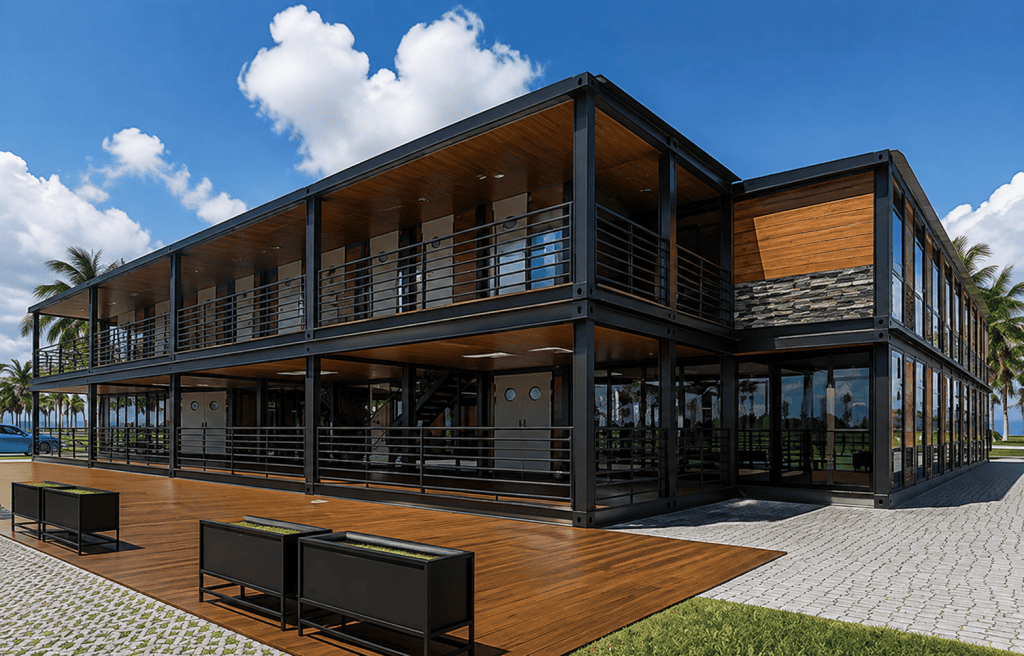
A container hotel represents a more advanced hotel concept. Accordingly, they can be found in various forms which can include tall buildings comprising a reception area, restaurants, and other lounges, put up to cater to the interests of those who intend to stay longer in these hotels. Delivery of containers is also done in the shape of finished rooms, prefabricated in factories.
This format is closer to what the industry calls a prefabricated hotel solution, where factory-built rooms are combined into a complete hospitality building rather than a row of standalone motel units. Interior standards tend to run higher too, with options for floor-to-ceiling windows, balconies, and premium finishes aimed at boutique or resort guests rather than overnight travelers.
As a container hotel often means stacking units on several levels, the design phase is more extensive, involving calculations of structural loads, studying communal distribution, and the operations of technical equipment throughout the building rather than merely inside each room.
Container Motel vs Container Hotel: Side-by-Side Comparison
| Feature | Container Motel | Container Hotel |
| Typical Height | 1-2 stories | 2+ stories, often mid-rise |
| Guest Stay Length | Short stays, overnight | Short to extended stays |
| Room Access | Exterior, drive-up | Interior corridors, possible elevators |
| Shared Amenities | Minimal | Lobby, dining, lounges common |
| Typical Location | Highways, remote sites | Urban, resort, eco-tourism areas |
| Construction Complexity | Lower | Higher |
| Investment Level | Lower to moderate | Moderate to high |
Where the Real Differences Show Up
The gap between a container motel and a container hotel is not just size. It shows up in three practical areas: guest experience, construction approach, and long-term operating cost.
A major difference lies in what guests expect to have when they stay at a motel or at a hotel. Motels usually provide the basic necessity of a room, along with access and some other services, while hotels provide their guests with a bit of interaction in the lobby, some meal options, and a certain design theme for the interior.
The construction methods differ as well. A one-story container hotel can simply be constructed from prefabricated parts or modules because there are minimal building requirements due to the fact that the weight of the structure is pretty much at ground level. However, when building a multi-story container hotel, construction is more complicated. There is a need for better engineering planning, such as identification of how loads are distributed in containers stacked one on top of the other, how elevators will work if they are used, how people will be evacuated from different floors in an emergency, and how plumbing and heating will run through the entire building. According to the International Code Council, off-site construction projects now follow dedicated standards for planning, design, fabrication, and assembly, which help keep multi-story modular buildings consistent with conventional building code expectations even as project complexity increases.
Generally speaking, operating expenses tend to follow the same pattern. Specifically, motels are run on lean operations with fewer staff members and services, resulting in lower operating expenses per day. Hotels, on the other hand, have to shoulder higher staffing costs and other costs such as utility costs and maintenance, resulting in higher revenues per night and longer average stays, thereby sustaining the original investment.
Applications: Where Each Format Fits Best
Selecting the right project type format in advance helps in reducing extra redesigns later on. For instance, roadside inns, construction lodges and remote lodgings tend to prefer motels because they pay attention to how cheap and quick the operation of the project could be. Urban business hotels and boutique hotels are primarily dependent on hotels because their customers want more than simply a room and a parking area.
| Project Type | Better Fit |
| Highway rest-stop lodging | Container Motel |
| Mining or construction workforce camp | Container Motel |
| Boutique eco-resort | Container Hotel |
| Urban business hotel | Container Hotel |
| Seasonal tourist accommodation | Either, depending on scale |
| Apartment-style long stay | Container Hotel |
Developers weighing modular hotel buildings for a resort or urban project should expect a more involved design phase than a straightforward motel build, simply because more systems need to be coordinated across floors and shared spaces.
Customization and Sustainability Considerations
Although both types offer a high degree of customization, there are several choices available. Generally, container motels provide the opportunity for customization by allowing several options concerning exterior finish, insulation system, bathroom arrangement, and electrical technology. As such, it is possible to strike a fine balance between comfort and cost. Container hotel rooms offer a higher degree of customization options relating to balcony construction, upscale bathroom finishes, lighting, and lounge areas for guests who prefer to spend more time and money at the hotel.
The factors of sustainability affect both of these formats. Factory production leads to reduced waste, as it is possible to take care of the leftover material in one location, while in the case of site-built structures, the scraps are all over the site. As far as the systems one can use in hotels and motels: different options of solar electricity systems and efficient HVAC systems are available in both buildings. This means that the developers can minimize their expenses over the years, no matter which type of building they are going to build.
Cost and Timeline Factors
Both formats benefit from factory production, but the variables that move the price and schedule differ slightly between the two.
| Factor | Container Motel Impact | Container Hotel Impact |
| Room Count | Moderate cost driver | Major cost driver |
| Interior Finish Level | Basic to standard | Standard to luxury |
| Structural Complexity | Low | Moderate to high |
| Transportation Distance | Significant | Significant |
| Site Preparation | Simple foundation work | Foundation plus utility coordination |
In most cases, factory production and site preparation happen at the same time, which shortens the overall project timeline regardless of format. This parallel process is one reason modular and prefabricated hospitality buildings continue gaining ground globally. Industry researchers project the modular hotel construction market to grow from roughly $52.3 billion in 2025 to $89.7 billion by 2034, a trend driven largely by labor shortages and rising demand for faster hotel openings.
Case Study: Roadside Container Motel for a Highway Rest Stop
A hospitality developer planning a highway rest-stop lodging project faced a familiar set of constraints: a remote site with limited access roads, a short construction window before the peak travel season, and a workforce shortage in the surrounding region that made traditional on-site building difficult to staff.
The work included the construction of 24 single and double bedrooms, whereby each accommodation was fitted with its own private bathroom, HVAC system and good finishes that would withstand the frequent change of guests. ZN House made the bedrooms in the factory in the form of steel modules, assembling the full range of interior parts, including bathrooms, wall finishing and electrical wiring, before their delivery. Thus, the necessity of labor expenditures on site was only about the foundation and module assembly because all the construction was carried out at the factory, and the timeline was not affected by the local labor scarcity.
Because production ran in parallel with site preparation, the developer was able to open the motel ahead of the original target date, avoiding the risk of missing the peak travel season entirely and losing a full quarter of expected bookings.
Frequently Asked Questions
Is a container motel cheaper to build than a container hotel?
Generally, yes. Container motels use simpler structures with less interior finishing, which usually keeps per-room costs lower than a multi-story container hotel with shared amenities and higher finish standards.
Can a container motel be upgraded into a container hotel later?
In many cases, additional modules can be added in future phases to expand room count, though adding shared amenities like lobbies or elevators may require re-engineering the site layout from the start.
Are container motels and hotels suitable for cold or hot climates?
Yes. Insulated wall systems and HVAC packages can be specified for both formats, allowing either building type to be adapted for a wide range of climate conditions.
Choosing the Right Format for Your Project
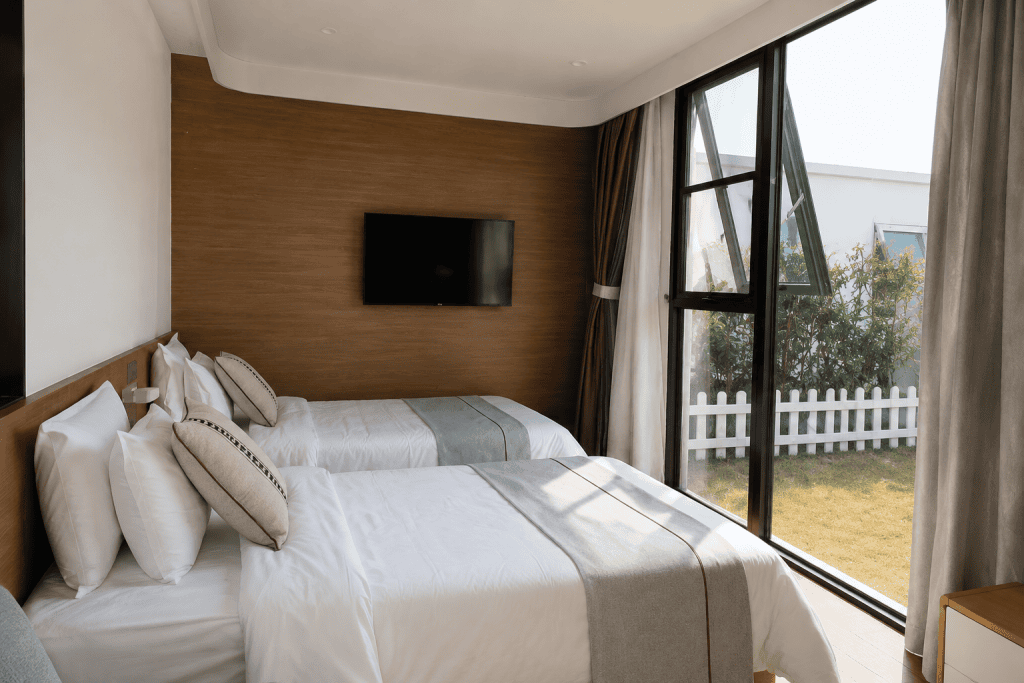
Both container motels and container hotels rely on the same core advantage: factory-controlled manufacturing that shortens construction timelines compared with traditional building methods. The right choice depends on guest stay length, site location, and how much amenity investment the project can realistically support. Roadside and workforce lodging projects tend to favor the motel format, while resort and urban hospitality developments typically lean toward the hotel format, sometimes explored further through container hotel options offered through ZN House’s sister brand, ZN MEOX.
If you would like to proceed, ZN House can help compare plans, discover factory production timelines, and pull together an offer tailored to the requirements of the project site and the target market. Contact us to get started on your modular motel or hotel project.
Disclaimer: Technical specifications, data, and materials mentioned in the article are based on ZN House products. Actual specifications, technical details, and materials differ from one project to another and should be confirmed with ZN House at the time of proposal.
To see a completed multi-story hotel project in action, watch our video walkthrough of a ‘3-floor Container House Hotel by ZN House’:
Similar Posts
Light Steel Structure Buildings: A Complete Guide to Cold-Formed Steel Construction
The buildings made of light steel structure are prefabricated buildings made from the galvanized and cold-formed…
Maximizing Workplace Efficiency with a Modular Container Office
The present-day working environment requires the ability to adapt quickly. Generally, the conventional office setups come…
How Much Do Portable Classrooms Cost
The cost for portable classroom has been found to be USD 50,000 to 300,000; a number…
Container house price facts every homeowner should knowFolding Container House
Container house price depends on size, design, and location. Learn key cost factors and how container homes compare to traditional housing.
What Is the Container Building Approval Process?
In recent years, container architecture has boomed due to its mobility, rapid installation, low energy use,…
The Ultimate Guide to Assemble Houses: Design, Cost, and Benefits in 2025
This guide delves into the concept of assemble houses, exploring their advantages, cost analysis, design possibilities,…


