



How to Choose a Container House: A Complete Buyer’s Guide
When selecting a container house, the first step is to make five important decisions: selecting the type of container to meet your needs, verifying that the construction meets local wind and seismic requirements, choosing suitable insulation and MEP systems for your climate, determining the total costs against the minimum order and payment terms, and verifying the manufacturer’s capacity to produce and deliver the house. If you manage to make a good choice in all five points, then you will receive the container house in weeks instead of months, and pay much less for it than for traditional building methods. However, if you fail to do any of these steps, you will end up having to make changes in your plans and overpaying for the project. This manual will help you go through every decision step by step, along with the questions that must be asked before signing any contracts.
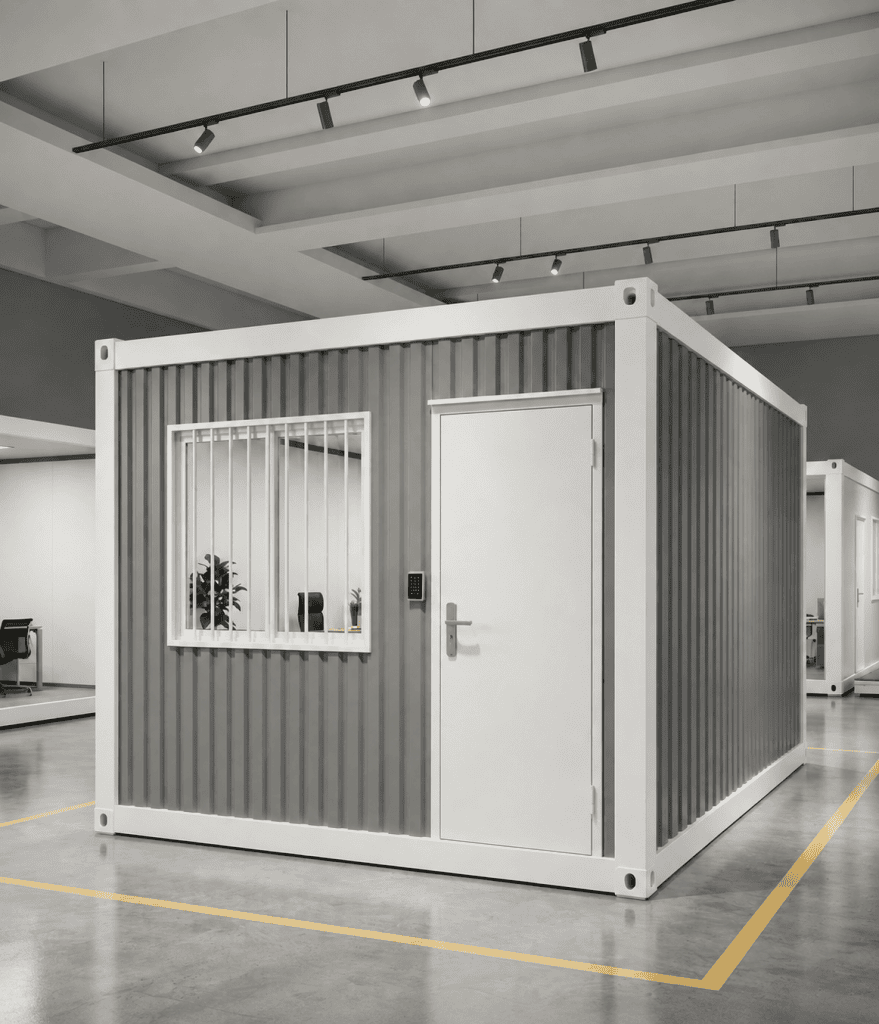
What Is a Container House, and Why Are Buyers Choosing Them?
The building process for a container house involves the use of steel shipping containers that are produced, insulated, wired, plumbed, and finished in a factory, and then transported to the site for assembly with very little work done on-site. The modules used can either be standard shipping containers or specially designed steel frames that can be folded, stacked, or expanded. Since the majority of the assembly process takes place mainly inside the factories, weather interruptions in the process caused by rain, labor shortages, and the challenges that come with working on-site, such as poor quality of construction, are minimized.
The popularity of this option has been increasing due to the growth of the larger modular construction area, which, according to an estimate, will reach about 111 billion US dollars in 2025 and is expected to increase twofold by 2030 due to the demand for cost-effective housing and healthcare.
The application of container homes spans multiple areas, including permanent housing, dormitories for workers, site offices, classrooms, hospitals, toilets, hotels, and complete camps for working personnel in mining, construction, and energy projects. One must pick the right solution based not on the containers used, but on the kind of container, its structural rating, as well as the way the manufacturer fits the given project.
Step 1: Define Your Project’s Purpose and Site Conditions
Before comparing suppliers, get clear on four project variables, since they determine almost everything downstream:
- Use case — a single-family home, worker accommodation, a site office, a classroom, a restroom block, or a full workforce camp each call for different floor plans and MEP layouts.
- Site access — remote sites without crane access may need lighter, foldable, or flat-pack units that a small crew can install with basic tools, while accessible urban sites can accommodate heavier modular or fully pre-assembled units.
- Climate and load conditions — wind speed, seismic zone, and temperature swings all affect the structural specification and insulation package the manufacturer should design in.
- Expected lifespan — a temporary construction-camp unit has different durability and warranty requirements than a permanent modular home meant to last decades.
Writing these four variables down before requesting quotes makes it far easier to compare suppliers on equal terms, rather than comparing prices for units that are not actually built to the same standard.
Step 2: Match the Container House Type to Your Project
Typically, container home manufacturers provide various formats of their products, each of which is designed in a specific way in order to achieve an optimal level of loading space, shipping costs, and the speed of installation. The next table shows a comparison of various formats of container home products.
| Type | Best For | Installation Speed | Key Advantage |
| Prefab / Expandable Container House | Homes, offices, and camps needing extra floor area | Fast — unit expands on site | Can expand to 2–3x the original floor area after delivery |
| Assemble House | Dormitories, site offices, schools | Moderate — factory panels bolted on site | Customizable floor plans and finishes with simple-tool assembly |
| Flat Pack Container House | Mining camps, construction sites, overseas projects | Very fast — hours per unit | Packs flat for efficient shipping; multiple units per container |
| Folding Container House | Emergency housing, disaster relief, temporary offices | Fastest — unfolds and installs quickly | Transported in a compact folded form; lightweight structure |
| Modular Container House | Multi-room homes, larger commercial buildings | Moderate — units craned into position | Room-sized modules for larger, more complex layouts |
| Pro Detachable Container | Projects needing repeated relocation | Fast — designed for repeated assembly/disassembly | Built for multiple relocation cycles without structural fatigue |
When it comes to projects requiring maximum livable space while keeping transportation expenses low, expandable prefab units work best. In case your highest priority is swiftness of installation (for instance, if you need an emergency shelter, a temporary workforce camp, or a disaster relief facility), the quickest option is either flat pack or foldable units. On the other hand, complex projects like multi-room houses or hotels require the use of modular units that have to be lifted with heavy machinery.
Step 3: Verify Structural, Wind, and Seismic Standards
The safety of a lorry container’s steel frame is determined by the engineering behind it. It is advisable to ask the manufacturer to provide specific design criteria instead of making do with a generic brochure figure. For example, one of the established container house manufacturers designs the containers for a seismic intensity of 7 degrees (0.1g) and wind load of 0.35 kN/m², or approximately a wind speed of 23.66 m/s, or a gale of Beaufort scale.
The manufacturer’s quality management certifications should also be verified. The most credible manufacturers of container homes gain certifications such as ISO 9001 (Quality Management), ISO 14001 (Environmental Management), and ISO 45001 (Occupational Health and Safety) thus ensuring operational standards and discipline in manufacturing products.
Step 4: Plan for Climate, Insulation, and MEP Systems
Container homes are made or broken by insulation, electrical setup, and plumbing problems in practice, especially in regions with significant differences between daytime and night temperatures and with high humidity levels. A good manufacturer should provide full architectural design assistance featuring full 2D design drawings and diagrams, MEP drawings, and landscape plans whenever required, thus making sure that both the insulation pack and the utility layout are ready in advance of the production rather than being modified on site.
This upfront design work matters for budget control as much as comfort: because most modification happens off-site in a factory, the design has to be locked in early. A clear design and specification package reduces the change orders and costly rework that are common in traditional on-site construction.
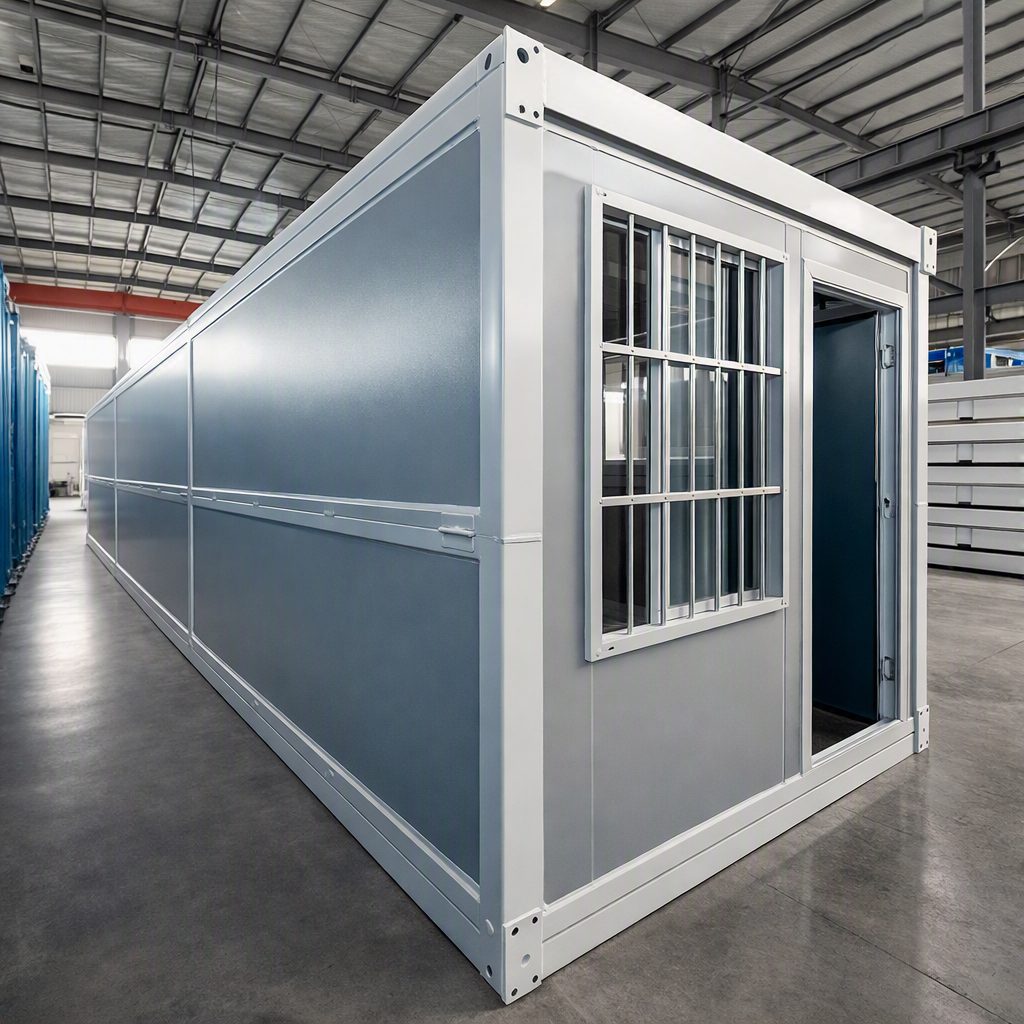
Step 5: Compare Cost Structure, MOQ, and Payment Terms
Container house pricing is usually quoted per unit or per container load, with minimum order quantities tied to shipping container capacity. A typical structure looks like this:
| Shipping Format | Typical Capacity | Standard Payment Terms | Typical Lead Time |
| 20ft container | Can hold roughly 7 sets of assembled container houses | 30% deposit (T/T), 70% before delivery | About 15–30 working days after payment, depending on order size |
| 40ft container | Can hold roughly 18 sets of assembled container houses | 30% deposit (T/T), 70% before delivery | About 15–30 working days after payment, depending on order size |
Obtain a formal quote that indicates individual unit price, customization fees, shipping costs, and any on-site installation assistance. If everything is included on one number, it becomes difficult to make an accurate supplier comparison. Reputable manufacturers nearly always issue a formal quote and design plan in 24 hours after receiving complete information about the project.
Step 6: Check Manufacturing Capability and Logistics Timeline
Verify whether you are purchasing from a factory-direct manufacturer or a trading firm that is reselling third parties’ goods. A factory-direct supplier should be able to give you access to their premises and demonstrate the types of raw material used in production, which is real proof of their capacity in the manufacturing field when it comes to large orders or distant locations.
Clarify the particulars of the overseas installation support you are going to get, if needed. For a lot of projects, a manufacturer can make their own instructional videos and hold training sessions for your employees, or even send their engineers to the site. In the latter case, the client is responsible for costs related to trips such as flights, food, accommodation, and sometimes other allowances.
Case Study: A Container Camp Built for Extreme Temperature Swings
A mining and energy operator required residential buildings at a location where sharp temperature variations during the day and at night make the implementation of proper insulation a must (otherwise, any conventional steel frame house would suffer much from the processes of expansion and contraction). ZN House offered the client a container project featuring a modified frame and an insulation package that suited local conditions instead of using standard specifications.
After several months of operation, the containers continued standing still for the duration of their usage and proved to be a comfortable accommodation for workers. This was the result the operator wanted to obtain by departing from conventional, lightweight container solutions in his project. The case makes it easy to see that the main idea related to Steps 3 and 4 is that it is the climate-specific approach taken when designing and insulating containers in advance of their production that guarantees their performance and functionality, rather than their appearances.
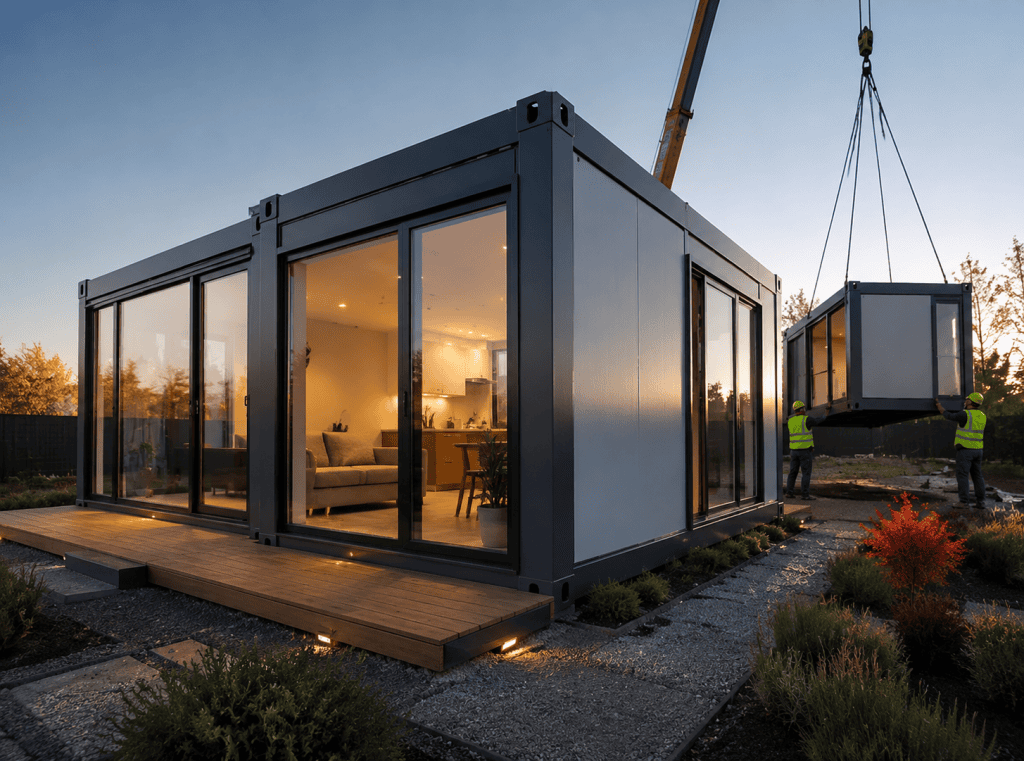
Common Mistakes to Avoid When Choosing a Container House
- Skipping the wind and seismic conversation. A quoted price that doesn’t reference your project’s actual climate zone is an incomplete quote.
- Choosing a container format based on price alone. A flat-pack unit that’s cheaper to ship may not suit a project that actually needs the larger floor area of an expandable or modular unit.
- Underestimating logistics and customs lead time. The 15–30 working day production window is separate from ocean freight, customs clearance, and inland transport at the destination — plan the full timeline, not just the factory portion.
- Not confirming design and MEP support upfront. Locking in floor plans, electrical layouts, and plumbing before production avoids expensive on-site rework later.
- Skipping the factory check. A short video call or in-person visit to confirm the supplier is a manufacturer, not a reseller, is worth the extra step on any sizeable order.
Frequently Asked Questions
How long does it take to get a quotation and design plan?
Most established manufacturers can provide a formal quotation within about 24 hours once all project details are confirmed.
What’s the minimum order quantity for a container house?
MOQ is usually expressed in shipping container capacity rather than a fixed unit count — for example, a 20ft container can typically hold around 7 sets of assembled container houses, and a 40ft container around 18 sets.
What’s the typical delivery time after payment?
Production and delivery generally take about 15–30 working days after payment is confirmed, depending on order quantity and customization.
Can I install a container house myself, or do I need the manufacturer’s engineers?
Many manufacturers produce assembly guides in various forms (videos, instructions, and even engineer-present), allowing owners or builders to perform installations on their own. Should the need arise for on-site technical assistance, the company can usually make arrangements for it, at the expense of the owner, who will handle transportation, lodging, meals, and a per-day supplement for engineers.
How is wind and earthquake safety determined for a specific project?
A professional fabrication company creates its solution tailored to the site conditions of your location, such as the climate and the seismic zone, rather than a single worldwide specification. It also keeps records of the design calculations it employed; request to see these records before completing a purchase order.
Final Thoughts
The quality of a container house mainly depends on the decisions made before production. These include choosing the right module type suited to the user’s needs, selecting a structural specification that accounts for local wind and seismic conditions, developing a plan of insulation and MEP systems that match the climate, setting clear cost and payment terms, and picking a manufacturer whose factory capacity can be verified. After you have gone through those five aspects with a seller who is willing to put down its responses, a container house brings exactly what initially appeals to most buyers about this solution – a much quicker and more reliable route from deciding to having a home.
ZN House provides customized container house design, engineering, manufacturing, and full lifecycle project support, from 3D renderings and MEP planning through international logistics and on-site installation guidance. Projects can be discussed directly with the design and engineering team through the contact page below.
Explore ZN House Container Solutions
- Prefab / Expandable Container House
- Assemble House
- Flat Pack Container House
- Folding Container House
- Modular Container House
- Pro Detachable Container
- Container House Design Services
- Container House Guide & FAQs
- Container Home Solutions
- Container Camp Solutions
- Get a Free Consultation
Source Cited
Disclaimer: Structural ratings, MOQ figures, payment terms, and lead times referenced in this article reflect typical industry and manufacturer practice at the time of writing and are provided for general guidance only. Actual specifications vary by project, destination country, and local building code, and should always be confirmed directly with your chosen manufacturer and verified against local regulations before finalizing an order.
Similar Posts
Low-Cost Prefabricated Houses: Affordable Options and Buyer Guide
Low-cost prefabricated houses are factory-made or semi-manufactured housing solutions that help shorten the construction period, minimize…
Prefab Homes Under 50K
Affordable housing is no longer a dream far removed from reality. You can even buy prefab…
Maximizing Workplace Efficiency with a Modular Container Office
The present-day working environment requires the ability to adapt quickly. Generally, the conventional office setups come…
Why Choose Flat Pack Container House
The flat pack container house commonly known as the flat pack house, is a type of…

Detachable Container for Sale: Off-the-Shelf Solutions
What is a Detachable Container House? Demand of fast assemble housing solutions grow across industries. Detachable…
What Size Shipping Container Is Best for a House?
Due to their durability, affordability, rapid construction time and variety of customization options, shipping containers have…


