



Modular Container House: Standardization, Sustainability, and the Potential for Future Living
Modular Container House, as an emerging form of architecture, is increasingly receiving attention from the construction industry and society. It demonstrates enormous potential in addressing residential needs, promoting sustainable development, and exploring the possibilities of future architecture with its unique advantages. The core of this architectural form lies in using standardized containers as basic units, creating spaces for residential, office, and even commercial use through design, renovation, and assembly.

The primary advantage of Modular Container House is its efficiency and cost-effectiveness
Due to the high standardization of container production, its construction process can be completed in the factory, greatly shortening the construction period and reducing labor costs. Compared to traditional architecture, modular shipping container houses are typically built faster and at lower costs. In addition, its mobility and disassembly also provide greater flexibility for land use. Modular Container House houses can quickly play their role in responding to sudden natural disasters or the need for rapid construction of temporary shelters.
More importantly, Modular Container House is highly aligned with the concept of sustainable development
If a large number of abandoned containers are not utilized, they will cause serious pollution to the environment. Transforming these containers and giving them new life not only reduces waste generation but also saves building materials. In addition, during the construction process, prefab modular container houses can use energy-saving and environmentally friendly materials and technologies, such as solar panels, rainwater collection systems, etc., to further reduce their impact on the environment. This architectural concept that emphasizes environmental protection and resource recycling is in line with the urgent need for sustainable development in today’s society.
The development of Modular Container House also faces some challenges
On the one hand, the spatial dimensions of containers are relatively fixed and may be limited in design. How to break through these limitations and create more comfortable and functional living spaces is a problem that architects and designers need to constantly explore. On the other hand, the approval and regulatory mechanisms for modular container homes are still incomplete in many regions. Lack of clear norms and standards may lead to safety hazards and quality issues.
We still have reason to be confident in the future of Modular Container House
With the advancement of technology and the transformation of concepts, we can foresee that modular shipping container homes will play an increasingly important role in the field of architecture in the future. It can not only provide us with more economical and efficient living choices, but also promote the sustainable development of the construction industry and provide new ideas for us to explore the possibilities of future living. From emergency shelters to creative office spaces, and even to mobile art studios, the application prospects of Modular Container Houses will become increasingly broad. The standardized, modular, and sustainable architectural concepts it represents will also profoundly influence the future direction of architectural development.
Modular Container House FAQs
What is a Modular Container House?
Modular Container House is a building constructed by prefabricating and assembling multiple standard containers (such as 20/40 feet) in a factory. It can be flexibly designed as a single-layer or multi-layer structure to meet various purposes such as residential, office, commercial, etc.
What are the core advantages of Modular Container House?
Rapid construction: Factory prefabrication followed by on-site assembly, shortening the construction period by 50% to 70% compared to traditional buildings.
Flexible expansion: Container modules can be added or removed at any time to adapt to changes in demand.
Environmental protection and energy conservation: Recycling old containers to reduce construction waste.
Durable and sturdy: The steel structure is earthquake resistant and wind resistant, with a lifespan of over 25 years.
What are the common splicing and combination methods for Modular Container Houses?
Horizontal splicing: Expand the single-layer area (such as two boxes arranged side by side into a living room and bedroom).
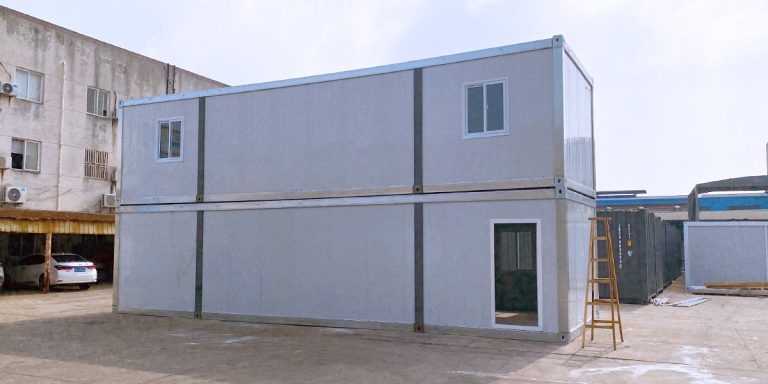
Vertical stacking: constructing multi story buildings (requiring structural reinforcement).
Creative styling: oblique cut, cantilever, staggered design (requires professional calculation).
What application scenarios is Modular Container House suitable for?
Residential properties: single apartments, vacation villas, low-cost affordable housing.
Business: pop-up stores, offices, hotel rooms.
Public facilities: school classrooms, medical stations, temporary isolation rooms.
What is the price and customization level of Modular Container House?
Price range:
Basic single box renovation: $10000~$20000 (simplified packaging).
High end customized project: $50000+/box (whole house intelligent, energy-saving system).
Customization options:
Appearance (graffiti/glass curtain wall), interior style, water and electricity configuration, rooftop garden, etc.
Similar Posts

Foldable Container Homes: The Future of Modular Living
The world of architecture is undergoing a quiet revolution, and at its heart lies the ingenious…
Step-by-Step Guide to Assembling a Flat Pack House
The rise of modular construction has introduced innovative housing solutions that combine affordability, efficiency, and sustainability. Flat…
Can an assemble house be customized to meet unique architectural styles
The world of architecture is constantly evolving, with a growing demand for buildings that are not…

The Future of Modular Housing: Folding Container Houses
In an ever-evolving world where space and flexibility are at a premium, folding container houses are gaining…
Easy Assemble House Perfect for Temporary or Emergency Housing
In the face of urgent housing needs during emergencies or for temporary projects, Suzhou Zhongnan Steel…
The Sustainability Benefits of Container Homes
As the world becomes more conscious of environmental challenges, sustainability is at the forefront of many…


