



Container Office vs Traditional Office: Cost, Time and Flexibility Compared
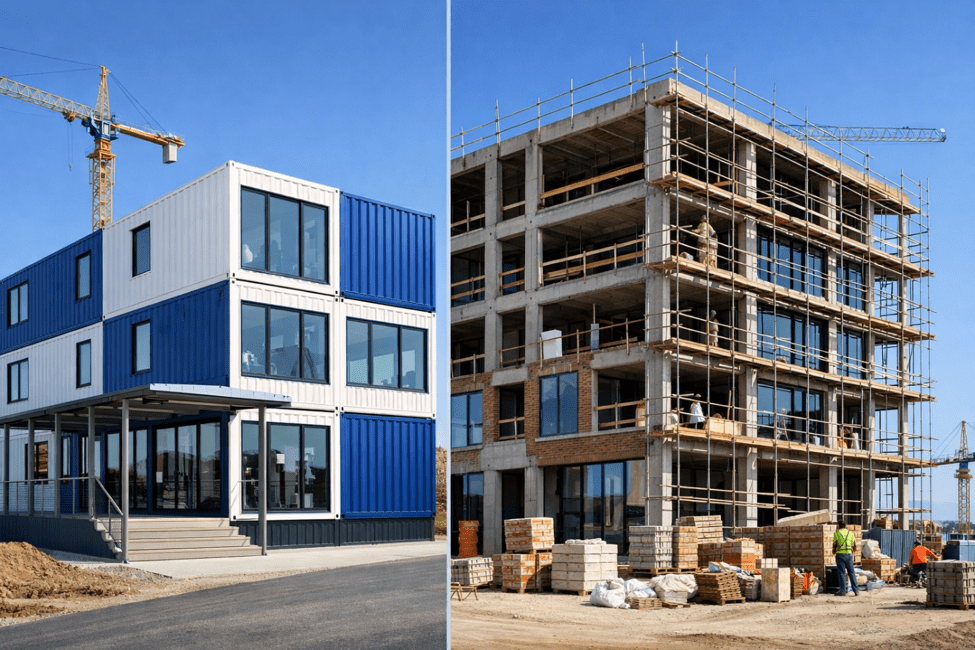
Choosing between a container office and a traditional office really comes down to a number of factors including the length of your project, the amount of money you have, the speed at which you want to get the office installed, if you want to be able to move the office later, and how much space you need. A container office is a type of prefabricated or modular steel building which can be shipped, assembled and moved around quite easily compared to a building made on-site, so it is an excellent option for example a temporary site office or a construction site office. For a permanent facility a traditional office will most likely be able to provide you with more freedom for designs but it will take more time, more workers will be needed on-site and a lot of planning will need to take place before you can start building.
Quick Answer: Container Office or Traditional Office?
A container office is usually the better choice for temporary site offices, construction projects, remote camps, mining sites and any project that needs fast deployment. A traditional office is usually better for permanent headquarters, long-term corporate facilities and buildings that require highly customized architecture. For cost-sensitive and time-sensitive projects, container offices typically deliver faster installation, easier relocation and greater flexibility than conventional construction.
What Is a Container Office?
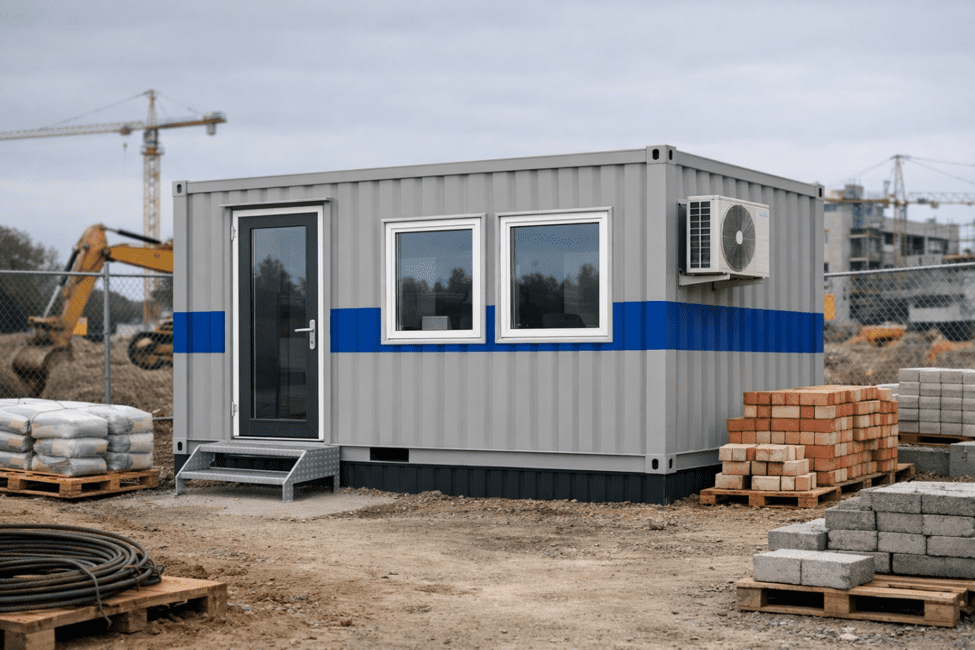
A container office is a prefabricated office building made from a container-based steel structure or modular unit. It can function as a site office, temporary construction office, project management office, meeting room, engineering office or security office. Depending on the project, a unit may be a converted shipping container, a flat pack container office, a detachable container office, or a folding container office, configured with doors, windows, insulated wall panels, electrical wiring, lighting, air conditioning, work areas, meeting rooms and washrooms — well suited to job sites, mining areas and project camps.
What Is a Traditional Office?
A traditional office is a permanent or semi-permanent building constructed on site using conventional materials such as concrete, steel, brick, block, timber, glass and standard interior finishing. It generally offers greater architectural freedom and an easier path to a high-end appearance. However, it requires a longer construction timeline, more on-site labor, more coordination between trades, and more permitting and inspection steps, and since it is built directly on the site, it is not designed for frequent relocation.
Container Office vs Traditional Office: Key Differences
| Factor | Container Office | Traditional Office |
| Construction Speed | Faster, often prefabricated and installed quickly | Slower due to on-site construction |
| Initial Cost | Usually lower for simple or temporary setups | Usually higher due to labor, materials and engineering |
| Site Work | Less on-site work required | More site preparation and construction work |
| Flexibility | Easy to expand, relocate or combine | Flexible in design but difficult to move |
| Relocation | Can be moved or reused | Usually fixed to one location |
| Customization | Strong for functional layouts | Better for complex architecture |
| Durability | Strong steel structure, suitable for harsh sites with proper insulation | Durable for permanent, code-built use |
| Comfort | Depends on insulation, HVAC and interior design | Easier to achieve high-end comfort |
| Best Use | Construction sites, camps, temporary offices, remote projects | Permanent offices, headquarters, corporate buildings |
| Project Timeline | Shorter | Longer |
Container offices are generally stronger in speed, mobility and project flexibility. Traditional offices are generally stronger in permanent design, corporate image and long-term architectural customization.
Cost Comparison: Container Office vs Traditional Office
Initial Construction Cost
Because the container office structure is largely prefab and manufactured in a factory environment, it is a fact that a container office generally has a lower upfront cost. Whereas, a brick-and-mortar office entails requiring even more materials, work and technical developments for site-manufacturing, this way the initial cost will be higher. Market cost reports indicate that it costs around $200 to $570 per square foot for the U.S. office construction based on the class of building and the height, which explains the significant influence of on-site labor and finishing work on the traditional pricing.
Shipping and Transportation Cost
Container offices still require transportation planning. For overseas projects, a flat pack container office can reduce shipping volume and improve loading efficiency inside a 40HQ container versus a fully assembled unit, lowering freight costs.
Installation Cost
A container office usually needs less site labor and a shorter installation window than a traditional build, which involves more trades and more scheduling coordination between contractors.
Foundation and Site Preparation
Both options require site planning. A container office may use a simpler foundation depending on ground conditions, while a traditional office usually needs more extensive foundation and structural work.
Maintenance and Relocation Cost
A container office can often be reused or relocated to a new site, reducing long-term costs for contractors managing several projects over time. A traditional office generally cannot be relocated once built.
Total Project Cost
The lowest purchase price is not always the lowest total project cost. Compare factory price, shipping, foundation work, installation, utilities, maintenance, relocation potential and timeline before deciding which option delivers better value.
Time Comparison: Which One Is Faster to Build?
Container offices are often faster to deliver because factory production and site preparation happen in parallel. Research on modular and prefabricated construction has found this off-site approach can shorten project timelines by roughly 20 to 50 percent versus conventional methods. Once components arrive, site work is usually limited to foundation preparation, lifting and connection. A folding container office suits urgent deployment; a flat pack container office suits overseas shipping and organized assembly. A traditional office depends on sequential on-site construction and coordination among multiple trades, with a schedule more exposed to weather delays.
| Project Stage | Container Office | Traditional Office |
| Design | Standard or customized layout | Full architectural planning |
| Production | Factory prefabrication | Mostly on-site work |
| Site Work | Foundation and assembly | Full construction process |
| Weather Impact | Lower during factory stage | Higher |
| Relocation After Use | Possible | Usually not possible |
Flexibility and Expansion
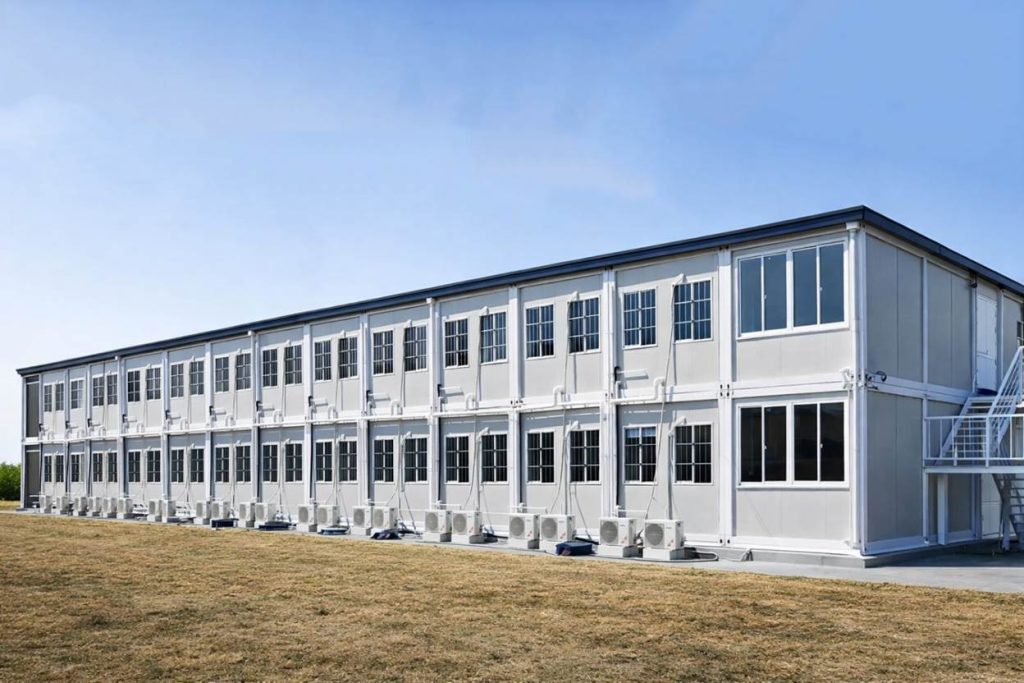
A container office may function as a standalone unit and can also be merged to form a bigger block consisting of conference rooms, an office of a manager, a document room, and restrooms. Besides that, when combined with dormitories, a canteen, toilets, and a kitchen it can constitute a whole container camp. Usually, as the size of the project grows, adding more modules is one option, and after the completion of the project disposing the office is not the only option because it can most of the time be moved. But a conventional office runs differently: the cost of adding new construction to an already existing building rises after construction is complete, relocating is not a reasonable option, and it is mostly more suitable for organizations that are planning to stay in one location for a long time.
Comfort and Working Environment
A container office is not just a metal box. With proper insulation, wall panels, HVAC, windows, flooring and interior layout, it can provide a genuinely comfortable workspace. Hot climates need roof insulation, ventilation and air conditioning; cold climates need wall, floor and roof insulation; coastal sites benefit from corrosion-resistant coatings. Comfort depends heavily on the materials and configuration chosen. A traditional office generally makes it easier to achieve a high-end environment, though usually at a higher cost and over a longer build.
Durability and Service Life
A container office is built on a steel structure and can perform well on construction sites and remote projects, but its service life depends on frame quality, anti-corrosion treatment, wall panel material, roof waterproofing, foundation condition and maintenance in the local climate. A traditional office generally offers a longer permanent service life when built to local codes, since it is engineered as a fixed structure. It is not designed for relocation, so its durability edge applies mainly to buildings staying on one site indefinitely.
Customization: Which Option Offers More Design Freedom?
A container office can be customized as a single unit, an open office, a meeting room, a manager’s office, an office with a washroom, an office combined with accommodation, a multi-unit block or a two-story modular office, with options for exterior color, doors, windows, electrical and plumbing layout, and insulation level. A traditional office offers more architectural freedom and premium facade options, which suits a brand headquarters. In short, container offices deliver strong functional customization; traditional offices deliver stronger architectural customization.
Best Applications for Container Offices
| Application | Why a Container Office Works Well |
| Temporary construction office | Fast installation and easy relocation |
| Construction site office | Practical workspace for managers and engineers |
| Mining camp office | Suited to remote and harsh project sites |
| Oil and gas site office | Can be combined with worker accommodation |
| Infrastructure project office | Flexible and scalable across long timelines |
| Security office | Compact and easy to deploy |
| Project meeting room | Customizable open layout |
| Container camp office | Integrates with dormitories, canteens and toilets |
| Emergency response office | Fast deployment for temporary coordination |
Real-World Example
On a regional infrastructure project in Southeast Asia, a contractor needed a management office at a remote site within a two-week window. ZN House supplied a flat pack container office built around a 40ft footprint, with an open work area, a manager’s office and a washroom. Because the unit shipped disassembled with a factory-fitted panel system, the site team completed foundation work and assembly in under two weeks, letting the project office open on schedule.
When Should You Choose a Container Office?
Choose a container office if:
- You need a temporary site office
- You need fast installation
- Your project site is remote
- You may relocate the office later
- You need expandable office space
- You need office units for construction, mining or infrastructure projects
- You want to reduce on-site construction work
- You need an office that can combine with accommodation or camp facilities
- You need a cost-effective office solution for overseas projects
When Is a Traditional Office Better?
Choose a traditional office if:
- You need a permanent headquarters
- You require a high-end corporate image
- The office will stay in one location for decades
- The building requires complex architecture
- Local regulations favor conventional construction
- You need large open spaces that are difficult to achieve with container modules
- Relocation is not needed
Traditional offices remain the better option for permanent, highly customized and image-focused office buildings.
Container Office Options for Different Project Needs
| Office Type | Best For | Key Advantage |
| Flat Pack Container Office | Overseas projects and bulk orders | High shipping efficiency |
| Folding Container Office | Urgent temporary offices | Fast deployment |
| Detachable Container Office | Reusable site offices | Easy relocation |
| Modular Office Building | Larger office layouts | Flexible combination |
| Steel Structure Office Building | Long-term project facilities | Stronger structure and larger space |
Flat Pack Container Office
Suited to overseas projects and site camps, this option ships disassembled to improve loading efficiency and keep transport costs manageable.
Folding Container Office
Built for urgent or temporary needs, this option unfolds quickly on site with minimal equipment required.
Detachable Container Office
Designed for reuse, this option can be disassembled and moved to a new project once the current job finishes.
Modular Office Building
Suited to multi-room requirements, this option combines meeting rooms, management areas and project offices into one connected layout.
Steel Structure Office Building
Suited to long-term facilities, this option supports larger spans and larger shared spaces for camp administration.
How to Choose the Right Office Solution for Your Project
Project Duration
Short-term, long-term and semi-permanent projects call for different office types.
Required Office Capacity
Decide how many people will use the space and whether you need a meeting room, storage or reception area.
Site Location
Urban sites, mining areas, oil and gas locations, remote regions and overseas projects bring different access and logistics constraints.
Transportation and Loading
For overseas projects, factor in 40HQ loading efficiency versus fully assembled shipping.
Installation Speed
Confirm whether the project needs rapid deployment and whether a local installation team is available.
Climate Conditions
Hot, cold, humid, coastal and desert environments call for different insulation, ventilation and coating specifications.
Future Relocation
If the office may need to move after the project ends, a detachable or modular container office is usually the better fit.
Total Cost
Look beyond the factory price to shipping, foundation work, installation, utilities, maintenance, relocation and delay costs.
Container Office Solutions from ZN House
ZN House provides container office and temporary site office solutions for construction sites, mining camps, infrastructure projects, oil and gas sites and remote project locations. Our lineup includes flat pack container offices, folding container offices, detachable container offices, modular office buildings and steel structure office facilities, available in 20ft, 40ft and custom sizes for teams from a handful of staff up to multi-story layouts.
ZN House supports layout planning, factory production, custom configuration, insulated wall panels, electrical and plumbing preparation, bulk loading plans, overseas shipping coordination and installation guidance, plus integration with dormitories, canteens and toilets for a complete container camp or worker accommodation setup. Share your project location, capacity and usage period, and our team can recommend a practical solution.
Get a Container Office Solution — Contact ZN House
Frequently Asked Questions About Container Offices vs Traditional Offices
What is the difference between a container office and a traditional office?
A container office is a prefabricated or modular unit built from a container-based steel structure, produced largely in a factory. A traditional office is built on site with conventional methods such as concrete, steel and brick, meaning a longer timeline but greater architectural flexibility.
Are container offices cheaper than traditional offices?
Container offices often have a lower initial cost and faster installation for temporary or project-based use. Total cost still depends on size, customization, shipping, foundation, installation and utilities, so compare full project costs, not just unit price.
How long does it take to install a container office?
Installation time depends on office type, foundation, layout and site conditions. Folding offices are usually fastest, while flat pack and modular offices require planned, sequential assembly.
Are container offices suitable for construction sites?
Yes. Container offices are widely used as temporary construction offices, site offices, project management offices, meeting rooms and engineering offices, since they install quickly on active job sites.
Can container offices be used permanently?
They can serve long-term projects when properly designed with a suitable structure, insulation, waterproofing, foundation and regular maintenance, though most buyers choose them for temporary or project-based deployments.
Are container offices comfortable?
Yes, when equipped with proper insulation, ventilation, HVAC, lighting, windows, flooring and interior finishes. Comfort depends on the specification chosen, not the container format itself.
Can container offices be relocated?
Yes. Many units can be relocated or reused on another project site, especially detachable and modular container offices designed with reuse in mind.
When is a traditional office better than a container office?
A traditional office is usually better for permanent headquarters, high-end corporate buildings, complex architectural designs and projects that do not require relocation.
Which container office type is best for overseas projects?
Flat pack container offices are often the best fit for overseas projects because they pack efficiently, load in bulk, and assemble on site using a patent-pending locking system without heavy machinery.
Disclaimer: This article is provided for general informational purposes. Construction costs, timelines, materials and regulatory requirements vary by project, region and supplier, and readers should confirm current specifications and local code requirements directly with ZN House or a qualified local professional before making purchasing or construction decisions.
Similar Posts
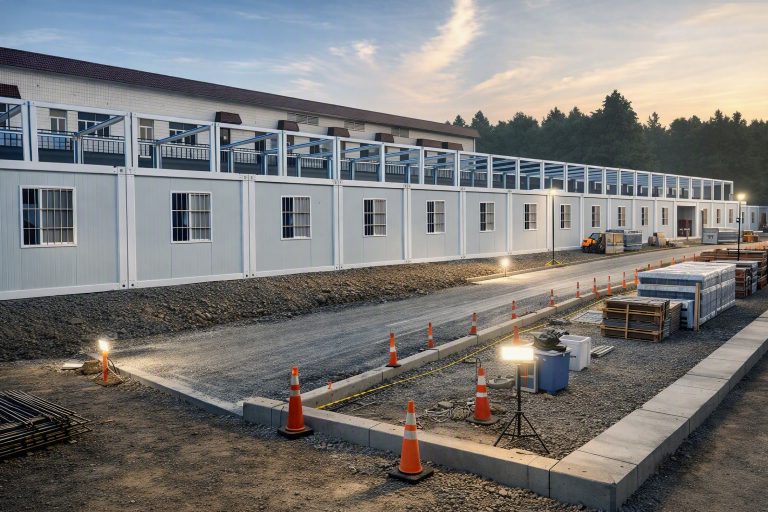
Refugee Camp Container Housing: Building Faster, Safer, and More Dignified Emergency Shelters
The provision of safe and reliable accommodation has always been among the main requirements in humanitarian…

Shipping Container House Wiring Guide
Shipping container house wiring requires careful planning for power supply, outlet placement, lighting, grounding, circuit protection…
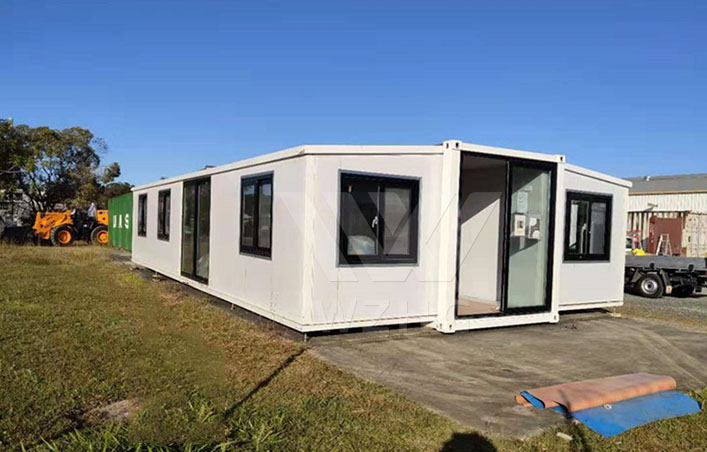
Flat Pack vs Foldable vs Expandable: Which Container Home Is Best?
Flat pack container houses are the most freight-efficient and cost-controlled for bulk projects; foldable container houses deploy…

Cladding Options for a Modular Container House
The exterior cladding of a modular container house plays a pivotal role in defining its aesthetics, durability,…
Step-by-Step Guide to Assembling a Flat Pack Building
How to Assemble a Flat Pack Building: Step-by-Step Installation Guide Flat pack buildings are delivered as…
The Ultimate Guide to Assemble Houses: Design, Cost, and Benefits in 2025
This guide delves into the concept of assemble houses, exploring their advantages, cost analysis, design possibilities,…


