



12 Types of Prefabricated Houses
Prefabricated houses refer to fully or partly factory-built houses that are shipped to the site where they can be installed or put together. The major kinds of prefabricated houses are modular homes, manufactured homes, panelized homes, kit homes, container homes, flat pack container houses, folding container houses, detachable container houses, steel structure buildings, and hybrid prefab systems. Knowing these types of prefabricated houses will enable buyers to differentiate prefab homes, modular homes, container homes, and steel structure buildings when deciding on the best house system for a residential, commercial, or workforce housing project.
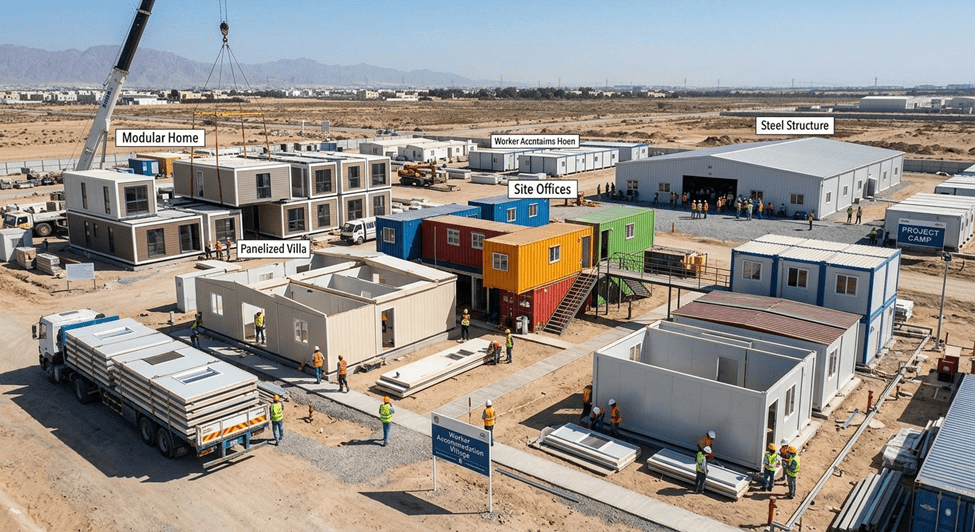
What Is a Prefabricated House?
A prefabricated house is a structure which is produced in a factory, fully or partly, then transported to the location. Upon delivery of the parts, they are fixed, put together, or joined on a leveled foundation. A prefabricated house is a very general term that includes many various types of building methods. In fact, each kind is created with a particular use, budget, and schedule in mind.
Quick Answer
A prefabricated house is a house or a building that can be entirely or partially built at a factory and later moved to the site for installation. Modular homes, panelized homes, manufactured homes, kit homes, container homes, flat pack container houses, folding container houses, and even steel structure buildings are some of the most popular types of prefabricated homes.
Why Do Buyers Choose Prefabricated Houses?
Usually, buyers assess prefabricated houses not just for cost but also from the viewpoint of the overall project planning and procurement. Typical reasons behind these changes are:
- Faster construction time compared with fully on-site building methods
- Factory-controlled quality and more consistent workmanship
- More predictable project schedules with fewer weather-related delays
- Reduced on-site labor requirements
- Easier project planning for phased or large-scale developments
- Suitability for remote sites with limited local construction resources
- Scalability for worker accommodation and project camps
- Flexibility for homes, offices, dormitories and emergency housing
Indeed, prefab housing won’t necessarily be cheapest every time. The overall price varies based on the design materials, shipping distance, foundation local labor, utilities, and the size of the project.
Main Types of Prefabricated Houses
The following section categorizes the typical kinds of prefabricated houses in the most detailed manner. Each one is described with a definition, main characteristics, benefits, drawbacks, and the most suitable projects for them.
1. Modular Homes
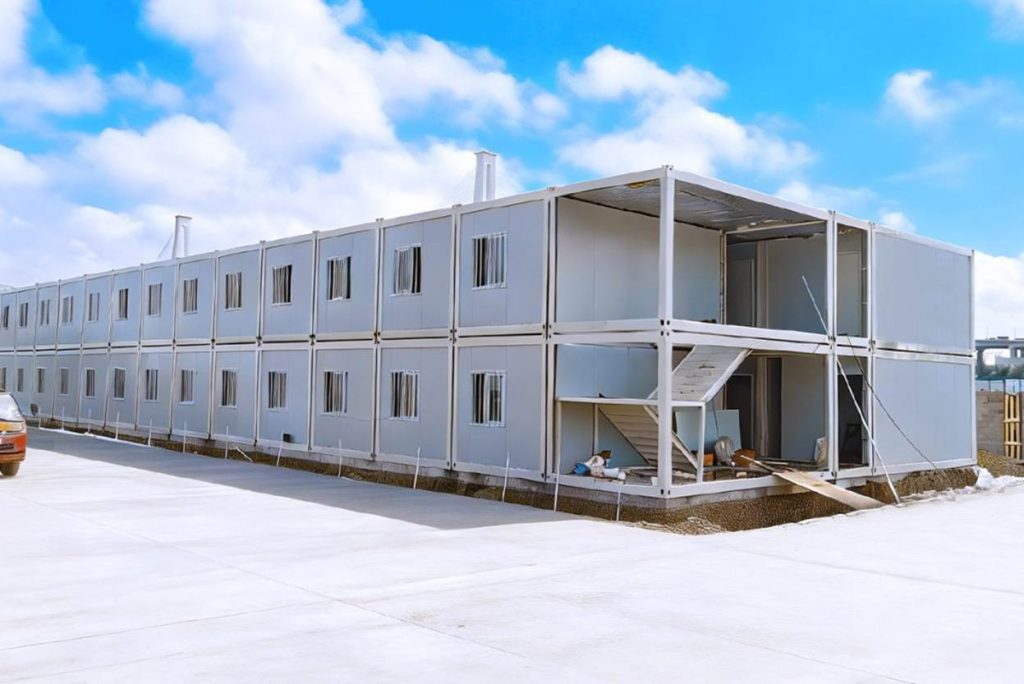
Modular homes are constructed in large 3D parts or modules in the factory. These modules are brought to the location and put together on a foundation.
| Key features | Advantages | Limitations | Best for |
|---|---|---|---|
| Factory-built modules | Fast construction once modules arrive on site | Transport size limitations for oversized modules | Residential houses |
| Fast on-site assembly | Stable factory-controlled quality | May require crane equipment for placement | Hotels |
| High completion rate before delivery | Good for multi-room layouts | Shipping cost can be higher because modules are bulky | Dormitories |
| Suitable for residential houses, hotels, dormitories and modular buildings | Can closely resemble traditional buildings | Design changes after production are difficult | Modular apartments |
2. Manufactured Homes
Manufactured homes are usually built almost entirely in a factory and transported to the site as complete housing units.
| Key features | Advantages | Limitations | Best for |
|---|---|---|---|
| Highly factory-completed | Quick installation after arrival | Limited customization compared with modular or panelized systems | Affordable housing |
| Often standardized designs | Predictable cost structure | Transport and local zoning restrictions | Small residential communities |
| Fast delivery once produced | Suitable for affordable housing programs | Not always suitable for large construction camps or mining camps | Temporary housing |
3. Panelized Homes
Panelized homes are built using factory-made wall, roof, and floor panels. After the panels are manufactured, they are sent to the site where they are assembled to create the entire building.
| Key features | Advantages | Limitations | Best for |
|---|---|---|---|
| High shipping efficiency compared with full modules | Good design flexibility for custom layouts | More on-site assembly required than modular systems | Villas |
| More flexible design options | Easier transportation than full three-dimensional modules | Installation quality depends on the skill of local labor | Custom residential homes |
| Requires more on-site assembly work than modular homes | Suitable for custom residential homes | Weather conditions may affect the construction schedule | Low-rise buildings |
| Factory-made panels improve dimensional accuracy | Projects with flexible layouts |
4. Kit Homes / Pre-Cut Homes
Kit homes come in the form of pre-cut materials and building components which are then provided with assembly instructions for the local construction teams.
| Key features | Advantages | Limitations | Best for |
|---|---|---|---|
| Lower factory completion level than modular or panelized systems | Flexible for local assembly methods | Requires skilled local labor for correct assembly | Small homes |
| More construction work required on site | May reduce factory production cost | Longer installation time than higher-completion prefab systems | DIY-style projects |
| Suitable for buyers who already have a local construction team | Suitable for simple, straightforward structures | Mistakes during assembly can increase total project cost | Buyers with established local contractors |
| Not ideal for urgent, large-scale accommodation needs |
5. Container Homes
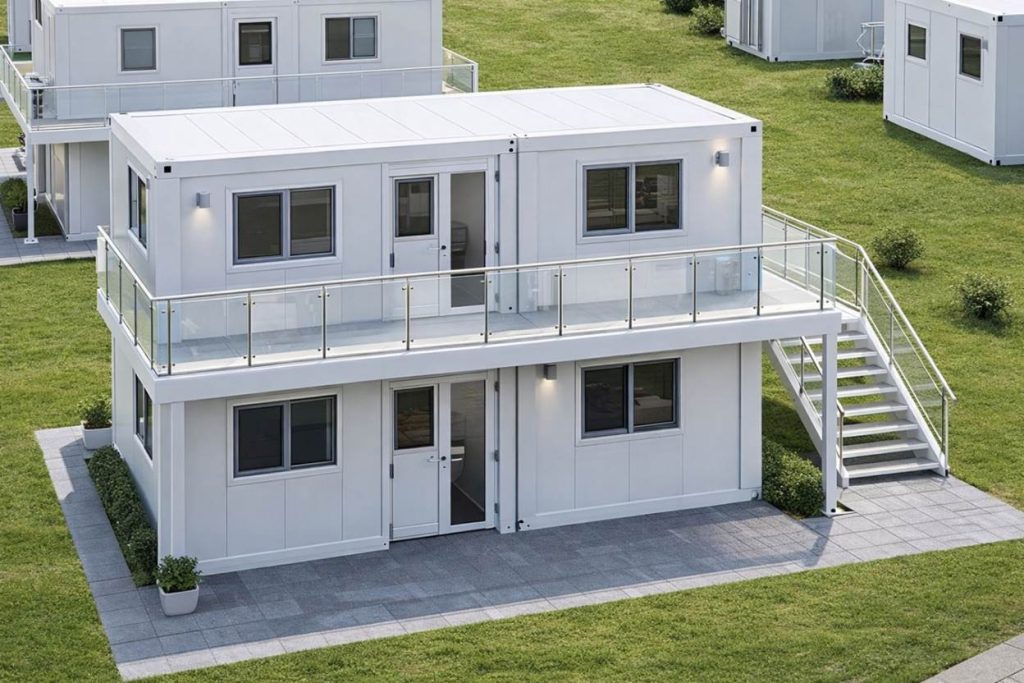
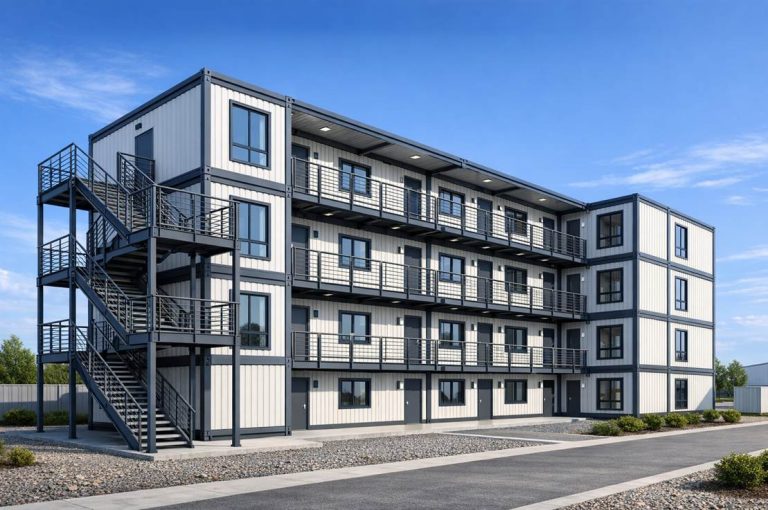
Container homes are essentially houses created from repurposed shipping containers or steel structures that resemble containers.
| Key features | Advantages | Limitations | Best for |
|---|---|---|---|
| Strong steel structure | Durable steel construction | Insulation must be carefully designed for comfort | Container homes |
| Can be combined or stacked into multi-unit layouts | Fast to build compared with traditional methods | Interior width may feel limited compared with conventional rooms | Site offices |
| Suitable for homes, offices, dormitories and temporary buildings | Easy to expand by adding multiple units | Anti-corrosion treatment is important in coastal or humid areas | Worker dormitories |
| Suitable for temporary or semi-permanent projects | Heavy structural modification can increase cost | Temporary housing | |
| Small commercial spaces |
Learn more about ZN House container homes for residential and workforce housing projects.
6. Flat Pack Container Houses
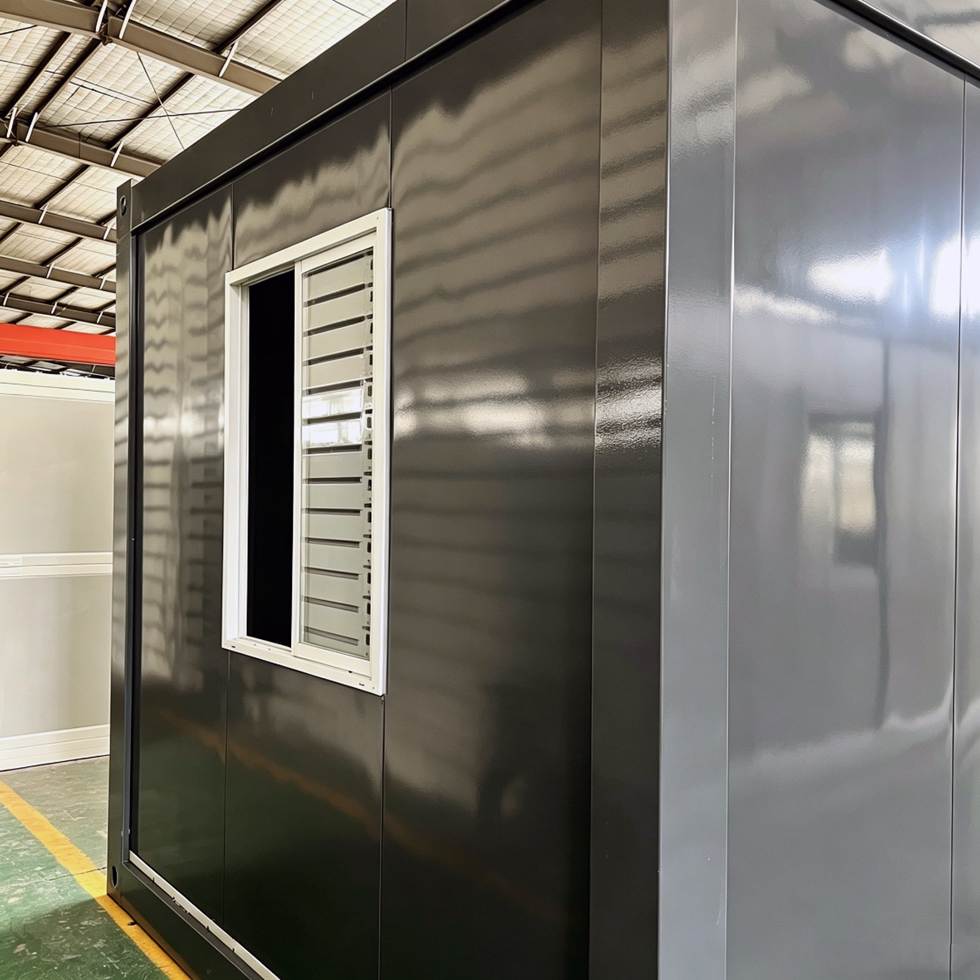
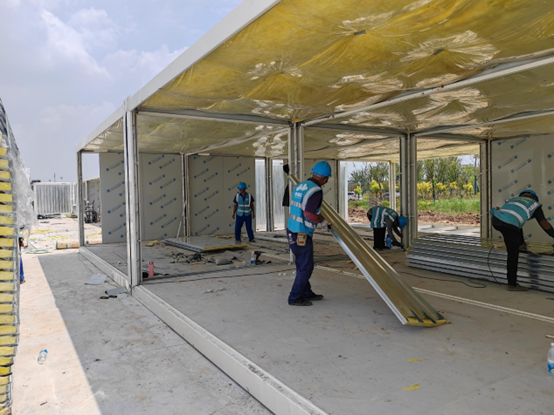
A flat pack container house is a pre-fabricated container building system consisting of a steel structure, walls, floors, skylights, doors and windows, beyond the ventilation, electrical, and plumbing systems. The components are flat packed for ease of transportation.
| Key features | Advantages | Limitations | Best for |
|---|---|---|---|
| High shipping efficiency for international orders | Very efficient for 40HQ container loading | Requires on-site assembly work | Construction camps |
| Good fit for overseas projects | Suitable for long-distance international shipping | An installation team and basic tools are needed | Mining camps |
| Lower logistics cost per unit when shipped in bulk | Flexible for dormitories, offices, kitchens, dining halls, clinics and camps | Foundation and drainage planning are still important | Worker accommodation |
| Suitable for bulk and repeat orders | Good balance between cost, shipping and installation | Not as instantly deployable as folding container houses | Site offices |
| Flexible layout combinations | Suitable for large-scale project accommodation | Emergency housing | |
| Suitable for camps and worker accommodation | Government housing projects | ||
| Overseas project camps |
For overseas camp projects, flat pack container houses are often one of the most practical prefab building options because they balance shipping efficiency, layout flexibility and installation speed.
Learn more about flat pack container houses for overseas camp projects, or explore ZN House container camp solutions for construction and mining sites.
7. Folding Container Houses
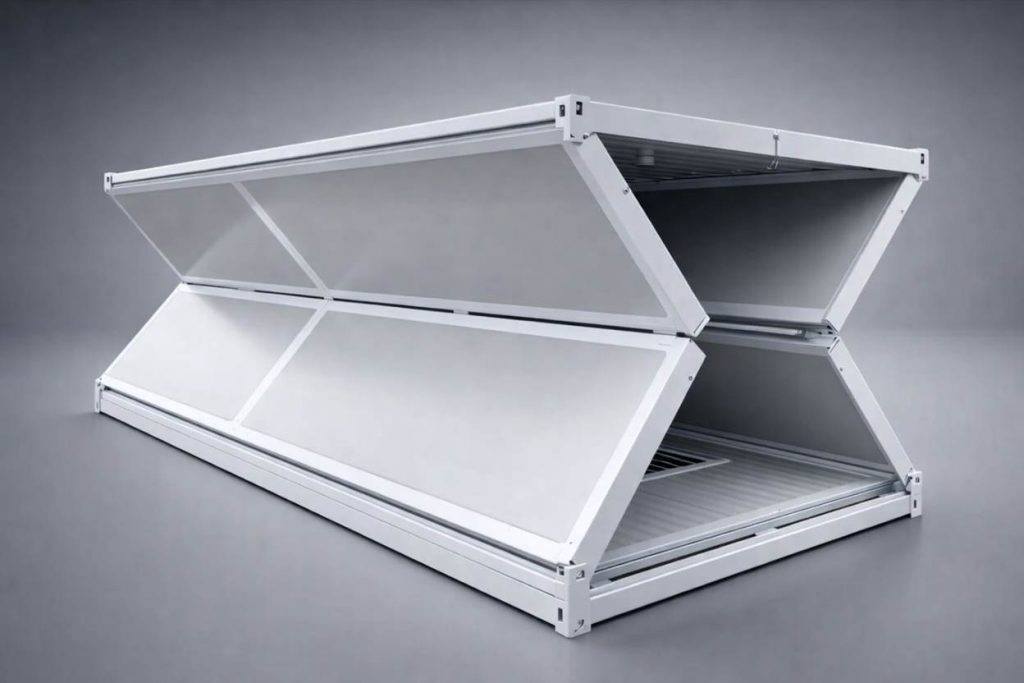
Folding container houses are prefab units that can be folded for shipping and then unfolded at the location for quick setup.
| Key features | Advantages | Limitations | Best for |
|---|---|---|---|
| Fast deployment with minimal on-site work | Very fast installation once units arrive | Customization is usually more limited than flat pack systems | Emergency shelters |
| Simple, straightforward installation process | Reduced on-site labor requirements | Not ideal for complex, multi-room layouts | Disaster relief housing |
| Good fit for emergency and temporary use | Suitable for urgent project timelines | More standardized design than flat pack systems | Temporary site offices |
| Convenient for temporary accommodation needs | Long-term project suitability depends on structure and materials used | Short-term worker accommodation | |
| Fast deployment projects |
Flat pack container houses can be used for larger and more flexible camp layouts; Still, folding container houses are more suitable if the main concern is the speed of installation.
See ZN House folding container houses for rapid-deployment projects.
8. Detachable Container Houses
Detachable container houses are modular container buildings that can be assembled, disassembled, moved, and reused.
| Key features | Advantages | Limitations | Best for |
|---|---|---|---|
| Reusable across multiple projects | Can be relocated to new project sites | Requires assembly and disassembly labor | Construction site offices |
| Relocatable to new sites | Good balance between cost and durability | Maintenance is needed after relocation | Worker dormitories |
| Suitable for temporary and semi-permanent buildings | Suitable for repeated project use | Not as fast to set up as folding units | Temporary schools |
| Common choice for construction sites | Flexible layout combinations | Clinics | |
| Project camps |
Explore ZN House detachable container houses for relocatable site facilities.
9. Steel Structure Buildings
Steel structure buildings have as their primary load-bearing system prefabricated steel frames. These frames are then combined with wall panels, roof panels, doors, windows and insulation materials.
| Key features | Advantages | Limitations | Best for |
|---|---|---|---|
| Strong load-bearing structure | Strong and durable construction | More complex design process | Long-term prefab buildings |
| Suitable for larger building spans | Better suited to large public buildings | Longer installation time than standard container units | Dining halls |
| Suitable for long-term or semi-permanent projects | High customization ability | Usually requires stronger foundation planning | Warehouses |
| Can be combined with container houses in large camps | Suitable for dining halls, warehouses, offices and large facilities | Needs an experienced installation team | Camp public facilities |
| Large-span buildings | |||
| Schools and offices |
Learn more about ZN House light steel structure buildings for large-span and long-term facilities.
10. Tiny Prefab Homes
Tiny prefab homes are small, factory-made houses that can be minimal dwelling units, holiday accommodation, or residential use for only a short period of time.
| Advantages | Limitations | Best for |
|---|---|---|
| Small footprint and easy site placement | Limited living space for larger households | Vacation cabins |
| Lower material use than full-size homes | Not suitable for large families or camp-scale accommodation | Small homes |
| Fast construction and delivery | May face local zoning restrictions | Rental units |
| Easy to maintain | Tourism projects |
11. SIP Homes
SIP houses are built with structural insulated panels that integrate the building structure and insulation into a single panel system.
| Advantages | Limitations | Best for |
|---|---|---|
| Good thermal insulation performance | Requires skilled installation for proper panel sealing | Energy-efficient homes |
| Energy-efficient design | Panel joints need careful sealing to avoid air or moisture leaks | Residential buildings |
| Fast panel assembly on site | Design changes after production are difficult | Climate-sensitive housing |
| Suitable for hot or cold climates | Material cost may be higher than basic panel systems |
12. Hybrid Prefabricated Houses
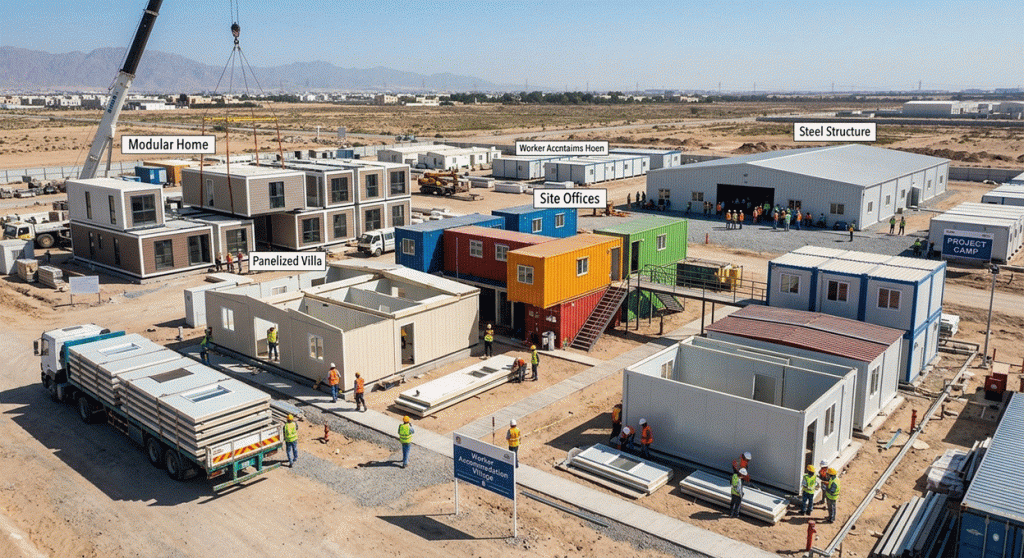
Hybrid prefabricated houses are a combination of two or more prefab systems like container units, steel structures and panelized systems, to cater to the requirements of big or complicated projects.
| Key features | Advantages | Limitations | Best for |
|---|---|---|---|
| Combines multiple prefab systems within one project | Flexible for complex project layouts | Requires more detailed planning | Mining camps |
| Useful for large camps with mixed building types | Can combine dormitories, offices, canteens and public facilities | Needs experienced supplier coordination | Oil and gas camps |
| Suitable for large camps | More complex design and logistics than a single prefab system | Construction camps | |
| Can balance cost, speed and durability | Worker accommodation villages | ||
| Mixed-use project sites |
Comparison Table of Prefabricated House Types
| Type | Installation Speed | Shipping Efficiency | Customization | Best For |
| Modular Homes | Fast | Medium | High | Residential homes, hotels, dormitories |
| Manufactured Homes | Very Fast | Low to Medium | Low | Affordable housing |
| Panelized Homes | Medium | High | High | Villas, custom homes |
| Kit Homes | Slow to Medium | High | Medium | Small homes, local contractor projects |
| Container Homes | Fast | Medium | Medium | Homes, offices, dormitories |
| Flat Pack Container Houses | Fast | Very High | High | Camps, worker accommodation, overseas projects |
| Folding Container Houses | Very Fast | Medium to High | Low to Medium | Emergency and temporary housing |
| Detachable Container Houses | Fast | High | Medium | Site offices, dormitories |
| Steel Structure Buildings | Medium | Medium | Very High | Long-term and large-span buildings |
| Tiny Prefab Homes | Fast | Medium | Medium | Small homes, tourism units |
| SIP Homes | Medium | High | Medium | Energy-efficient homes |
| Hybrid Prefab Houses | Depends | Depends | Very High | Large customized camps |
How to Choose the Right Type of Prefabricated House
Selection from many types of prefabricated houses mainly hinges on project utilization, transportation distance, installation conditions, climate, and overall project cost.
Choose Based on Project Use
- Residential home: modular homes, panelized homes or SIP homes
- Worker accommodation: flat pack container houses or detachable container houses
- Emergency housing: folding container houses
- Construction camps: flat pack, detachable or hybrid systems
- Mining or oilfield camps: flat pack, steel structure or hybrid prefab systems
- Large public facilities: steel structure buildings
Consider Transportation Distance
A key factor in international projects is shipping efficiency. Generally, flat pack container houses and panelized systems can be shipped more efficiently than the fully assembled modular units, because they have a more compact packing for ocean freight.
Consider Installation Conditions
During the purchasing of a prefabrication system, the buyer should first investigate if local installation crews are available or not, if crane or lifting tools will be required, if the site is a geographically remote area, if the schedule of the project is very restrictive, and if the weather conditions may have an impact on the construction timetable.
Consider Climate and Insulation
- Hot climate: roof insulation, ventilation, heat-resistant materials
- Cold climate: wall insulation, floor insulation, sealed joints
- Coastal climate: anti-corrosion treatment
- Rainy or humid regions: waterproofing and drainage design
Consider Total Project Cost
Buyers should avoid comparing prefab systems on unit price alone. Total project cost typically includes:
- Factory price
- Custom design fees
- Shipping
- Foundation work
- Local installation labor
- Utilities
- Permits
- Ongoing maintenance
Consider Customization Level
Folding container houses can be set up quickly, but their customization options are more limited. But flat pack container houses represent a better compromise between the efficiency of shipping and the flexibility of design. Buildings with a steel structure not only give you the most freedom of design but also are the most suitable for long-term or large-scale projects.
Which Prefabricated House Type Is Best for Worker Accommodation and Project Camps?
In the categories of worker accommodation, construction camps, mining camps, oilfield camps and temporary site facilities, flat pack container houses, separable container houses and hybrid prefab systems are often more advantageous than the normal residential prefab homes.
- They can be shipped efficiently in bulk.
- They can be arranged into dormitories, offices, canteens, toilets, clinics and public facilities.
- They support fast installation.
- They are suitable for remote project sites.
- They can be expanded as the project grows.
- They are easier to plan for large teams and temporary accommodation.
Zn House offers prefabricated housing solutions for container camps, worker accommodation, site offices, dormitories, and steel structure buildings. Besides, they provide assistance for the design of the layout, production loading, dispatch, and installation supervision.
Explore ZN House container dormitory solutions, or send your project layout to get a prefab housing solution tailored to your camp.
Frequently Asked Questions About Types of Prefabricated Houses
What are the main types of prefabricated houses?
Major categories are modular homes, manufactured houses, panelized houses, kit houses, container houses, flat pack container houses, collapsing container houses, sliding container houses, steel framed buildings, SIP homes, tiny prefabricated homes, hybrid prefabricated systems, each is completed at a different level factory, delivered most efficiently, with varying installation and customization speed, and is best suited for different applications, budgets and schedules.
What is the difference between prefab and modular homes?
The term “Prefab” is a wide category that includes any building made entirely or partially off-site. Modular houses are a particular type of prefab house consisting of large three-dimensional sections being built in a factory and then assembled on a foundation. Other types of prefabs, like panelized houses or container houses, use different construction methods and levels of completion.
Are container houses prefabricated houses?
Yes, container houses are indeed categorized under prefabricated houses in case the major frame or elements are produced in the factory and then put together or installed at the location. This also covers flat pack container houses, folding container houses and detachable container houses, which are all constructed around a factory-made steel container frame.
Which prefab house type is best for overseas projects?
Flat pack container houses are usually a good choice for overseas projects, since they are highly efficient when it comes to shipping, the layout can be changed anytime, and the assembly on site is very fast. Loading their flat-packed parts into regular shipping containers is done very efficiently, so it helps with lowering the freight cost of long international routes.
Which prefab house type is fastest to install?
Among the fastest container house options due to their design for quick unfolding on site are folding container houses. This feature makes them a very viable option for emergency shelters, disaster relief housing and similar projects where the top priority is the speed of installation,
Which prefab house type is best for worker accommodation?
Flat pack container dwellings, removable container homes and hybrid prefab systems are popular solutions for worker’s accommodation. Bulk shipping, modular design and rapid erection are attractive features and these systems can add steel structure buildings for canteens, offices and camp utilities.
How do I choose a prefab house supplier?
Choose a factory supplier with strong capacity, experience in exporting, clear product specifications, proven cases of projects, ability for customization, quality control and support for layout design, shipping and installation guidance. Another way of confirming a supplier’s true capability is reviewing locations of previous projects and asking for engineering drawings.
Disclaimer: This article is written as general information only. Specs, sizes, and setups referred to for ZN House products in this article are purely the ones which are visible on the product pages at the time of writing and can be changed without notification. Buyers must get the latest specs, prices, and lead times from ZN House before making any project decisions.
Similar Posts

Benefits of Easy Assemble House Homes
The demand for easy assemble house solutions is growing rapidly due to their cost-effectiveness, quick installation, and flexibility….

Professional container home construction tutorials
Professional container home construction tutorials serve as a critical bridge between high-quality container housing design and…
How To Convert a Shipping Container into an Office
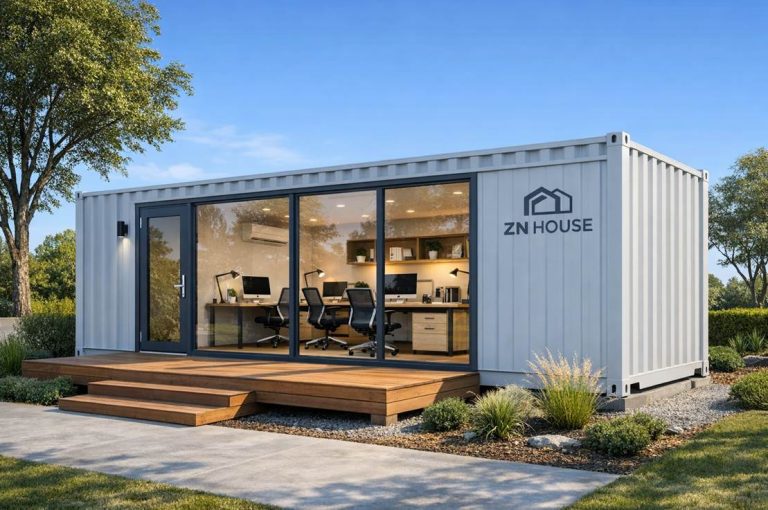
An office created using an enclosed metal recycling system from original shipping vessels provides an environmentally…
Easy Assemble Houses: The Future of Quick, Affordable Living
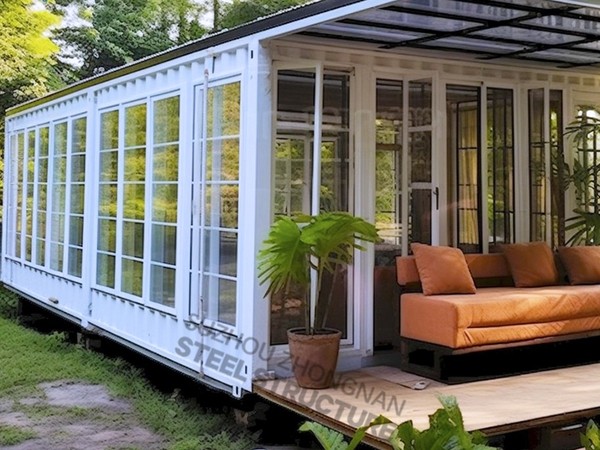
In today’s fast-paced world, easy assemble houses have become an attractive solution for those seeking quick, affordable,…
What Is a Container Dormitory?
Introduction Container dormitories are modern prefabricated housing units that are constructed using modular container components. They…
Is a Hurricane-Proof Modular Home the Safest Investment for Coastal Living?
Coastal homeowners have to deal with a distinct challenge every year. To keep their homes safe,…


