



Foundation Requirements for Collapsible Container Homes
Collapsible container homes are widely used for construction site accommodation, worker camps, temporary offices, emergency housing, and remote project facilities. Before installation, one of the most important steps is preparing a suitable foundation.
A proper foundation helps keep container units level, stable, dry, and secure during daily use. It can also reduce installation problems such as door misalignment, water accumulation, structural stress, and uneven settlement.
The best foundation type depends on soil conditions, project duration, drainage, wind exposure, site accessibility, and whether the units will be relocated in the future. This guide explains the most common foundation options for collapsible container homes and helps project buyers understand what to prepare before delivery and installation.
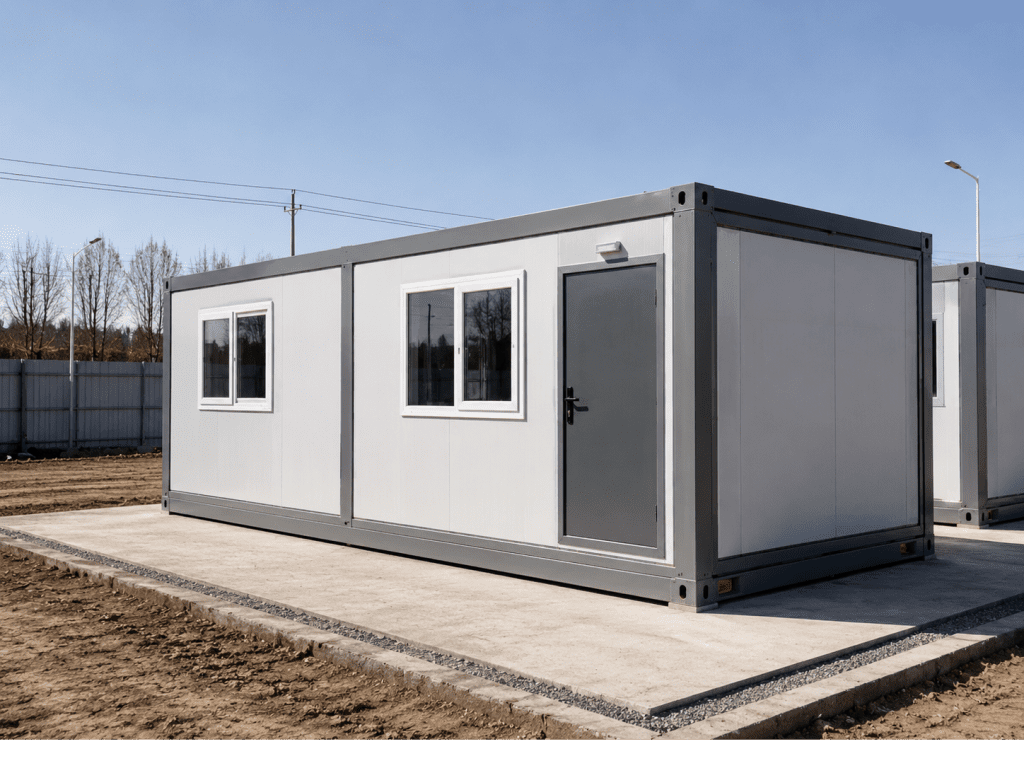
Why Foundation Planning Matters Before Installation
For project buyers, foundation planning directly affects installation speed, site safety, long-term stability, and total project cost.
If the ground is not properly prepared, container units may face problems after installation. Common issues include uneven floors, doors or windows that do not close smoothly, water pooling under the unit, corrosion risks, or settlement after long-term use.
For temporary accommodation projects, the foundation does not always need to be complex. However, it should be stable enough to support the container units, protect the floor structure, and allow safe daily use by workers or residents.
A well-prepared foundation can help project owners:
- Shorten installation time
- Improve site safety
- Reduce maintenance costs
- Keep container units stable and level
- Support future relocation if required
- Improve drainage and moisture protection
Key Factors That Affect Foundation Selection
Before choosing a foundation for collapsible container homes, project buyers should evaluate the site conditions carefully. The following factors are especially important for construction sites, worker camps, mining camps, and temporary housing projects.
Soil Bearing Capacity
Soil bearing capacity determines whether the ground can safely support the weight of the container units, furniture, equipment, and occupants. Soft soil, loose sand, or wet ground may require stronger support such as concrete pads, piers, or screw piles.
For large projects or long-term camps, local engineers should check whether the soil can meet the required load-bearing conditions.
Ground Levelness
Container units should be installed on a flat and stable surface. Uneven ground may cause structural stress, poor door alignment, or water drainage problems.
If the site is not level, buyers may need ground compaction, concrete pads, pier foundations, or adjustable support systems before installation.
Drainage and Water Accumulation
Good drainage is essential for container housing projects. Water accumulation under the units may increase the risk of corrosion, mold, unpleasant odors, and foundation settlement.
The installation area should be slightly raised or sloped to guide water away from the container units. Drainage channels may be needed for rainy areas, low-lying sites, or remote camps with poor ground conditions.
Wind Load and Anchoring
For open areas, coastal regions, desert sites, or mining camps, wind load should be considered before installation. Anchoring systems may be required to keep the container units secure during strong winds.
Anchor bolts, steel connectors, concrete pads, or pile foundations can be used depending on the project location and local safety requirements.
Temporary vs Long-Term Project Use
The foundation choice also depends on how long the container homes will be used.
For short-term construction sites, concrete pads, strip foundations, or steel base supports may be enough. For long-term worker camps or semi-permanent accommodation, concrete slabs or more stable foundations are usually recommended.
If the units need to be relocated after the project ends, buyers should choose a foundation system that supports easier removal and reuse.
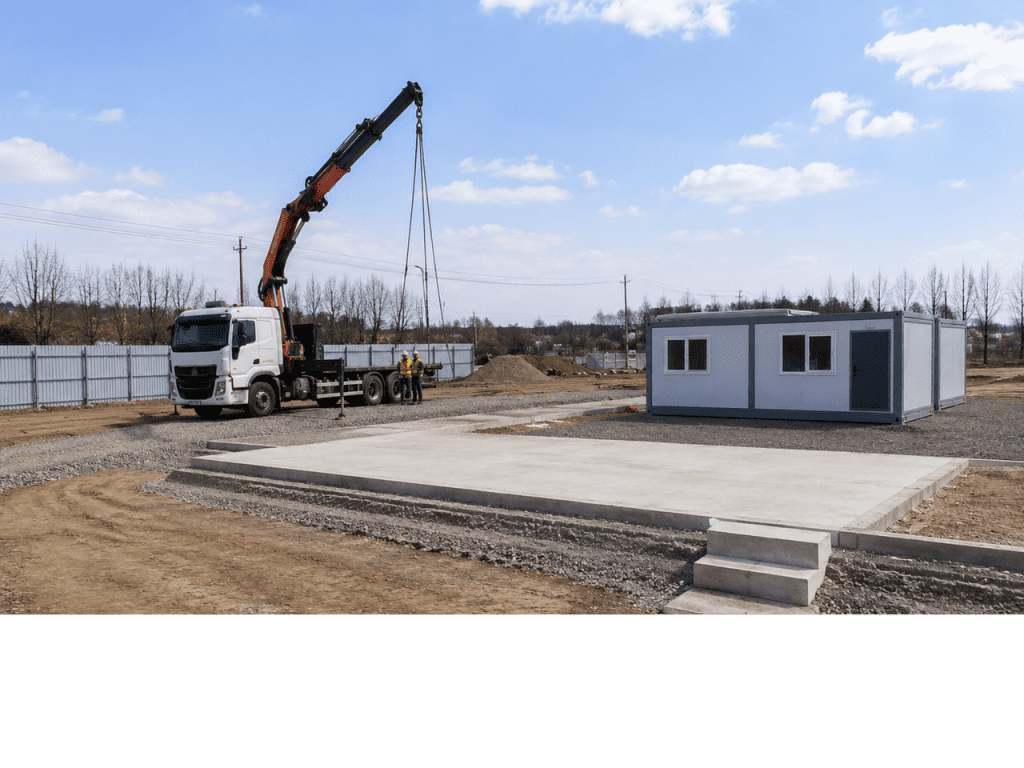
Common Foundation Types for Collapsible Container Homes
Different projects require different foundation solutions. Below are the most common foundation types used for collapsible container homes and temporary accommodation units.
Concrete Slab Foundation
A concrete slab foundation provides a flat, strong, and durable base for container homes. It is suitable for long-term worker camps, permanent or semi-permanent accommodation, site offices, and organized camp layouts.
Concrete slabs offer good stability and moisture protection. They also make it easier to arrange walkways, drainage, utilities, and outdoor facilities.
However, concrete slabs usually require more preparation time and higher upfront cost. They are less suitable for projects that need frequent relocation.
Best for:
- Long-term worker camps
- Construction site offices
- Container dormitories
- Permanent or semi-permanent accommodation
- Sites that require clean and organized layouts
Concrete Pad Foundation
A concrete pad foundation uses separate concrete blocks or pads placed under key load-bearing points of the container units. It is faster and more cost-effective than a full slab foundation.
Concrete pads are commonly used for temporary accommodation, construction camps, and project sites where the units may be relocated later.
The key requirement is accurate positioning. The pads must be placed under the correct support points to keep the container units level and stable.
Best for:
- Temporary construction site accommodation
- Short-term worker housing
- Relocatable container units
- Projects with limited foundation budgets
Pier and Beam Foundation
Pier and beam foundations raise container units above the ground. This method is useful for uneven terrain, wet areas, sloped sites, or locations that require better ventilation under the units.
The elevated structure helps reduce direct ground contact and allows easier access to utilities. It can also improve drainage performance in rainy or humid environments.
However, pier foundations must be installed accurately. The height and position of each pier should be carefully controlled to prevent uneven support.
Best for:
- Uneven terrain
- Wet or humid sites
- Raised installation requirements
- Remote camps with difficult ground conditions
Screw Pile Foundation
Screw pile foundations are installed by drilling steel piles into the ground. They are useful for remote projects, soft soil, temporary camps, and sites where excavation work should be reduced.
Compared with concrete foundations, screw piles can often be installed faster and with less disruption to the site. They can also be suitable for projects that require relocation or minimal ground disturbance.
However, screw pile installation usually requires professional equipment and site evaluation.
Best for:
- Remote project camps
- Mining camps
- Soft soil areas
- Fast installation projects
- Sites with limited excavation access
Steel Frame or Temporary Base Support
Steel frame supports or temporary base systems can be used for short-term projects where fast installation and relocation are priorities.
This option is suitable for modular layouts, temporary offices, and construction site accommodation that may be moved after the project is completed.
The steel base should be designed according to container size, load, and site conditions. It must provide stable support and avoid uneven stress on the container structure.
Best for:
- Short-term projects
- Relocatable camps
- Temporary offices
- Fast deployment accommodation
Which Foundation Is Best for Your Project?
There is no single foundation type that fits every container housing project. The best choice depends on site condition, project duration, budget, installation speed, and relocation requirements.
| Foundation Type | Best For | Advantages | Notes |
| Concrete Slab Foundation | Long-term camps, permanent or semi-permanent housing | Strong, flat, durable, good moisture protection | Higher cost and longer preparation time |
| Concrete Pad Foundation | Temporary accommodation, construction sites | Faster and cheaper than full slab | Requires accurate positioning under load points |
| Pier and Beam Foundation | Uneven terrain, wet areas, raised installation | Better ventilation and ground clearance | Needs stable piers and proper leveling |
| Screw Pile Foundation | Remote projects, soft soil, fast installation | Quick installation, less excavation | Requires professional equipment |
| Steel Frame Temporary Base | Short-term or relocatable projects | Flexible and reusable | Must be designed according to unit size and load |
For most temporary construction site accommodation projects, concrete pads or simple steel supports are often practical choices. For long-term worker camps, concrete slabs or well-designed concrete pads are usually more reliable. For remote projects with difficult soil conditions, screw piles or pier foundations may be more suitable.
Foundation Recommendations by Application
Construction Site Accommodation
For construction site accommodation, project buyers usually need a fast, cost-effective, and removable foundation option. Concrete pads, strip foundations, or steel base supports are often suitable when the site is temporary and the container units may be relocated after the project ends.
The foundation should be stable enough for daily worker use, while also allowing quick installation and future removal.
Recommended options:
- Concrete pad foundation
- Simple strip foundation
- Steel frame support
- Pier foundation for uneven ground
Worker Camp Housing
Worker camps usually involve long-term daily use, higher occupancy, and complete living facilities. The foundation should consider drainage, sanitation, walkways, utility connections, and long-term stability.
If the camp will be used for several months or years, concrete slabs or concrete pad foundations are more reliable options.
Recommended options:
- Concrete slab foundation
- Concrete pad foundation
- Pier foundation for wet or uneven sites
Mining and Remote Project Camps
Mining camps and remote project sites often face uneven terrain, soft soil, limited machinery access, and harsh weather conditions.
In these cases, screw piles, pier foundations, or reinforced concrete pads can help reduce excavation work and adapt to difficult site conditions.
Recommended options:
- Screw pile foundation
- Pier and beam foundation
- Concrete pads under key load points
Temporary Offices and Dormitory Units
Temporary offices and dormitories should be installed on a stable and level base. The foundation should also allow easy access to electricity, water supply, sewage, and drainage systems.
For organized project sites, concrete pads or slab foundations are commonly used to improve layout efficiency and daily maintenance.
Recommended options:
- Concrete pad foundation
- Concrete slab foundation
- Steel frame temporary base
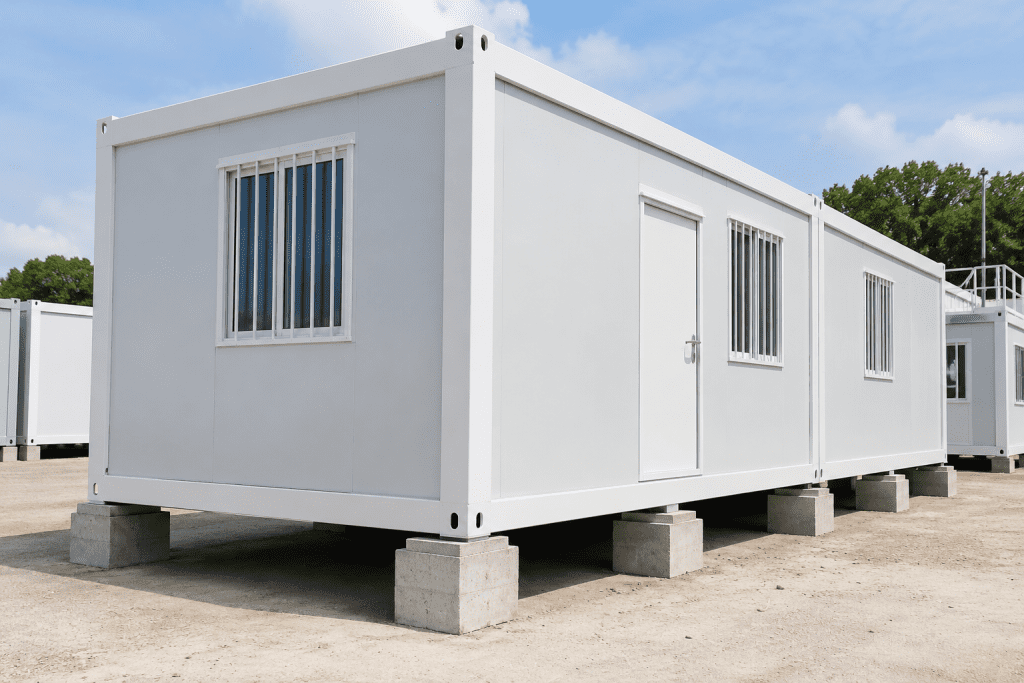
Site Preparation Checklist Before Delivery
Before collapsible container homes arrive on site, buyers should prepare the installation area in advance. Proper site preparation can reduce delays, extra labor costs, and installation risks.
Use the following checklist before delivery:
- Confirm the number, size, and layout of container units.
- Check whether the ground is flat, compacted, and stable.
- Confirm soil conditions and load-bearing capacity if required.
- Arrange drainage to prevent water accumulation under the units.
- Choose a suitable foundation type based on project duration and site conditions.
- Prepare access roads for trucks, cranes, forklifts, or lifting equipment.
- Reserve enough space for unloading and installation.
- Plan utility connections, including electricity, water supply, sewage, and drainage.
- Check local building codes, permits, and safety requirements.
- Confirm anchoring requirements for strong wind areas.
- Mark the installation positions before delivery.
- Coordinate with local contractors for foundation construction if needed.
Need help preparing your project site?
Send us your project location, site photos, container quantity, and expected usage period. ZN House can help you evaluate suitable container house layouts and foundation preparation options.
How ZN House Supports Your Container Housing Project
ZN House provides collapsible container homes and modular accommodation solutions for construction sites, worker camps, temporary offices, emergency housing, and remote project facilities.
For project buyers, foundation preparation is only one part of the complete project planning process. ZN House can support customers with product selection, layout planning, container unit configuration, and general installation preparation guidance.
Based on your project requirements, our team can help evaluate:
- Container unit size and quantity
- Camp layout and functional areas
- Accommodation, office, dining, and sanitary needs
- Site access and installation sequence
- General foundation preparation suggestions
- Packing, transportation, and delivery planning
- Project quotation based on layout and quantity
For final structural design, foundation engineering, and local code compliance, buyers should work with qualified local engineers or contractors.
FAQs About Collapsible Container Home Foundations
Do collapsible container homes always need a concrete foundation?
Not always. For temporary construction sites or short-term worker accommodation, concrete pads, pier foundations, or steel base supports may be enough.
For long-term camps or semi-permanent use, a concrete slab foundation is usually more stable and durable.
What is the best foundation for worker camp container houses?
For worker camps, concrete pads or slab foundations are commonly used because they provide stable support, good drainage control, and easier daily maintenance.
The final choice depends on project duration, soil condition, camp layout, and local construction requirements.
Can collapsible container homes be installed on uneven ground?
Yes, but the ground should be leveled or supported with a suitable foundation, such as pier and beam foundations or screw piles.
Uneven ground without proper support may cause door misalignment, structural stress, settlement, or water drainage problems.
What should be prepared before container house delivery?
Before delivery, buyers should prepare the foundation, access roads, unloading space, drainage, utility connections, and installation layout.
This helps reduce installation delays, extra site costs, and on-site coordination problems.
Are screw pile foundations suitable for remote project camps?
Yes. Screw pile foundations can be suitable for remote camps, soft soil areas, and sites where excavation work should be minimized.
However, they usually require professional equipment and local site evaluation before installation.
Can collapsible container homes be relocated after installation?
Yes. One advantage of collapsible container homes is that they can be relocated more easily than traditional buildings.
If future relocation is required, the foundation should be designed with removability in mind. Concrete pads, steel base supports, or screw piles may be more suitable than permanent slab foundations.
Can ZN House provide foundation layout suggestions?
Yes. Based on the container size, quantity, project layout, and site conditions, ZN House can provide general foundation preparation suggestions and layout support.
Final structural approval should follow local engineering standards and building code requirements.
Plan Your Collapsible Container Home Project with ZN House
A suitable foundation helps ensure that collapsible container homes remain stable, safe, and easy to maintain throughout the project.
Whether you are planning construction site accommodation, worker camp housing, temporary offices, dormitory units, emergency housing, or remote project camps, ZN House can help you choose suitable container units and prepare a practical project layout.
Contact ZN House to get container house specifications, layout design support, and project quotation.
Planning a construction site camp, worker accommodation, temporary office, or remote project housing?
ZN House provides collapsible container homes, container dormitories, container camps, and modular accommodation solutions for global projects.
Similar Posts
Emergency Housing Innovations: The Promise of Modular Container Houses
In a world where natural disasters and unforeseen events are becoming increasingly common, the need for…
Building Your Flat Pack Dream House
In the ever – evolving world of housing, flat pack homes have emerged as a revolutionary way to…

Weatherproof Designs for Reliable Shipping Container Houses
As a leading wholesaler in the construction industry, Suzhou Zhongnan Steel Structure Co., Ltd. is committed…

Transformable Living: The Future of Foldable Container Homes
As the world becomes more dynamic and space-efficient solutions are in higher demand, foldable container homes…
Integrating Prefab Container Houses into Urban Landscapes
Urban landscapes are constantly evolving, driven by the need for sustainable, efficient, and adaptable housing solutions….
Flat Pack Homes Revolution – Your Dream Space Delivered in a Box!
Imagine having your perfect living space arrive in flat packages and assemble like furniture – that’s…


