



Low-Cost Prefabricated Houses: Affordable Options and Buyer Guide
Low-cost prefabricated houses are factory-made or semi-manufactured housing solutions that help shorten the construction period, minimize on-site labor, decrease material wastage and keep the overall expenditure of the project low. They may also comprise low-cost prefab homes, prefab home kits, modular housing, prefab cabins, container houses, flat pack container houses, folding container houses and ready-made houses. This article breaks down the workings of each alternative, what factors mainly influence the whole project expense, and which kinds are suitable for different budget ranges and use cases.
What Are Low-Cost Prefabricated Houses?
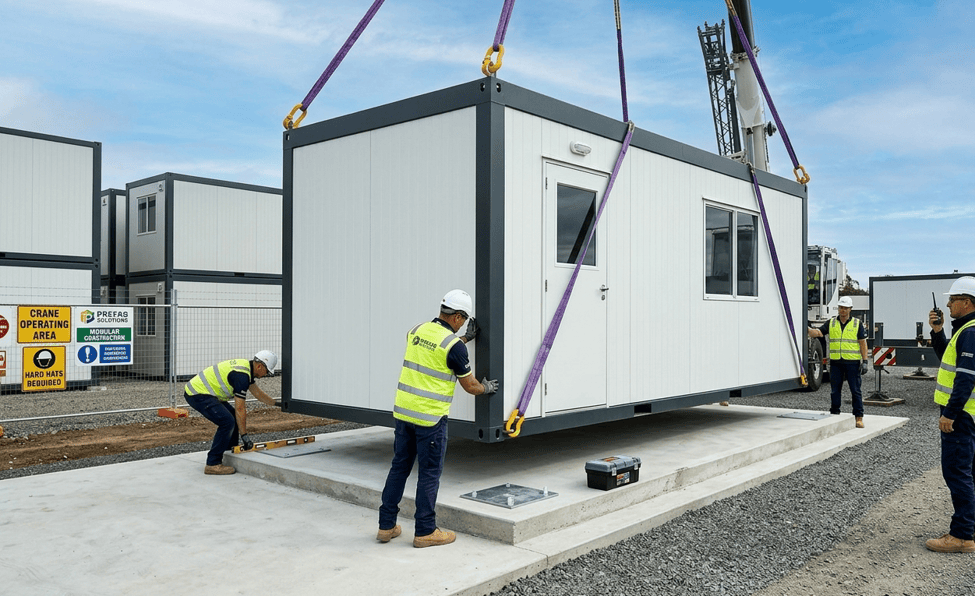
Prefabricated houses that are highly inexpensive are structures that, in whole or in part, are produced in a factory and then moved to the construction site for installation, assembly or unfolding. This is an extensive category rather than a single product. It usually covers prefab home kits, modular houses, prefab cabins, container houses, flat pack container houses, folding houses and ready-made houses. Most of the savings in costs are achieved through the optimization of manufacturing and logistics, not by sacrificing safety or build quality.
| Quick Answer Low-cost prefabricated houses are mainly factory-built housing systems with a standardized design aimed at reducing overall project cost through efficient material use, faster production, lower on-site labor and quicker installation. Popular choices include prefab home kits, modular houses, prefab cabins, container houses, flat pack container houses, folding container houses and readymade houses. |
Low-Cost vs Cheap: What Buyers Should Understand
“Low cost” and “cheap” are often used as synonyms, but to consumers, they express two different things. Low cost normally refers to a solution where the overall cost of the project is managed through well-skilled design and production choices, at the same time fulfilling safety, durability and performance standards. Cheap, on the other hand, usually represents the lowest possible price, which can mean use of second-rate materials, decreased insulation, or lack of installation support.
A low-cost prefabricated house still has to be safe, durable and suitable for its purpose. Cheap prefabricated house kits might be priced lower but they may really demand more site labor, more tools, more finishing work, and more local construction knowledge to get the job done. A low first price definitely does not always mean a low total cost. For overseas buyers in particular, shipping, installation and long-term maintenance are most times more important than the unit price alone.
| Term | Meaning | Buyer Risk |
| Cheap Prefab House | Lowest initial price | May sacrifice materials, insulation or installation support |
| Low-Cost Prefab House | Cost-controlled solution | Needs proper specification comparison |
| Cost-Effective Prefab House | Lower total project cost | Best for serious buyers and project owners |
Why Are Prefabricated Houses More Affordable Than Traditional Construction?
Prefabricated houses could be much more affordable than traditional construction only if the design, materials shipping, installation, and project scale are carefully planned. There are several reasons why these houses cost less:
- Factory-controlled production with consistent quality
- Standardized components that reduce design and engineering time
- Reduced material waste compared with on-site construction
- Faster construction timeline, which lowers labor cost
- Less on-site labor required overall
- Fewer weather-related delays during production
- Repeatable designs that simplify quoting and manufacturing
- Scalable production for larger orders
- Better logistics planning for bulk shipments
- Faster occupancy, reducing temporary housing or rental costs
Main Types of Low-Cost Prefabricated Houses
Different types of cheap prefabricated houses have varying degrees of price, speed of construction, customization, and durability. What follows is a discussion of each alternative for what it is, how it helps in reducing cost, its pros and cons, as well as the profile of the target customer.
1. Cheap Prefab House Kits
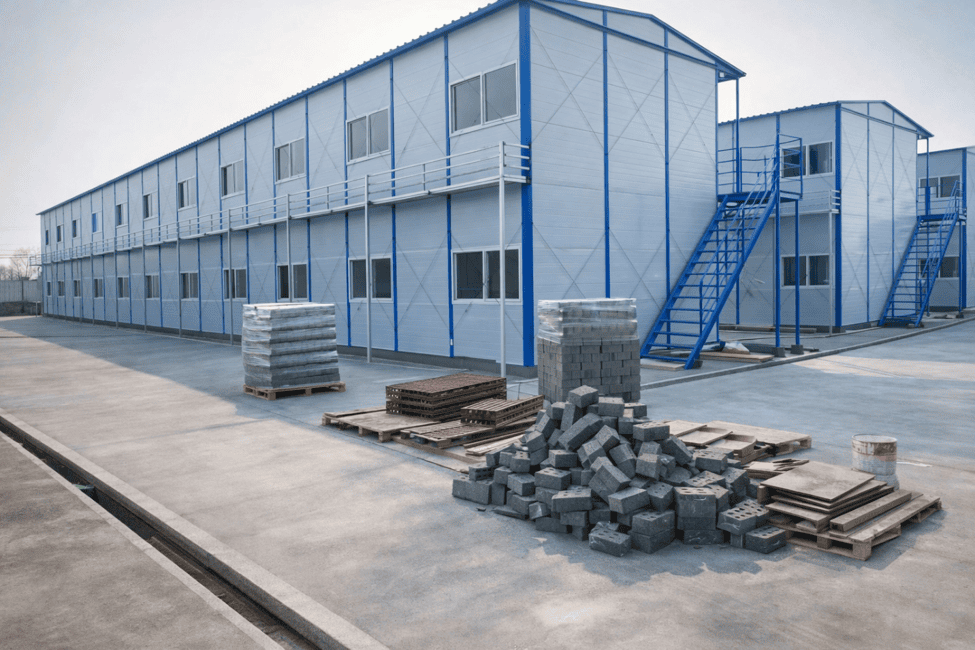
Cheap prefab house kits consist of sets of pre-cut or pre-made building parts that are shipped to the location where they will be assembled. The cost benefits stem from factors like lower factory finishing standards, simpler transportation, adaptation for local assembly, and lower labor costs when the buyer already holds a skilled team.
Advantages:
- Lower initial price
- Flexible for small projects
- Suitable for simple homes or cabins
- Can be assembled by local contractors
Limitations:
- Requires more on-site work
- Installation mistakes can increase total cost
- Not ideal for urgent or large-scale accommodation
- Local labor skills matter
- Finishing work may not be included
Best for: small homes, DIY-style houses, low-cost prefab cabins, rural housing, and buyers with their own local construction teams.
2. Low-Cost Prefab Home Kits
Low-cost kit homes usually consist of structural elements, wall panels, roofing materials doors windows and some basic materials pre-packaged for a quicker onsite construction. They fit very well with a limited-budget individual home, but not necessarily the most suitable option for bigger camps. Buyers should inquire if a kit will have flooring, interior finishing, electrical work, plumbing, bathroom fixtures and installation guidance.
Advantages:
- Lower upfront cost
- Easier transportation
- Flexible for small residential projects
- Can be finished in phases
Limitations:
- Total cost may rise after adding foundation, utilities and interior finishing
- Requires local labor
- Not always ready to use immediately
Best for: small residential homes, budget housing, rural houses and vacation cabins.
3. Low-Cost Modular Housing
Low-cost modular housing relies on factory-made modules or modular parts which are then moved to the location and put together to form entire housing units. The economic benefits of this approach come from factors like standard designs that can be repeated, construction that takes less time, quality that is done in a controlled manner, fewer workers on the site, and the capability of being used for a big housing scheme.
Advantages:
- Suitable for scalable housing projects
- Faster than traditional construction
- More predictable quality and schedule
- Good for developers, governments and NGOs
Limitations:
- Fully finished modules may have higher shipping costs
- Transport size may be limited
- Crane or lifting equipment may be required
- Design changes after production can be difficult
Best for: affordable housing projects, public housing, social housing, student housing, worker housing and community housing developments.
4. Low-Cost Modern Prefab Homes
Low-cost modern prefab houses manage to limit expenses during the construction phase while staying true to the modern design, efficient layouts and practical materials. Having a stylish, up-to-date look doesn’t have to mean spending more money; uncluttered floor plans, standard measurements, simple roof design, logical window placement and minimal interior finishes are just a few ways to stay within budget while having a modern touch.
Advantages:
- Clean modern appearance
- Efficient use of space
- Faster build time
- Better design consistency
- Suitable for residential and rental projects
Limitations: high-end facades, complex rooflines, large glazed areas and luxury interiors can significantly increase cost, so a genuinely low-cost modern home needs controlled design complexity.
Best for: small modern homes, rental units, vacation homes and affordable residential developments.
5. Low-Cost Prefab Cabins
Low-cost prefab cabins refer to small pre-assembled structures intended for a minimalist lifestyle, tourist attraction, holiday purposes, distant locations, etc. The price benefits derive from the reduced size, more basic designs, less material consumption, simpler shipping, and quicker setup.
Advantages:
- Affordable for small-scale use
- Suitable for tourism and vacation projects
- Can be delivered faster than traditional cabins
- Lower maintenance requirements
Limitations:
- Limited living space
- Not suitable for large families or large worker camps
- Local zoning and utility connection still need planning
Best for: vacation cabins, resort units, remote site cabins, small rental units and temporary accommodation.
6. Container-Based Low-Cost Prefab Houses
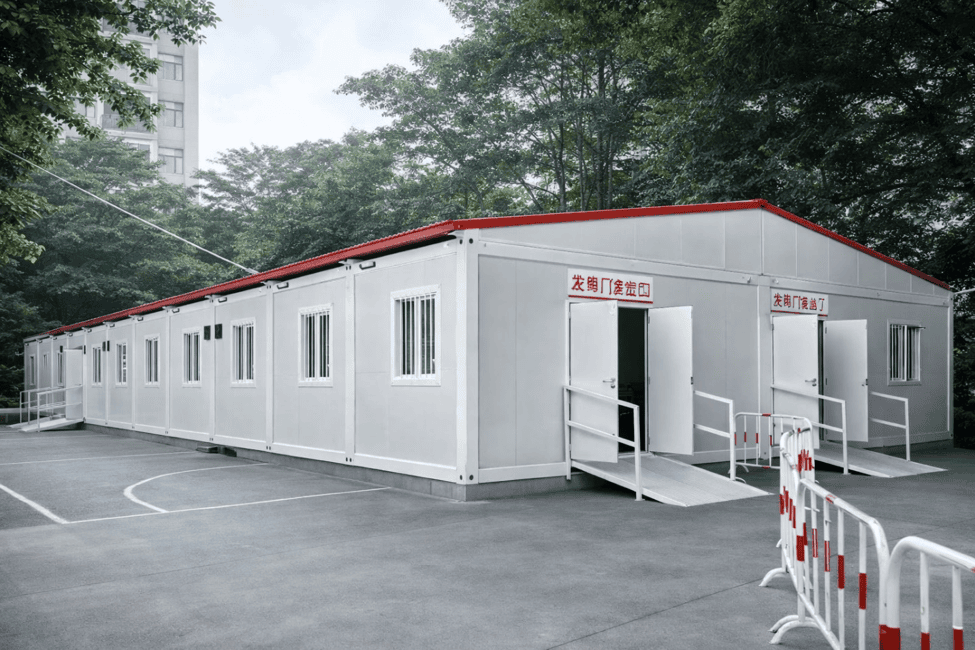
Container-based prefab houses mostly use steel container structures or modular systems inspired by containers to create homes, offices, dormitories and temporary buildings. Besides, they have a long-lasting structure that can easily withstand harsh weather, and the manufacturing process is time-saving, as the designs are standard and the units can be combined into larger layouts, which, of course, are not limited to temporary and semi-permanent uses.
Advantages:
- Durable steel structure
- Fast installation
- Good for site offices and dormitories
- Can be combined for camps
- Suitable for project-based accommodation
Limitations:
- Insulation must be designed properly
- Layout width may be limited
- Anti-corrosion treatment is important in coastal or humid areas
- Heavily modified designs may increase cost
Best for: worker dormitories, site offices, temporary housing, construction camps, mining camps and emergency housing. For container office configurations, see ZN House’s
Container Dormitory solutions, which are built on this same container-based approach.
7. Flat Pack Container Houses for Lower Total Project Cost
A flat pack container house is a prefabricated container building system that is packed flat for transportation and assembled on site. This system comes in handy mostly for overseas projects where the efficiency of shipping and the ability to deliver a large quantity at once are the main concerns. Some of the price benefits are a high loading quantity in 40HQ containers, lower shipping cost per unit, suitability for bulk orders, flexible layout, faster site assembly and good economics for large accommodation projects.
Advantages:
- Better shipping efficiency than fully assembled units
- Suitable for international projects
- Can be arranged into dormitories, offices, kitchens, dining halls, toilets and clinics
- Good balance between price, transport, installation and flexibility
- Suitable for large project camps
Limitations:
- Requires on-site assembly
- Needs foundation and drainage planning
- Installation team and tools are required
- Not as instantly deployable as folding units
Best for: construction camps, mining camps, worker accommodation, government housing projects, emergency housing, overseas project camps and large-scale low-cost modular housing projects.
Note: For overseas buyers, flat pack container houses can be more cost-effective than many fully assembled prefab homes because they reduce shipping volume, support bulk loading and allow flexible project layouts.
Learn more about ZN House flat pack container houses for overseas worker accommodation projects, or explore
container camp solutions for construction and mining sites.
8. Folding Container Houses as Low-Cost Readymade Houses
Folding container houses are prefabricated units that are manufactured in such a way that they can be folded up for transport and then quickly unfolded at the location. If speed of deployment is the highest priority, then they can be considered almost as a readymade house solution. Cost benefits include extremely rapid installation, less on-site labor, being fit for urgent projects and minimizing project delay costs.
Advantages:
- Fast setup
- Good for temporary housing
- Suitable for emergency use
- Less installation complexity
- Practical for short-term accommodation
Limitations:
- Lower customization than flat pack systems
- More standardized layout
- Not always ideal for complex camp designs
- Long-term performance depends on material and structure quality
Best for: emergency housing, disaster relief, temporary site offices, short-term worker housing and fast deployment projects.
Note: Flat pack container houses are usually better for large and flexible camp layouts, while folding container houses are better when fast installation is the top priority.
Explore ZN House folding container house options for rapid deployment projects.
9. Steel Frame Low-Cost Prefabricated Houses
Steel frame prefab houses utilize ready-made steel frames as their primary load-bearing system, which are then complemented by the use of insulated wall panels, roofing systems, and doors and windows. With its cost and advantages, the structure is very resistant; it is possible to have larger spans so the building can be more open, the life of the building can be very long, the maintenance cost can be very low and the performance for repeated or long-term use can be very good.
Advantages:
- Strong and durable
- Suitable for larger buildings
- High customization
- Good for long-term projects
- Can be combined with container buildings
Limitations:
- More complex design
- Longer installation than standard container units
- Foundation planning is important
- Requires an experienced installation team
Best for: long-term low-cost housing, public facilities in camps, dining halls, warehouses, schools and large project buildings.
See ZN House Light Steel Structure Building for larger-span, long-term project facilities.
Cost Comparison: Low-Cost Prefabricated House Options
| Type | Initial Cost | Shipping Efficiency | Installation Speed | Customization | Best For |
| Cheap Prefab House Kit | Low | High | Medium to Slow | Medium | Small homes, cabins, DIY projects |
| Low-Cost Prefab Home Kit | Low to Medium | High | Medium | Medium | Budget homes, rural housing |
| Low-Cost Modular Housing | Medium | Medium | Fast | Medium to High | Public housing, developers, communities |
| Low-Cost Modern Prefab Home | Medium | Medium | Fast | High | Residential and rental projects |
| Low-Cost Prefab Cabin | Low | High | Fast | Medium | Tourism, vacation, remote sites |
| Container-Based Prefab House | Low to Medium | Medium | Fast | Medium | Offices, dormitories, temporary housing |
| Flat Pack Container House | Low to Medium | Very High | Fast | High | Overseas camps, worker accommodation |
| Folding Container House | Medium | Medium to High | Very Fast | Low to Medium | Emergency and temporary housing |
| Steel Frame Prefab House | Medium | Medium | Medium | High | Long-term and large-span buildings |
Besides the most affordable one, there are usually more cost-effective alternatives. Planning overseas projects involves considering the whole gamut of factors impacting the project cost, like shipping efficiency, installation time, durability and maintenance; the price when the product leaves the factory is the least of the concerns.
What Affects the Total Cost of Low-Cost Prefabricated Houses?
Size and Floor Area
Bigger floors require more materials and carrying them will also be very expensive but when the production is a large project, the price of one item is lower because of the economy of scale.
Structure Type
Different structural types result in different cost profiles, for example, kit homes, modular units, container houses, flat pack container houses and steel structure buildings.
Material and Insulation
Insulation grade, fire resistance, waterproofing, anti-corrosion treatment, wall panel thickness, and roof structure all influence the price as well as the service life.
Interior Finish Level
Shipping Distance and Loading Quantity
Shipping efficiency is a major consideration for international buyers when determining the cost of a product. Flat pack systems may help in reducing the shipping volume versus fully assembled units.
Foundation and Site Preparation
Foundation work, drainage, land leveling and road access conditions all influence total project cost.
Local Labor and Installation
Cheap prefab house kits may require more local labor, while folding houses and modular systems can reduce installation time.
Utilities and Permits
Electrical work, water supply and drainage, HVAC, local permits and building codes all factor into the final budget.
Quantity and Project Scale
Large-batch projects can lower per-unit cost through standardized design, batch production and consolidated container loading.
Best Low-Cost Prefab House Options by Project Type
| Project Type | Recommended Option | Reason |
| Small residential home | Low-cost prefab home kit / modern prefab home | Lower initial cost and flexible layout |
| Vacation cabin | Low-cost prefab cabin | Compact and easy to install |
| Rural housing | Prefab home kit / modular housing | Suitable for local assembly and scalable projects |
| Public housing | Low-cost modular housing | Repeatable and scalable |
| Worker accommodation | Flat pack container house / detachable container house | Efficient shipping and flexible camp layout |
| Construction camp | Flat pack container house/container camp | Fast installation and scalable dormitory layout |
| Mining camp | Flat pack container house + steel structure | Suitable for remote and large-scale projects |
| Emergency housing | Folding container house | Fastest deployment |
| Site office | Container-based prefab house | Durable and easy to relocate |
| Long-term project facility | Steel structure prefab building | Stronger structure and longer use |
Are Low-Cost Prefabricated Houses Suitable for Overseas Projects?
Yes, though foreign buyers must consider overall landed cost besides only the unit price. For projects overseas, besides the unit cost, one will also have to incorporate into the budget the 40HQ loading quantity, a mode of transport, packing design, level of installation complexity, availability of local labor, climatic requirements, customs & documentation, spare parts & maintenance, and supplier’s export experience.
As they are packed flat, efficiently loaded, and assembled on-site, the flat pack container houses for large accommodation projects are often considered by overseas projects as a way of reducing the shipping cost per unit.
How to Choose a Reliable Low-Cost Prefab House Supplier
Never choose a supplier solely based on the lowest quoted price. Find a partner who will help you lower the overall project cost through structural materials shipping, installation, and long-term use. Key factors to consider are:
- Factory production capacity
- Clear technical specifications
- Real project cases
- Export experience
- Custom layout ability
- Material and insulation options
- Loading and packing support
- Installation guidance
- Quality control system
- Ability to support bulk orders
- Response speed and quotation clarity
A reliable supplier should help buyers compare structure, materials, shipping, installation and long-term use cost instead of only offering the lowest unit price.
Low-Cost Prefabricated Houses from ZN House
ZN House offers affordable, prefabricated housing options for international projects such as house kits, folding container houses, detachable container houses, container camps, worker accommodations, site offices, and light steel structure buildings.
ZN House supports projects with:
- Project layout planning
- Factory production
- Custom size and configuration
- Wall panel and insulation options
- Bulk loading plan
- Shipping support
- Installation guidance
- Solutions for worker dormitories, offices, kitchens, dining halls, toilets, clinics and camps
These options suit various types of projects like construction camps, mining camps, oil and gas camps, worker accommodation, emergency housing, government housing, remote project sites and temporary offices.
Tell us where your project is carried out, how many people it can accommodate, what layout you need and how much you want to spend. ZN House will be able to propose a cost-effective prefab housing model that will be most suitable for your project requirements.
Get a Low-Cost Prefab Housing Solution
Frequently Asked Questions About Low-Cost Prefabricated Houses
What are low-cost prefabricated houses?
Low-cost prefabricated houses are a type of factory-built or partially factory-built housing systems which are designed to reduce total project cost through standardized production, efficient materials, faster installation and lower site labor. They comprise different formats, from prefab home kits, modular housing, container houses to folding houses.
Are low-cost prefab homes durable?
Yes, if adequately designed and fabricated using suitable structural insulation, roof, waterproofing and installation. ‘Low cost’ should mean. cost managed/controlled rather than poor quality, and durability depends greatly on the choice of material and standard of build.
What is the cheapest type of prefab house?
Cheap prefab house kits and small prefab cabins rarely have the lowest initial prices; Though, the overall cost depends on the foundation work, installation, utilities, permits, and finishing work that can add up really after delivery.
Are cheap prefab house kits a good choice?
For smaller projects and where there is an in-house team of contractors, this may be a good option, although it will require more labor on site and a more stringent installation process to prevent errors that could result in additional cost.
What is the difference between low-cost prefab homes and modular housing?
Low-cost prefab homes are a broad term covering many building types. Low-cost modular housing is one specific type; modular components or modules designed for faster and more scalable construction.
What affects the cost of a prefab house?
Size, type of structure, choice of materials, level of insulation, finishing of exterior and interior, distance of shipping, foundation work, installation utilities, permits and how many orders are placed will all impact the final price of a prefab house project.
Which low-cost prefab house is best for overseas projects?
Flat pack container houses could be great for overseas projects as they provide effective loading, less shipping volume, layout changes easily done and almost instant assembly, mainly when there is a need for bulk accommodation.
What is a low-cost readymade house?
Generally, a low-cost ready-made house means a type of prefabricated housing unit that is largely assembled before shipment and can be very quickly set up at the site. To satisfy the requirement for quick deployment, folding container houses are usually chosen.
How can I reduce the total cost of a prefab housing project?
Standardize layouts, select the right materials, improve the efficiency of loading, organize the structural work far ahead, minimize the time spent on over-customization, collaborate with a supplier that gives you design, packing and installation consultancy.
Disclaimer
This article is intended solely for general information purposes and should not be seen as pricing, engineering or legal advice. The costs, specifications and configurations change according to the project, region and supplier. For project-specific quotations and technical advisory, please get in touch with ZN House directly.
Similar Posts
Tiny Home Flat Pack: The Future of Compact and Efficient Living
As more people seek affordable, sustainable, and flexible housing solutions, the concept of tiny home flat…
Flat Pack Homes for Sale Quick Installation Guide
In the contemporary housing market, the demand for convenient, cost – effective, and rapidly installable housing…
Top 10 Benefits of Container Camps for Modern Living Solutions
When construction starts on new infrastructure projects in remote desert regions, a new mine is developed…
What Is a Prefabricated Building? Types, Benefits, and Applications
A prefabricated building (or prefab building) is a structure whose major elements are built in a…
How to Choose a Container House: A Complete Buyer’s Guide
When selecting a container house, the first step is to make five important decisions: selecting the…
How to Choose the Right Site Office Container for Your Construction Project
The construction industry, which operates in dynamic settings and under time pressure, demands the highest levels of…


