



What Is a Prefabricated Building? Types, Benefits, and Applications
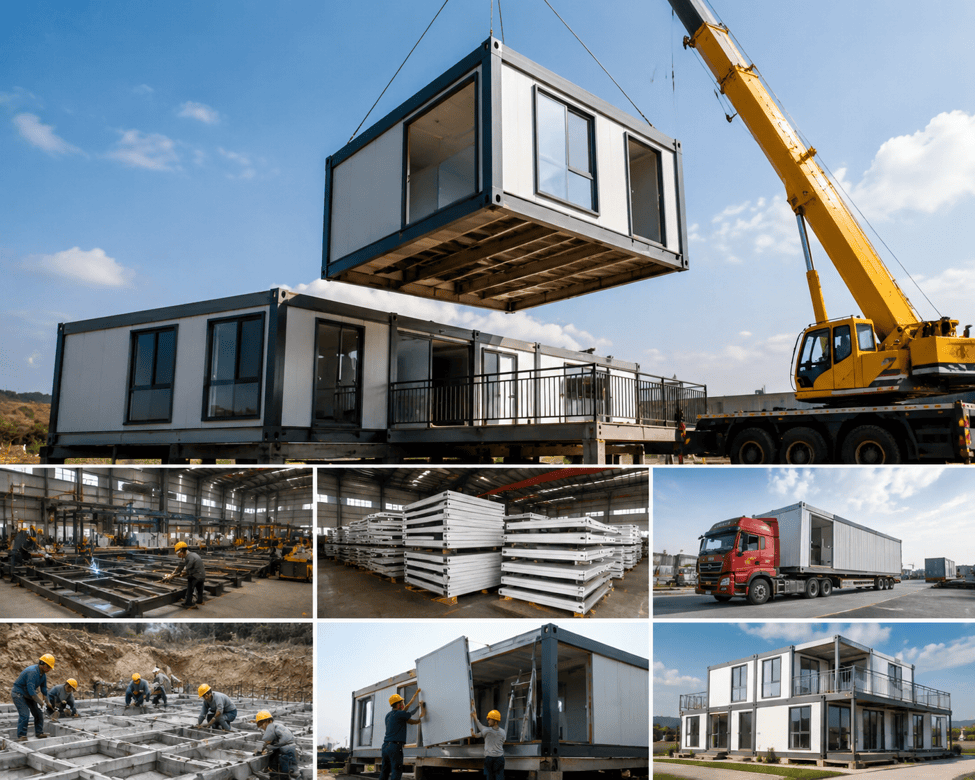
A prefabricated building (or prefab building) is a structure whose major elements are built in a manufacturing plant off-site, then transported to the location for assembly or installation. Prefabricated buildings can be constructed from the use of modular panelized containers, flat pack containers, folding containers, detachable container houses, as well as steel structure buildings, etc. Usually, the construction speed, site conditions, budget, and the number of replicated units decide whether a prefab building is chosen over a site-built structure for project owners.
This article describes a prefab building, how prefab construction is done, the major types of prefab buildings available in the market today, and how one can select the right system for a residential, commercial, or workforce accommodation project.
What Is a Prefabricated Building?
| Quick Answer A prefabricated building (sometimes abbreviated to prefab building) is a building constructed entirely or partly in a factory before it is shipped to the location where the final assembly takes place. Some of the typical prefab building categories are modular buildings, panelized buildings, container buildings, flat pack container houses, folding container houses, detachable container houses, and steel structure buildings. |
Prefabricated buildings are produced by making all or some of the structural parts in a factory with a well-controlled environment and then packing those parts and sending them to the site where they are combined, installed, or joined into a completed building. Prefab is essentially a construction technique rather than a particular type of product. The same fundamental technique can be used for delivering houses, offices, schools, dormitories, project camps, warehouses, and temporary buildings.
Heavy factory work is done inside factories away from the building site. This is one reason why prefabricated construction is widely used in remote, overseas, and time-sensitive projects, as it can reduce the on-site construction time and the need for skilled labor at the site.
How Does Prefabricated Construction Work?
Prefabricated construction generally follows five stages, from initial planning through to final on-site assembly.
1. Project Design and Planning
The work reflects the client’s character and the way they live. The first step is determining the building’s function, the size needed, the configuration of the rooms, how many people will be inside, and the various areas of the building. Besides picking a structural system, the buyer and manufacturer also check the local weather, access roads, assembly conditions, and the main rules for buildings before starting production.
2. Factory Manufacturing
Inside the factory, steel frames, wall and roof panels, flooring, doors, windows, and electrical preinstallation work are done. It is more straightforward to maintain the same quality and materials when working in a controlled factory environment. Besides, there are also fewer uncertainties that usually happen during onsite building, like weather delays or variations in the quality of labor.
3. Packing and Transportation
Finished modules, panels, or components are packed and shipped to the project site. For overseas projects, how efficient the packing is has a direct impact on the shipping cost because more units loaded per container usually result in a lower landed cost per unit. Flat pack container buildings, in fact, are a form of pre-fabrication which is More exactly aimed at reducing the shipping volume versus fully assembled units.
4. Site Preparation and Foundation
Since prefabricated buildings are built off-site, the location intended for the project still calls for leveling, foundation installation drainage construction of access roads as well as planning of the electricity and water supply. Prefab construction minimizes the requirement of on-site labor for constructing the building structure but does not completely remove the necessity of site work.
5. On-Site Assembly and Installation
Installation time depends greatly on the type of product. Modular units usually demand the lowest amount of on-site work as they come almost fully assembled. Panelized and flat pack systems need more assembly time; folding container houses are made for very quick deployment.
Prefabricated Building vs Traditional Construction
| Factor | Prefabricated Building | Traditional Construction |
| Production Method | Factory-made components or modules | Mostly built on site |
| Construction Speed | Faster in many projects | Usually longer |
| Weather Impact | Lower factory-stage weather impact | More affected by weather |
| Quality Control | More standardized factory control | Depends heavily on-site work |
| Site Labor | Usually less on-site labor | More on-site labor |
| Waste Control | Easier to manage material waste | More site waste risk |
| Design Flexibility | Good, but must be planned early | Flexible during construction |
| Transportation | Needs logistics planning | Less factory-to-site transport |
| Best For | Repeated layouts, camps, offices, temporary buildings | Highly customized local buildings |
Prefabricated buildings greatly increase efficiency mainly if the projects involve multiple units, have tight building timelines, are in remote areas or if it is a case of temporary accommodations. Even so, there are still situations when traditional methods can be the better option, like for highly customized permanent buildings where the use of local materials and the possibility of on-site changes are important.
Prefabricated Building vs Modular Building: What Is the Difference?
Modular buildings are, in fact, a type of prefabricated building; Still, not all prefabricated buildings qualify as modular.
Prefabricated buildings cover a large category. Modular buildings are a particular type within that category, formed as complete three-dimensional units in the factory and later brought to the site for assembly into a bigger structure. Several other types of prefabs, like panelized, flat pack, container, and steel structure systems, also fall into the prefabricated category but are not necessarily modular.
| Term | Meaning |
| Prefabricated Building | Broad category of factory-made building systems |
| Modular Building | A type of prefabricated building made from complete 3D modules |
| Panelized Building | Uses factory-made wall, roof or floor panels |
| Container Building | Uses container-based steel units or container-inspired structures |
| Steel Structure Building | Uses prefabricated steel frames and building components |
Main Types of Prefabricated Buildings
This page gives an overview of the main types of prefabricated buildings, what they are mainly used for, and their common shortcomings.
1. Modular Buildings
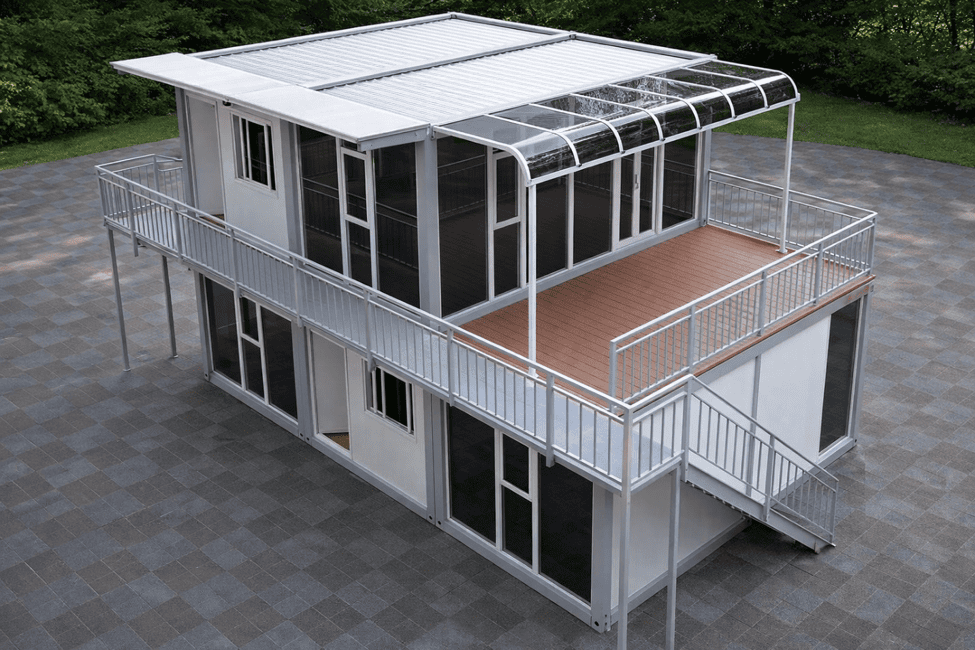
Prefabricated modular buildings are those built with modules that are completely manufactured in the factory, transported to the location and assembled into a bigger building. They generally come with a very high degree of factory finishing, thereby enabling very speedy installation at the site. The modular building method has become very popular for the construction of houses, hotels, student housing, schools as well as offices where the layouts are regularly repeated in several units.
- Best for: residential buildings, hotels, dormitories, schools, offices, repetitive layouts
- Limitations: transport size limits, crane equipment may be needed, design changes are difficult after production
2. Panelized Buildings
Panelized buildings consist of a number of factory-manufactured wall panels, roof panels, and floor panels, which are delivered to the construction site and combined with other building systems for final assembly. The shipping of panels is usually more efficient than the shipping of complete modules, and they provide greater design versatility; But, they also demand more on-site assembly work than fully modular systems.
- Best for: villas, residential homes, low-rise buildings, projects with custom layouts
- Limitations: more site work, weather may affect installation, local labor quality matters
3. Container Buildings
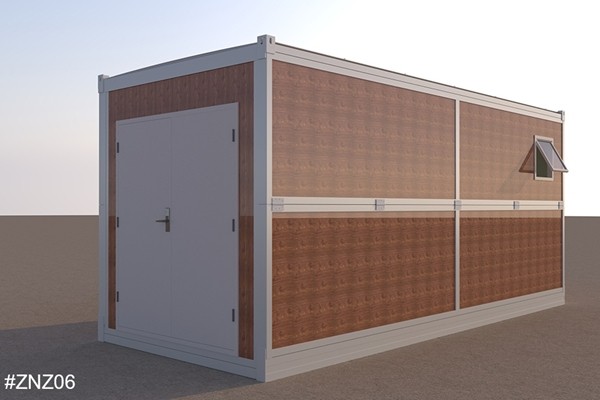
Container buildings refer to the type of prefab buildings that are constructed using shipping containers or container-like steel structures. Steel as a framed material allows for strong structural performance, and stacking or combining of units to make bigger layouts is possible, resulting in container buildings becoming the best option for temporary or semi-permanent usage. Without a doubt, insulation, corrosion-proofing and waterproofing are key considerations in the design, in particular when it comes to humid or coastal areas.
- Best for: site offices, worker dormitories, temporary housing, container homes, small commercial buildings, project camps
- Limitations: interior width may be limited, insulation design is important, coastal or humid areas require anti-corrosion treatment
4. Flat Pack Container Buildings
A flat pack container building is a prefab container building system that is packed flat to make transportation more efficient and then assembled at the site. Such a packing method greatly enhances container loading efficiency, which is one of the major factors that have made the flat pack systems popular for overseas shipping. Flat pack container buildings can be offices, dormitories, kitchens, dining halls, clinics, classrooms, and complete project camps. And the style usually offers a good trade-off between transportation efficiency, installation speed, and layout flexibility for large-volume projects.
- Best for: construction camps, mining camps, worker accommodation, temporary offices, government housing, emergency housing, overseas project camps
- Limitations: requires on-site assembly, foundation and drainage planning are needed, installation tools and team are required
For overseas project owners, flat pack container buildings are often practical because they reduce shipping volume, support bulk loading and allow flexible camp layouts.
5. Folding Container Buildings
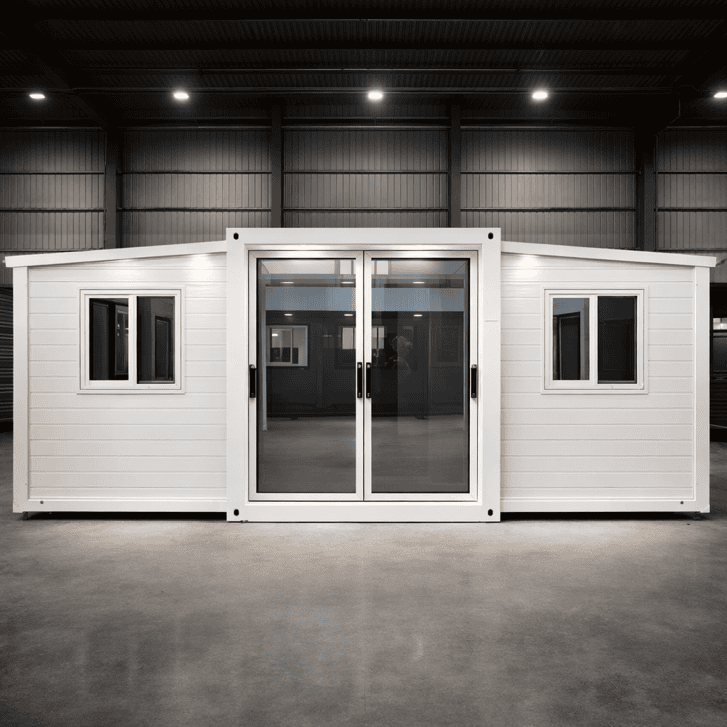
Folding container buildings consist of prefabricated units which after being folded, become compact enough for transportation, and then they can be unfolded promptly at the location. That means, these types of buildings are a very good fit for projects where speed of deployment is more important than the ability to customize the layout, for example, when it comes to emergency response and temporary housing for workers.
- Best for: emergency housing, disaster relief, temporary offices, short-term worker accommodation, fast deployment projects
- Limitations: more standardized layouts, less suitable for complex camp design, customization is limited
6. Detachable Container Buildings
Detachable container buildings are container units made of prefab material that can be easily assembled, disassembled and relocated. They can be reused multiple times. This makes them a wise choice for project owners who plan to move the buildings from one job site to another after a work phase is finished.
- Best for: construction site offices, worker dormitories, temporary schools, clinics, relocatable project buildings
- Limitations: assembly and disassembly require labor, maintenance is needed after relocation
7. Steel Structure Buildings
Buildings with a steel structure make use of the prefabricated steel frames as the primary load-bearing system alongside wall panels, roof systems, doors and windows. The steel frame is capable of holding larger spans than usual container units; Because of this, this method of construction is considered appropriate for permanent or semi-permanent facilities, and it is frequently combined with container buildings to create entire large-scale camps.
- Best for: warehouses, dining halls, schools, offices, camp public facilities, large-span buildings
- Limitations: more complex engineering, longer installation than container units, foundation planning is important
8. Hybrid Prefabricated Buildings
Hybrid prefabricated buildings mix together various prefab systems, for example container units, steel structures and panelized components. They are the usual solution for complex projects, where different spaces like dormitories, offices, dining halls, restrooms, storage, and medical rooms are combined into a single operating camp. Suppliers capable of detailed project planning are generally required for hybrid projects.
- Best for: mining camps, oil and gas camps, construction camps, worker accommodation villages, large mixed-use project sites
- Limitations: requires more planning, needs experienced supplier coordination
Advantages of Prefabricated Buildings
Faster Construction
As the factory production and on-site preparation can be done concurrently, the overall project delivery time is usually less when compared with traditional site-built construction.
Factory-Controlled Quality
It is easier to standardize materials, workmanship and dimensions accuracies in a factory environment where conditions can be controlled , unlike the variable site conditions.
Reduced Weather Delays
Manufacturing work that takes place indoors is rarely disrupted by rain, heat, or other weather conditions that usually cause delays in traditional construction.
Less On-Site Labor
If more of the building pieces are manufactured in the factory, then only a few skilled workers are required for the project. This is mostly convenient for remote locations or areas with a scarcity of available local workers.
Better Waste Control
Producing goods in a factory environment allows for more precise planning of material usage and managing offcuts, which can result in less wastage of materials overall when compared with cutting and fitting on site.
Suitable for Repeated Layouts
Prefab systems are very suitable for projects that have a lot of similar rooms, for instance, dormitories, hotels, hospitals, schools, and workers’ camps.
Flexible for Temporary and Permanent Use
Depend on construction and materials used, prefabricated buildings may act as temporary site offices and worker dormitories for a single project phase or as long-term and permanent facilities.
Limitations of Prefabricated Buildings
Prefabricated buildings can save time and improve efficiency, but they still require proper design, site preparation, logistics planning and professional installation.
- Early design decisions are important, since changes after production starts are difficult
- Transport size and shipping cost need planning, especially for overseas projects
- Site foundation work is still required even with prefab structures
- Local permits and building codes still apply to prefabricated buildings
- Installation quality has a direct effect on the final performance of the building
- Extreme climates require proper insulation and material selection
- Not every prefab system fits every project, so the structure type should match the project’s duration, climate, and use case
Common Applications of Prefabricated Buildings
| Application | Suitable Prefab Building Type |
| Temporary site office | Flat pack container building / detachable container building |
| Worker accommodation | Flat pack container house/container dormitory |
| Construction camp | Flat pack container buildings + steel structure facilities |
| Mining camp | Container buildings + steel structure buildings |
| Emergency housing | Folding container buildings |
| Container office | Flat pack / detachable/folding container office |
| School or clinic | Detachable container buildings/steel structure buildings |
| Warehouse or dining hall | Steel structure buildings |
| Government housing | Flat pack container houses / modular buildings |
Are Prefabricated Buildings Suitable for Overseas Projects?
Yes, prefabricated buildings are a good option for international projects, but purchasers should think about the overall landed cost, instead of just the factory price. Many factors can influence the effectiveness of a prefab system after it has been delivered to an overseas construction site, such as:
- Shipping volume and 40HQ container loading quantity
- Packing method
- Availability of an installation team
- Foundation requirements
- Local climate
- Local regulations
- Utilities and connections
- Supplier export experience
- Spare parts and ongoing maintenance
Flat pack container buildings are often suitable for overseas projects because they can be packed efficiently, shipped in bulk and assembled on site.
How to Choose the Right Prefabricated Building for Your Project
Define the Building Use
Housing, offices, dormitories, camps, warehouses, schools, clinics, and emergency housing each tend to suit a different prefab structure type.
Confirm Project Duration
Temporary projects, semi-permanent projects, and long-term facilities call for different structural choices and material specifications.
Check Transportation Conditions
For overseas projects, container loading quantity and shipping method directly affect total landed cost.
Consider Installation Speed
Emergency projects generally favor folding systems, large camps often suit flat pack systems, and long-term, large-span facilities are better matched to steel structure buildings.
Evaluate Climate Requirements
High temperature, low temperature, rainy season, coastal, and desert environments each call for different insulation, anti-corrosion, and waterproofing solutions.
Compare Total Project Cost
Rather than comparing factory unit price alone, project owners should account for shipping, foundation work, installation, utilities, maintenance, relocation, and overall project timeline.
Choose an Experienced Supplier
A strong supplier should be able to demonstrate factory production capacity, relevant project case studies, export experience, clear technical specifications, design support, a bulk loading plan, and installation guidance.
Prefabricated Building Solutions from ZN House
ZN House offers a range of prefabricated building options for offshore projects. These include flat pack container houses, folding container houses, detachable container houses, container offices, worker accommodation, construction camps, mining camps, and light steel structure buildings.
ZN House can support project owners with:
- Project layout planning
- Factory production
- Custom configuration
- Wall panel and insulation options
- Bulk loading plans for overseas shipping
- Overseas shipping support
- Installation guidance
- Solutions for offices, dormitories, dining halls, kitchens, toilets, clinics and camp facilities
Such solutions mostly find their way to the sites of construction, mining camps, oil and gas camps, infrastructure projects, emergency housing programs, government housing projects, worker accommodation, and temporary office buildings, among others.
For one thing, ZN House Steel Structure handled a two-floor folding container dormitory project in Malaysia, and also produced 1,000 units of fast packaging containers for the Qatar World Cup fan village project.
Tell us where your project is located, what kind of building you want, how big it should be, and the layout requirements. Based on that, ZN House will be able to suggest a suitable prefabricated building solution for your project.
Get a Prefabricated Building Solution
Frequently Asked Questions About Prefabricated Buildings
What is a prefabricated building?
A prefabricated building is a building whose parts or modules are made in a factory and then moved to the place for assembly or installation. This method can be used for houses, offices, dormitories, schools, camps, and other types of buildings and it includes various structural systems rather than one fixed product.
What is the difference between prefab and modular buildings?
Prefab is actually a very broad building technique covering constructions made up of parts manufactured in the factory. Modular building represents one aspect of prefabricated construction where fully completed 3D modules are made at the factory and then hauled and put up at the site of construction. It is only one amongst many other prefab methods like panelized, flat pack and steel structure systems.
Are prefabricated buildings permanent or temporary?
Based on the building’s structure materials, foundation and various project demands, they might be temporary, semi-permanent or permanent. For example, while a folding container building used as emergency housing meets a completely different need than a steel structure warehouse built for long-term use, both still come under the category of prefab.
What are the main types of prefabricated buildings?
Major types of modular construction are modular buildings, panelized buildings, container buildings, flat pack container buildings, folding container buildings, detachable container buildings, steel structure buildings and hybrid prefab buildings that combine several of these systems.
Are prefabricated buildings cheaper than traditional buildings?
They could decrease overall expenses in numerous construction works by accelerating the building period, lowering the site workforce and enhancing the management of the materials; but ultimate cost is influenced by design, choice of materials, freight, foundation laying and installation, which means total project cost should always be compared rather than factory price alone.
How long does it take to install a prefabricated building?
Depending on the type, size, foundation, and site conditions of the building, installation time varies. Usually, folding buildings are the quickest to be deployed, while flat pack and modular systems need a scheduled assembly plan based on crew size and site readiness.
Can prefabricated buildings be used as offices or worker accommodation?
Definitely. Prefabricated buildings have become the major source of construction for site offices, container offices, worker dormitories, construction camps and mining camp accommodation. These buildings are often accompanied by dining halls, toilets, and other supporting facilities, all built using the same prefab approach.
Are prefabricated buildings suitable for overseas projects?
Yes, mainly if the building system is engineered to facilitate efficient packing, shipping and on-site assembly. For example, flat pack container buildings are structures that have been designed to optimize container loading rates for international shipping.
How do I choose a prefabricated building supplier?
Besides, you need to consider choosing a supplier who can produce the goods in the factory, has overseas trading experience, can clearly specify the technical requirements, provide project case studies, layout designs and support, installation guidance, and plans for bulk loading because these impact the cost of the project and the reliability of delivery.
Disclaimer: We share this article as a general information resource only; it shall not be understood as engineering, legal, or regulatory advice. Rules and requirements on buildings, permits, and codes depend on the country and region. Before starting a prefabricated building project, owners should verify the specifications, compliance requirements and installation details firsthand from a qualified supplier or the local authority.
Similar Posts
Prefabricated Resettlement Homes: A Reliable Solution for Government Housing Projects
Government housing programs are often caught in a dilemma of speed, cost, and quality. After natural…
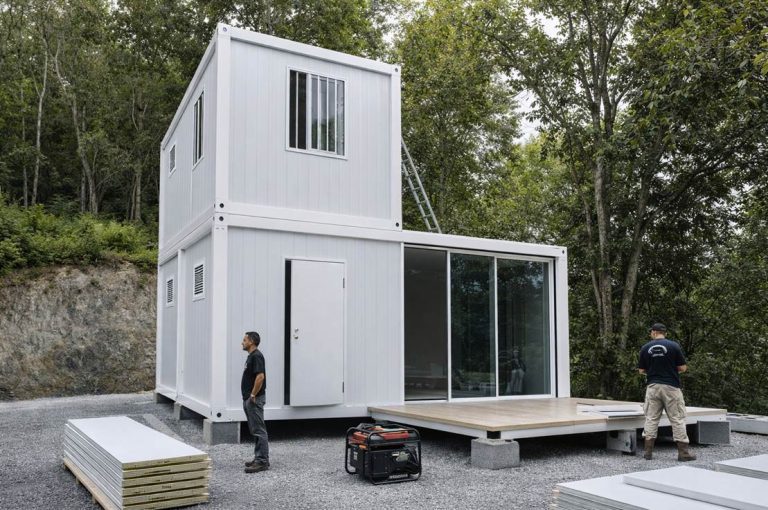
How Much Is a Prefab Tiny House?
The costs connected to owning a home haven’t been this high before. Considering rising median home…
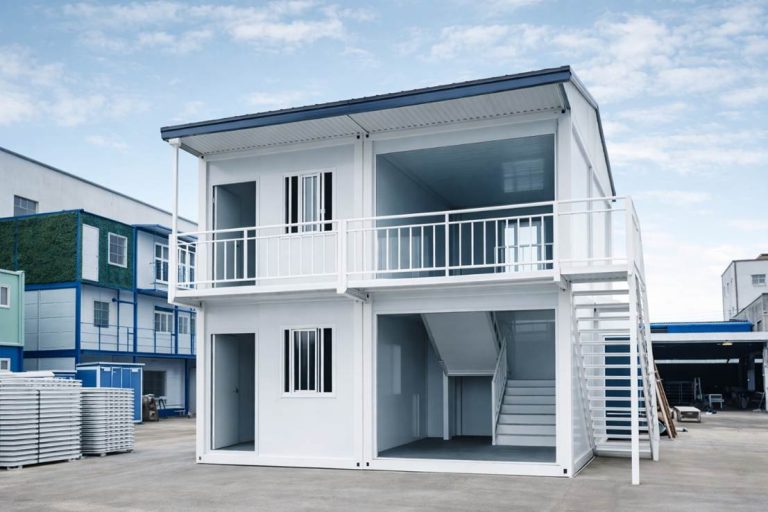
How Much Does a Container House Cost?
In recent times, container houses have emerged as one of the rapidly expanding segments in the…
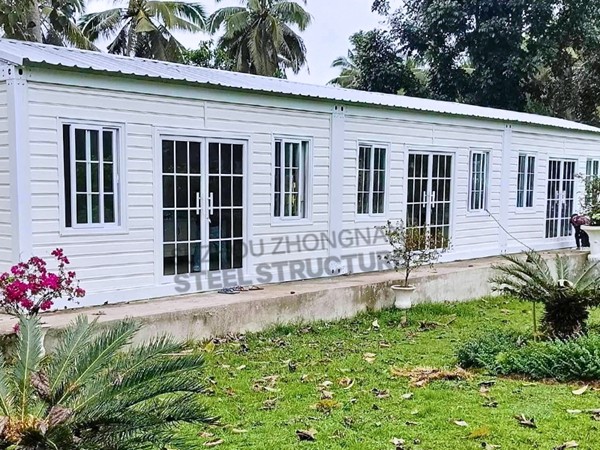
Earthquake-Resistant Container House: Key Seismic Features and Safety Guide
Introduction In earthquake-prone areas, building safety is one of the most important concerns for housing, offices,…
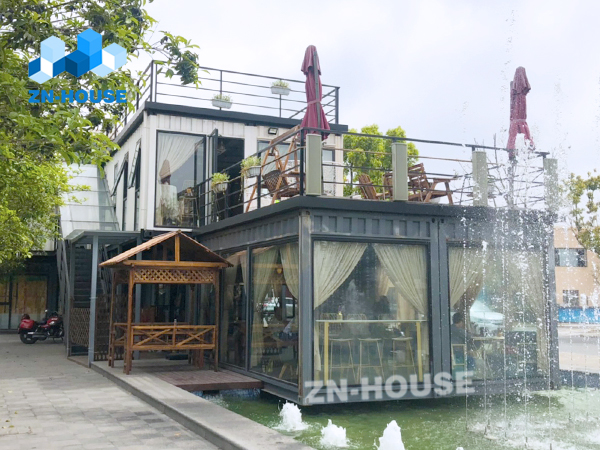
Container Hotels: A Cost-Effective & Sustainable Solution for Modern Hospitality
What is a Container Hotel? A container hotel is an innovative accommodation built using prefab containers. These…
Prefab modular container house assembly process
The assembly efficiency and quality of prefab modular container houses are crucial factors for wholesale partners,…


