



What Are Prefabricated Office Buildings? The Complete Guide for Businesses
Construction sites, factories, warehouses, mining projects, and remote work camps often need office space faster than traditional construction can deliver. A prefabricated office building offers a faster and more flexible solution by using factory-made components or modules that are delivered and installed on-site. This guide explains what prefabricated office buildings are, how they differ from modular and portable offices, where they are used, what they cost, and how to choose the right solution for your project.
Prefabricated office buildings help to solve this problem through off-site construction. Prefabricated office buildings are those that are assembled from parts made in the factory and sent to the construction site. Thus, companies can own their operational offices in the shortest period without going through the process of construction.
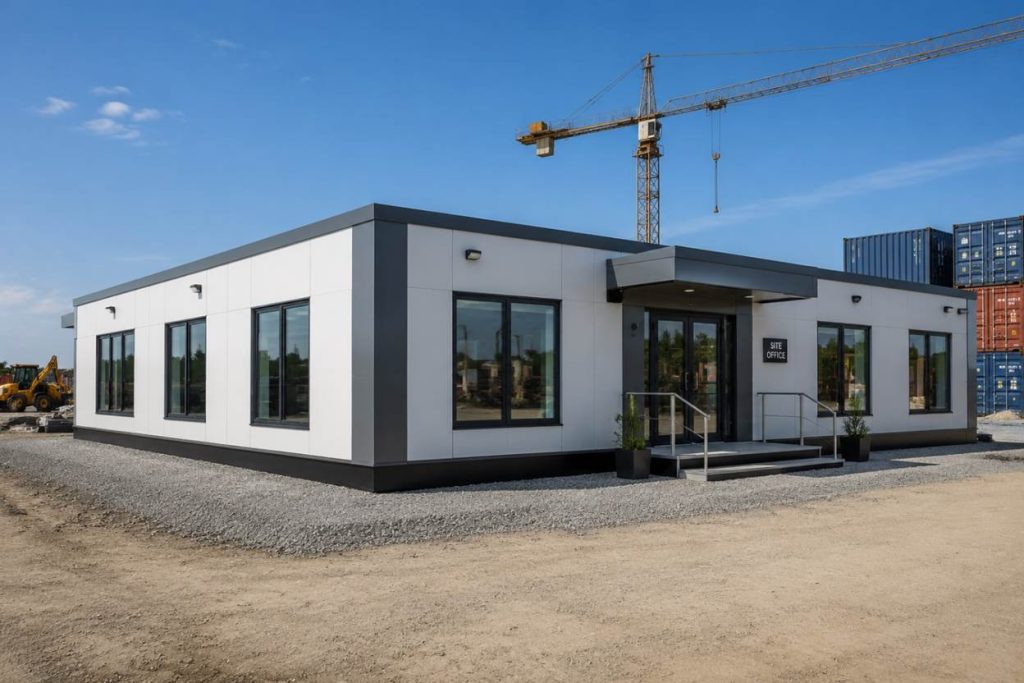
A prefabricated office building is a workplace structure made from factory-built components, panels, or modules and assembled on-site. It can be used as a construction site office, factory office, warehouse office, mining camp office, sales office, temporary office, or permanent administrative building. Compared with traditional construction, prefab offices can reduce build time, limit on-site disruption, and provide flexible layouts for temporary, semi-permanent, or permanent use.
| Question | Quick Answer |
| What is it? | A factory-built office structure assembled on-site. |
| Main uses | Site offices, factory offices, warehouse offices, mining offices, sales offices, and temporary offices. |
| Main benefits | Faster setup, lower site disruption, flexible layout, and easier relocation. |
| Temporary or permanent? | It can be temporary, semi-permanent, or permanent depending on design, foundation, materials, and local codes. |
| Related terms | Modular office, portable office, office container, prefab office building. |
What Is a Prefabricated Office Building?
The term "prefabricated" refers to the way the parts or modules are manufactured somewhere else, before being brought in and installed at the designated location. Office building, in this case, means any sort of workplace — a temporary site office, administrative office, sales office, meeting room, or reception area, among other things. Prefab offices could also be permanent solutions.
Indisputably, prefab offices are not simply temporary containers. Prefab offices in modern times are designed with insulation, HVAC (Heating, Ventilation, and Air Conditioning) systems, electrical systems, and plumbing systems. They also offer restrooms, meeting rooms, and offices inside.
Prefab vs. Modular vs. Portable Offices: What's the Difference?
These terms are often used interchangeably, but they describe different things:
| Term | Meaning | Typical Use |
| Prefabricated office building | Broad term for office buildings made from factory-produced components or units | Business offices, site offices, industrial offices |
| Modular office building | Built from complete modules manufactured off-site and assembled on-site | Multi-room offices, office complexes |
| Portable office building | Designed for temporary use and relocation | Construction sites, short-term projects |
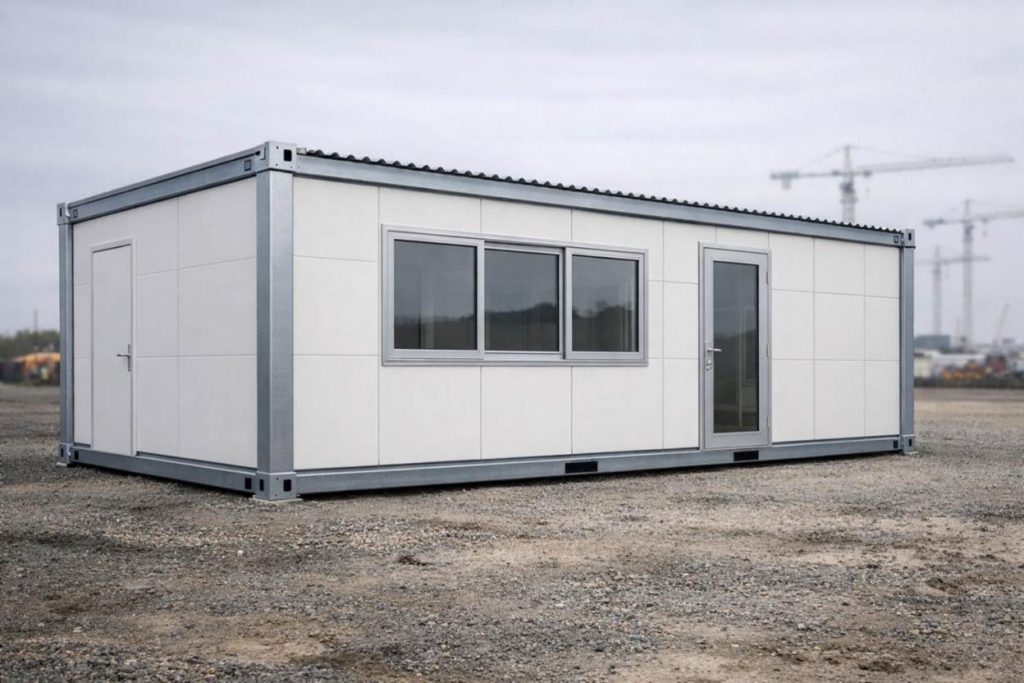
| Office container | Container-based prefab office unit with steel frame, wall panels, doors, windows, and utilities | Site office, guard office, remote camp office |
| Flat pack office container | Shipped in compact flat-pack form and assembled on-site | Export projects, bulk orders, remote sites |
Prefab is the umbrella term, modular is the most common construction method within it, and portable offices and office containers are specific applications built on prefab or modular principles.
How Are Prefabricated Office Buildings Built?
1. Design and Planning
Prior to the commencement of the operation, a number of issues need to be resolved such as the configuration and design of the site, the number of rooms required and how many people will occupy them, the number of restrooms and how many utilities will be provided, the HVAC system, electricity and plumbing, the applicable building codes, whether the office is going to be permanent or temporary and what is the budget and delivery schedule.
2. Factory Manufacturing
One of the major benefits of manufacturing in a controlled factory environment that on-site construction cannot match is quality control. In a factory setting, production cycles are faster, there are fewer weather-related delays, and standardization of quality control is facilitated. Also, electrical, plumbing, and HVAC systems are sometimes even pre-installed at the factory before the unit is dispatched. This makes the on-site work much shorter.
3. Transportation to Site
Once built, modules or panels are transported by truck to the project location. Site access needs to be checked in advance — road width, crane access, and foundation readiness all affect how smoothly delivery goes, especially for remote sites.
4. On-Site Assembly and Installation
First, installation involves getting the location ready, placing the panels, fastening and waterproofing the joints, linking the utility services, and eventually checking the work. Usually, installation consumes the minimum time as the major complicated tasks have been completed in the factory.
Key Benefits of Prefabricated Office Buildings
1. Faster Construction Time
Speed is one of the biggest draws of prefab construction. Because modules are built in a factory while site and foundation work happens in parallel, the overall project cycle is usually shorter than a comparable traditional build. The Modular Building Institute notes that this parallel scheduling, combined with 60–90% of construction happening inside a factory, largely eliminates weather-related delays. This makes prefab offices well suited to construction sites, industrial projects, emergency response needs, and fast business expansion.
2. Cost-Effective Office Space
Lower costs come from several angles: less on-site labor, a shorter construction period, less material waste, standardized production, and less disruption to ongoing operations. Modular Building Institute data shows the modular construction segment has been steadily gaining share of overall construction activity in recent years, reflecting growing confidence in its cost predictability.
3. Flexible and Customizable Layouts
The design of a prefabricated office can help shape and reflect the distinctive operation of any company. Among other things, the features and finishes of such offices can include open workspaces, private office suites, meeting spaces, a welcoming reception, washrooms, a kitchenette and pantry, and a variety of external appearances, including different types of windows and doors.
4. Easy Expansion and Relocation
Any requirement is bound to evolve from time to time, and that's why prefab offices are made to adapt to these changes. If the team becomes bigger, more modules can be added; if a new project is started where the office is no longer needed, it can be moved; and if the needs are different, then the spaces can simply be rearranged - this is very handy for construction, mining, and remote-site projects since space needs rarely remain the same for long.
5. Reduced Site Disruption
Because most of the work happens off-site, installation means less noise, less dust, fewer workers on-site, and a shorter installation window overall, a meaningful advantage for active factories, schools, and occupied job sites.
6. Sustainable and Reusable
Factory production definitely lowers the waste of materials, and also prefab offices can last longer as their modules can be moved instead of getting demolished. Insulated windows as well as other energy-saving lighting can help reduce operating costs in the long run.
Common Types of Prefabricated Office Buildings
| Type | Best For |
| Construction Site Offices | Contractors, engineers, and site supervisors — typically with a meeting room, document storage, rest area, restroom, and security features. |
| Industrial & Warehouse Offices | Manufacturing plants, warehouses, and logistics centers, often used as supervisor or quality-control offices built in or beside the facility. |
| Portable Office Buildings | Short-term projects needing quick setup, easy transport, and either lease or purchase options. |
| Office Container Buildings | Remote sites, mining camps, oil and gas projects, and security or site offices. |
| Commercial Modular Offices | Sales offices, temporary headquarters, business expansion, and showrooms. |
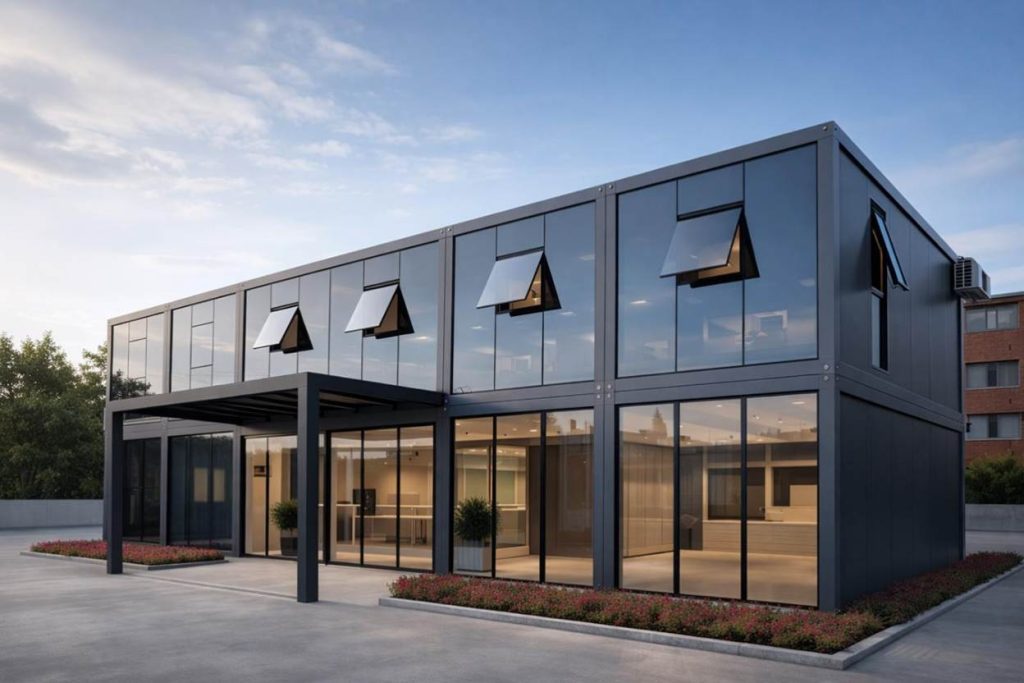
| Multi-Story Prefab Offices | Larger teams, permanent needs, and space-limited sites. |
For larger teams or space-limited sites, ZN House's container office solutions can be configured up to three stories, combining the speed of prefab construction with the footprint of a permanent office building.
Where Are Prefabricated Office Buildings Used?
- Construction sites
- Manufacturing plants and warehouses
- Mining and oilfield projects
- Schools and training centers, where prefab classroom buildings follow similar off-site construction principles
- Government and military facilities
- Healthcare and emergency response sites
- Disaster relief operations
- Sales offices and showrooms
- Remote work camps, where a container camp setup often pairs worker housing with office space
- Industrial parks
- Temporary offices during renovation
Prefabricated Office Buildings vs. Traditional Office Construction
| Factor | Prefabricated Office Buildings | Traditional Office Construction |
| Construction Speed | Faster — factory-built with quick on-site assembly | Slower — most work completed on-site |
| Cost Control | More predictable and often lower | Higher labor and site costs |
| Flexibility | Easy to expand, relocate, or reconfigure | Difficult to modify after completion |
| Site Disruption | Less noise, dust, and traffic | More on-site disruption |
| Quality Control | Factory-controlled production | More affected by weather and site conditions |
| Sustainability | Reusable and relocatable | Often harder to reuse or relocate |
| Best For | Fast, flexible, temporary or permanent needs | Highly customized permanent buildings |
Are Prefabricated Office Buildings Temporary or Permanent?
Typically, people view prefab offices solely as temporary solutions, but this opinion is unfounded. Any type of prefab office can have a temporary usage (ex., emergency job site office), a semi-permanent usage (ex., storage and factory offices), or even a permanent usage (commercial office). The durability of a prefab office, however, is determined by various factors including its structural design, insulation, building materials, maintenance, foundations, and building codes.
How Much Do Prefabricated Office Buildings Cost?
Rather than quote a fixed price, which varies enormously by project, it's more useful to know what drives cost up or down:
- Building size, number of rooms, and number of floors
- Materials and insulation level
- Interior finish
- HVAC, plumbing, and electrical systems
- Foundation type
- Delivery distance and installation requirements
- Local code requirements, and whether the use is temporary or permanent
Lease vs. Buy
| Option | Best For |
| Leasing | Temporary projects, construction sites, short-term expansion |
| Buying | Long-term office needs, permanent site facilities, repeated use |
| Custom Manufacturing | Special layouts, branded offices, industrial projects |
What Should You Consider Before Choosing a Prefab Office Building?
- How many people will use the office?
- Is it temporary or permanent?
- Where will it be installed, and does the site need foundation work?
- Do you need restrooms, plumbing, or HVAC?
- Do you need meeting rooms or private offices?
- Will the building need to be relocated later?
- What local building codes apply?
- What is your expected delivery timeline?
- Do you need custom branding or exterior design?
- What is your budget range?
Prefabricated Office Building Buyer Checklist
Before ordering a prefabricated office building, confirm: - Building use: site office, factory office, warehouse office, sales office, or remote camp office - Number of users and rooms - Temporary, semi-permanent, or permanent use - Required size and number of floors - Restroom, pantry, meeting room, and storage needs - HVAC, electrical, plumbing, and data requirements - Site condition and foundation method - Road access, crane access, and installation space - Local building codes and permit requirements - Climate, wind load, snow load, and insulation needs - Exterior appearance and branding requirements - Delivery distance, packing method, and installation support
Advantages and Limitations of Prefabricated Office Buildings
Advantages
Fast delivery, lower construction disruption, flexible layout, easy relocation, scalable design, better cost control, and suitability across many industries.
Possible Limitations
Transportation size limits, site access restrictions, local permit rules, customization which might delay manufacturing, the on-site foundation and utility work that's still necessary, and, in reality, not every prefab type is suitable for every climate or every permanent-use case.
Disclosing these restrictions with the benefits will give a much more accurate understanding than just presenting prefab as a miracle solution for all projects.
How to Choose the Right Prefabricated Office Building Supplier
To compare suppliers, the very first thing to consider is how long they have been manufacturing. Next, take a look at their historical record of completed projects. Then check if they are able to design custom solutions. And, quality of materials, physical strength, insulation and weather resistance must be taken into account. Besides, their capability of delivery, installation support, their adherence to local regulations, after-sales service, and availability of drawings and technical documentation must be considered as well.
On top of selling a building, a reliable prefab office supplier will probably be able to assist you with site condition assessment, help you figure out layout requirements, and think through transportation, installation and future expansion needs.
Recommended Prefab Office Solutions by Project Need
| Project Need | Recommended Solution | Why It Fits |
| Fast construction site office | Portable office or office container | Quick setup, easy relocation, suitable for temporary project use |
| Factory or warehouse office | Modular office building | Can be placed beside or inside industrial facilities |
| Remote mining or oilfield project | Container office building | Durable, transportable, suitable for harsh or remote sites |
| Larger project team | Multi-room modular office | Supports meeting rooms, private offices, restrooms, and admin areas |
| Space-limited site | Multi-story container office | Expands office area vertically while saving land space |
| Long-term business use | Custom prefab office building | More durable specifications and customized layout |
| Export project | Flat pack office container | Helps reduce shipping volume and logistics cost |
Real-World Example: A Multi-Story Container Office in the Field
For a customer in the construction and industrial business, ZN House came up with a container office of two floors made of four 40-foot high-cube units. The units were factory-fitted with insulated wall panels, complete electrical and data wiring, air conditioning, and security glazing. After being lifted by crane onto a concrete pad, the office complex was linked with the site's power and water supply within 48 hours of arrival, and it was almost running by the third day. On top of that, in reality, the project was cheaper than the modular option; the same units being moved to a different location after the initial project was over greatly raised the value of the original investment far more than just a single project.
Frequently Asked Questions About Prefabricated Office Buildings
What is a prefabricated office building?
A prefabricated office building is an office structure made from factory-built components or modules and assembled on-site to create usable workspace.
Are prefabricated office buildings the same as modular offices?
Not exactly. Prefabricated is a broader term for factory-made building components, while modular offices are complete building modules made off-site and installed on-site.
Can prefab office buildings be used permanently?
Yes. Prefab office buildings can be temporary, semi-permanent, or permanent, depending on the structure, foundation, materials, and local building requirements.
How long does it take to install a prefab office building?
Installation time depends on size, design, site preparation, transportation, and utility connections, but prefab offices are generally much faster to install than traditional buildings.
Are prefab office buildings customizable?
Yes. Layout, room size, doors, windows, insulation, HVAC, plumbing, interior finishes, exterior panels, and branding can typically be customized.
Where are prefab office buildings commonly used?
They're widely used on construction sites, factories, warehouses, industrial parks, schools, government facilities, remote camps, and emergency response sites.
Ready to Build Your Prefab Office?
Whether you need a single-room site office or a multi-story administrative complex, ZN House's container office solutions are engineered for fast delivery, full customization, and long-term durability. For projects that call for stackable, flat-pack-ready designs, ZN House's flat pack and modular container house product lines cover everything from single site offices to full campus builds. Contact ZN House's team today for a tailored quote and project consultation.
Disclaimer
This article is for general informational purposes only. Costs, delivery times, and code regulations differ given the project, region, and local jurisdiction. Make sure to check details, certifications, and compliance requirements with a licensed engineer or your local building authority before starting the construction.
Similar Posts
Container House Size: Standard Dimensions, Measurements and Layouts
There is no single standard size for every container house. Converted shipping container homes usually follow...

The Ultimate Solution: Folding Container House for Sale
Are you searching for an innovative and cost-effective living space? Look no further! The folding container...
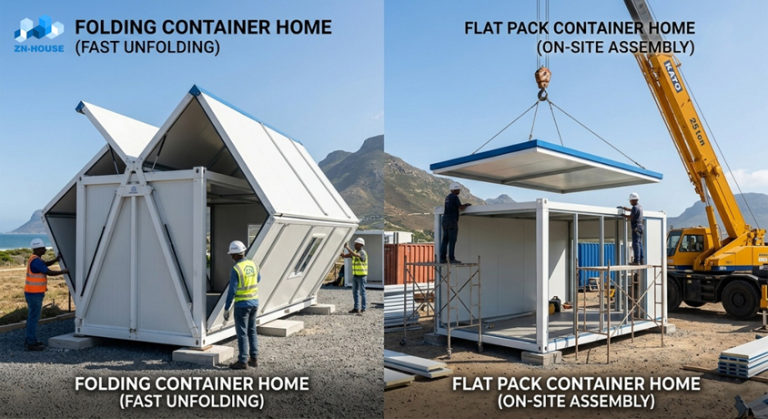
Flat Pack vs. Folding Container Homes: Which One Is Better for Your Project?
Introduction Modular building is globally revolutionizing the construction industry through speed of construction time, eco-sustainability, and...
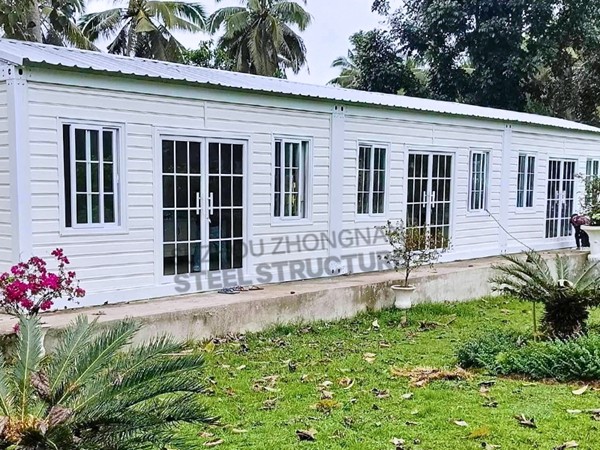
Earthquake-Resistant Container House: Key Seismic Features and Safety Guide
Introduction In earthquake-prone areas, building safety is one of the most important concerns for housing, offices,...
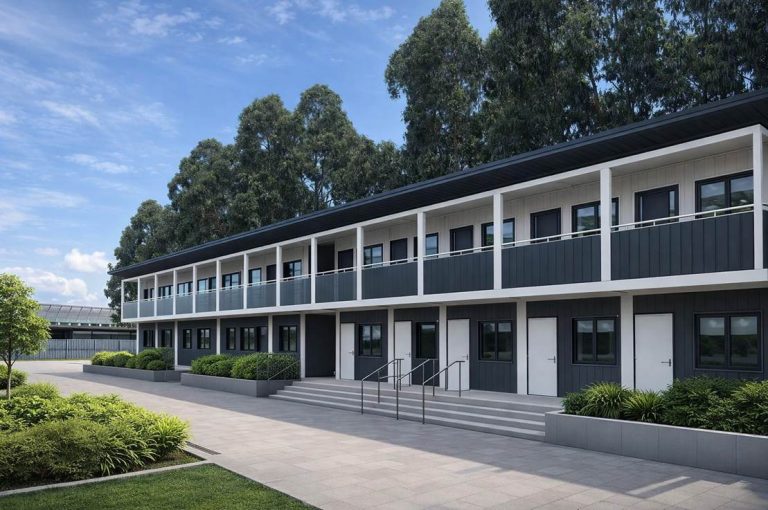
Benefits of a Modular Classroom
Introduction A common challenge throughout the world for all types of schools is the dramatic increase...
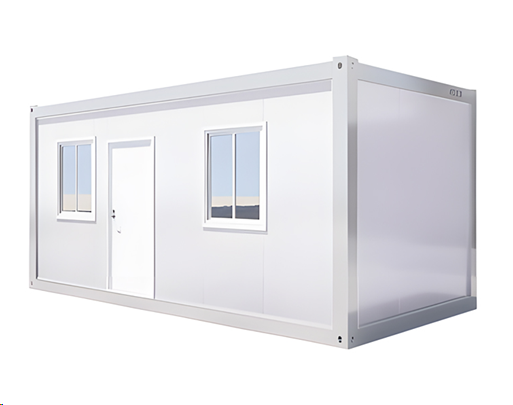
Detachable Container House Advantages for Rapid Deployment Projects
The modern world economy requires construction to be completed extremely quickly. Infrastructure, disaster relief, and commercial...


