



What Is a Construction Container? Uses, Types, and Benefits Explained
Eventually, every construction site hits that one problem: finding spots for the project team to work, workers to rest, and tools and materials to be kept dry and safe. Turns out a construction container can answer these three questions with the help of one flexible and fast-to-install solution.
In this guide, “construction container” refers to prefabricated modular container buildings used for site offices, worker accommodation, storage, sanitary units, kitchens, guard houses, and project camps — not waste containers or construction dumpsters. A construction container is a ready-to-use, portable and versatile building block that can be used for many different types of projects, including an office, dormitory (sleeping), store (storage), etc.
| Question | Quick Answer |
| What is a construction container? | A prefabricated modular unit for site offices, accommodation, storage, and temporary project facilities. |
| Is it the same as a shipping container? | No. A shipping container is mainly for cargo transport, while a construction container is designed or fitted for site use. |
| Main uses | Site office, worker accommodation, storage, toilet, shower, kitchen, guard house, and project camp. |
| Main benefits | Fast installation, easy relocation, flexible layout, lower site work, and reusability. |
| Best for | Construction sites, mining, oil & gas projects, infrastructure works, energy projects, and remote camps. |
This article will explain what construction containers actually are, how they are different than standard shipping containers, what the main types of construction containers are, what the key benefits of using construction containers are, what some of the common ways that construction containers are used, and what you should consider before deciding which type of construction container would best meet your project’s needs.
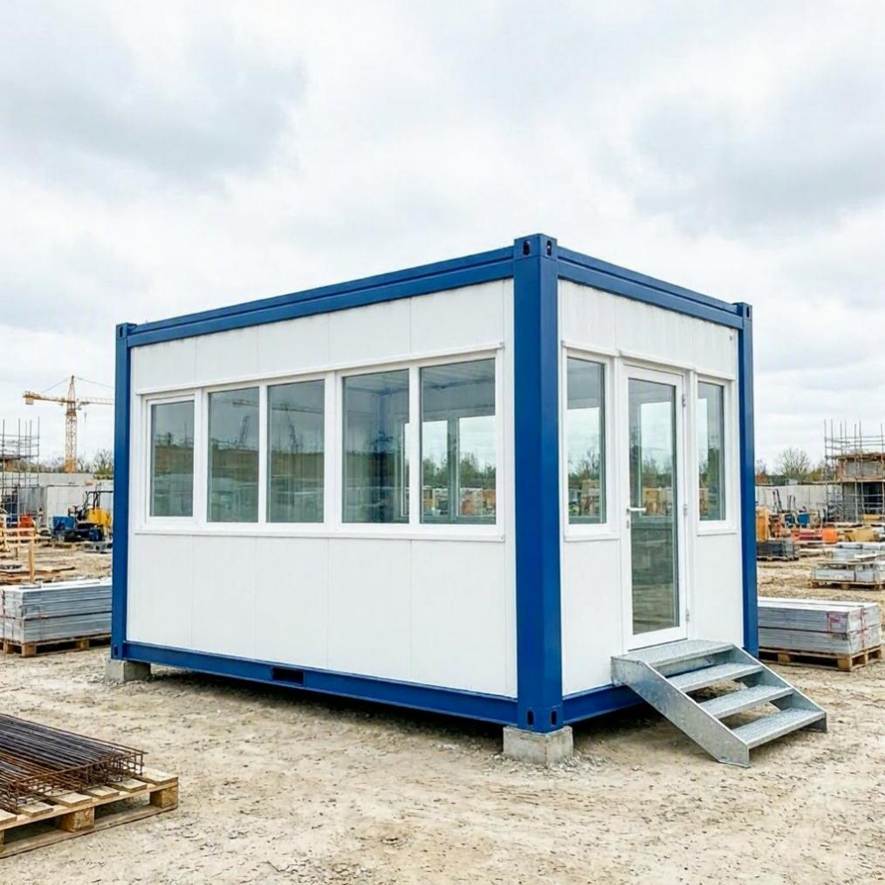
What Is a Construction Container?
A construction container is a starting-from-scratch, factory-built modular building component intended for delivery to construction sites and industrial projects (including infrastructure works, the mining industry, oil, gas, or energy sites). This is unlike a standard industrial steel cargo box in that the modular has been designed from inception to be a usable space in which people can work, eat, sleep or operate equipment.
A single construction container, or a group of them combined, can serve as:
- Site office
- Worker accommodation
- Storage room
- Meeting room
- Dining room or kitchen
- Toilet and shower unit
- Security guard house
- Locker room
- First aid room
The key idea is that a construction container is not just a storage box. It is a multipurpose building block that project teams can rearrange, expand, or relocate as the job progresses.
Construction Container vs Shipping Container
People frequently confuse the two terms being described in this section when talking about either a shipping container or a construction container. A shipping container is a specific type of container that can be used to transport goods over long distances (on ships and also by rail). In most cases, shipping containers are plain steel boxes with no interior or exterior finishing being done to them before they are shipped off to customers. However, construction containers are very similar in design to shipping containers; however, the differences between a shipping container and a construction container lie in where they’re to be transported to and what additional features have been built into the container so that it can fulfill its intended purpose when it arrives at its destination.
| Aspect | Construction Container | Shipping Container |
| Main Purpose | Site office, accommodation, storage, temporary buildings | Cargo transport |
| Interior | Can include insulation, wiring, doors, windows, plumbing | Usually an empty steel box |
| Flexibility | Easy to combine and customize | Needs heavy modification |
| Use Case | Construction sites, project camps, offices | Logistics and storage |
Briefly put, a construction container is tailored in particular for the building industry sector right from the inception. So, it demands much fewer changes at the site versus a shipping container turned into a building one.
What Are Construction Containers Used For?
Construction Site Office
A construction site office container is a temporary modular office unit used by project managers, engineers, supervisors, and administrative staff on active construction sites. It can be equipped with desks, lighting, power sockets, air conditioning, network access, document storage, and a small meeting area.
Worker Accommodation
Worker accommodation containers(内链:https://znsshouse.com/worker-a-accommodation/) can be living quarters or resting places for personnel, or even housing at a camp. They can be fitted with beds, lockers, windows, ventilation systems, insulation, air conditioning, and even attached sanitary facilities. This makes them highly suitable for remote projects, big sites, mining camps, and infrastructure works where workers are staying on-site for quite a while.
Storage for Tools and Materials
Construction storage containers store hand and power tools, materials, equipment and safety gear away from the elements and away from thieves. Secure, lockable centralized storage also minimizes materials being lost, makes management easier on an active site.
Toilet and Shower Container
Without fixed facilities, sanitary containers can offer you toilets, showers, and handwashing stations. They usually feature plumbing, drainage, and ventilation systems and are mainly used on sites and remote projects which don’t have access to permanent restrooms.
Kitchen and Dining Container
Kitchen and dining containers provide workers with a convenient place to prepare and consume their meals while working on-site. They are commonly found in large worker camps, mining projects, road or bridge construction, and are usually accompanied by accommodation units to create a complete living area.
Security Guard House
A compact guard house container manages site entry, monitoring, and access control. These units are typically placed at project gates, camp entrances, or industrial park checkpoints.
Meeting Room or Training Room
Multiple containers can be joined to form a larger meeting or training space for project briefings, toolbox talks, and safety training sessions.
First Aid or Medical Room
Larger or more remote projects often set up a dedicated first aid container to handle basic medical support and emergency response before a patient can be transferred off-site.
Main Types of Construction Containers
Construction containers are generally categorized by function first, then by construction method.
By Function
- Office Container – on-site management, coordination, and document work
- Accommodation Container – worker housing and temporary staff quarters
- Storage Container – tools, machinery, and building materials
- Sanitary Container – toilets, showers, and washrooms
- Kitchen and Dining Container – food preparation and dining areas
- Guard House Container – entrance control and security monitoring
By Construction Method
Flat Pack Construction Container: This kind of container isshipped in a disassembled, flat-pack format and is assembled on the spot. This drastically reduces the shipping volume which is highly important for export projects and bulk orders where the transport space is limited.
Detachable Construction Container: The steel structure of this house is composed of independently assembled wall panels, roof, floor, doors, and windows. These components can be taken apart for moving and reassembled again and again. It is suitable for projects that change location often.
Combined or Multi-Story Container Building: Separate container units may be placed next to each other or stacked up to create a larger office block, a dormitory building, or a complete project camp. If multi-level structures are made, they have to be designed and implemented to comply with local structural and building code requirements.
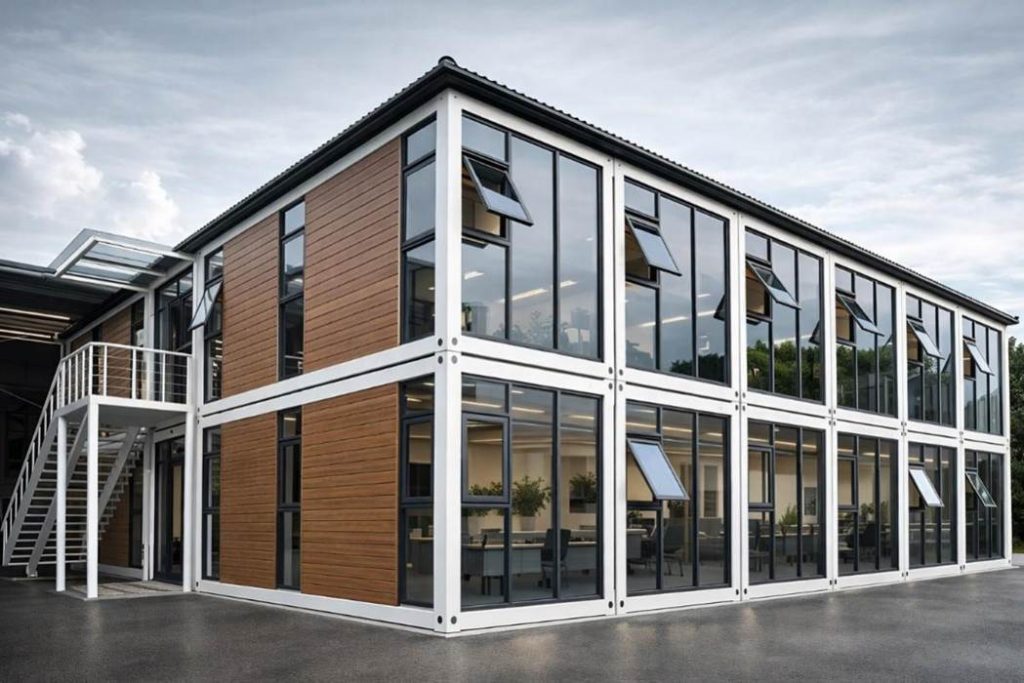
Key Features of a Construction Container
Strong Steel Structure
A galvanized or coated steel frame gives construction containers the structural stability and durability needed to withstand repeated transport, assembly, and site conditions.
Fast Installation
Since most of the work is done at the factory, installing the project on-site can be completed much more quickly than if the entire structure is built from the ground up. This A lot reduces the time until the facility can be used.
Easy Transportation and Relocation
Construction containers are made to be transported from one place to another. It means that after one construction is finished, you can move the same containers to the next location. This way, you will use your construction containers for a longer time and get more value out of your investment.
Customizable Layout
Interior layouts can be configured for offices, dormitories, storage, sanitary facilities, or kitchens, with partitions and fittings tailored to the intended use.
Insulation and Weather Resistance
Wall panel material can be selected based on climatic conditions like hot climates, cold climates, humid environments, and even locations that are subject to strong wind and heavy rain. EPS, rock wool, and PU-core sandwich panels are some of the most common choices.
Electrical and Plumbing Options
Depending on the intended use, a construction container can be fitted with lighting, power sockets, a distribution box, air conditioning, water supply, drainage, and toilet or shower systems.
Benefits of Using Construction Containers
Faster Project Setup
Construction containers let a project team establish site offices, accommodation, and support facilities almost as soon as the site is accessible.
Lower Cost Compared with Traditional Buildings
One of the reasons why factory prefabrication can be more cost-efficient is that it leads to less on-site labor, fewer foundation works, and a shorter overall construction time. However, these are only the typical benefits and you need to take other factors into consideration when comparing the costs of assembling temporary buildings from scratch and prefabricated buildings on-site.
Flexible for Temporary and Remote Projects
If you need temporary buildings at your construction site, mining site, oil & gas facility, energy project, road or bridge work, modular construction containers will be the best option for you as they can be easily relocated, stacked or expanded or even converted to offices, kitchens, clinics, etc. They also require minimal foundation and are strong, durable and weather-resistant.
Easy to Relocate and Reuse
Once a project finishes, containers can be moved to the next site rather than demolished, which improves their long-term value.
Scalable Layout
As the project develops, more container units can simply be integrated to enlarge office, housing, or storage areas, without the necessity of redesigning the entire building.
Reduced On-Site Construction Work
Since many the fabrication is carried out off-site, construction containers greatly reduce on-site disruptions, noise and labor requirements, which become very important on busy and cramped job sites.
This shift toward off-site, modular building methods is part of a broader industry trend. The global modular construction market was valued at roughly $111 billion in 2025 and is projected to keep growing at a compound annual rate above 8% through 2033, driven in part by demand for faster, lower-waste construction methods (Source: Modular Construction Market, 2026).
Where Are Construction Containers Commonly Used?
Construction containers appear across a wide range of project types, from residential and commercial construction sites to specialized industrial and emergency applications.
| Project Type | Typical Container Use |
| Road & bridge projects | Site offices, storage for tools and materials, worker rest areas along the corridor |
| Mining sites | Worker accommodation, canteens, guard booths, and equipment storage in remote locations |
| Oil & gas projects | Site offices, dormitories, sanitary units for crews on rotation |
| Solar & wind energy projects | Temporary offices and storage during construction of remote generation sites |
| Disaster relief | Rapidly deployable shelters, medical rooms, and storage for emergency supplies |
They are also used on power plant projects, industrial facilities, and residential and commercial construction sites more generally, wherever a project needs fast, temporary support space.
How to Choose the Right Construction Container
When choosing a construction container supplier, buyers should check the steel frame thickness, surface treatment, wall panel material, insulation thickness, waterproof sealing method, electrical standard, packing method, and whether layout drawings can be provided before production.
Define the Main Use
Start by confirming whether the container will function as an office, storage room, accommodation unit, toilet, kitchen, or guard house. The intended use drives every other decision.
Confirm the Required Size and Layout
Size and layout should be based on the number of occupants, equipment to be housed, furniture needed, and any functional zones required inside the unit.
Check Site Conditions
Before ordering, review site-specific factors including:
- Climate
- Wind load
- Snow load
- Ground condition
- Installation space
- Transport access
Choose the Right Wall Panel and Insulation
Different climates and use cases call for different insulation materials; a hot, humid site has different needs than a cold, high-wind location.
Confirm Electrical and Plumbing Requirements
Offices, dormitories, toilets, and kitchens each need different electrical and plumbing configurations, so these requirements should be finalized before manufacturing begins.
Consider Transportation and Installation Cost
For export projects and bulk orders in particular, flat pack and detachable container formats (see Flat Pack Container House and Pro Detachable Container) are usually more transport-efficient, as they help reduce the shipping volume.
Check Local Building Codes
Long-term use, multi-story configurations, worker dormitories, and public sanitary facilities in particular need to comply with local building regulations.
Choose a Reliable Supplier
A dependable supplier should offer layout design, structural drawings, material specifications, customization support, export packing, installation guidance, and after-sales support.
Before ordering a construction container, confirm:
– Main use: office, accommodation, storage, toilet, kitchen, or camp
– Required size and layout
– Number of users or workers
– Climate conditions
– Wind load and snow load requirements
– Wall panel material and insulation thickness
– Electrical standard and socket type
– Plumbing and drainage requirements
– Furniture and interior fit-out
– Packing method and shipping destination
– Installation support and local code requirements
Recommended Construction Container Solutions by Project Need
| Project Need | Recommended Solution | Why It Fits |
| Fast temporary site office | Flat pack office container | Easy to transport, quick to assemble, suitable for project management teams |
| Remote worker housing | Accommodation container + sanitary container | Creates a complete living area for workers on-site |
| Export bulk order | Flat pack or detachable construction container | Reduces shipping volume and helps control logistics cost |
| Road, bridge, or mining project | Relocatable construction container | Can be moved from one site section to another |
| Large project camp | Combined container camp | Offices, dormitories, toilets, kitchens, and dining areas can be planned together |
| Site security | Guard house container | Compact unit for entrance control and monitoring |
Construction Container Installation Process
- Site preparation: clear and level the installation area.
- Foundation or support placement: set concrete pads, piers, or steel supports as required.
- Container delivery: transport the unit or its flat-pack components to site.
- Frame assembly: erect or connect the steel structure.
- Wall panel installation: fit insulated sandwich panels to the frame.
- Door and window installation: fit doors, windows, and any security hardware.
- Electrical and plumbing installation: connect power, water, and drainage systems.
- Waterproof sealing: seal joints, roof seams, and panel connections.
- Final inspection: check structural, electrical, and plumbing work before handover.
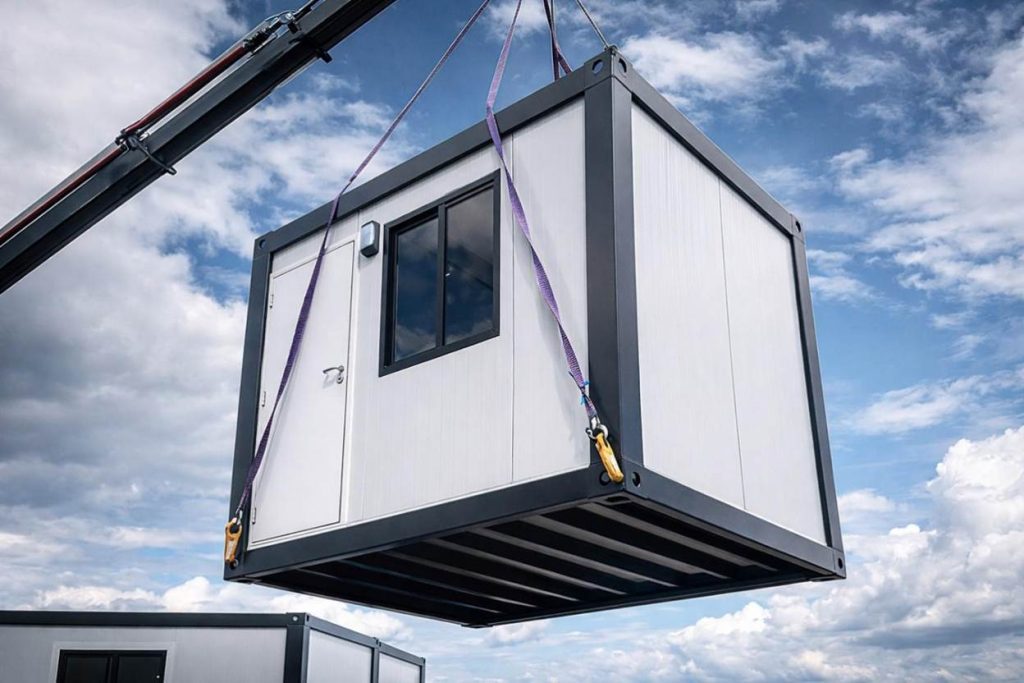
Construction Container vs Traditional Temporary Building
| Factor | Construction Container | Traditional Temporary Building |
| Installation Speed | Faster | Slower |
| Relocation | Easier | More difficult |
| Cost | Usually lower | Usually higher |
| Customization | Flexible | Flexible but labor-intensive |
| Site Work | Less | More |
| Reuse | Easier | Limited |
| Expansion | Easy to add units | More complex |
Construction containers are especially suitable for projects that require fast deployment, flexible layout, and future relocation.
Are Construction Containers Permanent or Temporary?
Usually, construction containers are employed for temporary or semi-permanent situations linked to a project schedule. However, if the setup, insulation, waterproofing, and base are well thought out and the necessary authorities have given their nod, some units may even be capable of accommodating longer-term usage. The appropriateness of a container for prolonged or permanent use needs to be verified according to local regulations and project specifications instead of being taken for granted.
How Long Does a Construction Container Last?
Service life depends on several factors:
- Steel structure quality
- Wall panel material
- Surface treatment and corrosion protection
- Climate exposure
- Maintenance frequency
- Usage intensity
- Installation quality
Well-built construction containers can be reused across multiple projects when properly maintained, which is a major part of their cost advantage over one-off temporary structures.
How Much Does a Construction Container Cost?
There is no single fixed price for a construction container, because cost depends on a combination of variables:
- Size
- Type (office, accommodation, storage, sanitary, etc.)
- Quantity ordered
- Wall panel material and insulation thickness
- Interior finishing level
- Electrical system complexity
- Plumbing system requirements
- Furniture and fit-out
- Shipping cost
- Installation requirements
When comparing quotes, it is worth looking beyond the unit price alone. Transportation, installation, and long-term reuse value all affect the real cost of a construction container over its working life.
Real Project Example: A Two-Layer Folding Dormitory in Malaysia
ZN House recently completed a two-layer folding container dormitory project in Malaysia for worker accommodation. The project used stackable folding container units to create a multi-level living space with faster installation and less on-site construction work compared with a traditional dormitory building.
This type of solution is suitable for construction camps, industrial projects, and temporary workforce housing where fast deployment, repeatable layout, and future relocation are important.
Conclusion
Construction containers are pre-assembled, modular structures to be exact designed to meet the needs of construction sites and temporary project facilities. These containers can work as a site office, worker accommodation, storage room, sanitary unit, kitchen, or guard house. They provide rapid installation, mobility, and customization, as well as the possibility of merging several units into larger structures that can be suitable for remote or fast-moving projects.
Determining the best unit involves aligning the container’s intended use, size, climate performance, and configuration with the real site conditions of the project. It also needs checking with a supplier who can provide end-to-end support of the project from design to after-sales service about installation, transport, and local code requirements.
If your project needs a Container Office, Container Toilet unit, or a full Container Camp setup, ZN House can design and manufacture the configuration your site requires. Get a free consultation to discuss your project.
Frequently Asked Questions
What is a construction container?
A construction container is a prefabricated modular unit used on construction sites as an office, accommodation, storage room, restroom, dining area, guard house, or other temporary facility.
What is a construction container used for?
Such containers are very popular for site offices, worker accommodation, storage, meeting rooms, kitchens, dining rooms, bathrooms, locker rooms, and security cabins.
What is the difference between a construction container and a shipping container?
Shipping containers are first and foremost used for transporting goods, but construction containers refer to buildings created from containers that act as offices, living spaces, storage, and other around-the-site facilities.
Can construction containers be used as offices?
Yes. Construction containers are widely used as temporary site offices for project managers, engineers, supervisors, and administrative teams.
Can construction containers be used for worker accommodation?
Yes. They can be customized with beds, lockers, insulation, ventilation, lighting, air conditioning, and sanitary facilities.
Are construction containers waterproof?
Construction container roofs are generally waterproof. Usually, they have sealed joints and sturdy wall panels, but their waterproofing effectiveness is largely determined by the quality of the materials and workmanship.
Can construction containers be stacked?
Yes, some modular construction containers can be stacked or combined, but the structure must be designed for stacking and installed according to engineering requirements.
Can construction containers be customized?
Yes. They can be customized with doors, windows, insulation, partitions, electrical systems, plumbing, air conditioning, furniture, and exterior colors.
Is a construction container the same as a site office container?
Not exactly. A site office container is one type of construction container. A construction container can be used as a site office, worker accommodation, storage room, toilet and shower unit, kitchen, dining room, guard house, or complete project camp. Site office containers are mainly designed for project managers, engineers, supervisors, and administrative staff working on construction sites.
What sizes are construction containers available in?
Construction containers are available in different standard and customized sizes. Common options include compact units for guard houses or small offices, standard 20ft-style modules for offices, accommodation, and storage, and larger combined layouts made by connecting multiple units. The final size should be selected based on the number of users, site space, furniture, equipment, and transport requirements.
Can construction containers be used in hot or cold climates?
Yes. Construction containers can be designed for hot, cold, humid, windy, or rainy environments by choosing the right wall panels, insulation materials, roof structure, ventilation, air conditioning, and waterproof sealing. For extreme climates, buyers should confirm insulation thickness, thermal performance, wind load, snow load, and local building requirements before production.
Do construction containers need a foundation?
Most construction containers need a level and stable base, but the foundation is usually simpler than that of a traditional building. Depending on the site condition and project duration, they may be installed on concrete pads, piers, steel supports, or a prepared flat surface. Multi-story or long-term installations usually require stronger foundation design and engineering confirmation.
How are construction containers transported?
Construction containers can be transported as fully assembled units, flat pack components, detachable parts, or folding units. Fully assembled units are faster to install but take up more shipping space. Flat pack and detachable construction containers are more suitable for export and bulk orders because they reduce shipping volume and help lower logistics costs.
Are flat pack construction containers suitable for export?
Yes. Flat pack construction containers are especially suitable for export projects because they are shipped in a disassembled format, which can reduce container loading volume and improve transportation efficiency. They are commonly used for bulk orders, overseas construction camps, site offices, worker accommodation, and temporary project facilities that need cost-effective international delivery.
What should I check before buying a construction container?
Before buying a construction container, check the intended use, required size, layout, wall panel material, insulation thickness, steel frame quality, surface treatment, electrical standard, plumbing requirements, wind and snow load, packing method, shipping cost, installation support, and local building code requirements. A reliable supplier should provide layout design, technical drawings, customization options, and after-sales support.
Sources
- Grand View Research, Modular Construction Market Size, Share Report, 2026.
- U.S. Occupational Safety and Health Administration, Compliance Assistance Quick Start – Construction Industry.
Disclaimer
The article represents general information and must not be treated as engineering, legal, or regulatory advice. Since local building codes, structural requirements, and site conditions vary from one location and project to another, it is critical to get advice from a well-qualified engineer, architect, or the local authorities before a construction container installation is finalized In particular for multi-story, permanent or occupied structures.
Similar Posts
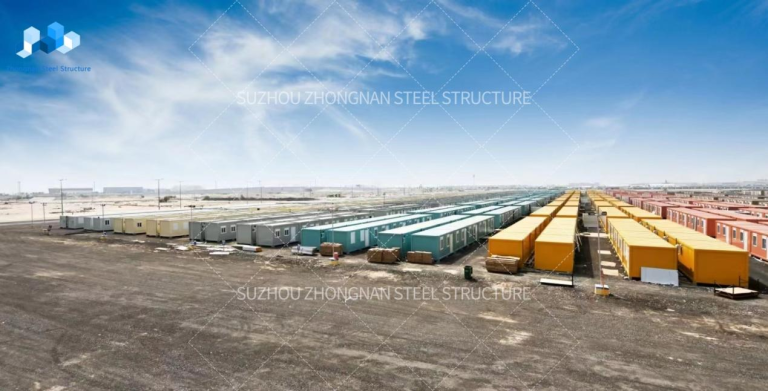
Qatar Shipping Container Hotel From ZN House
In September 2022, ZN House Steel Structure successfully delivered 1000 sets of shipping container hotels for the…

Flat Pack Container Homes (2026 Guide): Sizes, Prices, Benefits & Applications
Introduction A contemporary version of modular, prefabricated housing, flat pack container homes offer an efficient way…
How Are Modular Buildings Constructed?
Modular buildings are structures constructed from one or more sections, each of which is commonly called…
Top Types of Prefabricated Restrooms for Construction Sites, Camps, Schools, and Public Projects
At the end of the day, every new construction site, work camp, school or community center…
How to Insulate a Container House: Complete Guide 2026
Container houses are becoming increasingly popular for residential homes, site offices, workforce accommodation, mining camps, and…
Flat Pack Office Buildings: Modular, Portable & Scalable Workspace Solutions
The evolving corporate and industrial world now requires workspace solutions that are just as flexible as…


