



Demountable Buildings vs. Permanent Modular Construction: What's the Difference?
Demountable and permanent modular constructions are the same in the sense that they use prefab methods. The major difference is that demountable buildings are for temporary or semi-permanent usage. They allow people to put them up, break them down and move them as often as needed. But permanent modular constructions are factory-built modules on a permanent foundation for long-lasting use. When selecting one construction method out of these: demountable buildings, relocatable buildings, portable buildings, temporary modular buildings, or permanent modular constructions, you should think about whether the building's use is for the long term or if the building needs to be relocated. In the same way, the factors that you may need to consider include the conditions of the site, the availability of utilities, requirements of local regulations, etc.
One may find similar-looking terms while planning a site office, housing for workers, school addition, healthcare clinic, disaster shelter, or long-term commercial space construction. All such terms refer to different aspects of prefabricated construction only. Consider clarifying how long they will be there, whether they will be moved, what foundation and utilities would support such a structure, and which code(s) will be applied on the ground. Demountable buildings are more appropriate for temporary or short-term movable uses, whereas permanent modular constructions are subject to much stricter, more comprehensive building regulations. Though the selection should not be based only upon a single unit price, there are other factors one needs to take into account, like the duration of use, relocation intervals, site situations, local legislation, and how operational costs will affect the method of construction, etc.
Here you will find a comparison between demountable buildings and permanent modular constructions about: Definition, Cost (Installation), durability, compliance, and Applicability (i.e., best-fit situations).
What Are Demountable Buildings?
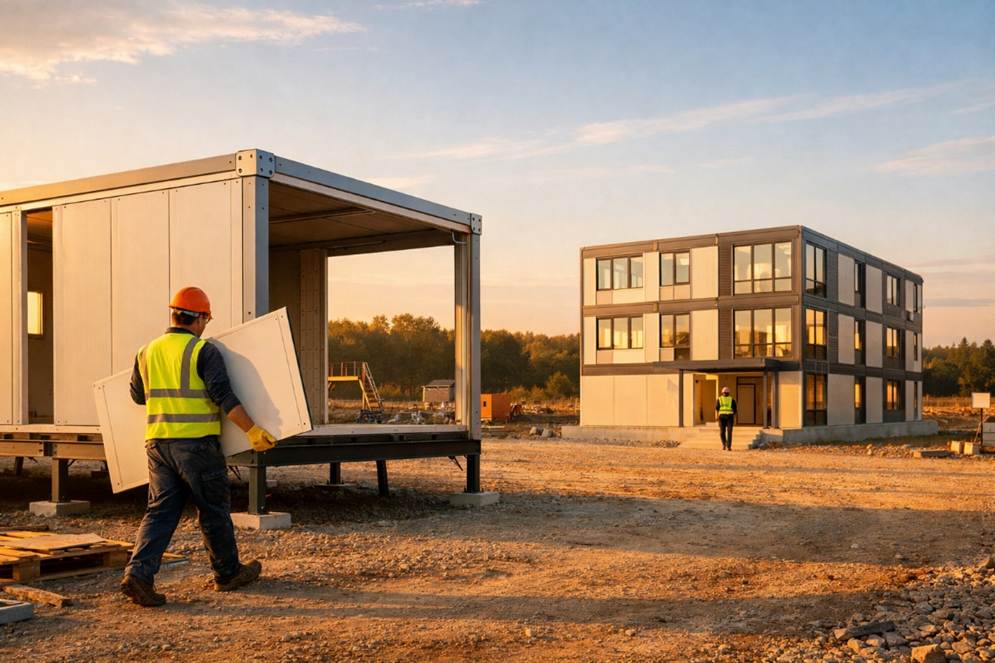
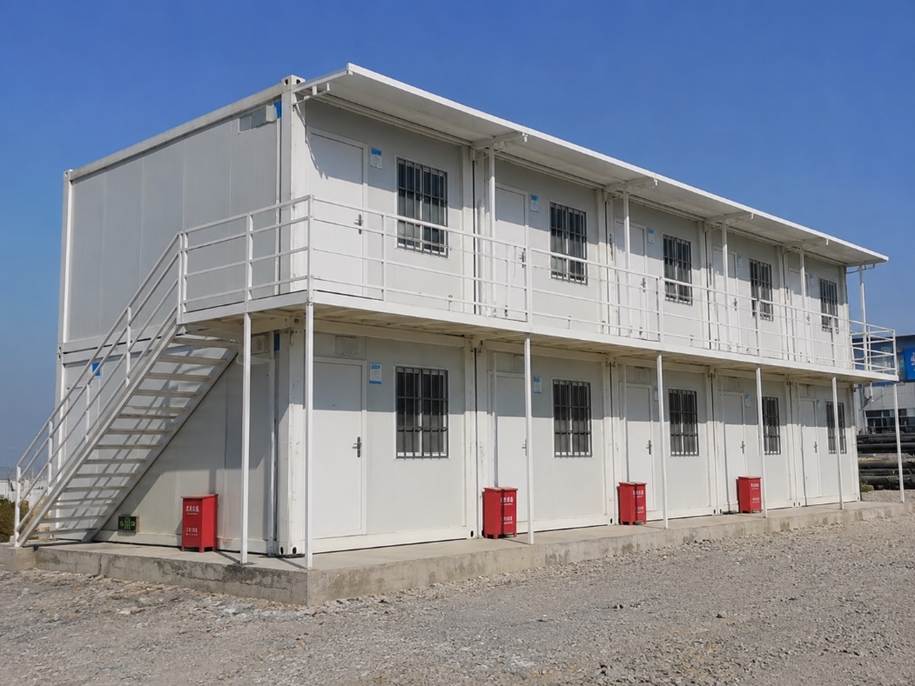
Demountable buildings or buildings that are taken apart, are prefabricated or modular buildings. They are built to be dismantled, moved, and set up again as needed. These buildings are commonly utilized for temporary offices, classrooms, worker accommodations, storage, emergency shelters, construction camps, and remote site facilities.
Demountable buildings are generally characterized by:
- A structure designed for repeated dismantling and reassembly
- Practical relocation between project sites
- Fast on-site installation
- Typically, lighter or simpler foundation requirements
- Suitability for temporary or semi-permanent project timelines
- Common use as offices, dormitories, classrooms, restrooms, storage, or camp support facilities
Demountable buildings are capable of staying operational for quite a long time. In fact, it can be from a matter of months to even a few years! Whether or not there's a strict time limit is not the key factor that defines whether a building is demountable or not. Instead, what really matters is that the building can be moved, quickly set up, or used for a limited period of time, which are the features most relevant to the project.
What Is Permanent Modular Construction?
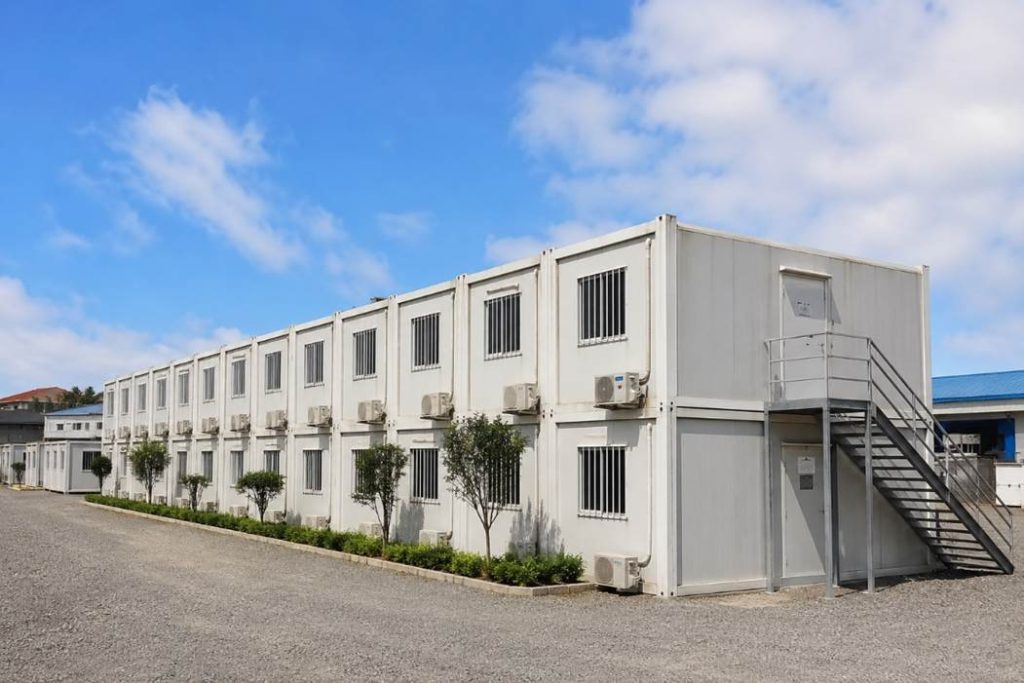
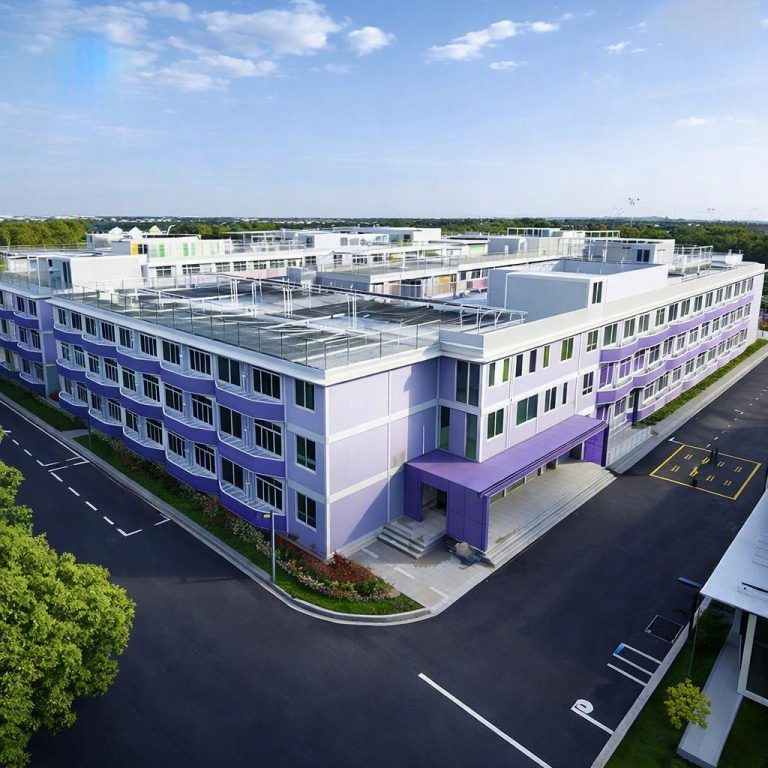
Permanent modular construction is a construction method in which the individual modules are produced in the manufacturing facility, they are brought over to the construction project site and they are finally erected on a permanent foundation and intended to be used as regular construction. Compared to conventional site-built construction, which uses permanent foundations and structures that will last several years for structural safety, energy needs and compliance with various regulations, it would be hard for such a comparison to be made.
Galvanized steel frame and waterproof sandwich panels are used in ZN House's container house range; they also offer a Corten steel option for improved corrosion resistance, engineered so that with adequate maintenance, its service life typically exceeds 20 years under normal use and maintenance. The modules can be combined to make one-story houses, dormitories, hotels, schools, or commercial buildings, and the design and decoration elements can be fully personalized with the help of your interior architect.
Permanent modular construction generally emphasizes:
- Factory manufacturing with on-site installation
- Fixing to a permanent foundation
- Long-term, fixed-location use
- Stronger emphasis on building codes, durability, energy performance, and comfort
- Suitability for schools, healthcare buildings, residential projects, hotels, and offices
Demountable Buildings vs. Permanent Modular Construction: Key Differences
1. Purpose and Project Duration
Demountable Structures are commonly the choice for short term or even medium term projects or in situations where it may be necessary to change the location. These structures can be found in the form of site office buildings, worker accommodation sheds, temporary schools, and even at remote camps. But permanent modular buildings are usually a go- to choice for long-term permanent projects. Examples would be schools, hospitals, hotel developments, residences, and commercial buildings where long-term investment and the performance of the building are more important than the mobility of the building.
2. Mobility and Relocation
In road construction, demountable buildings are used to provide offices and facilities for management at different points along a road project. When a construction project reaches a new area, these mobile offices are relocated to continue the work in that section. As well, they come in very handy at the initial stages of a development or mine site where all services are still to be installed, as these temporary structures can house offices, accommodation, and facilities until the permanent ones are in place. Permanent modular structures, however, are usually installed in one particular spot and remain there. Although the method of building is called modular, such buildings are not intended to be moved from one place to another, or at least not very often. If moving is required later for some reasons, the cost could be very high. Actually, apart from that, some of the other potential issues like those of the foundation or utilities are also involved.
3. Foundation and Site Preparation
Demountable buildings may have lighter or simpler foundation systems like concrete blocks or steel supports based on local codes and site conditions. But they require a safe, level and compliant base. However, permanent modular structures would need stronger and more durable foundations as well as connection with services like water supply, electricity, drainage, fire protection and HVAC. The planning and approving process for permanent modular construction would be more involved initially.
4. Construction and Installation Speed
Both options install faster than traditional construction. Demountable buildings, with lighter structures and simpler foundations, are usually the fastest to assemble, which suits urgent or time-constrained projects. Permanent modular construction is also fast relative to conventional building, but still requires a more complete foundation, utility connections, and on-site integration work, and larger projects still need full project management.
5. Cost: Initial Price vs Long-Term Value
Demountable buildings usually carry a lower initial cost and allow fast, budget-sensitive deployment, though frequent relocation adds dismantling, transport, and maintenance costs over time. Permanent modular construction usually requires a higher initial investment, but often delivers stronger long-term durability, energy efficiency, and asset value — an advantage that compounds over a longer operating period.
6. Durability and Lifespan
Demountable buildings are usually equipped with light structural systems that make disassembling and transporting the buildings easier; their lifespan and durability largely hinge on the quality of the materials, the design of the joints and connections, adequate sealing, the number of relocations they undergo and the extent of maintenance carried out. Permanent modular construction normally meets the building standards for long-term structures and is built with a heavy-duty structural system, thick insulation and cladding, durable and resistant roofing against weather, proper fire protection and interior finishes designed for use over a long period and at high frequency.
7. Design Flexibility and User Experience
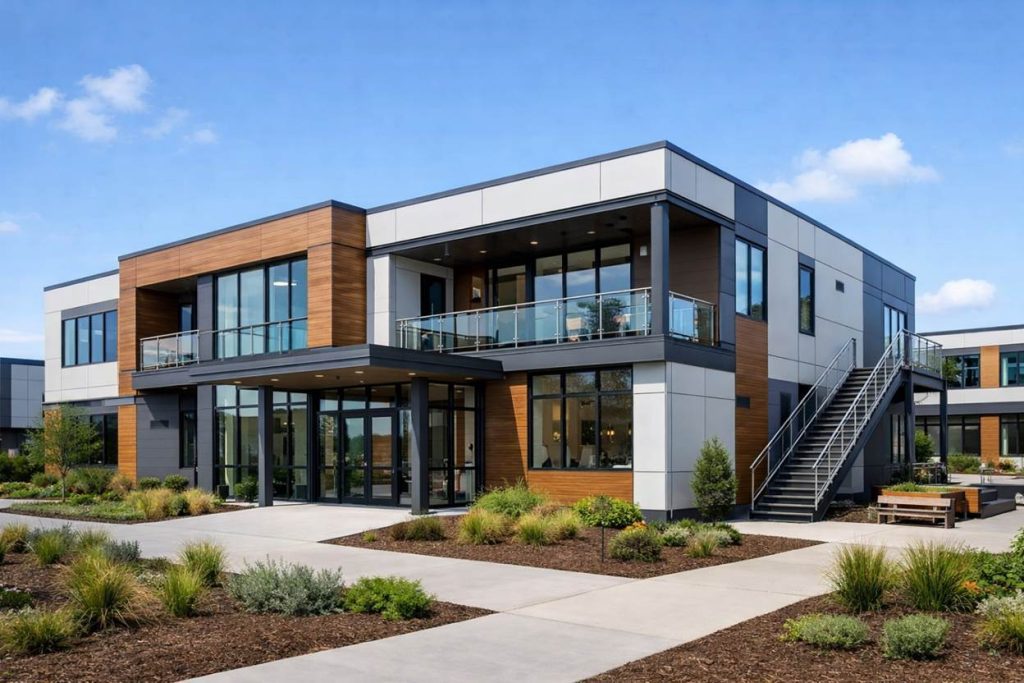
Demountable buildings are mostly composed of standardized functional configurations such as offices, dormitories, classrooms, storage areas, and restrooms. Still, they can be changed to personal taste as an added measure of the efficient character of the house. But permanent modular construction usually offers more creative leeway when it comes to designing. As such, the buildings can be designed with complex facades, use better and different materials and finishing for high-quality interiors, and have the noise levels, lighting, and HVAC performance enhanced. Apart from the appearance, these buildings suit the needs of schools, hospitals, hotels, and commercial offices; basically, places where comfort of use is a priority.
Buildings intended for public or commercial occupancy, such as schools or offices, are also subject to the ADA Standards for Accessible Design for features like ramps, door clearances, and restroom access.
8. Regulatory Compliance and Building Codes
Demountable buildings need to meet basic safety, fire, structural, electrical, and site requirements, though the specific rules depend on country, region, intended use, and duration of use, temporary and permanent building approvals can follow different standards. Permanent modular construction usually needs to meet requirements similar to conventional permanent buildings, including structural, fire, energy, accessibility, sanitation, and MEP codes, along with local building regulations.
In the United States, permanent modular construction is typically evaluated against the same International Building Code (IBC) provisions as site-built construction, while demountable and relocatable buildings may fall under separate provisions for temporary structures — buyers should confirm which classification applies with their local building authority.
Comparison Table: Demountable Buildings vs Permanent Modular Construction
| Comparison Factor | Demountable Buildings | Permanent Modular Construction |
| Main purpose | Temporary or relocatable use | Long-term or permanent use |
| Mobility | High, designed for relocation | Low, usually fixed after installation |
| Foundation | Usually lighter or simpler | Permanent foundation required |
| Installation speed | Very fast for simple projects | Fast, but more site integration needed |
| Initial cost | Usually lower | Usually higher |
| Long-term value | Good for reuse and relocation | Better for long-term asset value |
| Durability | Depends on materials and relocation frequency | Designed for long-term durability |
| Design flexibility | Functional and standardized | More flexible and architectural |
| Compliance | Depends on temporary building rules | Usually follows permanent building codes |
| Best for | Camps, site offices, temporary classrooms, emergency shelters | Schools, clinics, housing, hotels, offices, commercial buildings |
Best Applications for Demountable Buildings
Construction Site Offices
Project offices, meeting rooms, and engineer or management spaces that need to go up fast and may relocate as the project progresses.
Worker Accommodation and Dormitories
Worker dormitories, temporary camps, and site living quarters for construction and infrastructure projects.
Remote Camps
Mining, oil and gas, road construction, agricultural, and infrastructure projects operating in remote or changing locations.
Temporary Classrooms
School expansions or campus renovations that need extra teaching space during construction, without a permanent footprint.
Emergency Shelters
Post-disaster housing, temporary medical support, and accommodation for relief and response personnel.
Storage and Support Facilities
Material storage, tool rooms, temporary kitchens, restrooms, and shower facilities supporting a larger site or camp.
Best Applications for Permanent Modular Construction
Schools and Education Buildings
Long-term classrooms, laboratories, administrative offices, libraries, and dining halls.
Healthcare Buildings
Clinics, medical centers, care facilities, and long-term healthcare support spaces.
Residential and Staff Housing
Long-term apartments, staff housing, and residential development projects.
Hotels and Hospitality Buildings
Modular hotels, resort accommodation, and other long-term commercial hospitality projects.
Commercial Offices
Long-term office buildings, administrative centers, and commercial workspace.
Public and Government Buildings
Community centers, public service points, and government administrative buildings.
Which Option Should You Choose?
Choose Demountable Buildings If…
- Your project is temporary or semi-permanent
- The building may need to be relocated later
- You need fast installation with limited site work
- Your budget is more sensitive to upfront cost
- The project is a construction site, remote camp, temporary classroom, emergency shelter, or temporary office
- You need practical space more than architectural appearance
Choose Permanent Modular Construction If…
- The building will stay in one location for many years
- You need higher durability and long-term comfort
- The project must meet permanent building codes
- You need better insulation, finishes, MEP systems, and design flexibility
- The project is a school, clinic, office building, hotel, housing project, or public facility
- Long-term operating value is more important than the lowest upfront cost
Decision Table: Which One Fits Your Project?
| Project Situation | Better Option | Reason |
| 6-month construction project office | Demountable building | Fast setup and easy relocation |
| Remote worker camp for 1–3 years | Demountable building or modular camp | Depends on comfort and relocation plan |
| Long-term school expansion | Permanent modular construction | Better compliance and long-term use |
| Disaster relief shelter | Demountable building | Fast deployment and relocatable |
| Permanent healthcare clinic | Permanent modular construction | Higher compliance and MEP requirements |
| Temporary classroom during renovation | Demountable building | Short-term use and fast installation |
| Hotel or commercial building | Permanent modular construction | Better design, durability, and user experience |
| Storage or site support building | Demountable building | Practical and cost-efficient |
Cost Factors to Consider
Total project cost is shaped by far more than the quoted unit price. Key factors include:
Building Size and Layout
Room count, floor area, number of stories, corridors, restrooms, and office space all affect cost.
Structural and Material Specification
Steel structure grade, wall panel thickness, roofing, insulation, fire rating, doors, windows, flooring, and interior finish level.
Foundation and Site Preparation
Permanent modular buildings usually carry higher foundation costs; demountable buildings still need a safe, level, compliant base. Structural loading for the foundation and frame is generally calculated under ASCE 7, the standard referenced by the IBC for wind, seismic, and other design loads.
Transportation and Installation
For overseas projects, packing method, ocean freight, customs clearance, unloading, lifting, and local installation labor all affect final cost.
Utilities and MEP Systems
Water supply, power, drainage, HVAC, fire protection, networking, and lighting all contribute to total project price.
Relocation and Maintenance
Demountable buildings should budget for future dismantling, transport, connector replacement, and sealing maintenance over their service life.
Key Questions to Ask Before Buying
- Is the building temporary, semi-permanent, or permanent?
- How long will the building be used?
- Will it need to be relocated?
- What is the required function: office, dormitory, classroom, clinic, restroom, storage, or camp?
- How many people will use it daily?
- What are the local building code requirements?
- What foundation is available or required?
- Are water, electricity, sewage, HVAC, and internet needed?
- What climate conditions will the building face?
- What is more important: upfront cost, mobility, durability, comfort, or long-term value?
Common Mistakes When Comparing the Two Options
Only Comparing Initial Price
Demountable buildings may have a lower starting cost, but frequent dismantling, transport, and maintenance can raise total cost over time.
Ignoring Local Building Codes
Selecting a temporary structure for a long-term project can create problems at the approval or occupancy stage.
Underestimating Foundation and Utility Work
Buyers sometimes focus only on the building itself and overlook foundation, water, power, drainage, fire protection, and HVAC costs.
Choosing Permanent Modular for a Highly Mobile Project
If a project relocates frequently, a permanent modular structure may not offer the flexibility the project actually needs.
Choosing Demountable Buildings for High-Comfort Permanent Use
For long-term schools, hotels, healthcare, or commercial spaces, selecting the lowest-cost temporary option can affect comfort, compliance, and long-term maintenance.
Demountable Buildings vs Permanent Modular Construction vs Traditional Construction
| Factor | Demountable Buildings | Permanent Modular Construction | Traditional Construction |
| Speed | Very fast | Fast | Slower |
| Mobility | High | Low | Very low |
| Foundation | Simple to moderate | Permanent | Permanent |
| Site disruption | Low | Medium | High |
| Design flexibility | Medium | High | Very high |
| Long-term durability | Medium | High | High |
| Best use | Temporary and relocatable projects | Long-term modular projects | Fully custom permanent buildings |
| Cost structure | Lower upfront, relocation costs possible | Higher upfront, strong long-term value | Often higher site labor and longer schedule |
FAQ
What is the difference between demountable buildings and permanent modular construction?
Demountable buildings are designed to be assembled, dismantled, moved, and reused. Permanent modular construction uses factory-built modules installed on a permanent foundation for long-term use.
Are demountable buildings the same as temporary buildings?
Not exactly. Many demountable buildings are used temporarily, but they can also serve semi-permanent projects if properly designed and maintained.
Are permanent modular buildings movable?
They are generally not designed for frequent relocation. Once installed on a permanent foundation and connected to utilities, moving them is usually complex and costly.
Which is cheaper, demountable or permanent modular construction?
Demountable buildings usually have lower upfront costs, while permanent modular construction often offers better long-term value, durability, energy efficiency, and compliance.
Which option is better for construction site offices?
Demountable buildings are usually better for construction site offices because they install fast, relocate easily, and suit temporary projects.
Which option is better for schools or healthcare buildings?
Permanent modular construction is usually better for long-term schools or healthcare buildings, since these projects need stronger compliance, comfort, MEP systems, and long-term durability.
Can demountable buildings be used for worker accommodation?
Yes. They are commonly used for worker dormitories, site camps, remote accommodation, and temporary housing.
How do I choose between demountable and permanent modular buildings?
Base the decision on project duration, relocation needs, foundation availability, compliance requirements, budget, comfort level, climate, and long-term operation plan.
Conclusion
Demountable structures and permanent modular buildings are both quicker and more efficient ways of building compared to traditional construction, but they are meant for different kinds of projects. The ones that do best in such situations are those that require temporary use, those that are intended to be moved, those that are budget-sensitive, and also those that have to be deployed quickly. Permanent modular buildings still have the advantage of long-term usage of buildings through durability and the quality of the design, together with full code compliance and comfort for the long-term residents.
For construction sites, worker camps, emergency shelters, schools, offices, healthcare buildings, and accommodation projects, the right choice depends on how long the building will be used, whether it needs to move, what utilities are required, and what local codes must be met. ZN House supports both approaches; see the Modular Container House range for long-term, permanently installed projects, or get in touch to discuss a relocatable solution for a temporary or multi-site project.
Disclaimer: This article provides general information about demountable buildings and permanent modular construction for reference purposes. Exact specifications, structural performance, foundation requirements, compliance obligations, and pricing vary by project and should be confirmed directly with the manufacturer. Local building codes, zoning rules, and site-specific engineering requirements should also be verified before procurement.
Similar Posts
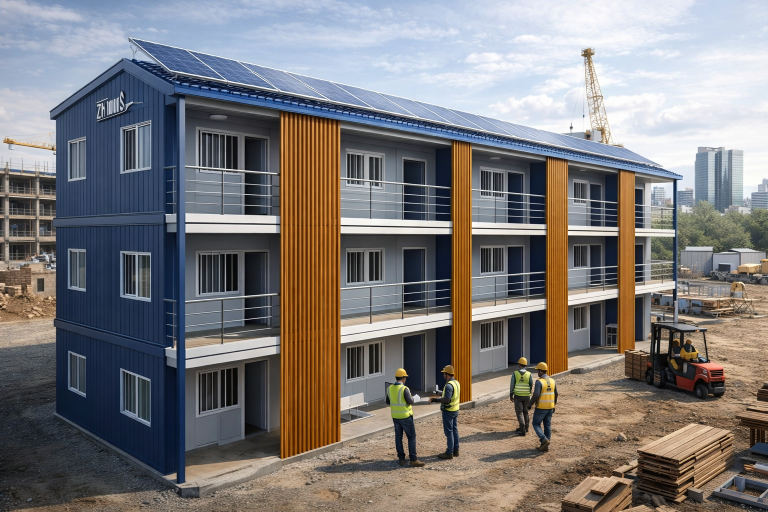
The Future of Workforce Housing: A Guide to Container Dormitory Solutions
The need for fast, quality, and scalable housing has just about gone through the roof, especially...
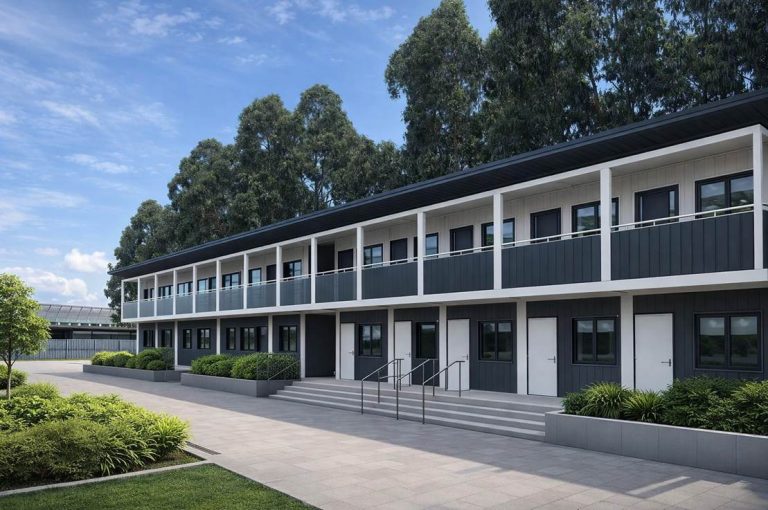
Benefits of a Modular Classroom
Introduction A common challenge throughout the world for all types of schools is the dramatic increase...
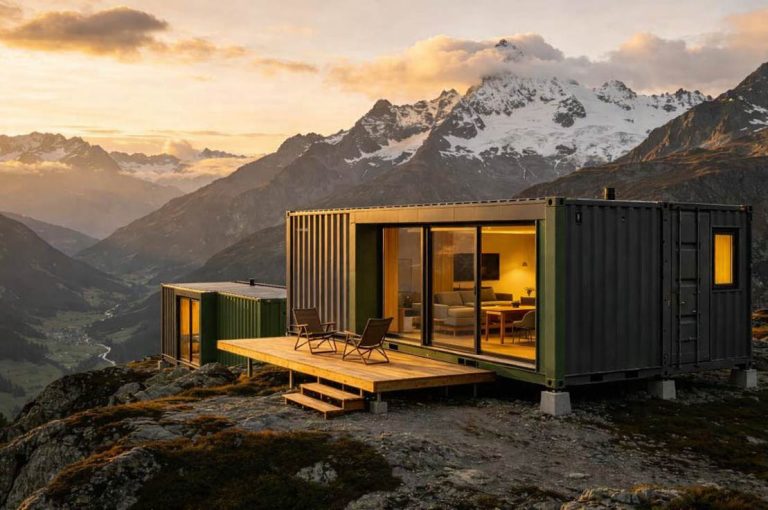
How to Choose the Best Container Camp for Your Outdoor Adventure
Container camps have changed outdoor experiences in many ways, allowing people to shift from tent camping...
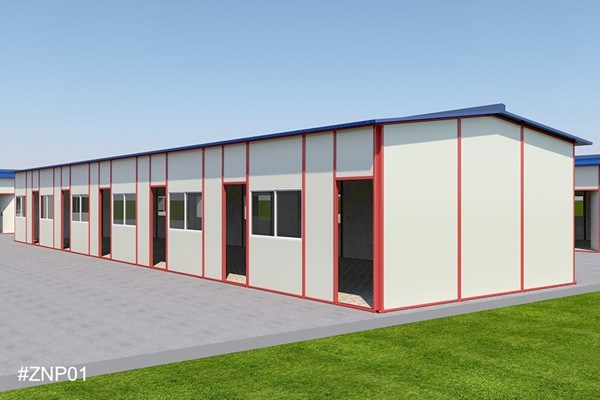
Benefits of Prefab Houses
Prefab houses come with all standard equipment and are designed to be simple yet cost-efficient solutions...
Flat Pack Container House: A Practical Buyer's Guide to Fast, Affordable Modular Living
How factory-built, bolt-together construction is changing the way homes, offices, and dormitories get built worldwide People...
Flat Pack vs. Folding Container Homes: Which One Is Better for Your Project?
Introduction Modular building is globally revolutionizing the construction industry through speed of construction time, eco-sustainability, and...


