



Container Toilets: A Practical Guide to Portable, Hygienic Sanitation for Any Job Site
Once construction workers show up at an empty site, sanitation is probably the last thought going through their minds until an issue arises that needs addressing immediately. Having no bathroom or an unreliable one could mean putting a stop to a construction process faster than if a shipment is delayed, not to mention jeopardizing the health of the builders involved. The scenario above is precisely the reason why portable toilets in containers have been introduced on the market and are used both in construction and during events and emergency responses. The containers from which the toilets are made of shipping containers and become ready for use in a few hours since they are fully connected to plumbing.
This article describes what the toilets are, how they work, where to use them, etc. We will provide specifications and show examples of actual cases related to the toilets.
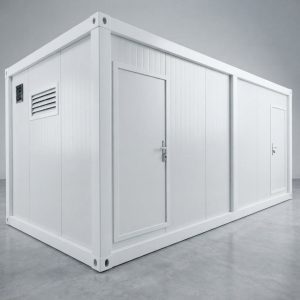
What Is a Container Toilet?
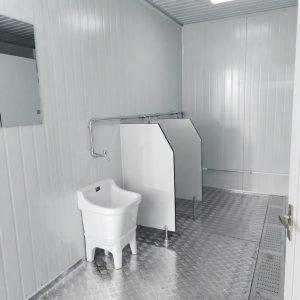
A container toilet consists of a prefabricated restroom created out of a shipping container made of steel. It has a solid structure since steel is much stronger than plastic which makes conventional porta-potties. The interior walls are generally insulated with rock wool which makes them heat-resistant and fireproof.
The container toilet is about 10 or 20 feet long depending on the project. The dimensions of the shipping containers allow for easy transport, maneuverability, and placement by using a crane. The 20-foot container washrooms have many stalls and washing facilities as opposed to the 10-foot containers that cater for smaller groups.
The table below summarizes typical specifications for the two most common sizes.
Typical Container Toilet Specifications
| Feature | 10ft Unit | 20ft Unit |
| Structure | Corrosion-resistant steel frame | Corrosion-resistant steel frame |
| Insulation | Rock wool, flame-retardant | Rock wool, flame-retardant |
| Stalls | 1–2 | 3–6 |
| Handwashing stations | 1 | 2–3 |
| Typical use | Small crews, short-term events | Construction sites, camps, festivals |
| Installation time | A few hours | Half a day or less |
Because these units arrive roughly 80% finished from the factory, on-site work is limited to leveling, lifting into place, and connecting utilities. That single fact explains most of the cost and time savings people associate with container toilets.
Types of Container Toilets
Not every project needs the same configuration. Three variations cover most real-world demand:
- Shipping container toilets — standalone restroom units, either single-stall or multi-stall, built directly from a container shell.
- Portable toilet containers — compact, easily relocated units designed for short-term deployment, common on event grounds and remote work sites.
- Prefab modular bathrooms — combine a toilet with a shower or bathtub, often installed as part of a larger prefab building, dormitory, or container camp
All kinds of container toilets have been constructed using the same general structure: the steel body, insulated panels, and the modular structure to enable stalls, sinks, and fixtures to be configured again. Purchasers of container toilets should determine which configuration meets their stall requirements and plumbing needs before making an order since the costs of retrofitting a unit in the future can turn out to be higher.
Application Scenarios for Container Toilets
These units show up in three settings more than any other: construction, events, and disaster relief. Each brings different pressures.
Construction sites need sanitation that keeps pace with a growing crew. The mobile toilet container is 20ft long and has several stalls, which can accommodate both medium-sized teams and large teams. The modular units can be added as more people are required. Many of the buyers mention that the price of the unit is their main deciding factor, given that prefabricated designs can reduce sanitation costs by up to 50% in comparison with standard plumbing costs.
Events and festivals need sanitation that also looks presentable. Mirrored vanities, touchless fixtures, and solar lighting are common upgrades on premium units, and stacking or clustering lets organizers serve high-traffic zones without long queues.
Disaster relief and humanitarian missions demand rapid deployment above all else. Foldable, flat-pack constructions minimize the volume of transportation while off-grid features such as rainwater harvesting and solar power ensure that restrooms remain operational even in places where infrastructure has failed. Here, sanitation is directly connected to public health; human waste might cause diseases in refugee camps, so humanitarian organizations have considered having access to a safe and appropriately placed toilet as an important requirement rather than as something desirable, as outlined in the Sphere Handbook on humanitarian water, sanitation, and hygiene response.
Container Toilet Use Cases at a Glance
| Setting | Priority | Common Features |
| Construction sites | Durability, worker headcount | Multi-stall layout, corrosion-resistant steel |
| Events & festivals | Presentation, high traffic flow | Vanity units, solar lighting, clustering |
| Disaster relief | Speed of deployment | Flat-pack design, off-grid water and power |
Container Toilets vs. Traditional Portable Restrooms
It's worth comparing container toilets against the plastic porta-potty most people picture first.
Container Toilets vs. Traditional Portable Restrooms
| Factor | Container Toilet | Traditional Portable Restroom |
| Structure | Steel frame, insulated panels | Molded plastic shell |
| Lifespan | Years of repeated use | Single season, rental-based |
| Climate resistance | Insulated, weather-sealed | Minimal insulation |
| Capacity options | Single stall to multi-stall clusters | Mostly single stall |
| Customization | Solar power, water recycling, accessibility | Limited |
| Best for | Long-term or repeat deployment | Short, one-off events |
The steel construction is the real differentiator. Where a plastic unit degrades after a season or two of hard use, a well-built container restroom is designed for years of redeployment across multiple projects, which shifts the cost calculation from a rental expense to a capital asset.
Compliance and Safety Standards
Sanitation isn't just a comfort issue — it's regulated. In the United States, OSHA's construction sanitation standard, 29 CFR 1926.51, requires employers to provide toilet facilities that are adequate and readily accessible, with minimum toilet-to-worker ratios set out in its accompanying table, and job sites without a sanitary sewer must provide an approved toilet facility unless local codes prohibit it, according to OSHA's official regulation text. Any unit specified for a U.S. job site should be checked against this ratio before delivery.
In humanitarian situations, it is common to refer to the Sphere Handbook, where minimum levels are set concerning water, sanitation, and hygiene response with regard to uncontrolled human waste and viewed as a health risk, especially in crowded and displaced populations. Generally, relief-focused units are built according to the aforementioned standards along with local building and plumbing regulations.
Case Study: Fast-Tracking Sanitation for a Coastal Infrastructure Project
A mid-sized contractor working on a coastal infrastructure upgrade in Southeast Asia faced a familiar problem. The site had no connection to municipal sewage, the workforce was expected to triple within two months, and the local wet season made standard plastic portable restrooms unreliable — several had already tipped or flooded during early storms.
The contractor approached ZN House for a sanitation solution that could handle both the load growth and the climate. The team recommended a cluster of 20ft container toilets, specified with corrosion-resistant steel bodies and rock wool insulation panels to handle heat and humidity, plus reinforced anchoring to withstand seasonal wind. Units arrived nearly complete and pre-plumbed, cutting on-site installation to a matter of hours per unit rather than days.
The entire cluster was working effectively within three weeks as it increased in size from about 80 employees to more than 240. The task force encountered no flooding incidents until the conclusion of the wet season. The modular system allowed for the addition of stalls without affecting the current installations.
How to Choose the Right Container Toilet
A few questions narrow the decision quickly:
- How many people will use it daily? This determines stall count and whether a 10ft or 20ft unit — or a cluster of them — makes sense.
- What's the site's water and power access? Off-grid sites benefit from solar lighting, rainwater harvesting, and vacuum-flush systems that cut water use.
- How long will the unit stay in service? Short-term events can lean toward simpler configurations, while multi-year projects justify a higher-spec, reusable unit.
- Does the project need related infrastructure? Many buyers pair a container toilet with a container dormitory or a broader modular building layout, since matching the sanitation unit to the rest of the site simplifies utility routing.
Getting these answers right before ordering avoids the cost of retrofitting a unit that doesn't match site conditions.
Frequently Asked Questions
How much does a container toilet cost compared with renting a portable restroom?
Price depends on size, stall count, and features like solar power or water recycling. The upfront cost of a purpose-built unit is generally higher than a single rental period, but its multi-year lifespan often makes it more cost-effective over repeated projects than continuously renting plastic portable restrooms.
Can a container toilet be used off-grid?
Yes. Many units are built with solar-powered lighting, rainwater harvesting, and low-flow or vacuum flush systems, which let them function in locations without a connected water or sewage line — a common requirement for disaster relief and remote construction work.
How long does it take to install a container toilet on site?
Because these units are largely factory-finished, on-site work is usually limited to leveling, lifting into position, and connecting available utilities. Most installations are completed within a few hours to half a day, depending on site access and unit size.
Final Thoughts and Next Steps
These units have moved sanitation planning away from short-term rentals and toward durable, purpose-built infrastructure. Whether the project is a construction site tracking OSHA compliance, a festival balancing hygiene with presentation, or a relief operation racing against the clock, a well-specified unit solves problems that plastic porta-potties were never designed to handle.
If you're planning a project that needs reliable, scalable sanitation, ZN House can help specify a container toilet configuration suited to your site, climate, and workforce size — from a single compact unit to a multi-container cluster paired with a broader container office or camp layout. Reach out to discuss your project and get a specification tailored to your needs.
Disclaimer: The technical data, dimensions, and materials referenced in this article are based on ZN House's own manufactured container products. Actual specifications, materials, and technical details may vary by project, configuration, and region — please confirm exact specifications with ZN House before finalizing a project plan.
To see how these units come together in practice, watch this short video on ‘Toilets Made from Container Houses by ZN House’:
https://www.youtube.com/watch?v=zsdL7_C539A
Similar Posts
Container House vs Prefab House: Which One Is Better in 2026?
Introduction There was a recent increase in the use of modular construction within all types of...
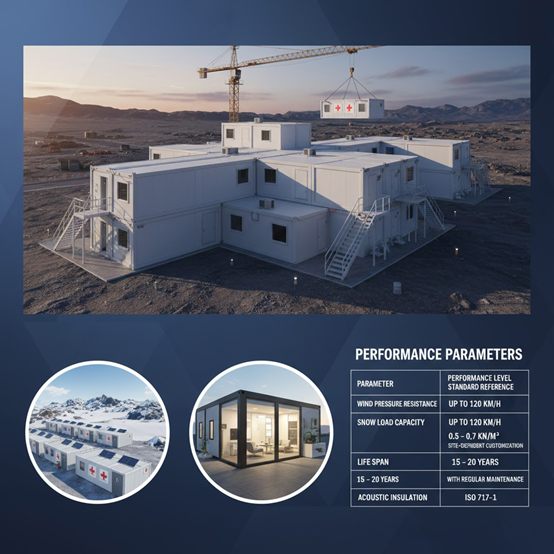
The Strategic Evolution of Modular Portable Living Units: A Professional Guide to Rapid Deployment Structures
At a time when speed, mobility, and resilience are the most important features of everything, the...
What Is Demountable Accommodation? A Guide for Worksites and Remote Projects
Remote and temporary projects often need worker housing before permanent facilities are available. Construction sites, mining...

Container Classroom Prices & Layouts: A Practical Guide for Schools
Why schools are choosing container classrooms When enrollment spikes or buildings are under renovation, schools need...
What is a Modular Container House? A Complete Guide to Modern Modular Homes
Introduction Modular container homes represent a disruptive innovation in construction design and methodology. The many positive...
Modular Container House: The Smart, Scalable Way to Build Fast
A modular container house is a prefabricated building made from steel modules that arrive on-site almost...


