



Container Toilets: The Portable Sanitation Solution Built for Every Jobsite
Anyone who has overseen a construction site, coordinated an outdoor film festival or organized humanitarian aid efforts understands how important sanitation can be. One of the ways to deal with this issue is to choose a container toilet that has been designed to combine a full washroom in a tough steel construction that can be easily transported anywhere by truck, crane, boat etc. The main advantage of the container toilet in comparison to other similar products is that it is not just a traditional portable toilet with a fresh layer of paint; it is a durable factory-made construction designed to endure continuous usage, heavy weather conditions and great requirements imposed by the legislation.
In this article, we will explain what container toilets are and what their main advantages are as well as what you need to be sure to check before ordering one. This guide also includes examples of specification tables, a short case study of an offshore project and an answer to commonly asked questions that project managers might have.
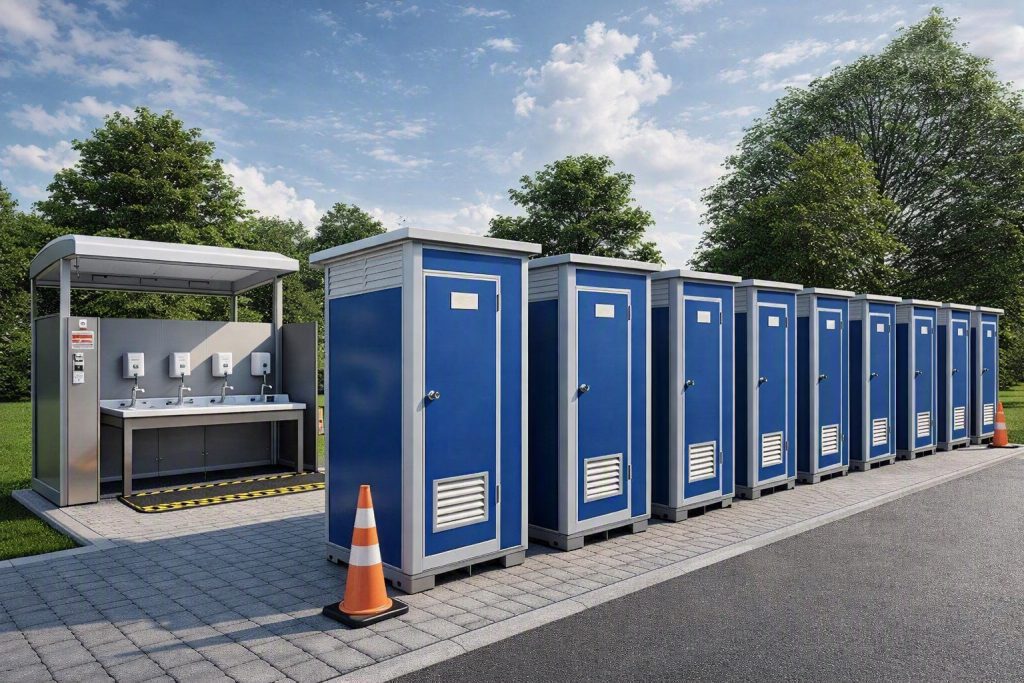
What Exactly Is a Container Toilet?
Three variations dominate the market:
- Shipping container toilets: standalone units built from purpose-built steel containers, ideal for freestanding deployment.
- Portable toilet containers: compact, lightweight versions designed for rapid relocation between sites.
Prefab modular bathrooms: combined toilet-and-shower units that can be joined to a larger modular container house or used as a standalone unit.
Because the whole structure is manufactured under quality control in a closed building, a container toilet presents fewer problems with weather-related construction delays and variable craftsmanship compared to an on-site restroom. The steel welding, plumbing, and electrical installation take place indoors in factories rather than outdoors in mud or rain, resulting in a better-quality construction of the unit.
The following table lays out how these three formats typically compare.
Container Toilet Types at a Glance
| Type | Best For | Typical Capacity | Setup Time |
| Shipping container toilet | Construction sites, camps | 2–8 stalls | A few hours |
| Portable toilet container | Events, remote short-term use | 1–4 stalls | Under 2 hours |
| Prefab modular bathroom | Worker housing, offices | 1–2 stalls + shower | Half a day with hookup |
Why Demand for Container Toilets Keeps Growing
Construction, live events, and humanitarian relief are three major industries driving the demand. Although they are different in terms of their preferences, they share some common aspects: durability, deployment speed, and predictability of container toilet cost as the most important features to address.
Construction Sites
Construction companies need sanitation solutions relevant to their working headcounts. The 20ft units used as toilet containers come with several toilet stalls and a hand-washing row, making them suitable for site use by crews of medium to large sizes without cluttering the project site. Compliance matters here too. In the United States, jobsite sanitation falls under OSHA’s construction sanitation standard, which sets minimum toilet counts by crew size and exists specifically to prevent the health problems that follow when workers cannot reach a toilet.
Event Organizers
By contrast, event teams tend to pay more attention to comfort and appearance of their guests. Mobile toilets for festivals and private events can be designed to include mirrored vanities, air conditioners, and brand finishes at the same time being compact.
Disaster Relief and Humanitarian Missions
Disaster response is an emergency situation at which speed and self-reliance are the main priorities to the point of aesthetics. Collapsible flat-pack toilet containers are used. These containers occupy less space so that they can be quickly dispatched to the disaster sites – flooded areas, earthquake victims – with only a bit of space taken up on the transport. Most of these toilets even collect rainwater and utilize solar power; That’s why the units do not need to be plugged in electrically. The Sphere Handbook, a widely used humanitarian reference, ties sanitation placement and hygiene provisions directly to reducing disease transmission in displacement settings, precisely the risk these deployable units are designed to manage.
Choosing the Right Size and Configuration
The dimension of a container toilet is determined primarily by the anticipated daily number of users as opposed to the number of users theoretically calculated. The following table presents a point of reference, though each location will have its own optimal usage trend.
Sizing Guide for Container Toilet Projects
| Container Size | Approx. Daily Users | Common Setting | Notable Add-ons |
| 10ft | Up to 40 | Small crews, remote outposts | Solar lighting, water tank |
| 20ft | 40–150 | Construction sites, mid-size events | Multiple stalls, handwashing row |
| Clustered 20ft units | 150+ | Festivals, large camps, disaster shelters | Modular stacking, greywater recycling |
A few planning questions tend to come up on almost every project:
- Will the unit connect to municipal sewage, or does it need a self-contained tank?
- Is off-grid power, such as solar, or water harvesting required?
- Does the site need accessible, disability-friendly stalls?
- What lifting or crane access exists for placement?
Bringing a supplier into these conversations during the design stage, rather than after fabrication starts, helps avoid the costly rework that comes from a structural or logistical mismatch discovered too late.
Servicing frequency deserves the same early planning as sizing. Facilities used by roughly ten people generally need waste removal and restocking about once a week, while high-traffic sites or events should schedule service more often to keep every stall usable. A toilet that sits out of service does not count toward a project’s required minimum, so a realistic servicing plan is as important as the unit itself.
Built for Harsh and Remote Environments
Under extreme conditions, the normal portable toilets do not perform well. So their containers are built with a different quality – heavy-duty container toilets are made of marine-grade materials. Their corrosion-resistant steel outer shells can stand exposure to seawater; corrosion-resistant stainless-steel components will make leaks from pipe corrosion a thing of the past; in the case of oil & gas platforms near areas of harmful gaseous emission, explosion-proof electrical fittings guarantee usage safety. The reason why these units still often have flushing systems is that the flush can use a very small portion of the water that a normal toilet takes. These systems are frequently used in offshore units, because there fresh water is very limited and every litre has to be brought in or turned into potable water by seawater desalination.
Anti-sway hardware is another detail that separates a purpose-built marine unit from a converted standard one. Fixtures anchored with damping supports and flexible, vibration-resistant pipe connections stay sealed even as a vessel or platform pitches, which matters as much for crew safety as it does for hygiene.
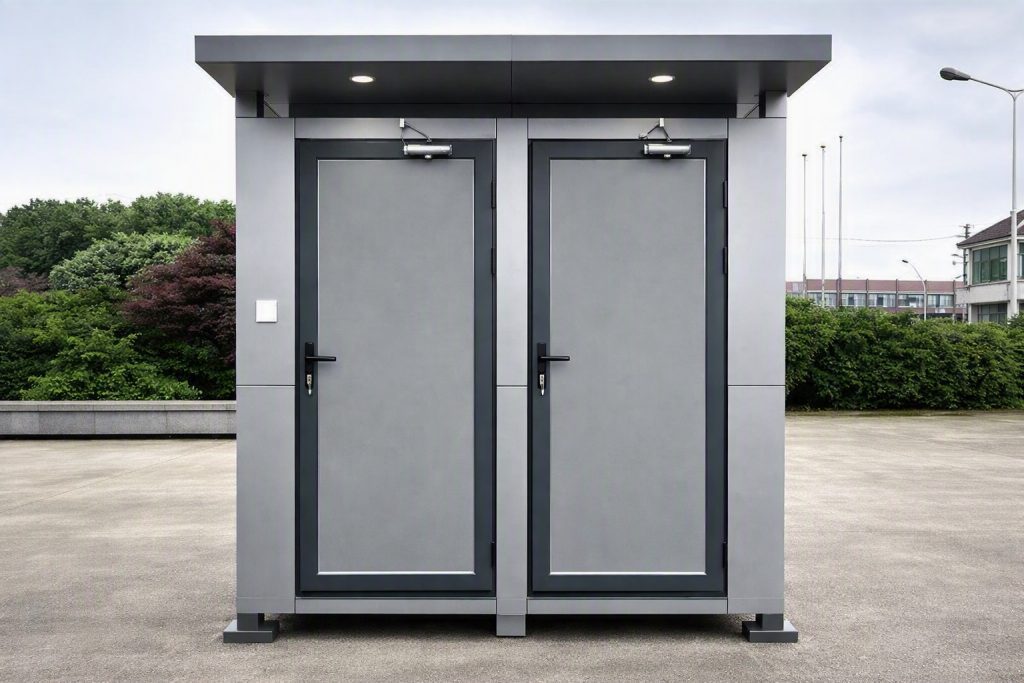
Case Study: Sanitation for an Offshore Platform Crew
The Challenge
In a drilling activity in the South China Sea, there was a demanding need for dependable sanitation for an offshore crew that worked in shifts. Standard portable toilets were getting spoiled in just a few months because of corrosion. The normal plumbing facilities were unreliable as the platforms kept moving constantly.
The Solution
ZN House supplied shipping container toilets built with galvanized steel bodies and an anti-salt-fog coating, paired with a hydraulic balancing support system to keep fixtures stable during platform movement. Explosion-proof lighting and ventilation met the site’s hazardous-area electrical requirements.
The Result
Five years of continuous installations of the docks unveiled no visible signs of corrosion and the crew faced no operational downtimes related to the sanitation facilities, which is a clear proof that a well-designed unit could equal the lifespan of permanent facilities on board ships.
Sustainability and Compliance Considerations
A well-built container toilet is not a disposable asset. Most steel-framed units are designed for reuse across multiple projects, and a large share of their material, including steel framing, insulation panels, and fixtures, can be recovered or recycled at the end of its service life. For teams managing worker accommodation alongside sanitation, pairing a toilet unit with a nearby container dormitory or container camp layout keeps utilities and maintenance centralized, which tends to lower long-term operating costs.
Frequently Asked Questions
What size container toilet do I need for a mid-size construction crew?
For crews consisting of about 40 to 150 employees, a 20-foot toilet container equipped with multiple stalls (as well as a handwashing row) should suffice. Larger teams might require clusters or additional handwashing stations so that the waiting time during shifts will not be too long.
How does container toilet price compare with renting standard portable toilets?
Purchasing a shipping container toilet requires a relatively high initial investment compared to that of renting, but given the durability and usability of the unit throughout different projects, it is usually a more financially sensible option in the long run, especially for businesses with repetitive tasks or long-term projects.
Can a container toilet operate without a municipal sewage connection?
Yes. Most models can be equipped with their own wastewater tank, vacuum flush system that saves water, optional energy from the sun, and rainwater harvesting, allowing them to operate in places without access to utilities.
A Note on Sourcing and Specifications
Every project brings different soil conditions, crew sizes, and regulatory requirements, so any published specification is best treated as a starting point rather than a final answer. Discussing load limits, sewage strategy, and site access with an experienced prefabricated container supplier before fabrication begins is the simplest way to avoid delays later.
Disclaimer: It is important to note that the specifications, materials, or technical data specified in this article may differ according to a particular unit and its use, so it is strongly recommended to ask for accurate information in a quotation prior to putting together any building plans.
Ready to See One in Action?
If you are planning a construction site, event, or remote deployment and want sanitation that can keep up, ZN House’s engineering team can help configure a container toilet around your exact site conditions and budget.
To see how a 20ft unit comes together in practice, watch “Movable Public Restrooms | 20FT Assemble Container Portable Toilets From ZN House”:
Similar Posts

What Is a Container Dormitory?
Introduction Container dormitories are modern prefabricated housing units that are constructed using modular container components. They…
What Is a Detachable Container House? Complete Guide for Buyers
Introduction As construction companies, developers, and project contractors seek out faster, more adaptable, and cost-effective options…
Refugee Camp Container Housing: Building Faster, Safer, and More Dignified Emergency Shelters
The provision of safe and reliable accommodation has always been among the main requirements in humanitarian…

Container house in Saudi Arabia makes living easy and smart
Container house in Saudi Arabia offers affordable, fast, and flexible living with climate-smart design and easy assembly for families and businesses.
Container Dormitory vs Traditional Building: Cost and Speed Comparison
Introduction The need for accommodation for construction workers is increasing rapidly. In addition to construction site…
Container Camps & Dormitories: Fast, Safe Housing for Workforces and Relief
Container camps deploy in days, not months. Start with a clear program—sleeping, WASH, kitchen, clinics, admin,…


